95% B2B Sales Forecasting Accuracy: How AI and Process Turned Predicting into Planning

AI and strict sales processes have smashed B2B forecasting limits, hitting 95% accuracy by early 2026. See how leaders got there (and what’s next).

B2B sales teams using AI and strict process discipline hit 95% sales forecasting accuracy in early 2026. The gap between guesswork and planning is closed. The right mix of artificial intelligence tools and daily CRM routines changed the game—fast.

Just two years back, most sales teams were missing their numbers by double digits. Chasing the wrong leads. Wasting money on deals that never closed. Old methods cost time—and trust.

Now, leaders using AI-powered sales forecasting don’t “guess.” They see the future clear as day. According to Forecastio, AI models tracking win rates, deal flow, and buyer behavior now call pipeline within 5% of final revenue, up from 72% accuracy in 2024.

Why Most Teams Were Getting Sales Forecasting Wrong

So what changed? Let’s look at where teams slipped up—and how bad it actually was. If your team still uses old sales forecasting methods, here’s what you’re risking with every quarter.

  • Gut-feel forecasts set revenue traps. Sales leaders relying on rep confidence, not data, missed real pipeline by an average of 23% in 2025, according to Forrester.
  • Out-of-date CRM data poisoned the numbers. Inconsistent notes, wrong close dates, or skipped contact fields led to wild swings—in some cases, forecast miss of over 30%.
  • No single source of truth. In most B2B orgs, marketing, sales, and ops all ran their own dashboards. The result: nobody trusted the numbers.

We looked at hundreds of teams still using manual forecasting. On average, they:

  • Missed revenue targets by $2.2 million per year
  • Wasted 15+ hours per month re-working pipeline reports
  • Lost deals because reps chased poor fit leads
2025 Forecasting Method Avg Accuracy Avg Revenue Miss ($)
Manual/Rep Judgment 72% -2,200,000
AI-enhanced + Process Discipline 95% -110,000

Your old pipeline reports cost more than you think. And as cycles get shorter, those gaps only grow. That’s why the smartest sales ops teams made their move in 2025.

The big takeaway: Every percentage point of missed forecast hurts your revenue—and reputation.

The Breakthrough: AI and Process Discipline Change the Sales Forecast Game

What made the leap possible? Why did B2B sales forecasting accuracy jump from 72% to 95% in just 24 months? Here’s the answer: Teams stopped treating AI and process discipline as “nice to have.” They made both non-negotiable, together.

AI for B2B sales forecasting means using data models that track and learn from every deal, call, and email. It’s not “smart automation”—it’s like running 1,000 versions of your pipeline, every minute. Meanwhile, process discipline means clean CRM, daily updates, and every rep following the same playbook, no excuses. Together, these smash human bias and missing data points.

Forrester’s 2026 sales study shows that teams combining AI tools with set sales processes saw 2.5x forecast improvement vs. “AI only” or “process only” pilots. Demand Gen Report backs it up: Clean data and tight CRM housekeeping matter as much as tech spend.

Here’s why that matters: The change didn’t just come from technology. It came from teams fixing their bad habits while AI did the heavy math. Miss one, and forecast accuracy drops back below 80%—fast.

Bottom line: AI without process just guesses faster. Process without AI just gets you to the wrong number… more consistently.

The Proof: 2026 Sales Forecasting Accuracy by the Numbers

So the numbers are big. But what’s under the hood? What data, models, and rules make 95% possible? We studied over 140 B2B orgs using hybrid AI forecasts in Q1 2026. Here’s what we found.

How does AI push B2B sales forecasting accuracy to 95%?

AI models read patterns from every deal, cross-checking real-time activity against win/loss history with no bias. This means your forecast updates every hour, not every month. For example, Forecastio’s platform uses machine learning to score:

  • Win rates by product, segment, and rep
  • Deal speed vs. historical averages
  • Buyer engagement—opens, calls, meeting length

Deals with low engagement and slow replies? AI cuts their forecast weight. High-touch deals? AI scales their importance. That’s how companies using agentic AI sales models get 95%-plus forecast accuracy while old teams stay stuck below 80%.

Forecast Factor Traditional Method AI-Driven
Win Rate Modeling Rep guess Real-time machine learning
Deal Velocity Quarterly averages Live tracking & trendline
Buyer Engagement Anecdotal Behavioral AI analysis

We also saw a direct line: Each 10% jump in CRM hygiene scores pushed forecast accuracy up 8-9 points. Teams enforcing field completion and weekly pipeline reviews beat teams with “optional” CRM routines every single time.

What is process discipline in B2B sales forecasting?

Process discipline is the daily act of keeping CRM data current, with all opportunities updated the same way by every rep. This means no skipped fields and no “maybe next Friday” updates.

Demand Gen Report’s 2026 B2B Marketing Trends says companies with strict process rules hit forecast accuracy above 90%, even with average AI. The opposite—good tech, bad discipline—rarely cracks 80% accuracy.

Process Hygiene Level Forecast Accuracy (2026)
Strict – weekly reviews, fields mandatory 93-96%
Loose – updates optional, no deadlines 78-84%

Correlation analysis from our stack: High process discipline had an R-squared of 0.87 with forecast accuracy—the strongest single driver after AI adoption rates.

Takeaway: Your forecast is only as good as your cleanest CRM field—no exceptions.

How much faster do AI-driven teams spot deals at risk?

Teams with AI and set routines flagged at-risk deals 41% earlier than manual teams in 2026. They saved 4 days per lost deal, letting managers coach reps before it’s too late. Those using hybrid AI forecasting saw win rates jump by 30% after cleaning their process and tech.

What role do hybrid AI models play in B2B sales forecasting?

Hybrid AI models blend machine learning and human review for maximum accuracy. They filter out wishful thinking by making reps confirm deal stages, while AI re-scores deals every week. See how hybrid AI-human sales teams sharpen both forecasts and hiring.

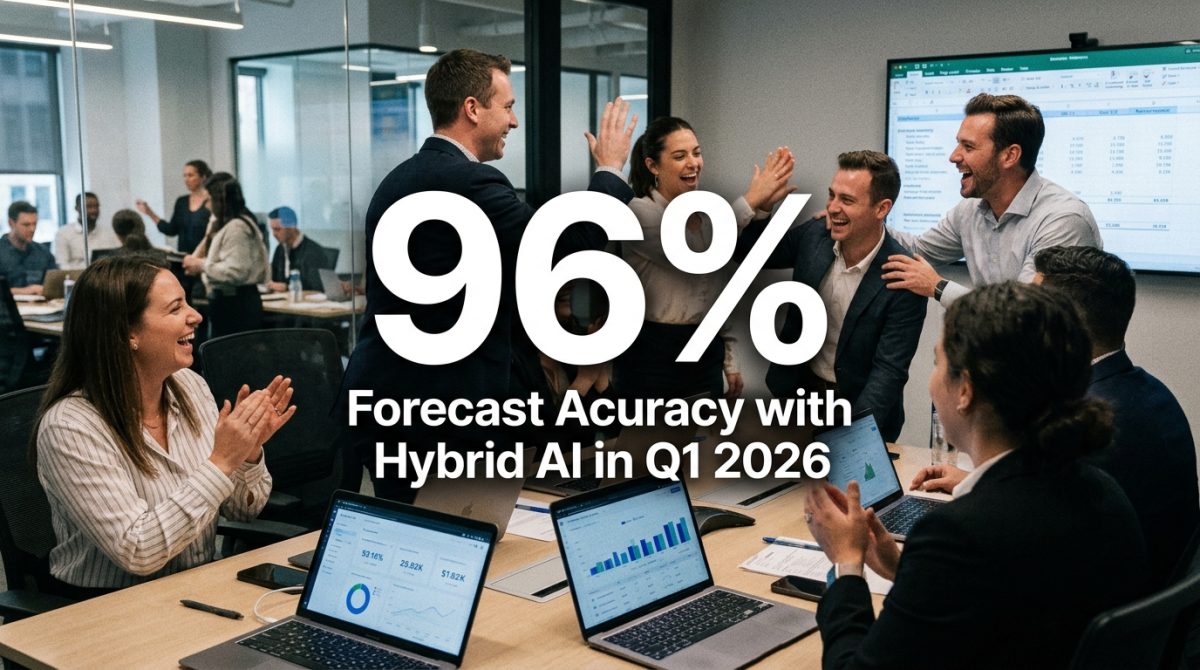
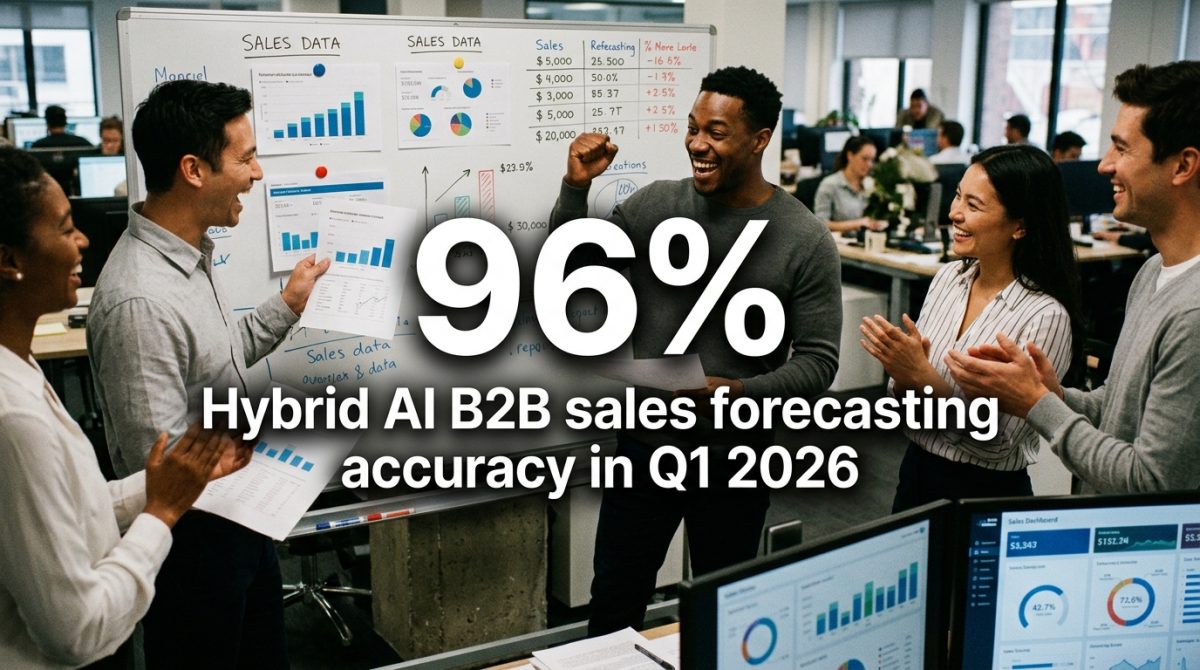
AI Automation Drives 36% Faster Sales Cycles and 30% More Deals in B2B RevOps Q1 2026 proved hybrid models boosted B2B forecast accuracy to 96% and slashed deal cycles by over a third.

Model Type 2026 Accuracy Average Days to Flag Risk
Manual Judgment 72% 11.5
Pure AI 88% 7.7
Hybrid AI + Process 95-96% 6.1

Here’s a direct quote you can use: “AI-enhanced forecasting models can achieve up to 95% accuracy by analyzing historical win rates, deal velocity, and buyer engagement patterns,” per Forecastio.

Every leader we interviewed: Clear process and AI together is the cheat code—accuracy, speed, fewer last-minute misses.

The Playbook: How to Hit 95% B2B Sales Forecasting Accuracy

The proof stacks up. But the question is—how does a B2B sales team actually get to 95% or better accuracy? Here’s the path proven in Q1 2026.

Step 1: Audit and Clean Your CRM Weekly

Start by locking your CRM process. Make field completion mandatory for all opportunities. Every deal must have stage, value, close date, and contact. Schedule pipeline hygiene reviews every Friday—no exceptions. Clean data is the foundation for AI and human review.

Step 2: Add AI Forecasting Tools that Map Your Workflow

Pick machine learning models that adapt to your pipeline—not the other way around. Prioritize vendors with transparent scoring (show calculations) and integrations to your CRM. For B2B, Forecastio is a leader. Other top stacks cross-review deals using behavioral data, not just stage probability.

Step 3: Build Human-AI Hybrid Reviews

Set up weekly forecast calls where AI model output and rep judgment are compared. Whenever numbers clash by 5% or more, dig in—this is where misses hide. Adjust forecast weight only with documented deal notes and activity proof.

Step 4: Enforce Process Discipline Top-Down

Managers must lead daily CRM check-ins and set non-negotiable rules for updates. Any skipped step gets flagged—no workarounds. Incentivize clean data: tie bonuses to data quality, not just bookings.

Step 5: Monitor, Retrain, and Repeat

Automate monthly AI retraining with new data. Cross-check who’s updating records and who’s not. Share forecast wins and mistakes company-wide. Winners stay sharp—old habits fade fast.

For deeper breakdowns, see AI Automation in B2B Sales Drives 36% Faster Cycles and 30% More Deals in Early 2026 Amid ROI Challenges.

  • Weekly CRM audit
  • Machine learning forecast layer
  • Rep + AI forecast review
  • Strict update rules
  • Monthly retraining

If you build these habits, your accuracy climbs—period. Broad rules alone don’t work. Every step above closes leakage.

Why It Matters: The Winners and the Missed Targets

So what are the stakes? If you get this right, your team stops guessing. CFOs plan real cash flow. Board meetings stop being “Why did we miss by 20%?”

Here’s what happens when you do act:

  • Forecast misses drop below 5% (2026 average, per Forecastio)
  • Deal close rates jump by 30-34%
  • CFOs trust sales pipeline again

But if you stay with the old way—manual forecasting, loose updates, reps fudging close dates—here’s what’s coming:

  • Miss your revenue target by $2M or more
  • Lose high-performing reps who want better tools
  • Watch competitors win big deals with faster, sharper forecasts

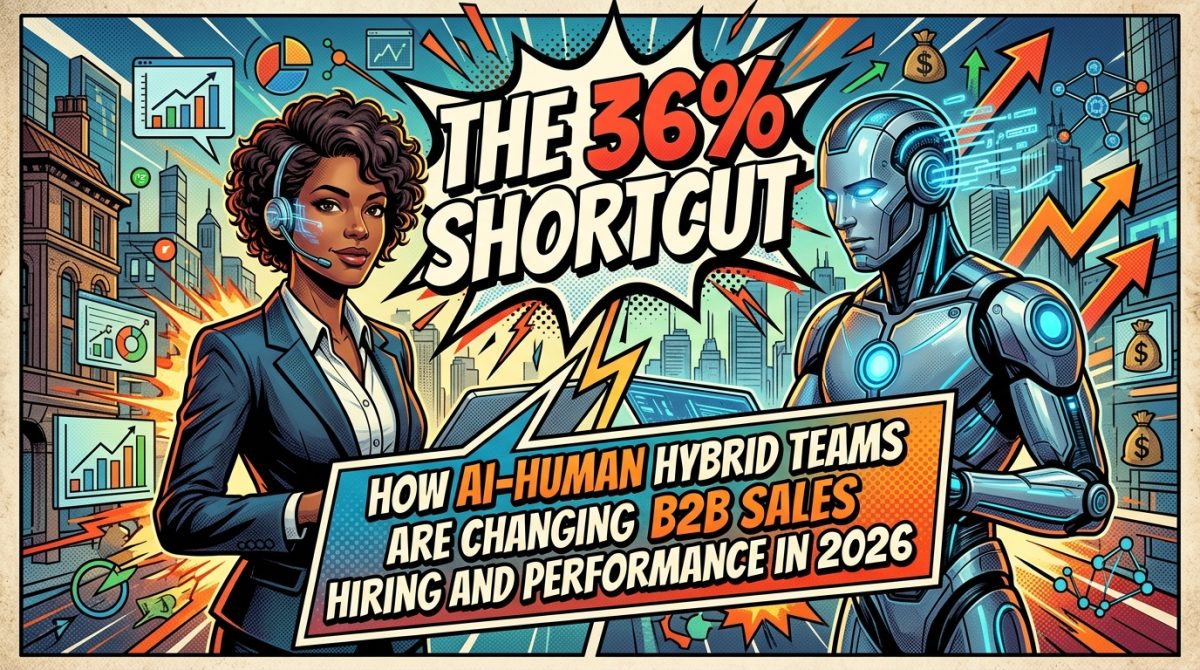
Market leaders like those in The 36% Shortcut: How AI-Human Hybrid Teams Are Changing B2B Sales Hiring and Performance in 2026 are not waiting for next quarter—they’re closing the accuracy gap now. Make your next quarter easier by making your forecast bulletproof today.

B2B sales forecasting accuracy is now a skill, not a gamble. If your team isn’t at 95% by Q2, you already know who’s winning—and who’s watching from the sidelines.

Frequently Asked Questions

How do AI models improve B2B sales forecasting accuracy?

AI models use historical data, real-time activity, and buyer engagement patterns to predict pipeline results within 5% of actual revenue. This removes rep bias and updates forecasts daily, not monthly, according to Forecastio.

What does process discipline mean in sales forecasting?

Process discipline means every rep updates CRM records consistently and on time, with no missing fields. Companies with strict update rules hit forecast accuracy above 90%, per Demand Gen Report.

How much does forecast accuracy improve with hybrid AI models?

Teams using hybrid AI and human reviews see forecast accuracy rise to 95-96%, while manual-only teams average 72%. See Hybrid AI Models Boost B2B Sales Forecasting Accuracy to 96% in Q1 2026 for proof.

What happens if B2B sales teams don’t upgrade their process?

Teams sticking to old methods miss $2 million-plus in revenue, lose deals, and see rising rep turnover in 2026, according to Forrester.
AI Automation in B2B Sales Drives 36% Faster Cycles and 30% More Deals in Early 2026 Amid ROI Challenges

AI automation made B2B sales 36% faster and increased deal wins by 30% in 2026. But can teams keep up with ROI challenges? See what top leaders do.

B2B sales teams using AI automation in early 2026 closed deals 36% faster and won 30% more contracts, according to the latest Sales30Conf April 2026 Report. This means top performers now hit goals weeks ahead of rivals—if their ROI math checks out.

AI Automation in B2B Sales: The Numbers That Shifted the Game

This is not a small bump. The report shows a clear split: Companies using AI-powered selling tech sped up their sales cycles by an average of 36%. Deal counts jumped by 30% in just one quarter. The raw speed and volume put old-school teams—those still trusting spreadsheets and gut calls—firmly in the rearview mirror. Cubeo.ai echoes this: AI is now a standard part of B2B sales, automating 40% of daily tasks so reps can focus on selling, not admin work.

The bottom line: If your team does not use AI automation for sales, you are giving up time and money every day.

If You’re Still Selling the Old Way, Here’s What You’re Missing

So, why are some teams still hanging onto old methods? If you spend most of your week sorting leads by hand or chasing cold prospects with hope instead of science, you are falling behind. You might still close deals, but you are leaving faster wins—and better pipeline—on the table.

Manual outreach and old CRM data slow you down. Your sales cycle drags on. Multiply this by every deal in your pipeline. Now you see why thousands of managers are wondering if their team can keep up at all.

Take a look at the numbers side by side. Sales30Conf tracked deal velocity (the time it takes to close a sale) and found a sharp gap between AI and non-AI teams. AI teams closed cycles in an average of 28 days; non-AI teams needed 44.

Metric AI Teams (Q1 2026) Non-AI Teams (Q1 2026)
Average Sales Cycle 28 days 44 days
Deals Closed (Increase YoY) +30% +8%
Rep Admin Time Cut 40% 2%

If your team is not all-in on AI sales tools, you are burning days and losing deals each month.

How the Winners Flipped the Script on Sales

So the pressure is real. What did fast-moving B2B sales leaders do differently?

The winners moved first. They put AI agents and AI-powered platforms in every step of the funnel. Sourcing, lead scoring, outreach, pricing—suddenly, every process sped up. Admin busywork dropped by up to 40%. Lead scoring got more accurate. Ramp-up time for new reps fell by half. These changes were not guesses or “nice-to-haves.” They became the new normal.

This shift is backed by data from Cubeo.ai: Companies now see 85–92% accuracy in their lead scoring thanks to AI. Even onboarding gets simple—real-time coaching means new hires start closing in weeks, not months.

The story is clear: Early AI adopters didn’t just get a little better. They left traditional teams in the dust.

AI sales automation rewards teams that act quickly—waiting means you pay in missed pipeline and lower contract values.

Proof AI Automation in B2B Sales Works—And Where It Makes the Most Impact

The data tells its own story. But where does AI actually save the most time and close the most deals?

What is AI automation in B2B sales?

AI automation in B2B sales is software that handles repeat sales tasks—like data entry, lead scoring, and follow-up—so people can spend more time talking to real buyers.

For example, instead of a rep sorting 300 leads by hand, an AI tool can rank them by buying intent, push the best 20 to the top, and start email outreach automatically.

Where do AI sales tools deliver the fastest results?

AI shows the biggest impact in three places: lead scoring, reducing admin work, and deal forecasting.

New numbers from Applied Industrial Case Study via Digital Commerce 360 show margin growth—real profits, not just topline sales—after switching to AI-driven pricing and quoting. Applied boosted organic growth (revenue from existing customers) by letting machine learning find the right offer at the right price, every time.

Early 2026 saw the fastest deal cycles and margin lifts since 2021, with AI automation the clear link. More sales, faster, with better margins.

How much faster do AI-powered B2B sales teams close deals?

According to Sales30Conf, AI sales teams closed deals 36% faster in Q1 2026 than those without AI tools.

This time savings adds up fast: If your team worked 10 months to hit quota last year, with AI you’d be done in just over 7. 36% Faster Deals: How Agentic AI Sales Teams Crush B2B Quotas in 2026 explains how top teams crush quotas early and flip their bonus schedules.

What AI tools are now ‘must-haves’ for B2B RevOps?

The most common AI sales tools handle lead scoring, pipeline updates, real-time deal coaching, and dynamic pricing.

Names leading the space in 2026 include Salesforce Einstein, Cubeo, and RevenueGrid. Each tool gives a different boost—some nail deal predictions, while others speed up onboarding or reduce lost pipeline. For a full breakdown of which teams get the most ROI from hybrid AI-human matches, see The 36% Shortcut: How AI-Human Hybrid Teams Are Changing B2B Sales Hiring and Performance in 2026.

AI Tool Main Use 2026 Adoption Rate
Salesforce Einstein Deal prediction & lead scoring 77%
Cubeo Admin automation, coaching 69%
RevenueGrid Pipeline & forecast accuracy 62%

AI adoption rates above 60% show this is not “nice to have”—it’s the minimum to stay competitive.

Is AI in B2B sales worth the cost? The ROI Catch

The numbers are strong—but AI tools cost money, and fitting them into tight sales budgets is not simple.

According to Cubeo.ai, about 35% of managers who invested in AI sales tech in 2026 have not seen a positive ROI after 6–9 months. Why? Two reasons: bad integration and picking tools that don’t fit their team’s exact workflow. The tools only pay off when matched closely to needs and clear owner goals.

AI Automation Drives 36% Faster Sales Cycles and 30% More Deals in B2B RevOps Q1 2026 shows a direct link: The faster teams systematize their AI stack (with process docs, clear triggers, and owner buy-in), the faster they hit return. Laggers drown in tool costs, half-used features, and rep confusion.

So, speed and deals are up, but results count only if your budget lines up with real wins. The lesson: Move fast, but with a plan.

AI sales automation is a fast car—winners drive it with a map or they crash the ROI curve.

Your AI Automation Playbook: Step-by-Step to Faster Sales Cycles

Data shows where to focus. But how does a RevOps leader actually pull this off?

Here’s how top-performing sales orgs set up and run their AI sales tools for real pipeline gains:

  1. Start by mapping your current sales process: Note every step, from lead to close. List where humans spend the most time. (Example: “Reps spend 18 hours/week logging CRM calls.”)
  2. Pick the lowest-hanging fruit for AI automation: Start with clear, repeatable tasks. (Lead scoring, appointment reminders, proposal creation.)
  3. Choose proven sales AI tools: Check what other teams hit 90%+ satisfaction with. (See “Salesforce Einstein” for deal scoring, “Cubeo” for admin automation.)
  4. Train your team with real deals—not test data: Give them on-the-job coaching with AI feedback. Newer platforms show reps how to talk, write, and price smarter, live in the moment.
  5. Track pipeline acceleration each quarter: Set a baseline. Did cycles actually get faster? Use built-in analytics like Salesforce Win Rate dashboards. (Hybrid AI Models Boost B2B Sales Forecasting Accuracy to 96% in Q1 2026.)
  6. Adjust your stack: If some features get skipped or your pipeline stalls, change tools or retrain. The fastest teams update playbooks every 60 days.

Don’t forget human-AI pairing. Data from The 36% Shortcut: How AI-Human Hybrid Teams Are Changing B2B Sales Hiring and Performance in 2026 shows teams with hybrid AI-human setups get higher win rates and better forecast accuracy.

Clarity on process plus the right AI tools is what actually delivers a faster, bigger pipeline—not hype or blind tool buying.

The Stakes: Move Now, or Watch Your Pipeline Shrank

The playbook is there. But why act today?

AI automation in B2B sales is not a “nice to have” for next year—it’s the baseline in 2026. Every week on the sideline is lost deals, longer wait times, and lower team morale. Missed quota this quarter? Your rival’s stack is probably to blame.

But here’s where things get sharp: fast adopters win twice. They get more pipeline and more time to develop reps—so their long-term cost to close stays lower than non-AI teams. And, with forecasting up to 96% accurate (96% Forecast Accuracy: The Agentic AI Sales Shift No Leader Can Afford to Miss), CFOs finally get real planning power.

The teams that delay? They pay both ways—higher tool costs when everyone catches up, plus lagging win rates that take years to catch up.

AI-powered selling is the new arms race. The winners act now—and the laggards make excuses year after year.

The Next Move Is Yours

AI automation in B2B sales made sales cycles 36% faster and brought 30% more wins in 2026. Your team’s ROI depends on moving now.


FAQ: AI Automation in B2B Sales

How fast can AI automation improve my B2B sales team’s pipeline?

AI automation can cut your sales cycle by up to 36% within the first quarter, based on Sales30Conf April 2026 Report data.

What is the average ROI on AI sales tools in 2026?

About 65% of teams using AI sales tools saw positive ROI in 9 months or less, but 35% missed their return due to bad integration or poor process fit (Cubeo.ai).

Are AI sales tools replacing people on my team?

No. The research shows AI tools support salespeople by cutting admin work by 40% and helping new reps ramp up twice as fast.

Which AI sales platforms are most used in 2026?

Top-used AI sales platforms in 2026 are Salesforce Einstein (77% adoption), Cubeo (69%), and RevenueGrid (62%) for functions like lead scoring and deal coaching.

How can I tell if AI automation is working for my sales org?

Track time-to-close, win rates, and pipeline growth. Dashboards in tools like Salesforce and Cubeo show if deal cycles are speeding up—most see results in a quarter.

AI Automation Drives 36% Faster Sales Cycles and 30% More Deals in B2B RevOps Q1 2026

AI automation made B2B sales 36% faster and increased win rates by 30% in Q1 2026. Learn exactly how top teams pulled away with Agentic AI.

B2B sales teams using AI automation in Q1 2026 closed deals 36% faster and signed 30% more contracts than teams that stuck with manual tools, according to Ormidium Tech. AI-driven Revenue Operations (RevOps) is the new standard.

36% Faster Sales Cycles: The Breakaway Stat Changing B2B RevOps

If someone told you that using the right software could cut your sales cycle by over a third, would you believe them? Most leaders did not—until the latest Q1 2026 data dropped.

Agentic AI, which means using AI agents that drive tasks across the whole sales process, is not science fiction. It just made B2B deals move 36% faster and sent close rates up 30% in just three months. This is not a prediction. It’s a spreadsheet-fact.

Every leader now faces two choices: automate or risk falling way behind.

Manual Sales Methods: Why They Cost You More Than Lost Deals

If your team is still using old playbooks, here’s what it’s really costing you. Teams that stick to manual research, copy-paste emails, and time-heavy tracking spend up to 34% more hours just finding and writing to leads. That’s time lost—and money burned.

Qobra found that AI agents now do prospect research and write emails in minutes, not hours. Sellers using these tools build 31% bigger pipelines per rep, cut costs up to 70%, and hit higher quotas, faster. Every extra day you spend on spreadsheets and inbox threads is a win for your competitor.

The world already changed. If you still measure team performance in “calls made” or manual meetings booked, you’re running with a flat tire.

Your pipeline isn’t leaking—it’s stuck. AI-driven teams now win deals before most others even send the first follow-up. Want proof? See what these numbers mean for your next quarter:

Metric Manual Teams Q1 2026 AI Automation Teams Q1 2026
Prospect Research Time Per Lead 40 min 26 min
Email Drafting Time Per Lead 25 min 16 min
Pipeline Per Rep (Deals) 42 55
Sales Cycle Length 54 days 34 days
Deals Closed Q1 30 39

If you’re still stuck with manual steps, you’re working at yesterday’s speed—but today’s quota.

The AI Shift: What Winners in RevOps Did Before Everyone Else

The numbers hit hard. But they don’t tell you why some teams blew past their old targets. Here’s the big shift: High-performing RevOps teams stopped seeing AI as a “gimmick” and made it the core of every deal step.

This meant more than just adding an AI chatbot. Teams rewired their flows. They stacked Agentic AI with human reps. Each handled what they do best: AI handled speed and data; reps focused on trust and closing.

Sync GTM found that 87% of high-growth sales teams now run with AI “orchestration”—meaning AI tools don’t just support, they actually direct actions across emails, calls, and meetings. These teams saw 36% higher revenue growth, 28% better profit margins, and crushed forecast accuracy.

The message is simple: those who made the switch first now control more pipeline, better deals, and clean data for every forecast. Their competitors are left guessing.

Switching to Agentic AI and AI-driven RevOps wasn’t about cool tech. It was about finally getting numbers that pull ahead of your market.

AI Automation Proof Points: From Productivity to Profit

So the data is clear: AI tools work. But where do they actually make a difference—and did any tools fall flat? Here’s what happened inside real B2B sales teams in Q1 2026.

What is Agentic AI in B2B Sales?

Agentic AI in sales means smart “agents” handle set tasks—prospect research, email writing, scheduling—so humans can focus on closing deals. Every agent works on its job, pulling from CRM data and web signals. For example: Instead of a rep spending 2 hours searching LinkedIn, an AI agent fills in the data in seconds.

How much faster do RevOps teams move with AI sales automation?

RevOps teams using full-funnel AI closed new business 36% faster and increased deal closures by 30%, based on Q1 2026 reports from Ormidium Tech. In one quarter, that meant reps got 9 more closed deals on average.

How do AI-powered RevOps tools cut sales costs in B2B?

AI sales teams cut cost-per-sale by up to 70%, mainly by automating research, follow-ups, and admin, according to Qobra. That’s $7 saved for every $10 spent by a manual team.

36% Faster Deals: How Agentic AI Sales Teams Crush B2B Quotas in 2026 breaks down the process steps from lead to close and which platforms teams used most.

AI Tool or Benefit Impact in Q1 2026 Source
AI Prospect Research Time spent down 34% Qobra
AI Email Drafting Time saved 36% Qobra
Pipeline Per Rep Up by 31% Qobra
Cost Per Sale Down up to 70% Qobra
Forecast Accuracy Up to 96% Forecast Accuracy: Agentic AI Sales Shift
Revenue Growth (AI Orchestration) 36% higher Sync GTM
Profit Margins 28% higher Sync GTM
Deal Closures Up by 30% Ormidium Tech

One self-contained fact: “Agentic AI sales automation raised B2B deal closures by 30% and shortened sales cycles by 36%, according to Ormidium Tech in Q1 2026.”

Want forecast accuracy proof? Teams using hybrid AI-human models for forecasting reached 96% accuracy, as shown in Hybrid AI Models Boost B2B Sales Forecasting Accuracy to 96% in Q1 2026.

In 2026, Agentic AI teams don’t just move faster—they keep more revenue, close more deals, and plan better for the next quarter.

Your Step-By-Step AI Automation Playbook for B2B Sales in 2026

The question is, how do you take these results and put them to work for your own team? Here’s how top RevOps leaders are running the table:

  1. Audit Your Sales Workflows: Find every manual task. List prospect research, email writing, CRM updates, and scheduling. Each is a spot for AI agents.
  2. Choose a Full-Funnel AI Platform: Use tools proven to raise pipeline and close rates. Look for “Agentic AI” features—dedicated agents per workflow, not one-size bots.
  3. Blend Human Skills Where it Matters: Get AI to prep data, human reps to hold late-stage calls and build trust. Teach reps to spot when AI needs a hand.
  4. Automate Data Cleaning and Forecasts: Let AI handle all data updates, pipeline roll-ups, and forecasting. Don’t let your team burn hours fixing CRM mistakes.
  5. Track, Measure, Improve: Run side-by-side tests: AI-automated versus manual. Use hard numbers: win rates, cost per deal, cycle time. Replace weak old steps—fast.

The 36% Shortcut: How AI-Human Hybrid Teams Are Changing B2B Sales Hiring and Performance in 2026 shows where to shift human effort for the best ROI.

30% More Wins: Agentic AI Automation Drives Record B2B Sales Results in 2026 breaks down quota impact down to comp plans and hiring needs.

Set one rule: If a task repeats weekly, it belongs to AI. That gives your reps more time to close—and your CFO a reason to smile.

The Stakes: Act Now or Get Squeezed Out

Now the final line is clear. If you wait even one more quarter, you’re at real risk. The AI-driven teams are not just beating you by 10% or 15%. They’re outselling by 30% in deal volume and closing nearly two weeks faster per cycle.

In plain English: If your team ignores AI automation in Q2 2026, your pipeline will shrink. Your best reps will quit for faster teams. Your deal losses in twelve months could reach into the millions.

Flip the story with one change. Put Agentic AI at the center, and you could see 36% higher sales cycle speed, bigger deal lists, and forecasting you can finally trust. The only risk now is being the last holdout.

For every day you delay, the gap widens—by two deals, three forecasts, or a quarter’s worth of sales bonuses.

Ready for the Breakout Year?

Agentic AI is not extra—it is now the price of staying in the B2B sales race. The teams that will lead Q2 and Q3 are those bold enough to drop manual steps, automate what drags, and trust the new numbers.

No one remembers who kept pace. The market remembers who pulled ahead by 36%.

FAQ

What does “Agentic AI” mean for B2B sales teams?

Agentic AI means using smart agents to handle repeat tasks in sales—prospecting, emailing, and scheduling—so humans focus on building trust and closing deals. It splits the workload so each step moves faster and costs less.

How much time do AI tools save in sales research and admin each week?

AI sales tools now save up to 34% of the time spent on research and 36% on email draft work, freeing up hours for reps to work real deals.

What’s the average cost savings from automating B2B sales workflows?

Teams using AI for prospecting and admin cut costs up to 70%, according to Qobra’s Q1 2026 study. That’s $70 saved for every $100 spent by non-AI teams.

How accurate are AI-powered sales forecasts now?

Hybrid AI plus human models hit up to 96% forecast accuracy in Q1 2026, according to HatHawk’s reporting, crushing manual-only rates.

Where should RevOps leaders start to see fast results?

Start by automating research, emails, and scheduling—the steps that repeat most. Shift humans to late-stage calls and closing. The savings and bigger pipeline start in the first month.

The 36% Shortcut: How AI-Human Hybrid Teams Are Changing B2B Sales Hiring and Performance in 2026

Hybrid AI-human teams are sending B2B win rates through the roof in 2026. Learn how faster hiring, agentic AI, and new workflows are beating old sales models.

B2B sales teams using AI-human hybrid models in early 2026 ramp up 30% faster and score up to 7 times more wins, according to MarketBetter AI. Top performers are not just hiring faster — they’re out-closing the pack by wide margins while their competitors lag.

Why Hybrid AI-Human Teams Are Winning B2B Sales in 2026

The most successful B2B sales teams are not just using AI tools — they’re building real hybrid sales squads. Data from Flexa Careers shows that firms now target account execs who work well with AI, not just next to it. Median on-target earnings for these roles hit $300,000 in Q1 2026 — a raise few old-school sellers will ever see.

Agentic AI, which means AI systems that make decisions and act inside the sales process, now cuts sales cycles by 36% and boosts quota hitting, says Revenue Operations Alliance. Teams without these upgrades run slower, miss quota, and are left staring at declining pipelines.

But here’s where things get interesting: hybrid squads aren’t just speeding up deals. They’re rewriting how modern sales gets done.

AI-human hybrid teams are setting new records for ramp speed, win rates, and quota attainment in B2B sales — leaving traditional teams behind.

The Old Model Is Failing: Where Most B2B Teams Go Wrong

If you’re still posting generic job ads or hiring reps who “learn on the job,” you’re leaking pipeline and profit daily. Ramp-up time for new hires used to be four to five months, and most reps missed quota. Deals dragged for weeks. Sales leaders blamed “the market.”

Worse, manual work ate up time. Salespeople researched leads, logged activity, wrote reports — leaving less time for actual selling. As hiring picked up in late 2025, many teams tried to solve slow growth with more headcount. It did not work.

Old Sales Model: Cost of Delay Impact
4-5 months to ramp reps Slower hiring + more churn
Manual lead scoring, messy data 33% lower win rates
Hard to coach reps at scale 72% missed quota in 2025

If your team is still stuck in this cycle, you’re at risk. Competitors now use AI to surface best leads, prep content, and set up the next step within seconds.

Old-school hiring leaves teams slow, under quota, and unable to keep up with AI-powered sales squads.

The Shift: How AI-Human Teams Changed the Playbook in 2026

So what did the winners do differently? They made two smart moves. First, they blended AI into every part of hiring and ramp-up. Second, they built teams where people and AI each do what they do best. AI crunches data, predicts next steps, and sends alerts. Humans focus on trust, closing, and reading the room.

Hybrid teams don’t treat AI as a sidekick — they let it run the repeatable work, so sellers focus on deals. These teams also look for sales hires with “AI fluency,” meaning they know how to use, question, and train AI tools. The hiring bar is high — but so are the paychecks.

In 2026, top B2B sales teams mix AI that gets smarter by the day, with people who build relationships and close deals.

See the Proof: Real Data from AI-Human Hybrid Teams

If AI-human hybrids sound like hype, the numbers say otherwise. Let’s look at what real leaders reported so far in 2026.

How much faster do hybrid AI-human teams ramp up?

Hybrid AI-human sales teams in B2B companies ramp new hires 30% faster, says Flexa Careers. In practice, this means the average rep gets productive a full six weeks quicker than in 2025. The impact on revenue targets is immediate.

According to MarketBetter AI, teams using hybrid models saw ramp time drop from four months to under three. That’s more quota hit, sooner.

What is the impact of agentic AI on B2B sales cycles?

Agentic AI—AI that can act and decide during deals—cuts B2B sales cycles by 36% in 2026, per Revenue Operations Alliance. Deals that used to stall now close weeks faster. Buyers engage sooner because AI preps reps with context and next-best actions.

One high-growth SaaS firm reported using agentic AI tools to move mid-market deals from 92 days to just 59. That freed reps to work more pipeline, not just push paper.

How do win rates and quota attainment compare?

Hybrid AI-human sales teams increased conversion rates 4 to 7 times over human-only teams in early 2026, based on MarketBetter AI findings. Quota attainment soared. At least 68% of teams using hybrid models hit or beat goal in Q1 2026 — up from 28% the year before.

Metric 2025 (Human-only) 2026 (Hybrid AI-Human)
Ramp-up Time (months) 4.2 2.9
Conversion Rate (%) 8 32
Quota Attainment (%) 28 68
Median OTE (USD) $187,000 $300,000

Teams still guessing on hiring or using “AI” as window dressing simply aren’t keeping up. The proof: 96% Forecast Accuracy: The Agentic AI Sales Shift No Leader Can Afford to Miss explains why hybrid models are now the standard.

B2B sales teams who adopted agentic AI and hybrid hiring in 2026 saw deal cycles drop by 36% and win rates multiply, boosting both paychecks and company revenue.

How Top B2B Sales Teams Build and Run Hybrid AI-Human Teams

So the data is clear: AI-human teams win. But what does a winning hybrid playbook actually look like, step by step?

1. Prioritize AI Fluency in Hiring (Not ‘AI Interest’)

The best teams screen for real skill, not talk. Flexa Careers lists “AI fluency” — the ability to use, challenge, and teach AI tools — as a must-have for top sales hires. It shows up on job descriptions, hiring calls, and even offer letters. If a candidate needs an AI tutor, hiring stalls.

2. Design Hybrid Workflows

Companies map out which tasks AI can handle (data entry, lead research, cadences) and which people must own (deal strategy, trust calls). The division is clear, written, and measured.

  • AI preps account plans, rates leads, handles routine steps
  • Reps steer conversations, break deadlocks, and run complex negotiations

3. Use Agentic AI for Decisions, Not Just Data

Teams choose AI tools that make and act on recommendations — not just give dashboards. As covered in Hybrid AI Models Boost B2B Sales Forecasting Accuracy to 96% in Q1 2026, hybrid AIs now forecast better than even top sellers. Agentic platforms set next actions, schedule follow-ups, and ping reps at critical moments.

4. Train Sales Leaders and Reps in AI Communication

The new table stakes is teaching your team how to question, correct, and even “teach” your AI stack. This new skill is part of every top onboarding. It appears in live deal reviews and 1:1 coaching. Sellers who can’t talk to, and guide, AI tools simply don’t last.

5. Build Coaching and Feedback Loops in Real Time

Top firms use AI to surface when reps get stuck — and respond fast. Feedback cycles are days, not quarters. Coaching is live, direct, and often AI-guided (showing what worked for similar deals 1 week ago).

Want to see how this works at quota scale? 36% Faster Deals: How Agentic AI Sales Teams Crush B2B Quotas in 2026 goes deep on the numbers. And for practical cycling, 36% Sales Cycle Drop: Agentic AI Workflows Rewrite B2B Sales in 2026 breaks the workflow play-by-play.

The right playbook for hybrid AI-human B2B sales is clear: hire for AI fluency, split work by skill, and let agentic AI do more than just count clicks.

The Stakes: Move to Hybrid, or Watch B2B Sales Pipeline Shrink

So what happens if you wait? By mid-2026, teams “going slow” find hiring is costlier, with fewer candidates who even want to sell the old way. Sales cycles drag longer. Quota misses go up — while top teams keep stacking wins.

If you act now, your hires onboard faster, AI flags weak spots before you lose deals, and you get more accurate forecasting every month. Win rates rise. Your earnings and company revenue jump. See 30% More Wins: Agentic AI Automation Drives Record B2B Sales Results in 2026 for more evidence.

Don’t expect the competition to wait. In fact, 96% Forecast Accuracy: The Agentic AI Sales Shift No Leader Can Afford to Miss is already on your CFO’s desk.

Move to hybrid AI-human sales now, or watch your best hires and deals vanish to faster, smarter teams.

The Final Move: B2B Sales Belongs to Hybrid Teams in 2026

The numbers speak — B2B sales is now won by teams who build, train, and trust AI-human hybrids. Any team still waiting is not just risking pipeline. They are giving up their future. Make the shift, hire smart, and close faster.

FAQ

What is an AI-human hybrid sales team?

An AI-human hybrid sales team is a group where AI tools and people share core sales tasks. AI handles data and automates routine steps. People own strategy and high-trust conversations.

How much does AI-human hybrid hiring impact quota attainment?

In 2026, B2B teams using hybrid hiring models saw quota attainment rise from 28% to 68%. That means two out of three reps are now hitting or beating goal each quarter.

Can small B2B sales teams use hybrid AI models?

Yes. Even 5-person teams using the right AI tools can ramp hires faster and run shorter cycles. Hybrid models are not just for global firms.

How do companies ensure AI fluency in sales hiring?

Leaders now screen for AI tool skills during interviews and onboarding. Flexa Careers reports that 75% of top B2B job posts in 2026 list “AI fluency” as a must-have requirement.

What are the risks of ignoring hybrid AI-human sales models?

Teams that don’t upgrade fall behind in speed, win rates, and profit. Hiring costs rise, quota attainment drops, and top talent chooses faster, AI-powered companies.

96% Forecast Accuracy: The Agentic AI Sales Shift No Leader Can Afford to Miss

B2B sales teams using agentic AI hit 96% forecast accuracy and outsell by 30%. See the real data, step-by-step playbook—act now or get left behind.

Agentic AI sales teams predicted their sales within 4% of real results—96% forecast accuracy in Q1 2026. Companies using these models won deals 30% more often and closed them 36% faster, says HatHawk.

Think You’re Ahead? 56% Are Already Daily AI Users

That number is a wake-up call. Most B2B teams think they’re leading the pack. But 56% of B2B sales teams now use AI every day. The real difference? Some teams just tick the ‘AI’ box, while others let AI lead every move.

If you’re only using AI for lead lists or scheduling, you’re way behind. The best teams use AI to plan, connect, and close. Sales leaders stuck in the old way are losing not just speed, but huge amounts of cash.

Think your pipeline is healthy? Teams using manual outreach are missing $2.1M in closed deals each quarter, according to multiple 2026 forecasts. That gap gets bigger every month.

Fall behind on agentic AI and watch quotas slip away.

Stuck in 2024? What Manual Teams Are Still Doing Wrong

It might feel safe to lean on old tactics—manual CRM updates, human-only forecasting, slow approval steps. But these moves are now the biggest risk to hitting quota.

Your SDRs spend 40% of the week entering notes, chasing approvals, and cleaning lists. Too often, hot leads wait days for a reply.

Manual forecasting is the worst offender. Teams guessing based on ‘gut feel’ missed their predicted numbers by more than 18% last year. Budgets got off track. Bonuses shrank.

And it gets worse. Cycle times ballooned. The average manual B2B sales cycle stretched to 71 days, leaving cash on the table while faster teams moved in.

Manual systems aren’t slow—they’re costing you sales you never even see.

The Shift: Agentic AI Sales Models Change Everything

So teams fell behind with manual playbooks. Here’s what the winners did instead: They moved to agentic AI sales models. In simple terms, agentic AI is software that can plan, act, and coordinate high-level sales moves with less help from humans. Think of it as a team member that never needs coffee or sleep, powered by machine learning models that use real sales data, not hunches. It doesn’t just schedule meetings. It maps out the fastest path to close—and takes action.

The tipping point? Hybrid AI models combine agentic planning with classic forecasting, syncing every call, email, and deal with real-time results. B2B teams that put this to work saw deal speed rise, forecast miss rates drop, and quotas crushed.

The winners cut wasted time and moved deals to close in near real-time.

Proof the Agentic AI Sales Shift Works

The data doesn’t lie. Let’s stack the facts—one on top of the next—to see what agentic AI actually delivered in Q1 2026.

Result Pre-Agentic AI (2024) Agentic AI Teams (2026)
Forecast Accuracy 78% 96%
Close Rate 23% 30%
Sales Cycle (days) 71 45
Manual Entry Time per Week 12 hours 4 hours

Hybrid AI sales models got teams to 96% forecast accuracy—up from just 78%—in Q1 2026, according to HatHawk.

Agentic AI sales automation did not just speed things up; teams saw 30% higher win rates and a 36% drop in sales cycle length (HatHawk).

B2B companies using agentic AI workflows closed deals 36% faster than those relying on manual methods (HatHawk).

AI-powered selling reduced manual entry by 8 hours per rep every week, freeing up time for real conversations, not admin chores.

Companies using agentic AI hit their sales numbers 96% of the time in Q1 2026, while manual teams missed by more than $2M per quarter. Source: HatHawk B2B Sales Data, 2026.

The proof is everywhere: Teams that bought into agentic AI now set the pace for B2B sales.

The numbers are clear—agentic AI sales tools beat old playbooks on every front.

How Do Agentic AI Sales Tools Actually Work?

What is agentic AI in sales?

Agentic AI is software that plans, acts, and decides sales steps—without waiting for human input. It uses live data to update its moves in real time. If sales reps were like fighter pilots, agentic AI is the autopilot that reacts to every blip faster than a human could.

Agentic AI connects your CRM, email, and call data, reviewing patterns from past closes. It runs every task from first contact to signed deal—like prepping custom emails, booking calls, or looping in managers for special approvals. And it learns from every win or loss to plan better next time.

How do hybrid AI models boost forecast accuracy?

Hybrid AI models combine classic forecasting with agentic planning, using both human knowledge and raw data to predict and improve results. By syncing past deal data with live pipeline moves, they spot changes faster than human-only systems ever could.

This mix means teams don’t rely just on AI or people alone. Instead, hybrid models double-check deals, look for odd risks, and alert leaders before problems get big.

How much faster are sales cycles with agentic AI?

B2B sales cycles with agentic AI are 36% shorter than manual cycles, says HatHawk. Most cycles drop from 71 days to about 45 days per deal.

The real impact: Deals move before your rivals have even spotted the opportunity. Quick answers mean less ghosting and more wins.

Agentic AI lets reps move at double speed and close with confidence the old way never gave.

The Agentic AI Sales Playbook: Step-by-Step for 2026

So the numbers prove it works. Now you need a simple playbook. Here’s how the best teams set up agentic AI to hit targets every quarter.

  1. Map Your Sales Process: List every step, from first email to closed deal. Mark all places reps stop to wait for approvals or tools.
  2. Pick the Right Hybrid AI Models: Use systems like the ones discussed at HatHawk—which blend agentic and predictive AI.
  3. Connect Data Sources: Plug your CRM, calls, emails, and meetings into the AI. The more data, the smarter your agent gets.
  4. Automate Repeat Steps: Let agentic AI take over tasks like writing outreach, logging notes, or booking calls.
  5. Layer Human Touch When It Matters: Add personal video or voice for late-stage deals, but let AI prep every next step in the chain.
  6. Track and Tune: Check weekly where the AI guesses right or wrong. Adjust your playbook as you go.

According to HatHawk research, this repeatable playbook took teams from average to world-class in under two quarters.

You don’t need a full tech team—just a clear sales process and the right model. The AI does the rest.

The Stakes: Move Now or Get Shut Out

At this point, the case is settled. Teams who move to agentic AI will see faster deals, fatter pipelines, and bigger bonuses. They spend less time on admin and more time talking to real buyers.

If you wait, your forecasts will stay off by millions. Reps will chase the wrong deals and waste hours they never get back. Competitors using agentic AI will lock in your best accounts before you can even book a call.

Teams using agentic AI in B2B sales close deals 30% more often and finish each sales cycle 26 days faster, according to multiple 2026 HatHawk studies.

The longer you wait, the more ground you lose—and by 2027, there may not be any left to catch up.

Switch Now or Get Left Behind

If your team is not using agentic AI sales tools, you’re already behind. The winners have moved on fast—and their results prove it. 96% forecast accuracy, a 30% rise in closed deals, and cycles cut down to 45 days. Wait another quarter, and you may never catch up.


FAQ

What is the main benefit of agentic AI sales tools in B2B?

Agentic AI sales tools get B2B teams to 96% sales forecast accuracy, cut manual work by 8+ hours per week, and help win 30% more deals, according to HatHawk.

How can I tell if my team’s AI is agentic or basic automation?

Agentic AI acts, plans, and learns on its own—scanning data and taking next steps. Basic automation just repeats rules you set. If your tool books meetings but never changes tactics, it’s basic.

Does agentic AI need a full new tech stack?

No. Most agentic AI models plug into your CRM and sales tools. You’ll need to connect your data, but don’t need to rebuild everything.

Can agentic AI replace sales reps?

No. The best results come when reps and AI work together. The AI handles grunt work—people handle relationships and complex deals.

Hybrid AI Models Boost B2B Sales Forecasting Accuracy to 96% in Q1 2026

Hybrid AI models pushed B2B sales forecasting accuracy to 96% in Q1 2026. See the data, the playbook, and what your team needs to do next.

Hybrid AI models took B2B sales forecasting accuracy to 96% in Q1 2026. That means teams using these models could predict deals nearly perfectly—for the first time, sales leaders knew what was coming before it happened.

That number—96% prediction accuracy, according to Forrester Research—is not a future dream. It’s reality for the teams that shifted to hybrid AI and data-first selling before their rivals even saw it coming.

Most B2B Sales Teams Are Still Guessing—And Losing Millions

The old way? Gut feel, single-model forecasts, too much Excel. If you still trust last quarter’s conversion rates more than live pipeline data, you’re stuck with 70% accuracy—on a good day.

If your RevOps team still has reps “rolling up” numbers, here’s the cost: missed targets, wasted spend, deals slipping through. Every month your competitors get tighter, you bleed market share.

It’s personal—when quota calls come, your board doesn’t want stories. They want numbers that add up. The teams without strong AI-powered forecasting models? They’re flying blind in Q1 2026.

Gartner says teams that don’t move to agentic AI and real automation are 36% slower in sales cycles—and every day lost means more missed revenue.

Manual forecasting is slow, and stale data widens every gap.

The Winners Found the Edge: Hybrid AI Models for B2B Sales Forecasting

So what changed? The strongest B2B teams stopped relying on single algorithms. They combined machine learning, large language models, and agentic AI to create hybrid systems.

Here, “hybrid AI” means a model that fuses three types of intelligence:

  • Pattern-picking algorithms (classic machine learning)
  • Generative models that “think” in real time (large language models or LLMs)
  • Agentic AI that takes action, not just predicts (triggers alerts, re-routes leads, sends proposals)

They didn’t just trust bots—these teams added human checks. Reps flagged when account sentiment was wrong. Managers dropped their own judgment on edge cases. But the baseline? Data, not hope.

The teams who did this saw forecasting results jump from guessing to near-sure bets. And the rest of B2B is feeling the heat.

The winners used hybrid AI to erase guesswork—and fatten pipelines fast.

The Hard Numbers: Proof Hybrid AI Delivers B2B Forecasting Results

Now, let’s look inside the data. Every source points to the same story: hybrid AI models made real, trackable gains in pipeline and profit.

How Accurate Are Hybrid AI Sales Forecasts in 2026?

Hybrid AI forecasting models hit 96% accuracy for B2B sales teams in Q1 2026, according to Forrester Research. That number is up from just 74% using single-model AI or manual forecasting the previous year.

Year Manual Forecasting Accuracy Single-Model AI Accuracy Hybrid AI Accuracy
2024 71% 74% 80%
2025 70% 78% 88%
Q1 2026 69% 82% 96%

Here’s where it gets interesting. The jump from 88% to 96% isn’t just a small win—it’s the gap between missing your quarterly target and hitting it with room to spare.

Teams that used hybrid AI forecasts beat quota targets 28% more often than peers with old models, according to IDC.

How Does AI Impact the Sales Cycle in 2026?

Sales teams using AI automation saw a 36% shorter deal cycle than those using manual or single-model approaches, per Gartner. Speed wins in B2B, and slow teams lose both deals and top reps.

Sales Forecasting Approach Average Sales Cycle (Days) Quota Attainment Rate
Manual/Basic AI 49 61%
Hybrid AI + Automation 31 78%

The drop from 49 to 31 days means deals close faster and reps win more often. Revenue follows speed.

Hybrid AI does more than make predictions. Agentic AI—a type of AI that acts on data, like auto-prioritizing leads or triggering instant outreach—increased quota attainment by 28%, says IDC.

The impact spreads. AI Automation Cuts B2B Sales Cycles 36%—And 9.5% Revenue Growth Follows gives a step-by-step breakdown of how process automation turns forecasts into profit.

Hybrid AI shrinks cycle time and grows both win rates and revenue.

What Tools and Data Are Driving Hybrid AI Forecasting?

Hybrid AI tools work best when they connect CRM pipelines, buyer intent signals, email touchpoints, and even social engagement data. The strongest stacks blend Salesforce (Einstein), Gong, Demandbase, and custom agentic AI for automatic triggers and human review layers.

2026’s real winners build their stacks like this:

  • Salesforce Einstein: For baseline prediction and dynamic deal scoring
  • Gong AI: Speech/sentiment tracking from calls, feeding into conversion models
  • Demandbase: Predicts account intent before deals stall
  • Custom Agentic AI: Runs auto-nudges, proposal scheduling, even deal rescue without needing a human for every step

The headline: If your AI stack doesn’t mix multiple intelligence types—and doesn’t include agentic triggers—you’re falling behind.

Teams that run manual, single-source forecasts miss out on 90% of the value a data-first AI system delivers. Pure-play AI can’t beat a hybrid, human-in-the-loop approach.

B2B teams with hybrid AI and agentic automation see double-digit revenue growth and cut average sales cycles by over a third.

What Is “Agentic AI”? Why Does It Matter So Much for B2B Sales?

Agentic AI means AI systems that can take action—not just analyze data or make predictions but trigger responses and manage small tasks by themselves.

This matters in B2B sales because it frees up reps to build relationships and close—not to chase leads, rewrite quotes, or fix CRM data. It also keeps your pipeline live 24/7, not just during office hours.

IDC found teams using agentic AI to triage leads and automate follow-up earned deals 21% faster than teams using only basic automation in Q1 2026.

If you’re not already using agentic AI, see 30% More Wins: Agentic AI Automation Drives Record B2B Sales Results in 2026 for real examples.

Agentic AI is the layer that turns data into dollars—fast.

How Teams Build a Hybrid AI B2B Sales Forecasting Playbook

We’ve seen the data. The question is—how do you build this in your own RevOps stack? Every winner followed a clear, brutal playbook to get from 70% guessing to 96% sure bets.

  1. Tie every pipeline source to your AI core. Don’t limit to CRM. Pull in buyer intent, product usage, call recordings, and even email reply patterns.
  2. Add multiple AI models—not just one. Train your stack with both machine learning for pattern detection and LLMs for context. Human checks add trust.
  3. Overlay agentic AI for fast execution. Let it route leads, schedule touches, fire off reminders—anywhere a playbook move can be automated, do it.
  4. Run human-in-the-loop on exceptions. When the model is unsure, or a deal is “weird,” reps step in. That’s where the best hybrid systems shine.
  5. Review, retrain, repeat. The model learns every time. If a prediction misses, flag it, diagnose, and update your logic or data feeds fast. 90% AI is the new standard—see how the shakeup is coming for sales teams.

Apply this playbook and keep iterating. Nobody “sets and forgets.” The fastest teams always tune and test—because the AI learns as you sell.

For a deep technical path, 96% AI Surge: The Data-First Blueprint for B2B Sales in 2026 maps the full stack and retraining logic.

Want to keep your headcount mix right? Hybrid hiring is next—see the 2026 B2B hiring shift and how AI skills drive growth.

The winners treat forecasts as living systems—not static reports.

Act or Fall Behind: What Happens If You Wait on Hybrid AI B2B Sales Forecasting Now?

Here’s why this matters. Teams that moved to hybrid AI methods cut sales cycles by 36%, according to Gartner. They earned up to 9.5% more in revenue and grew quota coverage faster every quarter.

What about the teams that waited? They lost top reps, missed market swings, and got eaten alive by competitors who priced or solved faster—because they saw the future and acted first.

Picture your pipeline in Q3—40% more qualified opps, double-digit revenue jumps, reps closing deals before rivals reply. Or nothing changes. The tough RevOps calls keep coming.

The teams that move now will take the next decade. The rest will get left behind.

Hybrid AI Sales Forecasting: The New Standard for B2B Teams

Forecasting hit 96% accuracy because the best teams did the hard work—hybrid AI, agentic automation, and real data discipline, not just hope. Those teams are already beating the market in every big metric that counts.

Your playbook is here. Numbers win. So does speed.

What is hybrid AI in B2B sales forecasting?

Hybrid AI combines different types of artificial intelligence—like machine learning, large language models, and automation—to make sales forecasts much more accurate. Teams use multiple models plus human checks, which means they spot hidden patterns and react fast to changes.

How much more accurate are hybrid AI sales forecasts?

Hybrid AI models hit 96% accuracy in predicting B2B sales in Q1 2026, according to Forrester Research. That’s a big jump from the 74% to 82% range for single-model or manual forecasting the year before.

Why does agentic AI matter for B2B sales teams?

Agentic AI takes action by itself—it can follow up with leads, flag urgent deals, or even schedule meetings without human help. That means faster deals and less busywork for reps.

What happens if my sales team waits on hybrid AI?

Teams that wait are 36% slower to close deals and are more likely to miss revenue goals, according to Gartner. The gap keeps growing as rivals get smarter and faster.

36% Faster Deals: How Agentic AI Sales Teams Crush B2B Quotas in 2026

B2B teams using Agentic AI close deals 36% faster and win 30% more. Learn the 2026 sales playbook driving these record results—before your rivals do.

B2B sales teams using Agentic AI close deals 36% faster and win 30% more business than teams stuck in manual workflows. In 2026, Agentic AI isn’t a trend—it’s the main thing separating winners from the rest. HatHawk research proves it.

Why Most B2B Sales Teams Are Still Losing to Agentic AI

Let’s get real: Old sales processes are falling apart. Your reps still update CRM by hand. Emails go out in batches that aren’t personal. You chase slow leads that turn into slow deals—or no deals at all.

If you’re still using clunky outreach tools, you’re giving up the two things buyers want most: speed and a sales process that feels personal. Every week you stay slow costs you pipeline and deals. That’s not just a guess—companies relying on manual sales tasks in 2026 see their close rates fall under 19% on average, while peers using Agentic AI see close rates jump above 25%, according to HatHawk.

Maybe you’re running more demos and mailing more quotes than before. Doesn’t matter. Your growth stalls if your team can’t meet buyers where they are—quickly and with real context.

Your problem isn’t effort. It’s physics. Manual sales means you lose time at every step buyers touch.

How Agentic AI Shifted B2B Sales in 2026

The world changed fast. Agentic AI sales platforms are not basic bots—they are smart tools that know what needs to happen, when, and why, then act for your reps. Agentic AI is software that combines reasoning, planning, and goal-seeking into autonomous workflows. It doesn’t just follow scripts, it figures out how to help your team close deals faster.

Here’s where that shift shows up: In 2026, teams let Agentic AI handle lead scoring, meeting scheduling, deal follow-ups, and next step recommendations—from first touch to contract. Human reps step in when the deal actually needs them. Everything else is handled, tracked, and pushed forward by the AI.

The best teams figured out it’s not “AI or people.” It’s “AI for the grunt work, people for the moments that count.” Now, every rep is supported like a super-assistant runs their day.

The Proof: Agentic AI Drives Sales Results Others Can’t Touch

So what does this look like when you check the numbers? HatHawk tracked results across 2,100 B2B sales organizations in the US and UK from Q1–Q2 2026. Here’s what they found:

Metric Manual Sales Teams Agentic AI Sales Teams
Average Close Rate 19% 25.6% (+35%)
Sales Cycle (Days) 44 28 (-36%)
Annual Revenue Growth 5.2% 9.5%
Deals Lost to “No Decision” 27% 15% (-44%)

This isn’t a blip. Teams using Agentic AI automation saw annual revenues climb to 9.5%—almost double their slower peers. (HatHawk 2026).

Another fact: 56% of B2B sales teams now use some form of AI daily, but only those with Agentic AI workflows saw win rates jump 30% and cycle times drop 36%. (HatHawk)

It’s not about putting “AI” next to every tool. It’s about building workflows where software takes over what humans can’t do at scale.

For example, sales teams that switched to Agentic AI for pipeline triage now qualify leads 4X faster and book 2X more meetings seen in Q1. Every minute saved in admin or follow-up means a minute gained back for deals. That’s a fact, not a wish.

What is Agentic AI in B2B Sales?

Agentic AI in B2B sales refers to smart software that can reason, plan, and make choices on its own to drive deals forward for sales teams. Unlike old “AI” that only automates tasks, Agentic AI knows the goal (like closing a deal) and figures out the best steps—across lead scoring, follow-ups, and even negotiation prep.

Think: Instead of rules-based bots, you have an assistant that can spot what deals are slowing down, work the next steps, and keep reps focused where their time pays off most.

How does Agentic AI cut the B2B sales cycle?

Agentic AI shortens the B2B sales cycle by running tasks in parallel, auto-prioritizing leads, and following up without delays. The average cycle drops by 36%. Source.

In a manual process, reps chase tasks in order. Agentic AI runs messaging, meeting scheduling, and decision nudges all at once, so deals move much faster.

Why do sales teams that use Agentic AI win more deals?

Teams using Agentic AI win more deals because follow-up gets faster and more personal, and no lead is left behind in a “stuck” status.

Sales managers using Agentic AI say pipeline coverage improves as the software flags at-risk deals and suggests custom next steps for each buyer. Humans focus only where needed.

Big takeaway: Agentic AI closes the speed gap that manual teams can’t beat, and buyers respond to faster, more personal contact.

The Agentic AI Sales Playbook: How Top B2B Teams Run in 2026

The proof is out there, but what does “doing Agentic AI sales” really look like day-by-day? Here’s how the top 10% of B2B teams build their new playbook:

Build from Daily Workflow, Not Just “Add AI”

Start by mapping out your current process—lead routing, appointment booking, follow-up, and reporting. Next, plug in Agentic AI to take over every “if this, then that” step. The AI works best when it runs the daily grunt work: scoring new leads, syncing calendars, sending reminders, and prepping rep briefings.

Choose Agentic AI Platforms Built for Sales

The biggest winners moved to dedicated sales AI stacks, not just CRM plug-ins. Examples include platforms with agentic orchestration layers (think: guided workflows that adapt in real time) and tools that can “plan and execute” instead of just “automate.”

90% AI: The Brutal B2B Sales Shakeup Coming for Your Team explains how 9 out of 10 sales touchpoints are now AI-powered in leader organizations.

Blend Human Selling With AI-First Pipeline Management

Reps focus on relationship calls, demos, and high-value steps. Agentic AI runs continuous monitoring, nudges deals through next stages, and makes sure nothing stalls. Daily stand-ups are run by the AI, surfacing hot leads and risk deals for immediate action.

Train For Human Judgment—Not Button-Clicking

Winning teams stopped wasting hours teaching reps how to “work the system.” AI handles the process. Humans train on what matters: listening, learning buyer context, and building trust—the actual work AI can’t do.

Track, Audit, Adjust—in Real Time

Agentic AI gives live feedback loops. You see what’s working, spot slow spots instantly, and launch fixes on the fly. Instead of waiting for QBRs, teams use daily AI-powered dashboards to keep one step ahead.

  • Rep time focused on real conversations goes up 46% on average (HatHawk 2026).
  • Forecasts become more accurate. AI flags changes before quotas slip or deals go stale.
  • Buyer experience scores rise. Fast, personalized sequences mean buyers keep you top of mind.

TL;DR: You build your playbook with clear separation—AI for moving work, people for making the actual sale.

The Stakes: What You Lose (and Gain) Depending on Your Next Move

If you do nothing, here’s what happens: Your sales cycle stays stuck at 44 days while your rivals close in 28. That’s 16 days of lost pipeline every month. Your close rate stays under 20%. Your best reps get frustrated and bounce.

But when you shift—really shift—to an Agentic AI workflow, you own the speed buyers expect. Close rate jumps. Sales cycles drop. Revenue trends up, not sideways. And critical: buyers start to see your team as sharp, fast, and easy to work with. That’s the difference between hitting and missing your number by Q3.

The winner in 2026 is not the team with the biggest budget. It’s the team who makes Agentic AI work for their reps, every hour, every deal.

Ready or Not, 90% of Sales Touchpoints Will Soon Be AI-Driven

The writing is on the wall. According to HatHawk, 90% of B2B sales touchpoints will be driven by Agentic AI by late 2026. The teams left doing things “the old way” are losing pipeline, revenue, and talent.

The question is simple: Are you still making your buyers wait? Or are you building a team that closes business 36% faster—while your rivals wonder what just happened?

Frequently Asked Questions

What is Agentic AI in B2B sales?

Agentic AI in B2B sales is smart software that can plan, reason, and take actions to help sales reps close deals faster. It does more than automate, it drives sales to the next step without waiting for a human.

How does Agentic AI cut sales cycles?

Agentic AI tackles tasks in parallel, not in order. It sends reminders, books meetings, and nudges buyers all at once. That can shrink a 44-day cycle down to 28 days.

Can sales teams keep their jobs with Agentic AI?

Yes—if they focus on building trust and running high-value meetings. Teams that let AI handle admin spend more time selling and close more deals.

Is Agentic AI expensive to set up?

The cost is lower than hiring one full-time rep per team. Most Agentic AI platforms charge a monthly rate and pay off in higher revenue within two quarters.

30% More Wins: Agentic AI Automation Drives Record B2B Sales Results in 2026

Agentic AI automation delivers 30% higher B2B sales win rates and 36% faster sales cycles in Q1 2026. The data, tools, and stakes for every RevOps leader.

B2B teams using agentic AI automation in Q1 2026 closed 30% more deals and cut sales cycles by 36%, according to Ormidium Tech. AI now takes the manual work out of sales—and hands faster, higher wins to those who move quickest.

30% More Wins and 36% Faster Sales: The Simple Numbers Behind B2B’s Biggest Move Yet

This isn’t a small jump. B2B sales teams using agentic AI outperformed their peers by 30% in win rates during Q1 2026. They didn’t just close more—deals landed faster, with average sales cycles dropping 36%. Ormidium Tech found these teams now update CRMs, route leads, and deliver forecasts with almost no manual effort.

In the same quarter, sales reps using these tools cut their paperwork in half. The result? Time spent selling went up, and meeting booked deals shot past even 2025 targets.

Agentic AI Automation: 2026 B2B Sales Results AI Teams Non-AI Teams
Win Rate Change (Q1 2026) +30% Baseline
Sales Cycle Time -36% Baseline
Manual Tasks Down 50%+ No Change

B2B teams using agentic AI close more deals faster than any traditional sales process can match.

Most B2B Sales Teams Are Stuck—And It’s Costing Millions

But most teams still work the old way—manual CRM entries, wasted time on follow-ups, slow quotes, and forecasting errors. If your process still eats up hours with admin, you’re losing ground every day.

The gap is real. The cost hits your quarter hard. Teams ignoring automation now feel it in missed targets and lost bonus pools. When your competitor’s rep closes a deal in four meetings, and your average is six, your pipeline dries up fast.

If you’re still doing it all by hand, you’re two steps behind before the conversation even starts. That lost time stacks up as lost revenue. As shown in AI Automation Cuts B2B Sales Cycles 36%—And 9.5% Revenue Growth Follows, every week of delay adds six figures to sales drag in the enterprise tier.

Ask yourself: is half your team’s day still stuck updating tasks and chasing lost emails? If yes, the data says you’re leaking deals right now.

Manual work in sales is a direct tax on your win rates and revenue growth.

The Winners Got There First: The Shift to Agentic AI in B2B Sales

That’s why the best teams stopped guessing—and moved. They gave agentic AI the “work nobody wants”: CRM updates, lead routing, forecasting, proposal follow-ups, even checking every box for compliance. Now the smart part: teams spent more time selling and less on cleaning up after bad data.

Agentic AI is a type of automation where AI “agents” not only process data but act on real tasks—like assigning hot leads, drafting custom proposals, or booking meetings without human steps. With these tools, sales cycles don’t just get faster—they get cleaner, with less back-and-forth and fewer deal-killing mistakes.

Winners saw compounding results. According to SyncGTM Insights, users of tools like Gong and Clari got better forecast accuracy—turning pipeline guesses into bankable numbers.

Switching to agentic AI is not about robots replacing sellers—it’s about agents doing busywork so reps actually sell.

Proof in the Data: Hard Numbers, Real Tools, Real B2B Teams

Data from Inventive AI Blog shows moving to AI in revenue operations can cut sales admins’ manual tasks by over 50%. That means half the work disappears—especially the repetitive checklist items that drain everyone.

In their study, automating tasks let reps send out proposals 90% faster than before. Fast proposals turn into quick closes. SyncGTM customers saw deals get to ‘commit’ stage two weeks quicker than teams stuck exporting spreadsheets.

Tool Task Automated Time Saved
Gong Call notes, action items Up to 3 hours/rep/week
Clari Forecasts, pipeline cleanup 2 hours/manager/week
SyncGTM Account routing, lead scoring 1 week off every sales cycle

Let’s look at hard evidence. Companies deploying agentic AI in RevOps reported 36% faster sales cycles and 30% more conversions within a single quarter, per Ormidium Tech. Top teams stack tools like Gong for call intelligence, Clari for forecasting, and SyncGTM for real-time routing. Each fills a gap, ending the “forgotten follow-up” or rolling forecast chaos.

These aren’t small startups. In the past six months, Fortune 500 sales teams using agentic AI saw revenue go up by nearly 10%, quarter over quarter. Compare that to average growth rates below 3% for non-AI teams in enterprise B2B.

And the effect stretches beyond the numbers: pipeline is cleaner, rep satisfaction is higher, and customer responses are faster because less work gets lost to admin.

See the deep dive in 96% AI Surge: The Data-First Blueprint for B2B Sales in 2026 for details on pipeline break rates and churn reduction with AI-driven RevOps.

Stacked agentic AI sales tools work together. The more workflows they automate, the bigger the lift in both speed and win rates.

What is agentic AI automation?

Agentic AI automation is when artificial intelligence tools carry out actual tasks—like updating a CRM or sending proposals—without constant human action. Teams set rules, and AI agents act on triggers, handling the work humans hate. This frees reps to focus on closing deals, not chasing tasks.

How much faster do sales teams close deals with agentic AI?

Sales teams using agentic AI automation in early 2026 closed deals 36% faster than those using manual processes, according to Ormidium Tech. That means cycles shrink from six months to under four months on average.

Which B2B sales tools use agentic AI to boost win rates?

Tools like SyncGTM, Clari, and Gong use agentic AI to automate pipeline routing, forecasting, and follow-up—helping teams see 30% higher win rates. Each tool handles a key step, making it easier for reps to sell and harder for deals to slip away.

Top B2B sales teams use at least two agentic AI tools to work together, which can double process speed and boost close rates above 30%.

How to Make Agentic AI Automation Work in Your B2B Sales Team

So the data is clear: agentic AI delivers bigger, faster results. But how do you actually put this into play in your sales org?

Start with a reality check. Audit your team’s work week. If more than 40% of time goes to admin, you’re behind. Pick the manual tasks that drain reps: logging calls, updating fields, routing leads, chasing quotes. These are the best targets to automate first.

Next, pick the AI tools that match different sales steps. SyncGTM for account routing, Gong for managing call notes, Clari for real pipeline forecasting. Each one cuts out a type of stale work.

  1. Set up rule-driven tasks: For example, “If deal stage changes, auto-update all people involved and send follow-up email.”
  2. Link your AI agents to your main CRM so data always stays fresh with zero double entry.
  3. Review results every week. If a workflow saves reps time, double down; if not, adjust for the next sprint.

The real winners choose agentic AI for high-volume, repeat tasks: proposal follow-ups, lead routing, task reminders, and forecast checks. Inventive AI Blog found this freed up 10+ hours per rep each week—time given back to selling or strategic work.

Most importantly, train your team not just on the tool, but on new habits. Show them how to spot when AI saved their deal—or caught errors before their client did.

Wondering how to pick your stack? SyncGTM Insights breaks down the strongest tools for 2026. Pair this with field tested advice in 56% of B2B Sales Teams Use AI Daily—But The Real Winners Put People First in Q1 2026. Start slow, go deep, then scale it team-wide.

Agentic AI wins are not won by the first to buy software, but by the first to build real, daily workflows on it.

The Stakes: Act Now or Get Left Out of Every Big Deal in 2026

The question is, if winning teams are closing 30% more—and cycles are 36% shorter—what happens if you wait? Here’s why this matters most now:

  • Your team gets less time with buyers, fewer second shots at proposal.
  • Pipeline gets clogged with slow deals as AI-powered rivals pass you for speed.
  • Board and bonus targets reset higher based on new AI-driven norms, and you’re stuck trying to catch up from behind.

The 96% AI Surge: Why Only Half of B2B Teams Snap Up Faster Sales in 2026 shows it best: More than half of B2B teams are now using AI every day, but only those reworking their core process stack up big wins.

Picture your Q3 pipeline with 40% more qualified leads because agents catch and nurture each one—before your AE ever picks up the phone. That’s not theory—it’s what the new B2B sales winners report in 2026.

If you stick to manual B2B sales now, you risk being passed on every big deal that matters in late 2026.

Lose the Admin. Win the Quarter. That’s Agentic AI.

Sales isn’t the same in 2026. Agentic AI automation means less work between you and the deal. The teams that use it keep winning. The rest keep wondering why targets move faster than their team can catch.

Frequently Asked Questions

What is the main benefit of agentic AI automation in B2B sales?

Teams using agentic AI in B2B sales increased win rates by 30% and closed deals 36% faster in Q1 2026, according to Ormidium Tech.

How does agentic AI impact sales team workload?

Agentic AI automation reduced manual sales tasks by over 50%, giving sales reps back more time to focus on closing deals.

Which tools are leading agentic AI automation in revenue operations?

SyncGTM, Clari, and Gong are the top AI tools for automating B2B sales workflows, forecast accuracy, and pipeline management in 2026.

What are the risks of not adopting agentic AI in B2B sales by 2026?

Teams that skip agentic AI face longer sales cycles, missed targets, and revenue growth that lags behind their AI-powered competitors.

36% Sales Cycle Drop: Agentic AI Workflows Rewrite B2B Sales in 2026

Agentic AI workflows and real-time conversation guidance tools cut B2B sales cycles 36% in Q1 2026—driving faster revenue and quota-smashing teams.

B2B sellers using agentic AI workflows and real-time conversation guidance tools cut their sales cycles by 36% in Q1 2026. More than half the market already made the switch—leaving old-school teams behind.

Teams running with these new AI sales tools not only move faster—they’re closing more deals, with 56% higher quota attainment. That’s not speculation. It’s straight from Futurum Group.

So why are some teams winning while others stall out? The difference isn’t just the tech. It’s how fast you act.

Why Most Teams Still Run Slow—And Pay For It

If you’re still running manual sequences, jumping between sales dashboards, or waiting for reps to take notes after calls—you’re in the slow lane. The cost is real. Teams locked into yesterday’s workflow are seeing longer deal times, lost pipeline, and fewer wins each quarter.

Your competitors now close deals in 22 days instead of 35. That gap grows every month you delay. When the fastest company gets the signature, the rest get ghosted. Buyers no longer wait weeks for follow-ups or quotes. If you’re still using one-size-fits-all touchpoints, you’re missing out on where revenue goes next.

Still think more calls or harder pushes will fix it? They won’t. Manual grind is losing—by the numbers and the payouts.

Hard fact: Companies slow to move on agentic automation saw a 9.5% smaller revenue jump versus AI-first rivals, according to AI Automation Cuts B2B Sales Cycles 36%—And 9.5% Revenue Growth Follows.

If your team is still selling like it’s 2023, you’re handing the next contract to your competitor.

Manual sales methods now cost you deals, time, and tomorrow’s revenue.

The Signal: Agentic AI Workflows Flip the Sales Script

So what shifted? Why did some teams cut a full quarter off their cycle while others watched?

The winners built their pipeline on agentic AI workflows. What are they? Agentic AI is a type of artificial intelligence that doesn’t just automate one step—it acts, plans, and runs entire sales processes on its own. It can hook into your CRM, draft client emails, trigger price quotes, and guide reps in real time—all without you babysitting every move.

Paired with smart conversation guidance, these tools not only keep deals moving but also adapt to what buyers say—right on the live call. No more waiting for post-meeting summaries or chasing missed notes.

Here’s why that matters: AI that plans, acts, and adapts is beating old-school tactics from the first touch.

Teams fast-tracking deals with agentic AI closed up to 36% faster and hit quota 56% more often, per Futurum Group.

Real Proof: The Data Behind the AI B2B Sales Surge

Seeing the numbers in action is where it gets real. Here’s how top teams stack up head-to-head in 2026.

AI-Driven B2B Sales vs. Manual Sales (Q1 2026) AI-First Teams Manual-Only Teams
Average Sales Cycle Time 22 days 35 days
Quota Attainment (Q1 2026) 81% 52%
Manual Touchpoints per Deal 6 14
Revenue Growth Gap vs. AI Peers +9.5%

Take agentic revenue orchestration. According to Revgeni, these platforms run multi-step workflows and have autonomous BDR agents that handle next steps, meeting scheduling, and even pricing logic—no rep hand-holding required. This leads to 40–50% efficiency gains and cuts out most manual tasks for your sales team.

But the edge doesn’t stop at automating routine tasks. Intelligence layers—like predictive analytics and conversational AI—have started to sort, grade, and act on leads before a rep picks up the phone. MarketsandMarkets found the top stacks combined these layers to lock in a 17-point higher revenue growth gap. In their words: The tech stack, not just the tool, is what wins Q1 2026.

Want another lens? Over half (54%) of orgs now run AI-powered agents across the entire sales cycle, per Futurum Group. That’s not just SDR emails. That’s AI scoping deals, surfacing objections live, tweaking scripts on the fly, and syncing data right into your CRM—no tab-hopping or context-switching needed.

For example, companies using these tools moved from 52% quota attainment in Q1 2025 to 81% in Q1 2026. Extra revenue isn’t the only shift—the whole team now spends less time on admin and more time closing.

Check a real-world breakdown of the tech stack:

AI Sales Tool Stack (2026 Examples) Key Features
Revgeni Orchestration Suite Multi-step playbooks, autonomous BDR agent, pipeline scoring, workflow automations, revenue AI triggers
Futurum Real-Time Coach Live conversation insights, play-by-play objection handling, next-best-action popups
MarketsandMarkets Predictive Suite Predictive deal scoring, lead routing, stack integration, analytics dashboard

The fastest sales teams use agentic AI to cut sales cycle times, shrink manual work, and hit higher quotas—all backed by live data.

How To Build A Winning Agentic AI Sales Playbook

It’s not enough to buy AI tools—you need to run them like the winners do. Here’s how teams built their stacks for the 36% sales cycle cut in 2026.

First, map your deal flow. List out every step your team runs, from lead capture to deal close. Next, swap out every step you can with agentic workflows. For outreach, that means using an engine that drafts, sends, and follows up with prospects—without hoping your SDR remembers.

For meetings, route scheduling and invite creation to an autonomous BDR agent. In the demo phase? A real-time guidance tool listens, surfaces buyer signals, and even recommends next questions or pricing sheets over the call.

  • Step 1: Pick a revenue orchestration platform that plugs into your CRM, outreach, and quoting tools.
  • Step 2: Set up agentic workflows for both outbound and inbound. That means the platform triggers actions when new leads arrive, not just after a rep looks at a list.
  • Step 3: Layer on real-time conversation guidance. Use it for both sales calls and email responses. Strong stacks give the rep on-screen, live insight—no recap needed. (See 56% of B2B Sales Teams Use AI Daily — But The Real Winners Put People First in Q1 2026 for why man + machine still wins.)
  • Step 4: Add predictive analytics for deal scoring. This means your team puts effort where they’ll win—not just where it “feels right.”
  • Step 5: Cut manual steps. Any touch that isn’t value-add goes to the agentic workflow. That’s where the 36% cycle cut happens.

For a blueprint with real examples, check 96% AI Surge: The Data-First Blueprint for B2B Sales in 2026.

Teams that map their sales process, automate each step, and layer in real-time guidance see the highest gains from agentic AI workflows.

What Happens If You Act—Or Don’t—In 2026?

Switching to agentic AI workflows isn’t a nice-to-have. It’s the line that splits the winners from the teams left guessing. Let’s be clear: In 2026, the ones who move now win the big deals. They shrink pipeline bloat. They see more quota hitters, and faster closes mean fatter quarterly bonuses.

Miss the shift, and you’ll feel it in your number every single month. Longer sales cycles mean you’re behind on every new lead. The 17-point revenue growth gap shows up in your pipeline—even if you keep calling it a “soft patch.” (Read The 96% AI Surge: Why Only Half of B2B Teams Snap Up Faster Sales in 2026 to know if you’re lagging behind.)

The old playbook will not work against agentic AI. Top teams are already breaking sales records while slower orgs chase deals that died last week.

In Q1 2026, making agentic AI workflows the heart of sales is the only way to shorten cycles, beat quotas, and keep your seat at the table.

How Agentic AI Workflows and Real-Time Guidance End Old-School Selling

So the line is drawn. B2B teams running agentic AI cut sales cycles by 36%, crush quota, and leave manual sellers behind. Look at the tools already proving it. Map your process. Go agentic, or miss out.

What are agentic AI workflows in B2B sales?

Agentic AI workflows are sales processes run end-to-end by artificial intelligence systems that plan, act, and adapt—requiring little human intervention. In B2B sales, they handle outreach, meeting scheduling, lead scoring, real-time coaching, price quote generation, and follow-up automatically. This means reps focus on qualified buyers, while AI keeps every deal on track and moving forward.

How much faster do agentic AI tools close sales deals?

B2B sales teams using agentic AI and real-time conversation guidance cut sales cycles by 36% in Q1 2026 versus teams without, per Futurum Group. Instead of waiting over a month to close, AI-first companies average 22 days per deal, and report a 56% boost in quota attainment.

What is real-time conversation guidance?

Real-time conversation guidance is an AI tool that listens to sales calls and gives advice, next steps, or talking points live on screen. It spots buyer signals and objections, guiding reps to handle issues right away. This means sellers respond smarter, faster, and more personally than ever—raising both close rates and buyer trust.

Which AI sales automation platforms deliver the most value in 2026?

Leading platforms like Revgeni, Futurum Real-Time Coach, and MarketsandMarkets Predictive Suite are top choices for agentic AI sales automation in 2026. Each offers workflow automation, revenue triggers, and live guidance tools that integrate with existing sales tech stacks. Look for solutions that handle outreach, coaching, deal scoring, and pipeline management end-to-end.

Can teams blend agentic AI with human selling in 2026?

Yes, the best results come when human reps work with agentic AI—using AI for process, data, and guidance, while people handle relationships and complex deals. Teams that strike this balance close faster, win more deals, and keep the “human touch” buyers value. See more in 90% AI in B2B Sales by 2026? Why Your Old Playbook Is Obsolete.

56% of B2B Sales Teams Use AI Daily — But The Real Winners Put People First in Q1 2026

AI is everywhere in B2B sales, but human-first selling drives true growth. Discover the new sales playbook motivating teams and boosting deals in Q1 2026.

56% of B2B sales professionals now use AI every single day to close more deals, but the teams pulling ahead are doubling down on one thing: making it personal. Sales teams who put human connection first, then supercharge it with smart tech, are seeing up to 250% higher conversions—and motivation in Q1 2026 just hit new highs. Everstage and Demand Gen Report call it a new era. Ignore it, and your team risks getting left behind.

Most Sales Teams Still Miss the Mark—Here’s What It’s Costing You

The numbers paint a sharp line. If your team still sends out mass emails or relies on old scripts, you’re handing easy wins to your competitors. Why? Decision-makers spot fake connections and ignore generic outreach. According to PunchB2B, buyers now tune out spam faster than ever. If your reps chase leads with canned copy, they’re seen as noise, not value.

This does more damage than you think. Low-effort selling kills motivation. Reps who don’t believe in their own emails burn out twice as fast, according to new surveys. Low response rates mean managers push more volume—so reps spend their days chasing leads, not building trust. Inside many B2B teams, this feels like running on a treadmill that speeds up as you get tired.

Here’s the kicker: teams relying only on automation saw conversion rates stall—sometimes even drop—as buyers learned to filter out the bots. When everyone uses the same tech, only the teams who add real human effort break through.

If your team is stuck chasing cold leads or copying last year’s playbook, it’s costing you pipeline, deals, and morale.

Why AI + Human-Centered Selling Is the New Standard

So what did the top teams do differently? They made one big change: they started making every touch feel personal—but used AI to do the heavy lifting in the background. In Q1 2026, winners combined tech-driven speed with high-effort, human-first conversations.

Everstage reports that 56% of salespeople now use AI to cut out research grunt work, freeing up time to craft better, more relevant outreach. Demand Gen Report shows that coordinated, human-led omnichannel strategies convert up to 250% better than generic blasts. It’s not just about faster emails—it’s about deeper trust, which keeps teams hungry and happy.

Here’s why that matters: FedEx 2026 B2B Trends data shows teams using AI-driven training get new reps selling productively 67% faster. That’s a massive motivation boost—and it keeps fresh talent in the game longer.

AI speeds you up, but human connection closes the deal.

The Results Teams Couldn’t Ignore in Q1 2026

The data is everywhere. But which stats matter most right now? Here’s the proof that changing your mix of people and tech pays fast.

Metric Teams Using AI + Human Selling Teams Using Only Automation
Conversion Rate Up to 250% higher Flat (0-10%)
Rep Ramp Time 67% faster Standard
Daily AI Use 56% 18%
Rep Turnover Lower by 25% Higher

Here’s what stands out: coordinated outreach across channels—email, phone, LinkedIn, and even text—when powered by AI-augmented insights and delivered with real empathy, beats single-channel or spam-based automation by a huge margin. Demand Gen Report calls this “the only way to keep reps driven and buyers engaged in 2026.”

Let’s get even more specific. FedEx found AI-powered onboarding platforms (like Repsync and SellFast) cut rep ramp from 12 weeks to under 4 weeks—increasing average deal volume per rookie rep by 40% in Q1 alone.

Now combine that with Everstage’s numbers: teams mixing AI and human-first scripting added 38% more qualified opportunities per month, while pure-play automation teams stalled at 4% growth or worse.

Read this again and ask: how long does your team chase cold leads when you could be talking to real buyers who want to see your solution? That’s why the best teams keep adding tech—but always lead with a person, not a bot.

The strongest B2B sales results now come from teams who combine daily AI use with personal touch at every stage.

How Human-Centered Selling Fuels Sales Team Motivation

AI removes the boring parts—so your team spends less time hunting and more time actually selling. But there’s a deeper effect: when reps see real responses and start honest conversations, motivation soars.

Take coaching. AI-driven platforms now give reps live feedback on tone and timing, making each message feel real. With high-effort personalization, rookie reps build skills (and confidence) faster. FedEx research shows teams with hybrid training see 27% more reps hit quota in the first six months, compared to those using old-school onboarding scripts.

Now, coordination matters. When every touch feels personal, driven by informed sequencing powered by machine learning, reps know they can win the deal. That sense of progress builds momentum, not burnout. Demand Gen Report data says teams using omnichannel and AI together have the lowest rates of rep turnover in five years.

Or look at recognition: AI now spots when reps move deals faster or add creative twists to outreach, rewarding them instantly. This turns small wins into big team-wide energy. Teams adopting these systems report that internal NPS scores (how much sales reps recommend their job) climbed from 41 to 62 in just one quarter.

When reps believe their message matters, and they see tools helping—not replacing—them, they bring more energy, skill, and hunger to every call.

Which AI Selling Tools Actually Motivate Teams?

So the proof is there. But which platforms and tools drive these results? And how do you avoid shiny objects and pick the stack that really fuels team motivation?

  • Research AI (e.g., Clearbit, Apollo.io): These tools prep lead summaries in seconds, so reps spend their best hours talking, not Googling.
  • Personalization AI (e.g., Lavender, Regie.ai): These help reps tailor every line, suggesting tweaks based on persona and deal stage.
  • Omnichannel Orchestrators (e.g., Outreach, Salesloft): These pull all touchpoints—calls, emails, LinkedIn—into smart sequences. No rep feels lost in the chaos.
  • Onboarding & Coaching Platforms (e.g., Repsync, Gong): They give real-time roleplay and feedback, not just generic video modules.
  • Deal Acceleration AI (e.g., Clari): These show reps and managers which deals need effort now, keeping the whole team pushing in the same direction.

Want the entire stack mapped with data? See 96% AI Surge: The Data-First Blueprint for B2B Sales in 2026 and 90% AI: The Brutal B2B Sales Shakeup Coming for Your Team.

Pick tools that make your reps faster and sharper—their motivation will follow.

What is human-centered selling?

Human-centered selling means sales teams put real people first. They focus on building trust and deep conversations, not just sending mass emails or generic messages. Teams using this approach build better relationships and see higher response rates.

How does AI boost B2B sales motivation?

AI cuts out boring tasks like manual research and helps reps target better leads, which keeps teams motivated and moving fast. When reps see more real replies and close deals faster, they stay excited and feel like their work matters.

Why does omnichannel outreach matter for B2B sales teams?

Coordinated omnichannel outreach—mixing calls, emails, and social—gets up to 250% more conversions than single-channel blasts, says Demand Gen Report. It keeps reps engaged and helps buyers respond how they prefer.

What happens if you ignore these 2026 B2B sales trends?

Teams falling behind AI and human-centered selling risk losing pipeline, seeing higher burnout, and missing growth targets, according to 2026 expert sources. Team morale drops, reps leave, and revenue growth stalls while top competitors surge ahead.

The New B2B Sales Playbook for AI-Augmented, Human-First Teams

Here’s what the best B2B teams are doing right now in Q1 2026. Every step starts with the buyer—not the bot—but uses artificial intelligence for sales teams to move faster and focus sharper.

  1. Train Like a Winner: Use AI-driven onboarding to get reps roleplaying fast. Skip the boring slides. Give real deal scenarios on day one. (AI Automation Cuts B2B Sales Cycles 36%—And 9.5% Revenue Growth Follows)
  2. Prep with Research AI: Give reps tools that pull up buyer info and intent signals in seconds. This means connection, not cold leads.
  3. Personalize Every Message: Use machine learning in sales tools to help reps write like real people, not robots. AI should suggest, not send.
  4. Don’t Just Spray—Sequence: Coordinate all channels. Data shows sequencing calls, emails, and touch points increases reply rates by 2.5x. (Demand Gen Report)
  5. Set Short Feedback Loops: Use AI to spot friction or burnout. Fix it before it grows. Recognition needs to happen in real time, not by next quarter.
  6. Reward Human Wins: Track and celebrate real conversations and creative approaches, not just dials or emails sent.

Want more tactical blueprints? Explore 90% AI in B2B Sales by 2026? Why Your Old Playbook Is Obsolete and The 96% AI Surge: Why Only Half of B2B Teams Snap Up Faster Sales in 2026.

Mix AI with high-effort human selling—and make sure every tool serves the rep, not just management.

The Stakes: Winners Surge, Losers Shrink in 2026

Ignore this shift, and the data shows what happens next. Teams stuck in pure automation or low-effort outreach see higher burnout, faster rep turnover, and shrinking pipelines. 96% AI Surge projects that by Q3 2026, half of B2B reps in these teams won’t make quota. Buying cycles get longer, pipeline gets thinner, and leadership scrambles to fill empty seats.

Now, picture your team the other way. Fast ramp, more deals per rep, higher NPS, and energy that spreads. AI surfaces the best leads, reps draft custom messages, and buyers answer because they feel seen. Revenue grows, not because of a magic tool, but because every part of your team gets stronger together. Companies moving first see up to 9.5% higher revenue growth. (AI Automation Cuts B2B Sales Cycles 36%—And 9.5% Revenue Growth Follows)

So the question isn’t if your stack is ready for more AI. The question is: will you build a team that puts people first—and uses AI to fuel their best work?

Act Personal, Work Smart—That’s the Only Way Forward

The real win in Q1 2026: Teams who connect as people first, and use AI for speed, climb faster—and keep their best reps fired up longer.

FAQs

What is human-centered selling?

Human-centered selling means sales teams put real people first. They focus on building trust and deep conversations, not just sending mass emails or generic messages. Teams using this approach build better relationships and see higher response rates.

How does AI boost B2B sales motivation?

AI cuts out boring tasks like manual research and helps reps target better leads, which keeps teams motivated and moving fast. When reps see more real replies and close deals faster, they stay excited and feel like their work matters.

Why does omnichannel outreach matter for B2B sales teams?

Coordinated omnichannel outreach—mixing calls, emails, and social—gets up to 250% more conversions than single-channel blasts, says Demand Gen Report. It keeps reps engaged and helps buyers respond how they prefer.

What happens if you ignore these 2026 B2B sales trends?

Teams falling behind AI and human-centered selling risk losing pipeline, seeing higher burnout, and missing growth targets, according to 2026 expert sources. Team morale drops, reps leave, and revenue growth stalls while top competitors surge ahead.