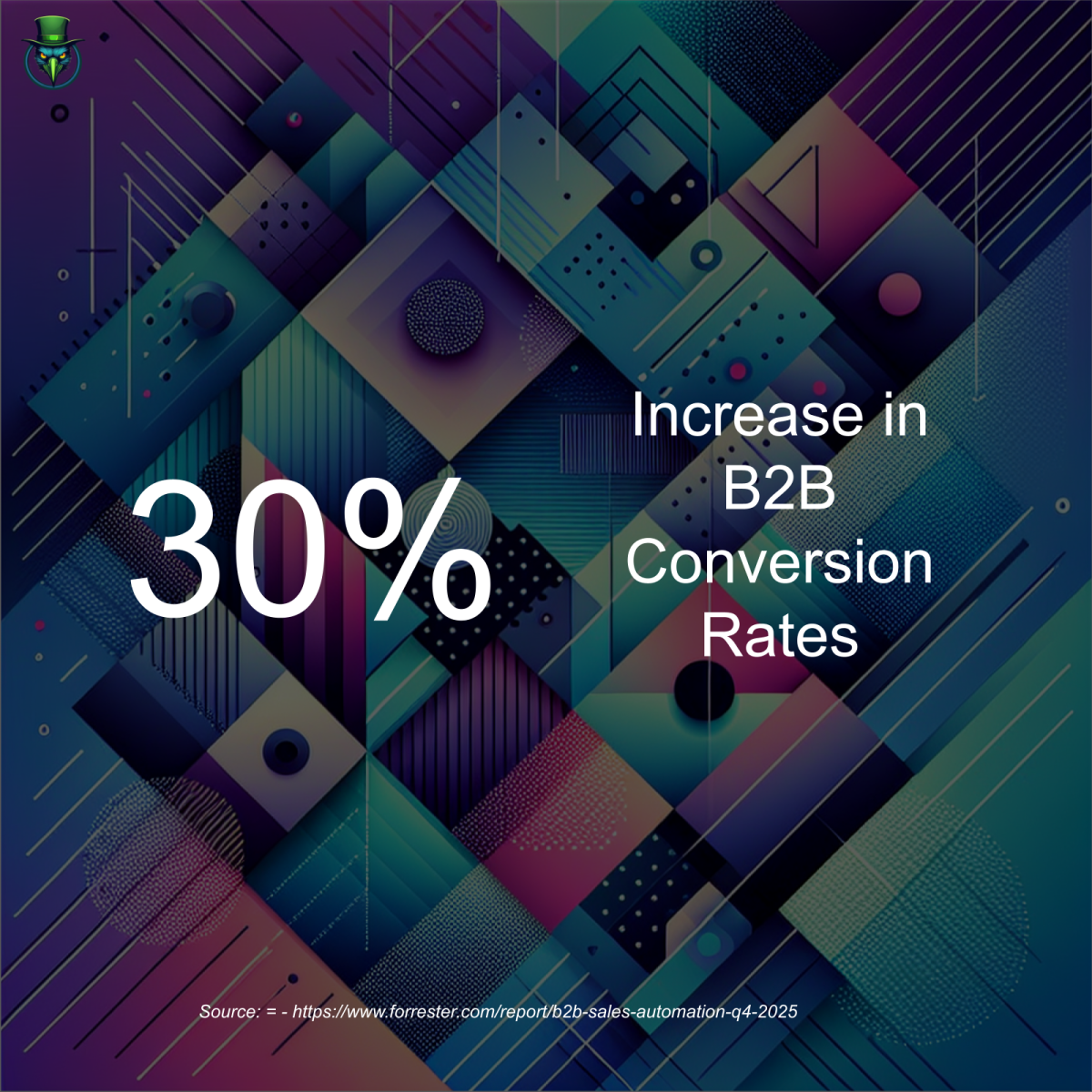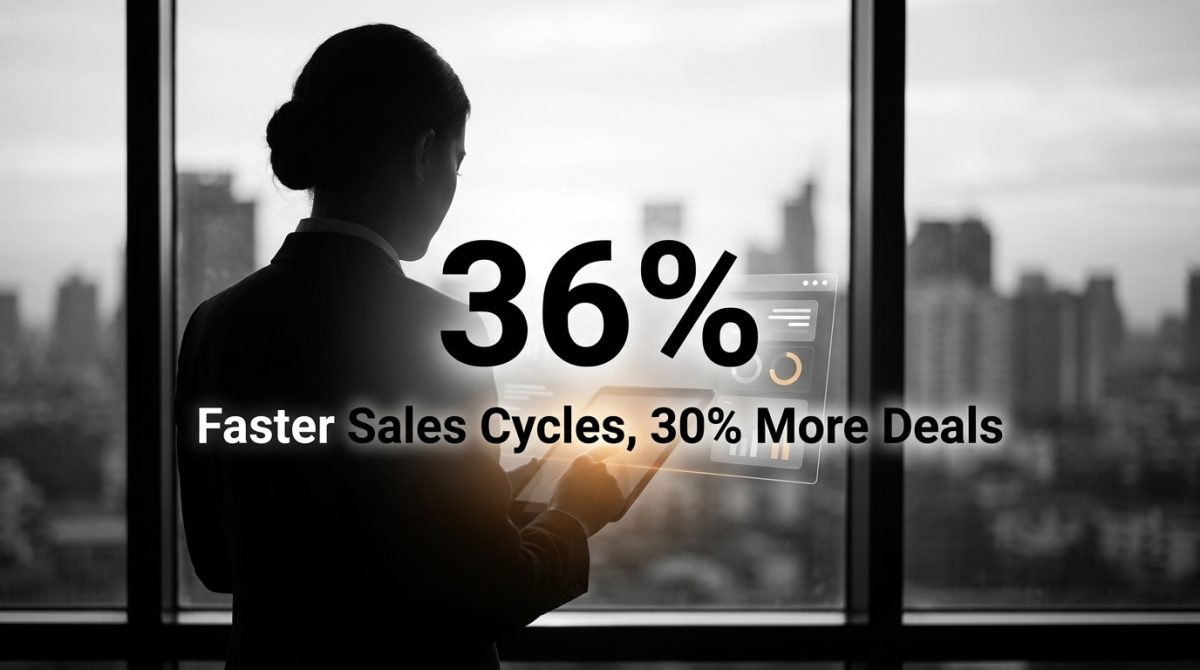
B2B sales teams using AI automation in Q1 2026 closed deals 36% faster and signed 30% more contracts than teams that stuck with manual tools, according to Ormidium Tech. AI-driven Revenue Operations (RevOps) is the new standard.
36% Faster Sales Cycles: The Breakaway Stat Changing B2B RevOps
If someone told you that using the right software could cut your sales cycle by over a third, would you believe them? Most leaders did not—until the latest Q1 2026 data dropped.
Agentic AI, which means using AI agents that drive tasks across the whole sales process, is not science fiction. It just made B2B deals move 36% faster and sent close rates up 30% in just three months. This is not a prediction. It’s a spreadsheet-fact.
Every leader now faces two choices: automate or risk falling way behind.
Manual Sales Methods: Why They Cost You More Than Lost Deals
If your team is still using old playbooks, here’s what it’s really costing you. Teams that stick to manual research, copy-paste emails, and time-heavy tracking spend up to 34% more hours just finding and writing to leads. That’s time lost—and money burned.
Qobra found that AI agents now do prospect research and write emails in minutes, not hours. Sellers using these tools build 31% bigger pipelines per rep, cut costs up to 70%, and hit higher quotas, faster. Every extra day you spend on spreadsheets and inbox threads is a win for your competitor.
The world already changed. If you still measure team performance in “calls made” or manual meetings booked, you’re running with a flat tire.
Your pipeline isn’t leaking—it’s stuck. AI-driven teams now win deals before most others even send the first follow-up. Want proof? See what these numbers mean for your next quarter:
| Metric | Manual Teams Q1 2026 | AI Automation Teams Q1 2026 |
|---|---|---|
| Prospect Research Time Per Lead | 40 min | 26 min |
| Email Drafting Time Per Lead | 25 min | 16 min |
| Pipeline Per Rep (Deals) | 42 | 55 |
| Sales Cycle Length | 54 days | 34 days |
| Deals Closed Q1 | 30 | 39 |
If you’re still stuck with manual steps, you’re working at yesterday’s speed—but today’s quota.
The AI Shift: What Winners in RevOps Did Before Everyone Else
The numbers hit hard. But they don’t tell you why some teams blew past their old targets. Here’s the big shift: High-performing RevOps teams stopped seeing AI as a “gimmick” and made it the core of every deal step.
This meant more than just adding an AI chatbot. Teams rewired their flows. They stacked Agentic AI with human reps. Each handled what they do best: AI handled speed and data; reps focused on trust and closing.
Sync GTM found that 87% of high-growth sales teams now run with AI “orchestration”—meaning AI tools don’t just support, they actually direct actions across emails, calls, and meetings. These teams saw 36% higher revenue growth, 28% better profit margins, and crushed forecast accuracy.
The message is simple: those who made the switch first now control more pipeline, better deals, and clean data for every forecast. Their competitors are left guessing.
Switching to Agentic AI and AI-driven RevOps wasn’t about cool tech. It was about finally getting numbers that pull ahead of your market.
AI Automation Proof Points: From Productivity to Profit
So the data is clear: AI tools work. But where do they actually make a difference—and did any tools fall flat? Here’s what happened inside real B2B sales teams in Q1 2026.
What is Agentic AI in B2B Sales?
Agentic AI in sales means smart “agents” handle set tasks—prospect research, email writing, scheduling—so humans can focus on closing deals. Every agent works on its job, pulling from CRM data and web signals. For example: Instead of a rep spending 2 hours searching LinkedIn, an AI agent fills in the data in seconds.
How much faster do RevOps teams move with AI sales automation?
RevOps teams using full-funnel AI closed new business 36% faster and increased deal closures by 30%, based on Q1 2026 reports from Ormidium Tech. In one quarter, that meant reps got 9 more closed deals on average.
How do AI-powered RevOps tools cut sales costs in B2B?
AI sales teams cut cost-per-sale by up to 70%, mainly by automating research, follow-ups, and admin, according to Qobra. That’s $7 saved for every $10 spent by a manual team.
36% Faster Deals: How Agentic AI Sales Teams Crush B2B Quotas in 2026 breaks down the process steps from lead to close and which platforms teams used most.
| AI Tool or Benefit | Impact in Q1 2026 | Source |
|---|---|---|
| AI Prospect Research | Time spent down 34% | Qobra |
| AI Email Drafting | Time saved 36% | Qobra |
| Pipeline Per Rep | Up by 31% | Qobra |
| Cost Per Sale | Down up to 70% | Qobra |
| Forecast Accuracy | Up to 96% | Forecast Accuracy: Agentic AI Sales Shift |
| Revenue Growth (AI Orchestration) | 36% higher | Sync GTM |
| Profit Margins | 28% higher | Sync GTM |
| Deal Closures | Up by 30% | Ormidium Tech |
One self-contained fact: “Agentic AI sales automation raised B2B deal closures by 30% and shortened sales cycles by 36%, according to Ormidium Tech in Q1 2026.”
Want forecast accuracy proof? Teams using hybrid AI-human models for forecasting reached 96% accuracy, as shown in Hybrid AI Models Boost B2B Sales Forecasting Accuracy to 96% in Q1 2026.
In 2026, Agentic AI teams don’t just move faster—they keep more revenue, close more deals, and plan better for the next quarter.
Your Step-By-Step AI Automation Playbook for B2B Sales in 2026
The question is, how do you take these results and put them to work for your own team? Here’s how top RevOps leaders are running the table:
- Audit Your Sales Workflows: Find every manual task. List prospect research, email writing, CRM updates, and scheduling. Each is a spot for AI agents.
- Choose a Full-Funnel AI Platform: Use tools proven to raise pipeline and close rates. Look for “Agentic AI” features—dedicated agents per workflow, not one-size bots.
- Blend Human Skills Where it Matters: Get AI to prep data, human reps to hold late-stage calls and build trust. Teach reps to spot when AI needs a hand.
- Automate Data Cleaning and Forecasts: Let AI handle all data updates, pipeline roll-ups, and forecasting. Don’t let your team burn hours fixing CRM mistakes.
- Track, Measure, Improve: Run side-by-side tests: AI-automated versus manual. Use hard numbers: win rates, cost per deal, cycle time. Replace weak old steps—fast.
The 36% Shortcut: How AI-Human Hybrid Teams Are Changing B2B Sales Hiring and Performance in 2026 shows where to shift human effort for the best ROI.
30% More Wins: Agentic AI Automation Drives Record B2B Sales Results in 2026 breaks down quota impact down to comp plans and hiring needs.
Set one rule: If a task repeats weekly, it belongs to AI. That gives your reps more time to close—and your CFO a reason to smile.
The Stakes: Act Now or Get Squeezed Out
Now the final line is clear. If you wait even one more quarter, you’re at real risk. The AI-driven teams are not just beating you by 10% or 15%. They’re outselling by 30% in deal volume and closing nearly two weeks faster per cycle.
In plain English: If your team ignores AI automation in Q2 2026, your pipeline will shrink. Your best reps will quit for faster teams. Your deal losses in twelve months could reach into the millions.
Flip the story with one change. Put Agentic AI at the center, and you could see 36% higher sales cycle speed, bigger deal lists, and forecasting you can finally trust. The only risk now is being the last holdout.
For every day you delay, the gap widens—by two deals, three forecasts, or a quarter’s worth of sales bonuses.
Ready for the Breakout Year?
Agentic AI is not extra—it is now the price of staying in the B2B sales race. The teams that will lead Q2 and Q3 are those bold enough to drop manual steps, automate what drags, and trust the new numbers.
No one remembers who kept pace. The market remembers who pulled ahead by 36%.
FAQ
What does “Agentic AI” mean for B2B sales teams?
Agentic AI means using smart agents to handle repeat tasks in sales—prospecting, emailing, and scheduling—so humans focus on building trust and closing deals. It splits the workload so each step moves faster and costs less.
How much time do AI tools save in sales research and admin each week?
AI sales tools now save up to 34% of the time spent on research and 36% on email draft work, freeing up hours for reps to work real deals.
What’s the average cost savings from automating B2B sales workflows?
Teams using AI for prospecting and admin cut costs up to 70%, according to Qobra’s Q1 2026 study. That’s $70 saved for every $100 spent by non-AI teams.
How accurate are AI-powered sales forecasts now?
Hybrid AI plus human models hit up to 96% forecast accuracy in Q1 2026, according to HatHawk’s reporting, crushing manual-only rates.
Where should RevOps leaders start to see fast results?
Start by automating research, emails, and scheduling—the steps that repeat most. Shift humans to late-stage calls and closing. The savings and bigger pipeline start in the first month.