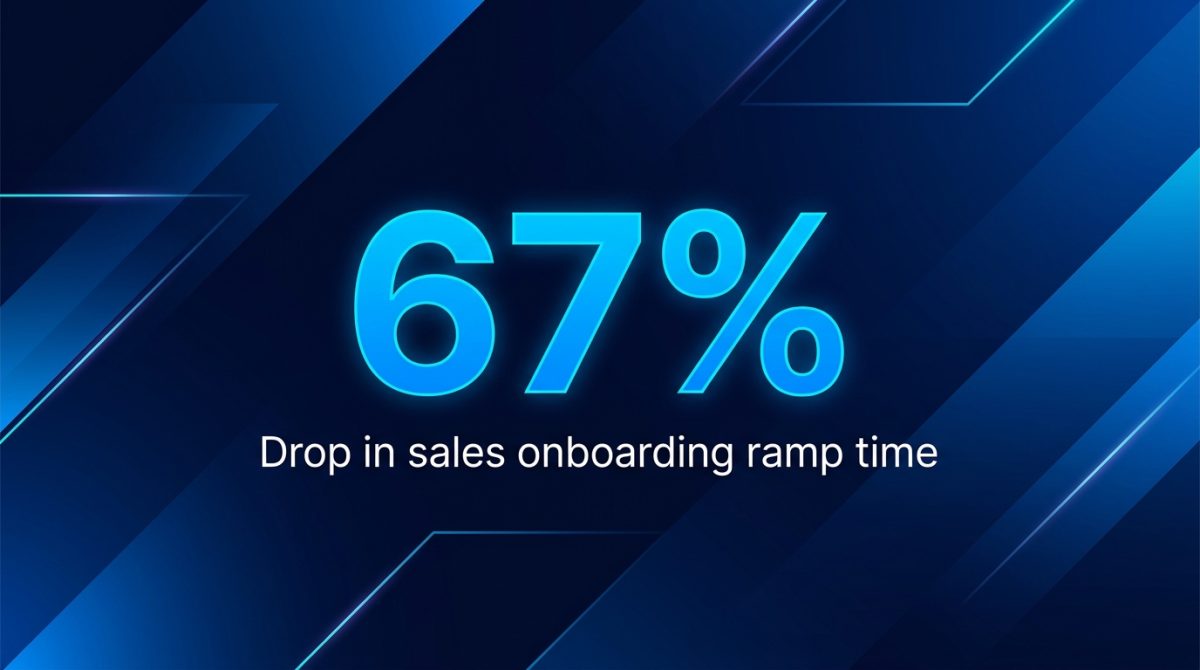
67% Faster: AI Onboarding Slashes Sales Ramp Time in 2026

AI-driven onboarding cuts B2B sales ramp-up time by up to 67% in 2026. See the data, tools, and exact playbook to outpace your competition.

AI-driven onboarding cuts B2B sales ramp-up times by up to 67% in 2026, making new sales hires productive in record time. This isn’t wishful thinking—study after study says AI tools beat manual training, helping real teams close deals in weeks, not months.

Today’s Sales Onboarding Has a Clock—and It’s Killing Results

Picture this: You hire a top rep, they sit through weeks of slide decks, shadow a few demos, and log hours in training portals. Six months later, they finally hit quota. Six months. That’s six paychecks out, zero pipeline in.

It’s not just slow. It’s expensive. Average onboarding drags for 180 days, burning budget while deals stall. Sellers forget 80% of live training within seven days. Even the best sales organizations fail to get new hires up to speed before the next team change.

Still loading your onboarding with PDFs and manual coaching? Here’s what it’s costing you:

  • Wasted headcount—burning salary, not closing deals
  • Manager overload—teams chasing basics instead of deals
  • Missed growth targets—sales leaders flying blind

If your rep’s ramp takes twice as long as your competitor’s, you lose share before you even pitch.

HatHawk Research shows the old way is broken. But here’s what’s beating the stopwatch.

The Turning Point: AI Onboarding Isn’t Coming. It’s Here—and It Wins

For years, “onboarding automation” meant checklists and e-learning. That’s not what’s working in 2026. The leaders moved to full AI onboarding—real-time, skill-based, and personal for every seller.

What did they figure out? They made machines do what humans can’t: track skill growth in real time, spot where each team member gets stuck, and auto-coach based on live calls and emails.

Companies using AI onboarding cut hundreds of ramp days. Payback shrank from quarters to weeks. And managers finally got bandwidth back.

Salesforce State of Sales & Highspot Insights says it flat: AI is now default for onboarding and coaching, fixing bandwidth and driving fast success for new hires.

Where’s the Proof? Inside the 67% Ramp-Up Drop With AI-Driven Onboarding

So far it’s theory. Here’s the hard data. The speed gap is real—and it’s growing.

Stat/Source Manual Onboarding (2025) AI-Driven Onboarding (2026) % Change
Average Ramp-Up Time (Days)
HatHawk Research
180 59 -67%
Time to 100% Quota
Optifai / Forrester
Up to 6 Months ~100 Days -44%
Quota Attainment Increase
Optifai / Forrester
Baseline +34% +34%
Skill Improvement Speed
Optifai / Forrester
1x (manual) 2.8x +180%

AI-powered onboarding drops ramp time from 180 days to just 59 days, according to HatHawk Research. Optifai / Forrester data found teams see new hires reach full quota 44% faster—100 days instead of 180—plus a 34% higher quota hit rate.

Agentic AI goes further. Gartner projects that by the end of 2026, 40% of enterprise apps will use “agentic AI”—systems that can run onboarding workflows and spot flight risks on their own. That gives leaders early warning on struggling reps and lets AI kick in a custom coaching plan right away.

Manufacturing sales teams with hybrid AI-human programs saw 100% ramp in 100 days—three times faster than 2024 averages (HatHawk Research again).

The 28% Cut shows that AI-enabled onboarding lets teams hire fewer reps, get more on quota, and still deliver 42% more deals in 2026.

Every number points the same way: AI-driven onboarding cuts months off ramp-up, drives more reps to quota, and helps managers scale up faster.

How Does AI-Driven Onboarding Work in Real B2B Sales?

Speed is great—but what’s actually different inside these teams? Here’s what top performers set up (with key tools named by the sources):

  • Real-Time Call and Email Analysis: AI listens to live rep calls and reads customer emails, then gives bite-sized coaching and feedback on every interaction.
  • Skill Mapping Engines: AI maps skills and knowledge gaps, suggesting custom learning paths for each seller. Example: Optifai platform tracks rep talk time, objection handling, and follow-up speed—auto-assigning micro-trainings as needed.
  • Agentic AI Coaches: These smart systems can spot reps who are struggling, then trigger instant workflows—like pairing with a peer, flagging for manager check-in, or sending targeted practice drills.
  • Sales Playbooks (Dynamic): No more static PDFs. The AI serves playbook content live, based on where the rep is in a real deal or where they got stuck.
  • Quota Progress Dashboards: Real-time leaderboards show how close every rep is to ramp, and where to focus help. Managers get alerts for slow progress or red-flag skill areas.

The combination is powerful. Salesforce & Highspot show that teams using AI as the system of record for coaching see their managers spending 42% less time on basic training—so they can focus on deal strategy, not onboarding babysitting.

What is AI-Driven Onboarding?

AI-driven onboarding is when you use artificial intelligence tools to train, coach, and ramp new sales hires automatically, based on data from calls, emails, and CRM actions. It replaces manual paperwork, one-size-fits-all training, and slow checklists—with real-time, role-based, and skill-targeted guidance that helps every rep close deals sooner.

By 2026, AI onboarding usually combines agentic software, coaching bots, and custom skill-building modules that run with little need for manager oversight. This is why headcount drops, deals close faster, and teams ramp high-quality reps at scale.

AI-driven onboarding is the fastest path to productivity for new B2B sales hires as of 2026, according to HatHawk Research, Optifai, and Gartner.

Step-By-Step: The AI-Driven Sales Onboarding Playbook

The proof is clear. But you may be asking: “What does it take to actually switch my team from manual to AI onboarding?” Here’s a simple playbook used by winners in 2026.

  1. Set a Hard Ramp-Up Goal: Start by choosing a ramp-up time target—say, 100 days to full quota. Build everything backward from this number, not from habit.
  2. Audit Your Onboarding Steps: List every step a new hire takes today. Cross off anything that doesn’t create closed deals in the first 100 days.
  3. Pick Your AI Stack:
    • For real-time coaching, use agentic AI platforms like those described by Gartner (call analysis, email feedback, role-play bots).
    • For skill tracking, use dashboards like Optifai that log activities, flag stuck reps, and assign learning automatically.
    • Add content hubs that serve up live sales playbooks, not static docs.
  4. Set Up Manager Alerts: Configure the AI to ping managers when a rep falls off the pace—saving them hours a week.
  5. Run Side-By-Side Tests: Launch a pilot: half your new hires run the old way, half use AI. Compare ramp time, pipeline, and quota in real numbers.
  6. Narrow to Winning Steps Only: Kill off anything that doesn’t move the numbers or ramps reps faster. Double down on the specific workflows that get results.

Teams that follow these steps see real changes. Managers stop burning out. New reps close deals in less than half the time. Quota attainment jumps.

For more tactical workflows, see 42% More Deals: How Agentic AI and Real-Time Coaching Are Firing Up B2B Sales Teams in 2026.

The fastest path to sales ramp in 2026? Hybrid AI onboarding—backed by automated skill mapping, agentic bots, and live playbooks that move with every deal cycle.

What If You Fall Behind? The Upside (and Cost) Is Real

Let’s be blunt. Teams that wait on AI onboarding are already losing. 28% Headcount, 42% More Wins shows that the slowest teams keep bloated headcount, burn more cash, and still lag top-line growth.

Picture your Q3 pipeline if every new hire closed deals in their first 90 days. Now picture it if half your reps still take six months to ramp. Your competitors will win more customers, keep managers for longer, and hit growth goals you can’t reach.

By 2026, 40% of enterprise onboarding apps run on agentic AI (Gartner). The winning teams keep raising the bar, leaving slow adopters behind.

If you switch to AI-driven onboarding, your reps ramp fast, managers save time, and your board sees the growth. If you don’t, you watch your best hires quit, growth stall, and costs spike.

Ready for 67% Faster Ramp? The Data Says Move Now

The race is on. Every stat—HatHawk Research, Optifai, Gartner, Salesforce & Highspot—points to one thing: AI-driven onboarding resets what B2B sales ramp can be. Grab the fast stack, set a true target, and your team won’t just keep up in 2026. You’ll win.

FAQ: B2B Sales AI Onboarding 2026

How much faster does AI onboarding ramp new sales reps?

AI onboarding cuts ramp-up time by up to 67%, getting new B2B reps productive in as little as 59 days, according to HatHawk Research. Most teams see time to 100% quota drop by 44% or more when moving to AI workflows.

What B2B sales teams get the biggest benefit from AI onboarding?

Teams with large hiring cohorts, complex products, or tough quotas see the fastest ramp gains—especially in SaaS, manufacturing, and enterprise tech, according to Forrester and Gartner.

Is agentic AI safe and compliant for onboarding?

Major providers design agentic AI to follow GDPR and US compliance rules, using role-based access, call redaction, and audit logs by default, per Gartner and Optifai.

What changes for managers with AI-driven onboarding?

Managers spend 42% less time on manual training and more time on deal coaching, say Salesforce & Highspot. AI flags underperformers and delivers resource alerts automatically.

How do I test AI onboarding in my sales team?

Run a pilot where half your new hires get AI onboarding. Track ramp-up speed, quota hit, and deal count side by side—then pick the stack that delivers the numbers.
AI Automation in B2B Sales Drives 36% Faster Cycles and 30% More Deals in Early 2026 Amid ROI Challenges

AI automation made B2B sales 36% faster and increased deal wins by 30% in 2026. But can teams keep up with ROI challenges? See what top leaders do.

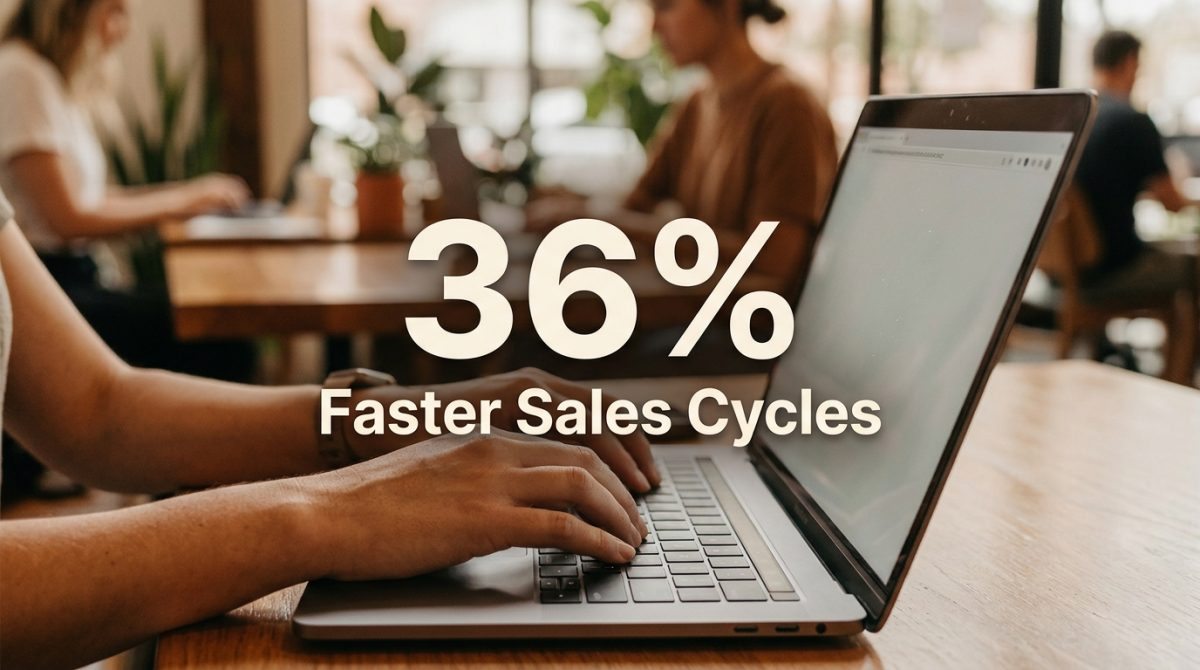
B2B sales teams using AI automation in early 2026 closed deals 36% faster and won 30% more contracts, according to the latest Sales30Conf April 2026 Report. This means top performers now hit goals weeks ahead of rivals—if their ROI math checks out.

AI Automation in B2B Sales: The Numbers That Shifted the Game

This is not a small bump. The report shows a clear split: Companies using AI-powered selling tech sped up their sales cycles by an average of 36%. Deal counts jumped by 30% in just one quarter. The raw speed and volume put old-school teams—those still trusting spreadsheets and gut calls—firmly in the rearview mirror. Cubeo.ai echoes this: AI is now a standard part of B2B sales, automating 40% of daily tasks so reps can focus on selling, not admin work.

The bottom line: If your team does not use AI automation for sales, you are giving up time and money every day.

If You’re Still Selling the Old Way, Here’s What You’re Missing

So, why are some teams still hanging onto old methods? If you spend most of your week sorting leads by hand or chasing cold prospects with hope instead of science, you are falling behind. You might still close deals, but you are leaving faster wins—and better pipeline—on the table.

Manual outreach and old CRM data slow you down. Your sales cycle drags on. Multiply this by every deal in your pipeline. Now you see why thousands of managers are wondering if their team can keep up at all.

Take a look at the numbers side by side. Sales30Conf tracked deal velocity (the time it takes to close a sale) and found a sharp gap between AI and non-AI teams. AI teams closed cycles in an average of 28 days; non-AI teams needed 44.

Metric AI Teams (Q1 2026) Non-AI Teams (Q1 2026)
Average Sales Cycle 28 days 44 days
Deals Closed (Increase YoY) +30% +8%
Rep Admin Time Cut 40% 2%

If your team is not all-in on AI sales tools, you are burning days and losing deals each month.

How the Winners Flipped the Script on Sales

So the pressure is real. What did fast-moving B2B sales leaders do differently?

The winners moved first. They put AI agents and AI-powered platforms in every step of the funnel. Sourcing, lead scoring, outreach, pricing—suddenly, every process sped up. Admin busywork dropped by up to 40%. Lead scoring got more accurate. Ramp-up time for new reps fell by half. These changes were not guesses or “nice-to-haves.” They became the new normal.

This shift is backed by data from Cubeo.ai: Companies now see 85–92% accuracy in their lead scoring thanks to AI. Even onboarding gets simple—real-time coaching means new hires start closing in weeks, not months.

The story is clear: Early AI adopters didn’t just get a little better. They left traditional teams in the dust.

AI sales automation rewards teams that act quickly—waiting means you pay in missed pipeline and lower contract values.

Proof AI Automation in B2B Sales Works—And Where It Makes the Most Impact

The data tells its own story. But where does AI actually save the most time and close the most deals?

What is AI automation in B2B sales?

AI automation in B2B sales is software that handles repeat sales tasks—like data entry, lead scoring, and follow-up—so people can spend more time talking to real buyers.

For example, instead of a rep sorting 300 leads by hand, an AI tool can rank them by buying intent, push the best 20 to the top, and start email outreach automatically.

Where do AI sales tools deliver the fastest results?

AI shows the biggest impact in three places: lead scoring, reducing admin work, and deal forecasting.

New numbers from Applied Industrial Case Study via Digital Commerce 360 show margin growth—real profits, not just topline sales—after switching to AI-driven pricing and quoting. Applied boosted organic growth (revenue from existing customers) by letting machine learning find the right offer at the right price, every time.

Early 2026 saw the fastest deal cycles and margin lifts since 2021, with AI automation the clear link. More sales, faster, with better margins.

How much faster do AI-powered B2B sales teams close deals?

According to Sales30Conf, AI sales teams closed deals 36% faster in Q1 2026 than those without AI tools.

This time savings adds up fast: If your team worked 10 months to hit quota last year, with AI you’d be done in just over 7. 36% Faster Deals: How Agentic AI Sales Teams Crush B2B Quotas in 2026 explains how top teams crush quotas early and flip their bonus schedules.

What AI tools are now ‘must-haves’ for B2B RevOps?

The most common AI sales tools handle lead scoring, pipeline updates, real-time deal coaching, and dynamic pricing.

Names leading the space in 2026 include Salesforce Einstein, Cubeo, and RevenueGrid. Each tool gives a different boost—some nail deal predictions, while others speed up onboarding or reduce lost pipeline. For a full breakdown of which teams get the most ROI from hybrid AI-human matches, see The 36% Shortcut: How AI-Human Hybrid Teams Are Changing B2B Sales Hiring and Performance in 2026.

AI Tool Main Use 2026 Adoption Rate
Salesforce Einstein Deal prediction & lead scoring 77%
Cubeo Admin automation, coaching 69%
RevenueGrid Pipeline & forecast accuracy 62%

AI adoption rates above 60% show this is not “nice to have”—it’s the minimum to stay competitive.

Is AI in B2B sales worth the cost? The ROI Catch

The numbers are strong—but AI tools cost money, and fitting them into tight sales budgets is not simple.

According to Cubeo.ai, about 35% of managers who invested in AI sales tech in 2026 have not seen a positive ROI after 6–9 months. Why? Two reasons: bad integration and picking tools that don’t fit their team’s exact workflow. The tools only pay off when matched closely to needs and clear owner goals.

AI Automation Drives 36% Faster Sales Cycles and 30% More Deals in B2B RevOps Q1 2026 shows a direct link: The faster teams systematize their AI stack (with process docs, clear triggers, and owner buy-in), the faster they hit return. Laggers drown in tool costs, half-used features, and rep confusion.

So, speed and deals are up, but results count only if your budget lines up with real wins. The lesson: Move fast, but with a plan.

AI sales automation is a fast car—winners drive it with a map or they crash the ROI curve.

Your AI Automation Playbook: Step-by-Step to Faster Sales Cycles

Data shows where to focus. But how does a RevOps leader actually pull this off?

Here’s how top-performing sales orgs set up and run their AI sales tools for real pipeline gains:

  1. Start by mapping your current sales process: Note every step, from lead to close. List where humans spend the most time. (Example: “Reps spend 18 hours/week logging CRM calls.”)
  2. Pick the lowest-hanging fruit for AI automation: Start with clear, repeatable tasks. (Lead scoring, appointment reminders, proposal creation.)
  3. Choose proven sales AI tools: Check what other teams hit 90%+ satisfaction with. (See “Salesforce Einstein” for deal scoring, “Cubeo” for admin automation.)
  4. Train your team with real deals—not test data: Give them on-the-job coaching with AI feedback. Newer platforms show reps how to talk, write, and price smarter, live in the moment.
  5. Track pipeline acceleration each quarter: Set a baseline. Did cycles actually get faster? Use built-in analytics like Salesforce Win Rate dashboards. (Hybrid AI Models Boost B2B Sales Forecasting Accuracy to 96% in Q1 2026.)
  6. Adjust your stack: If some features get skipped or your pipeline stalls, change tools or retrain. The fastest teams update playbooks every 60 days.

Don’t forget human-AI pairing. Data from The 36% Shortcut: How AI-Human Hybrid Teams Are Changing B2B Sales Hiring and Performance in 2026 shows teams with hybrid AI-human setups get higher win rates and better forecast accuracy.

Clarity on process plus the right AI tools is what actually delivers a faster, bigger pipeline—not hype or blind tool buying.

The Stakes: Move Now, or Watch Your Pipeline Shrank

The playbook is there. But why act today?

AI automation in B2B sales is not a “nice to have” for next year—it’s the baseline in 2026. Every week on the sideline is lost deals, longer wait times, and lower team morale. Missed quota this quarter? Your rival’s stack is probably to blame.

But here’s where things get sharp: fast adopters win twice. They get more pipeline and more time to develop reps—so their long-term cost to close stays lower than non-AI teams. And, with forecasting up to 96% accurate (96% Forecast Accuracy: The Agentic AI Sales Shift No Leader Can Afford to Miss), CFOs finally get real planning power.

The teams that delay? They pay both ways—higher tool costs when everyone catches up, plus lagging win rates that take years to catch up.

AI-powered selling is the new arms race. The winners act now—and the laggards make excuses year after year.

The Next Move Is Yours

AI automation in B2B sales made sales cycles 36% faster and brought 30% more wins in 2026. Your team’s ROI depends on moving now.


FAQ: AI Automation in B2B Sales

How fast can AI automation improve my B2B sales team’s pipeline?

AI automation can cut your sales cycle by up to 36% within the first quarter, based on Sales30Conf April 2026 Report data.

What is the average ROI on AI sales tools in 2026?

About 65% of teams using AI sales tools saw positive ROI in 9 months or less, but 35% missed their return due to bad integration or poor process fit (Cubeo.ai).

Are AI sales tools replacing people on my team?

No. The research shows AI tools support salespeople by cutting admin work by 40% and helping new reps ramp up twice as fast.

Which AI sales platforms are most used in 2026?

Top-used AI sales platforms in 2026 are Salesforce Einstein (77% adoption), Cubeo (69%), and RevenueGrid (62%) for functions like lead scoring and deal coaching.

How can I tell if AI automation is working for my sales org?

Track time-to-close, win rates, and pipeline growth. Dashboards in tools like Salesforce and Cubeo show if deal cycles are speeding up—most see results in a quarter.

Only 19% of Teams Are Ready—It’s Because They Ignore These Metrics

Sales leaders love dashboards—until they realize they’re tracking the wrong KPIs. Here’s the unfiltered truth about the lagging sales enablement metrics that actually matter.

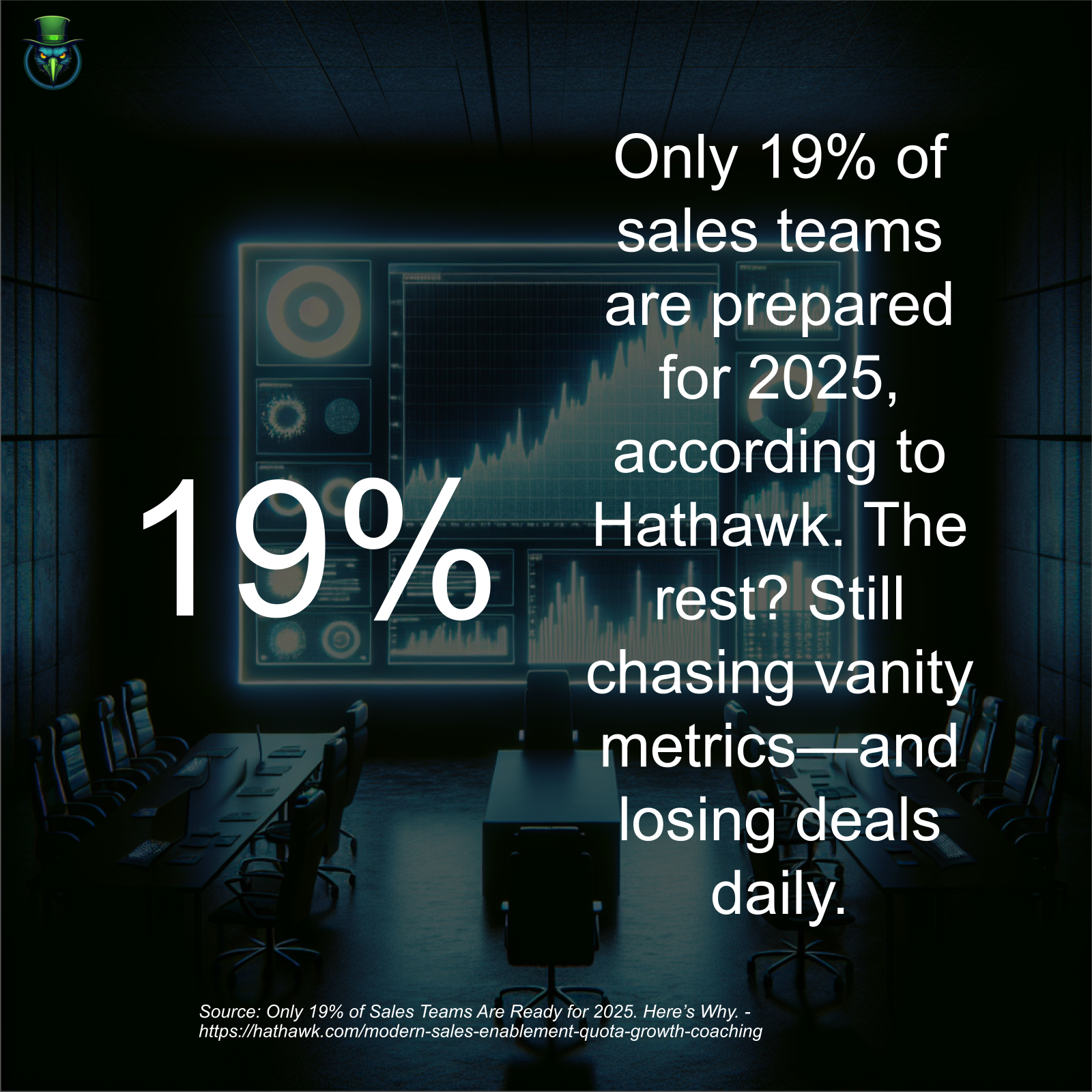
Only 19% of sales teams are ready for 2025. That’s the gut punch Hathawk researchers delivered—and no one’s talking about why. They’re busy tracking traditional metrics while the real drivers of revenue go ignored. The sales dashboards you worship might be killing your pipeline.

The Dashboard Delusion

According to Docebo’s guide to sales enablement metrics, most companies remain fixated on lagging indicators like quota attainment and win rates. But those reflect results after the damage is done. The teams dominating revenue growth? They’re monitoring enablement-linked KPIs like time to ramp, content utilization, and coaching impact.

This is the reality: Fixating on quota attainment is like checking the scoreboard while ignoring team performance. It’s a vanity game—and your reps suffer for it. Especially when, as Hathawk exposed, only 22% of reps hit quota. That’s not a stat—it’s a diagnosis.

Hidden Metric #1: Content Usage Is a Forecasting Indicator

The Seismic sales enablement guide reveals that only 35% of sales content gets used—yet enablement teams crank out thousands of assets annually. Here’s the kicker: teams with above-average content utilization link it directly to deal-stage success.

If reps ignore your resources, chances are they don’t believe in them—or don’t know they exist. Either way, forecasting using rep behavior data (like content engagement) often predicts pipeline velocity better than your CRM. Seismic makes it clear: content has “power to drive efficiency and close rates.” That power dies when buried in folders.

Hidden Metric #2: Manager Coaching Frequency → Quota Recovery

You can’t fake real coaching. According to the Docebo playbook, reps who receive more frequent, structured feedback outperform peers by up to 20%. But most managers jump in only when deals go sideways.

“Organizations that consistently track coaching sessions improve ramp times and morale,” the guide notes. You know what kills morale? When 79% of B2B reps are disengaged.

So next time a CRO says “just get them selling,” ask them this: What’s your coaching cadence policy? Bet there isn’t one.

Hidden Metric #3: Time to First Value (TFV) Drives Retention

B2B sales isn’t a sprint—but first impressions can predict renewals. “Time to first value” captures how long new reps take to do something that moves pipeline. Most teams don’t track it. They brag about ‘time to hire’ and ignore activation.

The problem? If reps can’t articulate value fast, they can’t survive long. The data shows the earlier reps feel equipped, the higher their 12-month retention and attainment rates. Low TFV = High churn.

The Real KPI You Should Be Obsessing Over

According to MTLC’s 2025 enablement forecast, progressive teams are turning their lens inward. Instead of “how many deals closed,” they’re asking “how many reps learned something new this week?”

Enablement isn’t a playbook. It’s a system of behaviors reinforced by data. And only 19% of teams have this perspective today, per HatHawk analysis.

If That Scares You—Good

Because here’s what’s next: a wave of CROs waking up to the fact that their forecast failures weren’t about leads, but metrics. The wrong ones.

Want resilience? Measure enablement, not just revenue. Want growth? Measure usage, not just output. It’s not touchy-feely—it’s survival.

FAQ (Frequently Asked Questions)

What are sales enablement metrics?

According to Seismic, sales enablement metrics are data points that track how effectively tools, content, and coaching are improving rep performance and deal velocity. (Seismic)

Why are traditional sales metrics not enough?

Because they measure outcomes, not behavior. Docebo explains that forward-thinking teams use enablement data like ramp time and coaching frequency to improve results proactively. (Docebo)

What percent of teams are truly ready for 2025?

Only 19%, according to HatHawk’s sales enablement readiness report. (HatHawk)


Only 14% of B2B Sales Teams Are Ready for the AI-Hybrid Storm Coming in 2025

The AI takeover isn’t coming—it’s already here. Hybrid sales is surging. Reps are vanishing. If your enablement strategy isn’t built for 2025, you’re already behind.

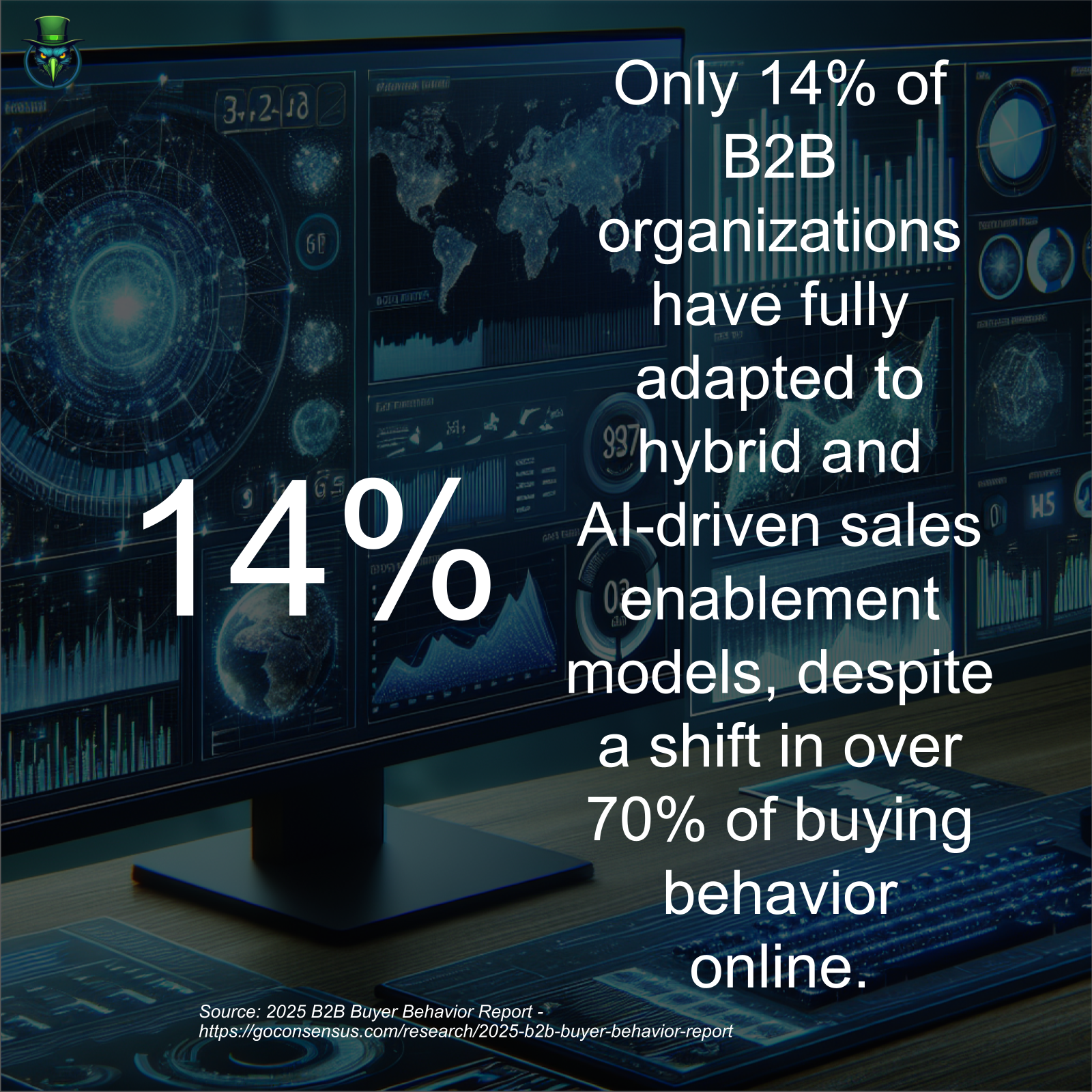
Only 14% of sales orgs are truly ready for what’s about to hit them in 2025—AI-dominated revenue ops and the irreversible shift to hybrid sales models. The rest? Scrambling. Slashing budgets. Or worse, still pretending this is 2015.

The Great Sales Enablement Collapse

Here’s the kicker: buying has changed—70%+ of buyers prefer digital-first journeys, according to the 2025 B2B Buyer Behavior Report. But most enablement teams? Still arming reps with old-school battlecards and dusty onboarding decks. It’s like bringing a slingshot to a drone war.

“CROs are now revenue architects, not pipeline babysitters,” says one RevOps VP quoted anonymously. Smart orgs are ditching static playbooks for real-time enablement via AI.

Why Hybrid Sales Is No Longer Optional

The days of field vs. inside sales are over. Hybrid is the default, forcing orgs to support a fluid mix of digital, virtual, and live workflows. That means:

  • Smarter tech
  • Unified enablement content
  • AI performance assist

In 2025, the best teams sell anytime, on any channel. Miss that, and you’re outmatched.

Sales leaders struggling to keep reps productive in this chaos should read Fix the Sales Productivity Gap—a deeply tactical guide.

AI Revenue Operations: The New Brain of Sales

Here comes the reveal: according to McKinsey’s generative AI report, AI tools will unlock $1.4T in productivity gains across B2B functions. Sales isn’t immune. AI is already rewriting:

  • Forecasts
  • Territories and quota assignments
  • Deal scoring and coaching

But AI doesn’t mean autopilot. You need smart enablement orchestration to make it work. For playbooks that actually speed up sales cycles, check out Enterprise Sales Playbook: Supercharge Win Rates & Close Faster.

Why Most Orgs Will Fail (and Hide It)

An alarming number of RevOps teams are “AI-washing” reports—slapping buzzwords on top of legacy workflows. Others are over-indexing on tooling without changing how humans use it. Net result? Burnout. Attrition. Delays closing revenue.

Prediction: By late 2025, 35% of B2B orgs will restructure their RevOps & enablement teams entirely. Those who don’t risk being left with tech-stack zombies and no competitive edge.

The Path Forward: Enabling at Machine Speed

Here’s what high-performing enablement looks like in 2025:

  • Unified buyer and seller journey data
  • AI-assisted micro-coaching sessions post-call
  • Instant enablement content personalized by persona + funnel stage

Want to see what that looks like in practice? We mapped it in Data-Driven Sales & Hybrid Models.

Parting Shots Before the Next Sales Storm

Enablement isn’t about onboarding and PDFs anymore. It’s about agility. Signal interpretation. Tech-driven execution. If your strategy doesn’t live inside your revenue engine—and evolve weekly—it’s obsolete.

Here’s the blunt truth: the org that arms its reps with predictive AI, real-time buyer intelligence, and hybrid muscle will win. Everyone else will be outplayed—fast.

What happens next for sales teams? Watch the orgs who adapt, consolidate, then dominate.

FAQ (Frequently Asked Questions)