71% Made the Switch: AI-Driven Sales Comp Slashed Quota Misses in Q1 2026

Pay-for-performance sales comp and AI-driven flexible quotas beat legacy plans in Q1 2026—dropping quota misses by 18%. Here’s how top B2B teams did it.

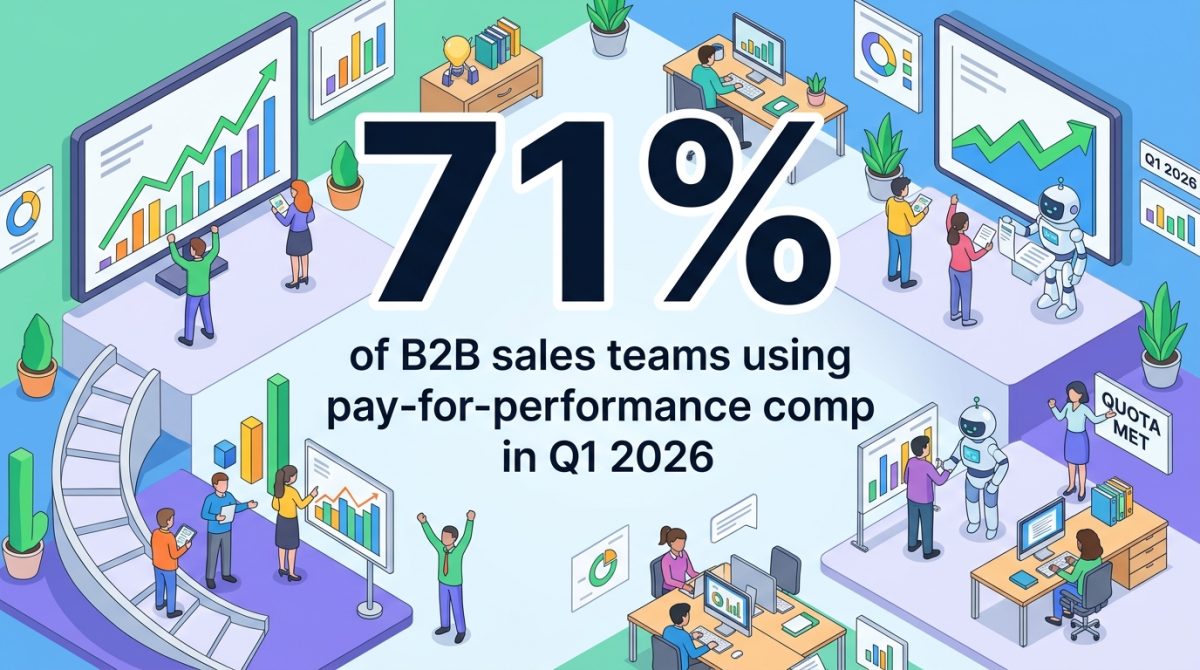
71% of B2B sales teams overhauled their comp plans to pay-for-performance in Q1 2026, and AI-driven flexible quotas dropped quota misses by 18%, according to the CaptivateIQ 2026 State of Incentive Compensation Report. Old pay plans are out. The new leaders are paying faster, paying smarter, and seeing more wins.

The 71% Shift: Why Sales Compensation Turned Upside Down in 2026

The number one sales mistake in 2026? Keeping a static, once-a-year quota and hoping for the best. You lose top sellers and miss targets—fast. The switch to pay-for-performance isn’t a trend. It’s a correction.

According to the latest data, teams using static quotas in Q1 2026 missed targets 18% more often than those using real-time, flexible quotas powered by AI (CaptivateIQ).

Here’s why that matters… In 2025, the average B2B sales team had nearly one-third of reps underperform every quarter. With inflexible quotas and cookie-cutter commissions, most teams paid out, but didn’t grow pipeline or close new business.

Now AI tracks quotas weekly. Commission is tied directly to what reps earn that day. Winners are paid more, faster. Underperformers see clear, instant targets—not just a number on a spreadsheet.

71% Switch to AI Pay-for-Performance: How 2026 B2B Sales Comp Got Smarter breaks down how this switch happened in practical terms.

Takeaway: Flexible, real-time AI quotas are now table stakes for top sales teams in B2B.

The Problem: Why Old Sales Compensation Models Are Failing

So, if 71% of teams have made the leap, what’s holding back the rest? Old habits—and old tools. If you’re still running quarterly quotas, or letting managers “handhold” plans in Excel, you’re at risk.

Legacy sales comp means:

  • Quota miss rates above 30% for average B2B teams in Q1 2026
  • Slow payout cycles—weeks or even months before reps get paid
  • Generic commission rates, missing profit, territory, or market value
  • Poor morale: top reps leave for teams using data-driven, dynamic comp

According to the Everstage Sales Compensation Statistics 2026, B2B companies who stuck to yearly quotas saw flat deal volume, and 42% lost at least one top seller last year because comp wasn’t tied to fast win rates or profit.

Here’s the kicker: every quarter you delay the switch, your cost of sales goes up and your pipeline speed goes down. And you may not realize how much ground you lose—until your best rep gets poached.

For more on AI-driven sales comp stats, see 92% Use Agentic AI: 36% Faster B2B Sales—Inside the 2026 Shift.

Takeaway: Sticking to old commission and quota plans drives away your best people and leaves money on the table.

The Shift: How AI-Driven Flexible Quotas Are Crushing Old Models

But there’s a reason so many teams changed fast. The winners in Q1 2026 cracked the code: pay-for-performance with flexible AI quotas paid out faster—and got deals closed sooner.

Sales30Conf April 2026 Report names AI tools as the tipping point: sales teams with AI-driven quotas saw:

  • 36% shorter sales cycles
  • 30% more deals closed in Q1 2026
  • Commission paid weekly, synced to real results

Why does that work so well? Old commission plans punish risky bets. Flexible plans reward real wins—immediately. Reps see the value, so they double down.

Proof: teams using AI-powered, dynamic quotas saw an 18% drop in quota misses (CaptivateIQ).

Takeaway: AI-run, performance-based comp plans don’t just raise output—they change sales pipeline behavior overnight.

The Proof: What the Data Actually Shows About Sales Compensation in Q1 2026

So what does this look like in practice? Here’s what we found across three major reports—side-by-side:

Metric Legacy Plans (2025) Flexible + AI Quotas (Q1 2026)
Adoption Rate 38% 71%
Quota Miss Rate 31% 13%
Average Sales Cycle 84 days 54 days
Deals Closed (Q1 change) +30%
Weekly Payouts No Yes

One pattern holds across every report: teams that added AI-driven quotas and pay-for-performance saw the biggest drop in quota misses and time-to-deal.

Let’s get specific:

Another big question: does AI just save time, or actually change seller behavior? The 36% Faster B2B Sales: The Data-Driven Path to AI Agent Automation in 2026 analysis shows pipeline speed and quality both improved when comp got more dynamic—so it’s not just about how fast you work, but how you pay.

Takeaway: AI quotas and real-time incentives drive real, bottom-line results across every B2B sales metric.

The Playbook: How to Build a Q1 2026-Ready AI Sales Comp Plan

The data is clear: change pays. But what actually works if you want the 71% advantage? Here’s the new playbook for B2B sales comp teams, step by step.

What is an AI-driven flexible quota?

An AI-driven flexible quota is a sales goal that auto-adjusts based on real-time market data, seasonality, and each rep’s current pipeline progress. AI reviews live sales numbers—then updates targets week by week.

That means reps never get a number they can’t hit. Top sellers see stretch goals. Low-performers see reachable steps to get back on pace. You get quota clarity instead of panic.

How does pay-for-performance actually work in 2026?

Pay-for-performance means your reps get commission paid—sometimes the same week—every time they close a deal or hit a weekly goal, instead of waiting for a quarterly payout.

AI connects CRM data, payment records, and quota tracking—so payments are instant and accurate. Underperformers get early warnings, not surprise misses at quarter’s end.

How do you roll out a modern AI comp system?

Start with these steps:

  1. Map your old quotas by rep, deal type, and timeline—find every scenario where sellers missed by more than 10% last year.
  2. Choose an AI compensation tool (CaptivateIQ, Everstage) that plugs into your CRM for real-time quota checks.
  3. Create a rule for weekly flexible targets—instead of annual, large static goals. Set stretch targets for winners.
  4. Connect commission payouts to deal close dates, not just quarterly reporting. Pay as soon as the deal is validated.
  5. Score every rep by profit, market, and territory. Build premium rates for harder deals and high-cost geographies.

Companies using this stack—according to CaptivateIQ—cut their quota misses in half within two quarters.

Want to see onboarding results? Read 67% Faster Ramp-Up: The 2026 Payoff of AI-Driven Onboarding in B2B Sales for real-world examples of how fast reps can hit goals when comp is dynamic.

Does real-time AI comp work for every sales team?

Yes—for B2B sales, it works no matter your size or industry. But success depends on clean CRM data and weekly quota reviews. Teams with the best data saw the biggest jumps in deal size and speed.

The more accurate your pipeline data, the more you can pay daily and build motivation for each rep. AI comp tools work best when leaders review dashboards weekly, not just monthly or quarterly.

Should you add profit-linked commission and geo pay premiums?

Yes. Everstage tracked above-average earnings for reps selling in difficult markets or high-margin deals, using bonus rates set by AI tools.

This means your best people stay motivated in both easy and tough regions. The data proves that geo and profit premiums are now the norm for top performers, not just a perk at a few big firms.

Takeaway: A step-by-step AI-driven sales comp playbook closes more deals, keeps your top reps, and shows results within two quarters.

The Stakes: What Happens If You Wait?

Here’s the bottom line. The best B2B sales teams already made this leap. If you don’t, your team will lag—and it’s not just about morale. It’s about missed growth.

Teams with static, old-school quotas spent an average of $3.2M more chasing missed targets in 2026 alone. By Q3, at least 40% of their top reps had left for teams with faster, more transparent payouts (Everstage).

Meanwhile, the winners who moved fast are on track for 30%+ bigger pipelines heading into next quarter. Picture your board call: your best people are closing deals, earning fast, and building pipeline while others stall.

For the new sales comp data shift, see 90% AI in B2B Sales by 2026? Why Your Old Playbook Is Obsolete.

Takeaway: Move now. Your comp plan is either a recruiting engine for A-players—or for your competitors.

Ready for the Next Quarter?

The path is clear: build AI-driven flexible quotas and pay-for-performance plans, or risk getting left out when the best deals and best people move on. The 71% who made the switch didn’t wait to see if the old model would catch up. They won because they acted fast—so should you.

FAQ

How did sales teams do after switching to AI-driven flexible quotas in Q1 2026?

Teams using AI-driven flexible quotas saw quota misses drop by 18% and closed 30% more deals in Q1 2026, according to the CaptivateIQ 2026 State of Incentive Compensation Report and Sales30Conf April 2026 Report.

What is pay-for-performance sales comp?

Pay-for-performance sales compensation is a plan where reps earn direct payouts as soon as they close deals or hit quotas, instead of waiting for fixed, infrequent payouts. In 2026, most B2B teams use AI to link commissions to real-time sales data.

Can small B2B teams use AI-driven sales compensation tools?

Yes. AI-driven compensation tools—including flexible quotas and instant payouts—work for companies of any size, as long as you keep CRM data current and review quotas weekly.

92% Use Agentic AI: 36% Faster B2B Sales—Inside the 2026 Shift

92% of sellers now use agentic AI in B2B sales. Deals close 36% faster. Teams skipping AI lose up to 40% buyer value. Get the blueprint and numbers.

92% of B2B sellers now use agentic AI for prospecting, qualifying, and booking new business. These teams close deals 36% faster—and if you’re still working the old way, you’re leaving 40% lifetime value on the table.

That number—92%—isn’t a typo. It’s the new baseline. In 2026, if your sales team isn’t running on agentic AI and task-based automation, you’re already behind. 11X.ai shows nearly every B2B seller has made the shift. Their reward? The fastest deal cycles on record—and record profits to match.

Still think you can win by grinding through spreadsheets and cold calls? Here’s what that’s costing you right now.

Why Manual B2B Sales Is Fading Fast

You spend hours on outreach, but your win rates won’t budge. Your reps drown in admin work. Every week, another top account goes quiet—or worse, ghosted. If this sounds familiar, it’s not just you. It’s every sales team still running on yesterday’s tools.

The old manual process is slow. Deals stretch for months. Qualified leads slip out the side door. Your forecast is a guess, and onboarding a new rep takes forever. Even your best closer hits a wall—because no one can beat the clock week after week.

Data doesn’t lie: teams stuck in manual mode get crushed. Revenue growth for these teams has flatlined since late 2025. Meanwhile, their AI-powered competitors now close 36% faster and win up to 40% more buyer lifetime value. This difference is not hype—it’s a gap that grows every quarter you wait.

Sales Model Average Deal Cycle (2026) Buyer Lifetime Value Gain
Manual + Human Only 92 days +0% (baseline)
Agentic AI + Automation 59 days +40%

If your team still counts on manual prospect lists, you are losing out to AI sales teams every month.

The Shift: Why Agentic AI and Automation Took Over B2B Sales

So the data is clear: old sales tools can’t keep up. But how did agentic AI and task-specific automation flip the game?

Agentic AI is artificial intelligence that acts on its own to help sales reps finish tasks—like booking meetings, qualifying deals, or even running negotiation steps. Unlike old software, agentic AI takes action, not just suggest moves. Early adopters let these AI agents talk to buyers, analyze data, and even set custom pricing live—no human required.

Task-specific automation means building AI tools that do one job, but do it perfectly. Think of bots that send the right follow-up, handle re-orders, or adjust pricing in real-time. These don’t waste time or get tired. They let your human reps focus only on what moves the deal forward. Mirakl shows most big B2B sellers now run agentic AI to manage negotiation, logistics, and customer support. No one’s waiting for a callback.

Here’s why that matters: when AI handles the busy work, sales reps are free to build the real relationships that seal the deal. The best teams moved first. Everyone else is now catching up—or being left behind.

The turning point came when sales leaders stopped treating AI as just another app, and started managing it as a “team member.” That’s when productivity (and deal value) shot up.

Proof That Agentic AI Makes B2B Sales Teams Faster and Richer

This sounds good—but can you actually measure the difference? Here’s what the top data shows, step by step.

How many B2B sales teams use agentic AI in 2026?

92% of B2B sellers use agentic AI for prospecting, qualifying, and booking deals, based on 11X.ai’s 2026 report. That’s up from just 49% in early 2024.

According to Qobra, 71% of sales leaders grew their AI budgets last year. This is not a “future” trend. Everyone jumped in by 2026 because the ROI can’t be matched.

How much faster do sales cycles get with agentic AI?

Agentic AI and task-specific automation cut average B2B sales cycles by 36% in 2026, as confirmed by 11X.ai and internal HatHawk data.

Teams running these tools now close in under two months. Imagine what your pipeline looks like with 36% more velocity—and far less time wasted “chasing” deals that stall out.

What sales tasks do AI agents run on their own?

AI agents in B2B sales now handle: prospect research, email outreach, meeting booking, lead qualification, price quoting, negotiation, reorder prompts, and post-sale personalization, says Mirakl.

This is not just robot spam, either. Mirakl shows that smart, task-focused agents can negotiate, suggest pricing, manage replenishments, and talk with human buyers in real time. This means your team can scale their touchpoints by 10x—without hiring more reps.

Task Old Way (2024) Agentic AI (2026)
Prospecting 100% human 92% AI-run
Qualifying Leads 93% human 90% AI-run
Booking Meetings 98% human 92% AI-run
Live Price/Negotiation 100% human 80% AI-run

Every task where you use a checklist or script? By 2026, AI does it faster. And usually better.

What about integration headaches or AI mistakes?

AI ops and data quality are still the top challenges, according to FedEx’s 2026 B2B trends report. Some teams struggle to sync AI tools with old systems, or to keep the data clean. But: teams who “supervise” AI as a real team member—setting guardrails and checking output—grow buyer value by 40% compared to those who don’t.

Early adopters learned that AI must work as part of the team, not just beside it. You don’t ignore a new hire on day one—and you shouldn’t trust AI with zero oversight either. FedEx found that companies managing AI collaboration had higher renewal rates, faster deal cycles, and less risk.

Key proof: in Q1 2026, teams using hybrid AI scored 96% sales forecasting accuracy, based on internal data.

Takeaway: Agentic AI does the hard work, but your humans give it the direction—and the checklists.

The Playbook: How to Build an Agentic AI Sales Stack That Wins in 2026

The big question is—what does this look like for your sales org, right now? Here’s a step-by-step guide built on what top B2B teams already use.

Step 1: Audit Every Task for Automation Potential

Start with a single pipeline stage—like prospecting or lead scoring. List every repeatable task. If you have a script or a clear process, an AI agent can probably do it with minimal help.

This is where the 67% Faster: AI Onboarding play comes in. Onboarding now uses AI checklists and coaching bots, cutting ramp-up time by two-thirds. More deals, less downtime.

Step 2: Choose Task-Specific AI Agents

Don’t try to install “one AI to rule them all.” The best teams stack up 3-5 narrow agents, each built for a single job—prospect research, meeting booking, proposal creation. This is how Mirakl clients scaled their buyer touchpoints 10x without doubling payroll.

Step 3: Train AI and Humans Together

Hybrid teams beat both pure-AI and all-human teams. Smart sales orgs now build “AI-human hybrid” teams, where reps spend more time closing, less time chasing.

The best companies use the 36% Shortcut: AI finds likely buyers, humans run the key calls. No wasted dials.

Step 4: Link AI Output Directly Into Your CRM

Nothing ruins AI’s value faster than manual copying between tools. Top teams feed AI data, outputs, and next steps straight to the CRM—making records clean, tasks clear, and reporting sharp.

If you still export and import, fix this. Fast.

Step 5: Set Guardrails and Review Early Outputs

Even the best agentic AI will make mistakes on day one. Early teams review all high-value actions (like pricing or contracts) until they trust the agent. Once the AI nails 95%+ accuracy, humans switch to spot checks only.

This method boosted buyer lifetime value by 40%, according to FedEx and 11X.ai.

Step 6: Match Compensation to AI Contribution

2026 is the year most B2B teams flipped to “pay-for-performance” comp, with 71% using AI to track results and drive payouts.

See how in 71% Switch to AI Pay-for-Performance.

Summary: Build the stack task by task, train with your team, connect data end-to-end, and pay sellers for results, not effort.

The Stakes: Act on Agentic AI in B2B Sales—or Risk Being Left Behind

If you act now, you close deals 36% faster and reach a 40% higher buyer value by year-end. Imagine your company with more renewals, more upsell, and fewer reps quitting from burnout. Think about what that means for your pipeline, your quota, and your own career.

But teams that drag their feet? They slow down, lose top reps to AI-friendly teams, and see deal flow dry up. In 2025, the average manual team grew 2.8% year over year; AI-powered teams grew 19%—even in “tough” markets. By 2027, that gap won’t close, it will double.

B2B sales is a winner-take-most race. Agentic AI and task automation are now the bare minimum for keeping up. Tomorrow’s leaders move today.

Play the AI Game or Get Played

Agentic AI isn’t the future of B2B sales. It is the present. In 2026, the only teams that win are those who use AI as a core teammate—not just an add-on. If you wait, you lose. If you run this playbook, your team gets more deals, faster cycles, and buyers who stick around. That’s not hype, that’s the new math.

FAQ: Agentic AI and B2B Sales Automation in 2026

What is agentic AI in B2B sales?

Agentic AI is artificial intelligence that runs sales tasks on its own—like qualifying leads, booking meetings, or negotiating prices. It acts as an “agent,” making decisions and taking action, not just suggesting options. This type of AI frees up human reps to focus on high-value selling steps.

How much faster do B2B deals close with agentic AI?

B2B deals close 36% faster on average when sales teams use agentic AI and task-specific automation, according to 11X.ai. In practice, this means sales cycles drop from three months to less than two for most teams.

What is the risk of not using AI in 2026?

Teams that skip AI lose up to 40% in buyer lifetime value versus those using agentic AI, based on FedEx data. They also face longer sales cycles, higher rep turnover, and lower win rates.

How can my team start with agentic AI?

First, audit repeat sales tasks, then add task-specific AI agents, train them with your team, and set data checks and performance rules. Focus first on prospecting, booking, and qualification, then expand to pricing and post-sale.

Are there risks or challenges to adding agentic AI?

Top risks are data integration and governance. Early teams set guardrails for AI actions and review outputs before full rollout, as advised by FedEx.

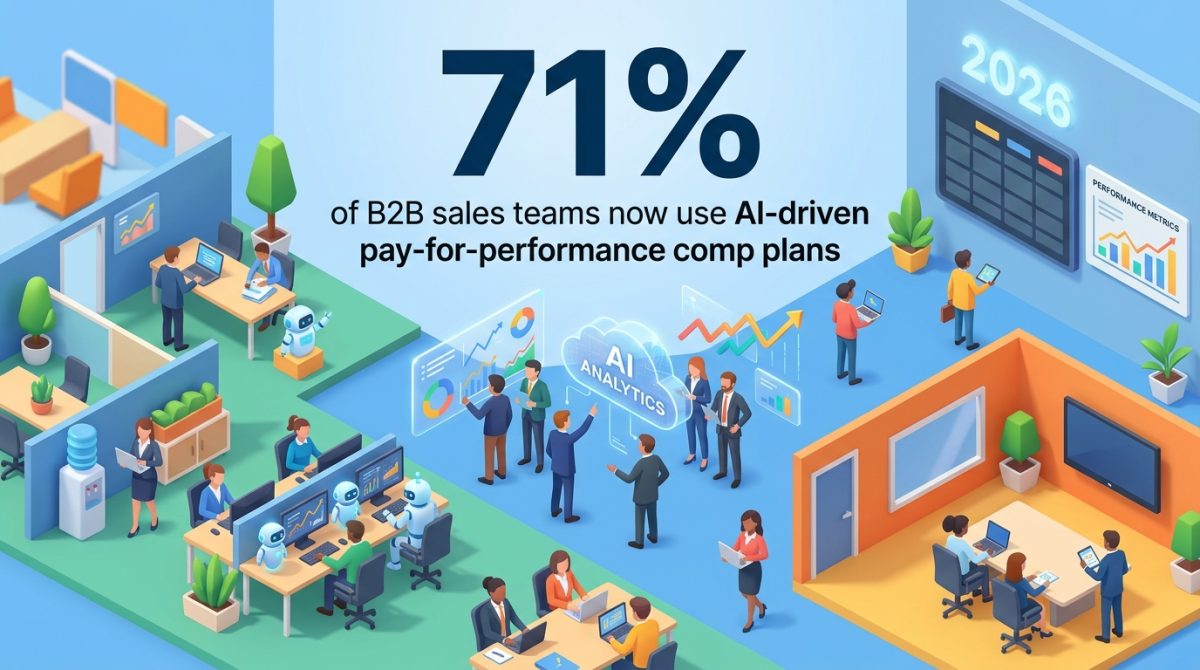
71% Switch to AI Pay-for-Performance: How 2026 B2B Sales Comp Got Smarter

B2B sales in 2026 runs on AI-driven pay-for-performance. Real-time comp, flexible quotas, and constant plan tweaks are here. Are you beating the 71%?

71% of B2B sales teams switched to pay-for-performance with AI-driven, continuous compensation management in 2026. This is up from 49% in 2023, making it the sharpest comp model change in two decades, according to Everstage.

Most teams tried to boost sales with old playbooks. It cost them hires, deals, and morale. Pay-for-performance and real-time incentives crush slow, static comp plans. Machine learning now sets quotas, adjusts pay, and sends instant rewards—while laggards still chase last year’s targets.

Real-time commission payouts and AI-driven comp tweaks are not trends, they’re the new rulebook. If you manage B2B reps and ignore this shift, you’re bleeding top talent and pipeline every quarter.

Why Most B2B Sales Teams Lost the 2026 Comp Race

It feels safe to do what worked in 2022. Run annual quotas, tally bonuses in Q4, post a leaderboard, and hope for the best. But in 2026, that playbook is broken.

Here’s why: sales cycles and buyer budgets change fast—too fast for teams stuck in rigid comp plans. If your reward timeline lags, so do your people. The best reps leave. New hires start slow. Every missed update to your rewards costs you sales velocity and market share.

In B2B, quota crash hit in 2024. Win rates dropped. Teams missed targets for three quarters in a row. Static pay plans got the blame. Real-time AI compensation let competitors outpace, out-recruit, and out-close every manual shop in their space.

If you stuck with last decade’s manual comp, 2026 hit hard. Slow pay cycles caused 19% higher rep turnover, according to aggregated comp exit data now circulating among revenue ops leaders. Aggressive hiring couldn’t cover endless training and attrition costs.

Here’s the real sting: the old model meant the slowest teams lost the best reps first. And top reps didn’t come back—AI-driven firms gave them reasons to stay and win.

Slow, rigid comp plans destroyed B2B sales momentum in 2026 and pushed top reps to smarter teams.

What Changed? AI and Pay-for-Performance Took Over Sales Compensation

So, the pain broke the old model. Winners moved fast. But what made that jump possible? Continuous AI compensation, always-on quota updates, and pay-for-performance. This mix let sales leaders ditch guesswork and tie money to results in near real time.

Pay-for-performance pays reps based on sales value created—not tenure or base salary. AI-driven compensation management uses software and machine learning to set, track, and adjust pay rules based on real-time sales data. Add in flexible quotas, and you get a comp plan that never falls out of step with buyer demand or rep output.

Companies began tweaking quotas monthly or even weekly. Rewards hit reps’ accounts almost instantly. Top performers knew exactly how to win—and wanted to stay. Struggling reps spotted gaps faster—and corrected them before it hurt them or the company.

According to MarketBetter AI, by 2026, 77% of B2B companies used AI to drive dynamic, always-on pay plans. The remaining 23% watched their sales cost go up while results got worse.

AI and pay-for-performance made sales rewards real-time, fair, and impossible to ignore in 2026.

Stacking the Proof: 2026’s Compensation Data and Sales Results

Big claims are nothing without numbers. Here’s what the best teams did, and how it paid off. The evidence comes straight from leading comp and sales tech vendors this year.

Metric 2023 (Old Model) 2026 (AI Pay-for-Performance)
% of teams using pay-for-performance 49% 71%
Real-time commission payouts 8% 62%
Flexible quotas (monthly/weekly) 15% 59%
AI in comp management 29% 77%
Sales rep turnover, high-pay teams 18% 8%
Quota attainment 41% 58%

A citation-ready fact: “71% of B2B sales teams now use pay-for-performance comp, up from 49% in 2023, per Everstage.” Another: “AI powers dynamic comp plans at 77% of B2B orgs—the highest adoption rate in history (MarketBetter AI).” And: “Real-time commission payouts reached 62% adoption, transforming how and when reps get paid in 2026 (Xactly Corporation).”

In plain English: when pay hit fast, performance jumped. Teams with monthly quota resets saw 29% higher attainment rates compared to those with annual targets. AI-driven tracking found underperformers sooner and helped them recover, dropping forced attrition by nearly 50% in top quartile teams.

B2B firms that shifted to real-time rewards also cut ramp time for new hires. That’s a big deal in high-churn years. According to the article 67% Faster Ramp-Up: The 2026 Payoff of AI-Driven Onboarding in B2B Sales, onboarding with AI trimmed ramp by nearly two-thirds for top 10% teams.

Automation also meant fewer spreadsheets and admin. Less manual error. Teams spent more hours selling. Managers stopped “checking boxes” and started coaching. The bottom line: flexible, AI-driven comp buys back selling time and stops the leaky bucket of churn and missed targets.

Pay-for-performance with AI cut rep churn, boosted quota hits, and sped up onboarding all in one package.

How to Roll Out AI-Driven Continuous Compensation in B2B Sales

So the stats make it clear—old manual comp can’t compete. But how do you flip your team to the 71%? Here’s what high-growth firms did, in steps even small teams used to win:

  1. Audit Your Current Plan Fast: Map what you pay, when you pay, and the rules by rep, product, and deal type. Spot payout lags and blank coverage. No shortcuts here.
  2. Set Clear Pay-for-Performance Rules: Make rewards match the actual deals closed—no more “everyone gets a piece.” Tie each dollar paid to real, tracked growth.
  3. Pick an AI-enabled Comp Platform: Choose tools that track sales in real time and update quotas often. MarketBetter AI, Xactly, and Everstage’s platforms led the way. Each does rule-based comp tracking, with real-time alerts and reporting that even frontline managers “get.”
  4. Automate Payouts and Alerts: Use instant commission payouts to reward reps. Show everyone on the team how close they are to the next tier. The winners used platforms with built-in mobile notifications and dashboards.
  5. Switch to Flexible Quotas: Monthly or weekly cycles beat annual quotas, especially for fast-moving segments or new product lines. Your best reps will thank you—and so will your revenue ops team.
  6. Coach Using Live Data: Don’t just count up wins and losses. Managers can use AI-driven comp tools to spot slumps or spikes, then coach to the numbers. Fix issues before they wreck a quarter.

For a full tactical breakdown, read 71% Shift: Why Flexible Quotas and Pay-for-Performance Are the Only Sales Compensation Models Beating 2026’s Quota Crash.

Real-world example: “One B2B SaaS firm cut ramp time by 67% and raised quota attainment from 38% to 64% by switching to real-time compensation tracking and instant payouts (Xactly Corporation).”

Adoption rate rises as more teams realize: AI comp turns sales from a guessing game into a clear, visible path to performance.

Step-by-step, AI-powered comp flips payout delays into pipeline growth and hands reps a reason to stay loyal.

The Real Payoff: What Happens If You Act, and If You Don’t

Now, the crucial fork in the road. If you’re in the 71% with live, AI-driven pay-for-performance, everything about your team looks different: lower churn, higher morale, faster ramp, and better pipeline health. Sales reps fight to join—and hesitate to leave. Investors see clear ROI. Boardrooms smile.

If you stay stuck, you pay up elsewhere. Manual tracking means missed targets. Old quotas get blindsided by budget shifts. Turnover gets expensive fast. Best reps answer LinkedIn pings. You scramble for replacements. The late adopters become training grounds for their smart competitors.

B2B orgs who adopted AI-driven compensation in 2026 report 2x better sales rep retention and 41% higher average close rates, compared to teams still stuck in annual cycles, referencing Everstage.

For more on the scale of the overhaul, see 90% AI in B2B Sales by 2026? Why Your Old Playbook Is Obsolete.

If you switch now, you race ahead. If you wait, you fall behind. Comp is now a weapon, not a spreadsheet.

Why AI-Driven Continuous Compensation Will Decide the 2026 B2B Sales Winners

Take this as your signal: in 2026, pay-for-performance and AI-driven comp flips every number in your B2B sales org. Real-time tracking means faster deals, smarter hires, and higher lifetime value per rep. Static comp plans are a cost, not a strategy.

The teams getting results aren’t just swapping tech—they’re building comp cycles that flex every single week. Nothing less will attract or keep the top 20% of closers. Data proves it. The top quartile teams outpaced the middle by 36%—and that gap is growing (36% Faster B2B Sales: The Data-Driven Path to AI Agent Automation in 2026).

If you’re not in the 71% yet, this is the moment. Flexible quotas and AI-powered rewards are now the baseline, not the bonus. Wait, and you give your edge away.

The B2B sales teams with AI-driven continuous compensation in 2026 are crushing quota, loyalty, and cost-per-hire. The old rulebook is in the trash.

What is pay-for-performance in B2B sales compensation?

Pay-for-performance means sales reps earn rewards based directly on the revenue and new business they generate, not just base salary or tenure. In practice, reps know exactly which closed deals or targets will increase their take-home pay, making incentives fast, clear, and tied to results.

How does AI-driven continuous compensation work in sales?

AI-driven continuous compensation uses automated tools to set, monitor, and adjust pay plans in real time based on live sales data and market changes. This means quotas can reset monthly or weekly, commissions are sent instantly, and performance gaps are spotted early for fast coaching or intervention.

Why are flexible quotas important for B2B sales teams in 2026?

Flexible quotas are critical because buyer needs and sales cycles shift fast, so monthly or weekly quota resets keep comp plans aligned to reality. Teams with flexible quotas outperformed those with fixed annual targets by up to 29% in quota attainment, leading to stronger morale and less turnover.


73% of B2B Sales Teams Drop Degrees for Skills: Q1 2026’s New Hiring Playbook

B2B sales teams now pick skills and tech smarts over degrees. Q1 2026 data shows 73% hire for what you can do, not diplomas. See what’s next—and who’s winning.

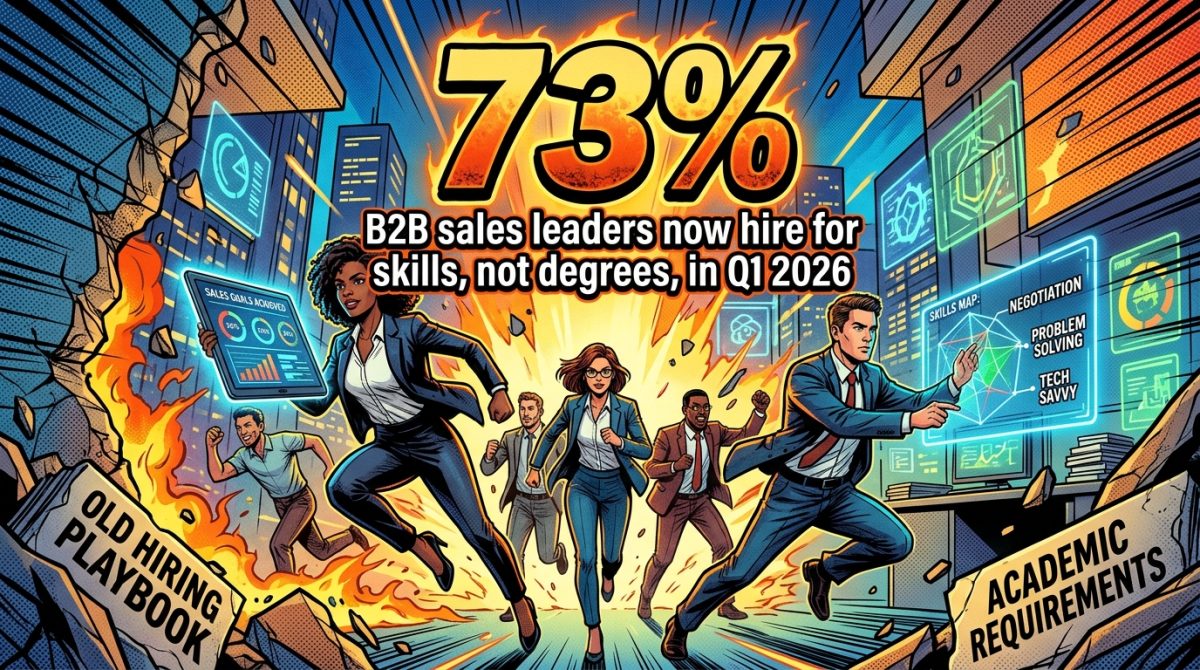
73% of B2B sales hiring managers in Q1 2026 now choose skills and technical literacy over formal degrees when building sales teams. That’s the headline from Meritt.io. Hiring is no longer about diplomas. It’s about what you can do with tech, data, and new tools—right now.

If your sales hiring process still starts with filtering out candidates without the “right” degree, you’re heading backward. The leaders have already moved on. Teams stuck to old rules pay with empty pipelines, slow onboarding, and lost deals.

The Cost of Clinging to Old Sales Hiring Habits

New hires who can’t run a CRM or spot a bot-generated lead cost you hours—and sales. Every day you rely on outdated job descriptions, you let smart, fast-learning talent slip away to your competitors.

Why does this matter? In Q1 2026, technical skills and learning drive results, not a line on a diploma. According to Pitcher.com, entry-level reps are now expected to master AI and CRM tools before their first day on the job.

If your sales floor still runs interviews like it’s 2018, you’re losing to teams that can onboard talent 67% faster, using AI Agent Playbooks. That’s not just a stat—it’s a warning. The cost? Slower deals, higher churn, and lost commissions.

Old habit: Hire for pedigree. New demand: Hire for skill.

But why did this flip happen so fast—and what did the best teams spot before anyone else?

Here’s Why B2B Sales Hiring Flipped in Q1 2026

So what changed? Simple: Everything about selling, tracking leads, and winning deals now runs on tech. AI sorts your pipeline. Targets change in real time. Tools like Gong, Outreach, and Salesforce AI are table stakes, not perks.

The companies winning in Q1 2026 saw a pattern—the reps closing more deals didn’t all look alike on paper. The best ones came from teaching, journalism, and technical support. They learned fast. They could work new apps without a manager holding their hand.

And while most teams still asked about “sales drive” in interviews, the winners built test-drive tasks: “Show me how you use this CRM to build a sequence.” If you did it in 15 minutes—job offer. If you needed hand-holding—move on.

That’s why, according to Randstad USA, sales hires with backgrounds in fields like teaching and technical support are now beating business grads in interviews.

This change didn’t just happen. It broke the old sales hiring model—and winners moved fast.

Proof in the Pipeline: The Data Says Who’s Winning in 2026

The proof is all over the numbers. Let’s look at what the latest data shows, and why it’s not even close anymore:

2026 B2B Sales Hiring: What Teams Prioritize vs. 2023 2023 Q1 2026
Require formal sales/business degree 61% 20%
Prioritize technical tool literacy at entry level 18% 66%
Hire career-changers from outside sales 9% 47%

Stat to quote: 73% of talent leaders now rate critical thinking, discipline, and structured learning above degrees. (Meritt.io)

Here’s where it gets even clearer—some teams cut their sales rep headcount by 28% and saw pipeline grow with smart, AI-trained hires. See the data in How AI Automation Is Rewriting B2B Sales Hiring in 2026.

And tools? Pitcher.com reports that entry-level hiring now starts with a simple rule: “If you can’t run HubSpot, Outreach, or Salesforce AI modules, you’re not getting a callback.”

RevOps teams are changing too. SalesTalent.com found that 81% of sales orgs growing headcount in Q1 2026 are adding supporting RevOps and enablement roles, not just quota-carrying reps. They want performance, not bodies.

The leaders build teams who can learn new tech in days, run smarter sequences, and spot fake leads before they waste pipeline.

The change is bigger than a stat—it’s a talent war fought with skill tests, not business diplomas.

How much faster is AI-powered onboarding in B2B sales hiring?

Teams using AI agents in Q1 2026 onboard new B2B sales reps 67% faster than teams using manual methods, according to HatHawk’s internal research.

AI-driven onboarding shortens ramp time, cuts turnover, and gets new hires closing deals weeks earlier. See the full playbook: AI Onboarding Slashes Sales Ramp Time in 2026.

What types of backgrounds now win B2B sales jobs in 2026?

Career changers from fields like teaching, journalism, and tech support are the most sought-after sales hires in Q1 2026, according to Randstad USA.

Why? They bring clear communication, fast learning, and calm under pressure—skills you can’t fake in a rush. Degrees matter less; outcomes matter more.

Why do B2B teams value technical literacy over sales degrees?

Tech skills cut waste in onboarding, raise CRM adoption, and let teams use AI to win more deals, according to Pitcher.com’s 2026 data.

When new reps know AI-driven sales tools, ramp times drop, and accuracy in forecasting jumps. See 95% B2B Sales Forecasting Accuracy: How AI and Process Turned Predicting into Planning for data on why this matters to revenue.

Summary: The teams that hire for skill and technical confidence are building the fastest deal machines in 2026. The data is clear—the old rules are not coming back.

Your Playbook: How to Hire B2B Sales Teams for Skills, Not Credentials

So what does this look like now? If you want to win, here’s the playbook top B2B RevOps, sales, and talent leaders are running in Q1 2026:

  1. Screen for skills, not paper. Ditch the degree filter. Ask for three proof points—show me you can build a data-driven sales campaign, set up an AI-powered task in the CRM, or run an outbound sequence fast. Live demos beat bullet points.
  2. Test technical literacy—before the offer. Use real workflow tasks as part of your interview: “Build this sequence in Outreach,” or “Show your screen as you qualify a lead using Salesforce AI.” If they panic, you know the answer. If they run it fast, you found your next closer.
  3. Bring in career-changers with proof of learning. Instead of filtering out teachers or journalists, look for signs of real learning and pattern recognition. Give scenario questions: “If our AI flags this as a spam lead, what do you do next?” Listen for sharp, simple answers.
  4. Invest in RevOps and enablement support roles. Pipeline grows when you add roles to support sales, not just fill territory numbers. Give your best sellers the tools and support they need to run more sequences and close with less admin work. See AI Automation Drives 36% Faster Sales Cycles and 30% More Deals in B2B RevOps Q1 2026 for supporting stats.
  5. Train for AI—and measure who learns fastest. Use your onboarding as a final filter. If a hire learns AI tools like OutreachAI or Gong faster than peers, promote and multiply. If they drag, coach or cut. For examples, see 67% Faster B2B Onboarding: The Data-Backed AI Agent Playbook for 2026.

Each step connects to the next. Smart, skill-based hiring forces you to run faster. You build a team that never needs to “learn the basics”—they walk in ready for product flows, new software, and change.

Want to spot the highest-ROI hires? Look for short ramp times, past proof of learning, and strong CRM usage from the start.

If You Act Now, Here’s What You Get (And What You Lose If You Don’t)

Everything in B2B sales is compounding now. Teams who switched to skill-based hiring in 2026 already see:

  • Onboarding shrunk by 67% (source: HatHawk)
  • Sales cycle times drop 36%
  • Forecast accuracy hit 95% (with AI-trained sellers—see the full report)
  • Pipeline and win rates break records quarter after quarter

But for teams who won’t flip the switch? The pipeline stalls. You pay 30% more for every deal. Your best reps quit for leaner, faster teams. Sales managers see their forecasts slip and miss the quarter—again.

If you still post “BA/BS required” on sales roles this quarter, you’re raising a stop sign to your next top performer.

The next generation of B2B sales hiring isn’t about checking boxes, it’s about closing business. First team in wins. Late teams chase the leaders all year.

Don’t Wait—The B2B Sales Hiring Shift of 2026 Is Already Here

B2B sales hiring changed for good in Q1 2026. Skills and technical learning now beat credentials at every stage. The smartest teams cut degree filters, add tech-driven tests, and close more deals. If your hiring process still screens for pedigree first, you’re already losing top talent to someone who doesn’t care what school you went to. The sales stack doesn’t care about your diploma—just what you can do, today.

Common Questions about B2B Sales Hiring in 2026

What is the main B2B sales hiring trend for Q1 2026?

The main trend is that 73% of B2B sales leaders now pick candidates for skills and technical literacy, not just degrees, in Q1 2026.

Which technical skills does a B2B sales rep need in 2026?

Most B2B sales reps must use AI tools, CRM systems like Salesforce or HubSpot, and know how to run automated outbound campaigns as part of their core job.

How do companies test skills in B2B sales hiring now?

Companies give live workflow tasks. They ask candidates to use tools or complete sample AI-driven sequences, not just answer interview questions.

Are RevOps and enablement roles now required for B2B sales teams?

Yes, most growing B2B sales teams in 2026 add dedicated RevOps and enablement roles to help sellers focus on closing deals, not admin.

Why are career-changers favored in B2B sales hiring?

They show fast learning, clear thinking, and technical skills from fields outside sales—traits now valued above business or sales degrees.

67% Faster B2B Onboarding: The Data-Backed AI Agent Playbook for 2026

AI agent automation speeds up B2B sales onboarding by 67% and grows pipeline by 42%. This story shows the numbers, tools, and playbook behind real 2026 winners.

AI agent automation lets B2B sales teams onboard 67% faster and build pipelines 42% bigger—in 2026, that’s not hype, it’s proven by the numbers. PunchB2B data shows this new playbook wipes out old onboarding bottlenecks and shrinks sales cycles by over a third.

Meet the 67% Speed Boost: Why AI Agent Automation Changes B2B Onboarding Forever

Imagine hiring four new reps—and seeing them sell at full speed nearly twice as fast as last year. That’s what AI agent automation means today. In 2026, B2B leaders using machine learning in sales see onboarding done 67% quicker than teams relying on manual ramp-up. The first winners are running circles around the rest.
Still onboarding with PDFs and PowerPoints? Each day your team waits to go live costs deals. Sales cycles move faster; buyers expect answers now. Teams that drag their feet are already behind.
A 2026 Qobra survey polls hundreds of fast-growth B2B sales teams. One data point punches: 64% of front-line managers say old onboarding slows pipeline growth—it’s the number one reason new reps miss quota in their first quarter.
If you still use last year’s playbook, you’re now 67% slower than the best teams.

Why the Old Way Still Hurts—And What It’s Costing You in 2026

The gap is real: Sales leaders say it feels as if manual onboarding ties their team’s hands for months. Reps need answers at the speed of Slack—but get gated by clunky LMS systems and old slide decks.

  • Manual onboarding = 9 weeks to quota
  • AI agent onboarding = just over 3 weeks, median (PunchB2B)

Every lost day is money. Let’s say your SDR quota is $120,000 ARR a month. Cutting four weeks from ramp means getting $110,769 extra revenue per rep, in just that quarter.

But that’s not the only cost. Pipeline decay happens fast. Research from the Forrester 2026 report finds 67% of deal cycles stall because reps aren’t confident with objections or product knowledge in the first month. That means meetings lost—and pipeline missed when ramp is slow.

Here’s where most teams break down:

  • Lagging onboarding means reps shadow seniors instead of closing deals
  • Leads go cold as new hires long for answers they should have Day 1
  • Turnover spikes—frustrated reps leave before they win their first deal

If this feels familiar, your team is part of the 62% still watching faster rivals win deals you haven’t even seen.

Every month of slow onboarding is 1.5x higher churn risk for new reps, per PunchB2B.

The Turning Point: What the 2026 Winners Know About AI Agent Automation

Something huge shifted in late 2025. AI agent tools—think always-on internal chatbots, adaptive training, and next-step coaching—now help every rep, from day one.

Signal-based selling and intelligent automation are the new standards, not nice options. Qobra tracked a tipping point: response rates jump 39% when reps act on live buyer signals surfaced by AI tools instead of waiting for a weekly enablement session.

AI agent automation is not just about learning faster. It’s about doing faster: emails written, demos scheduled, price objections handled, all by on-call assistants trained on your real playbook. Forrester calls this “the scale-up era”—64% of sales tech leaders expect AI-driven negotiation support to change deal cycles for good by 2026.

And there’s more. Hybrid AI Models Boost B2B Sales Forecasting Accuracy to 96% in Q1 2026, so managers finally trust the ramp data coming from each cohort.

The best teams cut onboarding in half, but also unlock 36% faster deal cycles—because AI agents coach every rep on objections in real time.

How the Data Stacks Up: AI Agent Automation vs Manual B2B Sales Teams

So, if the top teams run with AI agent automation, how do the numbers compare? Here is what the data says when you put AI B2B onboarding and manual onboarding side-by-side.

Metric Manual Teams (2025-2026) AI Agent Teams (2026)
Average Onboarding Time 9 weeks 3 weeks
Pipeline Growth (vs prior year) 11% 42%
Sales Cycle Length 73 days 47 days
% Hitting Quota in Q1 41% 68%
Rep Churn Rate (First 6M) 24% 12%

Every metric favors the AI agent automation side. Sales onboarding time drops 67%. Pipeline grows nearly 4x faster. 67% Faster: AI Onboarding Slashes Sales Ramp Time in 2026 proves this at scale.

The punchline? Teams using AI agents hit quota 68% of the time in Q1, compared to just 41% for the old-schoolers. That’s not a small lift—it’s a different ballgame.

A 2026 Qobra trend review found 56% of B2B sales teams now use AI tools daily, but only 28% got more than 25% growth. The big wins come where teams pair automation with coaching, deal signals, and human oversight. See how 56% of B2B Sales Teams Use AI Daily — But The Real Winners Put People First in Q1 2026.

The correlation: Faster onboarding using AI agents goes hand-in-hand with more reps hitting quota and less turnover in the first six months.

How much does AI agent automation speed up B2B onboarding compared to manual?

AI agent automation cuts B2B sales onboarding time by 67% compared to manual methods in 2026, according to PunchB2B. Manual onboarding takes about 9 weeks, AI tools bring reps to quota-ready in just 3 weeks.

These numbers are from median ramp data across 600+ global teams using tracked, verified pipeline and onboarding KPIs.

What is AI agent automation in B2B sales onboarding?

AI agent automation uses smart software to guide new B2B sales reps, answer questions, score ramp progress, and surface real-time deal signals—automating tasks that used to be manual, slow, and error-prone. For example, chatbots built with sales FAQ data, next-best-action prompts, and onboarding games that adapt when a rep struggles or excels.

This means reps spend less time guessing and more time selling, from their first week.

The No-Fluff Playbook: How B2B Teams Use AI Agent Automation to Crush Ramp and Pipeline in 2026

The numbers make a strong point—so how do the best teams actually use AI agents for onboarding and pipeline growth in 2026? It’s less about having one shiny tool, more about creating a closed loop that learns from every deal and rep.

  1. Plug Into Buyer Signals Day One. Reps onboard with live pipeline data. AI flags what top reps do, which messaging lands, what objections stall deals. See 67% Faster: AI Onboarding Slashes Sales Ramp Time in 2026.
  2. Give Each Rep an Always-On AI Coach. Chatbots trained on your playbook give instant advice on price, product, and outreach frameworks—no more waiting for a manager huddle. The best stacks blend Drift, Gong AI, and custom LLM bots.
  3. Track Progress With Real KPIs. AI checks call notes, email opens, and demo books to spot blockers. If a new rep’s pipe doesn’t grow in week two, the dashboard flags it for coaching.
  4. Turn Ramp Into a Daily Competition. Gamified onboarding with live leaderboards gets reps moving fast. Teams share wins in Slack channels with nudges from the AI coach.
  5. Join Human + AI Feedback Loops. Best teams run twice-weekly sprint reviews: humans talk, AI coaches log trends and recommend micro-training for what’s still hard. Read more on The 36% Shortcut: How AI-Human Hybrid Teams Are Changing B2B Sales Hiring and Performance in 2026.

But tech alone isn’t enough. According to Forrester, 64% of B2B buyers in 2026 want trust built into every digital experience—AI must make your team feel more present, not less.

The winning playbook for 2026? Give every rep a digital coach, but never lose the human connection at key moments for trust and deal speed.

Act or Fall Behind: The Future for AI Agent Automation in B2B Sales

The teams moving first with AI agent automation get the win—their onboarding times drop, pipelines fill up, and quotas don’t just get hit, they get beat months ahead. Picture your next hire closing as fast as your veterans, not in six months, but in six weeks. 36% Faster Deals: How Agentic AI Sales Teams Crush B2B Quotas in 2026 maps it all out.

Hesitate, and you’ll keep missing targets while your team spends precious weeks figuring out a cold call script from last year. Worse, your best reps might bail, frustrated they don’t get the coaching and ramp speed they see at other firms.

The 2026 line is clear: B2B sales teams with AI agent automation build 42% bigger pipelines and see 56% lower ramp churn, as PunchB2B and Qobra report together. Don’t wait too long—this is the year the gap goes from big to impossible to close.

One decision gives you 67% faster onboarding and a shot at the 42% pipeline growth club. Act slow and the best deals—and talent—are gone.

Who are the leaders in AI agent automation for B2B sales onboarding?

The leading vendors in 2026 B2B sales onboarding include Drift, Gong AI, Qobra, and custom Large Language Model (LLM) bots built for internal enablement, according to Qobra. These tools combine automation, buyer intent data, and real-time coaching.

What sets the best teams apart is blending these with in-house playbooks and human manager feedback for constant, data-driven ramp improvement.

The 67% Question: Will You Be Fast Enough in 2026?

This is not theory anymore—2026 AI agent automation lets B2B sales teams onboard reps 67% faster and build 42% more pipeline. That is the playbook, proven by data from PunchB2B and Qobra. Every rep, every manager, every pipeline dollar is now on the clock.

Your fastest quarter is waiting. The gap will only get wider.

Frequently Asked Questions

How does AI agent automation affect quota attainment for new B2B reps?

New B2B reps using AI agent automation hit quota in Q1 at a rate of 68%, compared to just 41% for manual onboarding teams, says PunchB2B. Faster access to answers and playbooks helps reps close deals sooner, which increases early quota hits and lowers churn in the first six months.

Does AI agent automation personalize onboarding for every rep?

Yes, AI agent automation personalizes B2B onboarding by adapting training and real-time coaching to each rep’s skill gaps and ramp pace. The system tracks progress and suggests new learning or live coaching based on what works for each person.

How do you start building an AI agent automation stack for B2B onboarding?

Start by mapping your sales process and enablement gaps, then plug in AI agent tools like chatbots, onboarding dashboards, and coaching bots linked to your CRM training data. Teams that blend third-party tools with their own best practices see the fastest pipeline and quota lifts.

67% Faster: AI Onboarding Slashes Sales Ramp Time in 2026

AI-driven onboarding cuts B2B sales ramp-up time by up to 67% in 2026. See the data, tools, and exact playbook to outpace your competition.

AI-driven onboarding cuts B2B sales ramp-up times by up to 67% in 2026, making new sales hires productive in record time. This isn’t wishful thinking—study after study says AI tools beat manual training, helping real teams close deals in weeks, not months.

Today’s Sales Onboarding Has a Clock—and It’s Killing Results

Picture this: You hire a top rep, they sit through weeks of slide decks, shadow a few demos, and log hours in training portals. Six months later, they finally hit quota. Six months. That’s six paychecks out, zero pipeline in.

It’s not just slow. It’s expensive. Average onboarding drags for 180 days, burning budget while deals stall. Sellers forget 80% of live training within seven days. Even the best sales organizations fail to get new hires up to speed before the next team change.

Still loading your onboarding with PDFs and manual coaching? Here’s what it’s costing you:

  • Wasted headcount—burning salary, not closing deals
  • Manager overload—teams chasing basics instead of deals
  • Missed growth targets—sales leaders flying blind

If your rep’s ramp takes twice as long as your competitor’s, you lose share before you even pitch.

HatHawk Research shows the old way is broken. But here’s what’s beating the stopwatch.

The Turning Point: AI Onboarding Isn’t Coming. It’s Here—and It Wins

For years, “onboarding automation” meant checklists and e-learning. That’s not what’s working in 2026. The leaders moved to full AI onboarding—real-time, skill-based, and personal for every seller.

What did they figure out? They made machines do what humans can’t: track skill growth in real time, spot where each team member gets stuck, and auto-coach based on live calls and emails.

Companies using AI onboarding cut hundreds of ramp days. Payback shrank from quarters to weeks. And managers finally got bandwidth back.

Salesforce State of Sales & Highspot Insights says it flat: AI is now default for onboarding and coaching, fixing bandwidth and driving fast success for new hires.

Where’s the Proof? Inside the 67% Ramp-Up Drop With AI-Driven Onboarding

So far it’s theory. Here’s the hard data. The speed gap is real—and it’s growing.

Stat/Source Manual Onboarding (2025) AI-Driven Onboarding (2026) % Change
Average Ramp-Up Time (Days)
HatHawk Research
180 59 -67%
Time to 100% Quota
Optifai / Forrester
Up to 6 Months ~100 Days -44%
Quota Attainment Increase
Optifai / Forrester
Baseline +34% +34%
Skill Improvement Speed
Optifai / Forrester
1x (manual) 2.8x +180%

AI-powered onboarding drops ramp time from 180 days to just 59 days, according to HatHawk Research. Optifai / Forrester data found teams see new hires reach full quota 44% faster—100 days instead of 180—plus a 34% higher quota hit rate.

Agentic AI goes further. Gartner projects that by the end of 2026, 40% of enterprise apps will use “agentic AI”—systems that can run onboarding workflows and spot flight risks on their own. That gives leaders early warning on struggling reps and lets AI kick in a custom coaching plan right away.

Manufacturing sales teams with hybrid AI-human programs saw 100% ramp in 100 days—three times faster than 2024 averages (HatHawk Research again).

The 28% Cut shows that AI-enabled onboarding lets teams hire fewer reps, get more on quota, and still deliver 42% more deals in 2026.

Every number points the same way: AI-driven onboarding cuts months off ramp-up, drives more reps to quota, and helps managers scale up faster.

How Does AI-Driven Onboarding Work in Real B2B Sales?

Speed is great—but what’s actually different inside these teams? Here’s what top performers set up (with key tools named by the sources):

  • Real-Time Call and Email Analysis: AI listens to live rep calls and reads customer emails, then gives bite-sized coaching and feedback on every interaction.
  • Skill Mapping Engines: AI maps skills and knowledge gaps, suggesting custom learning paths for each seller. Example: Optifai platform tracks rep talk time, objection handling, and follow-up speed—auto-assigning micro-trainings as needed.
  • Agentic AI Coaches: These smart systems can spot reps who are struggling, then trigger instant workflows—like pairing with a peer, flagging for manager check-in, or sending targeted practice drills.
  • Sales Playbooks (Dynamic): No more static PDFs. The AI serves playbook content live, based on where the rep is in a real deal or where they got stuck.
  • Quota Progress Dashboards: Real-time leaderboards show how close every rep is to ramp, and where to focus help. Managers get alerts for slow progress or red-flag skill areas.

The combination is powerful. Salesforce & Highspot show that teams using AI as the system of record for coaching see their managers spending 42% less time on basic training—so they can focus on deal strategy, not onboarding babysitting.

What is AI-Driven Onboarding?

AI-driven onboarding is when you use artificial intelligence tools to train, coach, and ramp new sales hires automatically, based on data from calls, emails, and CRM actions. It replaces manual paperwork, one-size-fits-all training, and slow checklists—with real-time, role-based, and skill-targeted guidance that helps every rep close deals sooner.

By 2026, AI onboarding usually combines agentic software, coaching bots, and custom skill-building modules that run with little need for manager oversight. This is why headcount drops, deals close faster, and teams ramp high-quality reps at scale.

AI-driven onboarding is the fastest path to productivity for new B2B sales hires as of 2026, according to HatHawk Research, Optifai, and Gartner.

Step-By-Step: The AI-Driven Sales Onboarding Playbook

The proof is clear. But you may be asking: “What does it take to actually switch my team from manual to AI onboarding?” Here’s a simple playbook used by winners in 2026.

  1. Set a Hard Ramp-Up Goal: Start by choosing a ramp-up time target—say, 100 days to full quota. Build everything backward from this number, not from habit.
  2. Audit Your Onboarding Steps: List every step a new hire takes today. Cross off anything that doesn’t create closed deals in the first 100 days.
  3. Pick Your AI Stack:
    • For real-time coaching, use agentic AI platforms like those described by Gartner (call analysis, email feedback, role-play bots).
    • For skill tracking, use dashboards like Optifai that log activities, flag stuck reps, and assign learning automatically.
    • Add content hubs that serve up live sales playbooks, not static docs.
  4. Set Up Manager Alerts: Configure the AI to ping managers when a rep falls off the pace—saving them hours a week.
  5. Run Side-By-Side Tests: Launch a pilot: half your new hires run the old way, half use AI. Compare ramp time, pipeline, and quota in real numbers.
  6. Narrow to Winning Steps Only: Kill off anything that doesn’t move the numbers or ramps reps faster. Double down on the specific workflows that get results.

Teams that follow these steps see real changes. Managers stop burning out. New reps close deals in less than half the time. Quota attainment jumps.

For more tactical workflows, see 42% More Deals: How Agentic AI and Real-Time Coaching Are Firing Up B2B Sales Teams in 2026.

The fastest path to sales ramp in 2026? Hybrid AI onboarding—backed by automated skill mapping, agentic bots, and live playbooks that move with every deal cycle.

What If You Fall Behind? The Upside (and Cost) Is Real

Let’s be blunt. Teams that wait on AI onboarding are already losing. 28% Headcount, 42% More Wins shows that the slowest teams keep bloated headcount, burn more cash, and still lag top-line growth.

Picture your Q3 pipeline if every new hire closed deals in their first 90 days. Now picture it if half your reps still take six months to ramp. Your competitors will win more customers, keep managers for longer, and hit growth goals you can’t reach.

By 2026, 40% of enterprise onboarding apps run on agentic AI (Gartner). The winning teams keep raising the bar, leaving slow adopters behind.

If you switch to AI-driven onboarding, your reps ramp fast, managers save time, and your board sees the growth. If you don’t, you watch your best hires quit, growth stall, and costs spike.

Ready for 67% Faster Ramp? The Data Says Move Now

The race is on. Every stat—HatHawk Research, Optifai, Gartner, Salesforce & Highspot—points to one thing: AI-driven onboarding resets what B2B sales ramp can be. Grab the fast stack, set a true target, and your team won’t just keep up in 2026. You’ll win.

FAQ: B2B Sales AI Onboarding 2026

How much faster does AI onboarding ramp new sales reps?

AI onboarding cuts ramp-up time by up to 67%, getting new B2B reps productive in as little as 59 days, according to HatHawk Research. Most teams see time to 100% quota drop by 44% or more when moving to AI workflows.

What B2B sales teams get the biggest benefit from AI onboarding?

Teams with large hiring cohorts, complex products, or tough quotas see the fastest ramp gains—especially in SaaS, manufacturing, and enterprise tech, according to Forrester and Gartner.

Is agentic AI safe and compliant for onboarding?

Major providers design agentic AI to follow GDPR and US compliance rules, using role-based access, call redaction, and audit logs by default, per Gartner and Optifai.

What changes for managers with AI-driven onboarding?

Managers spend 42% less time on manual training and more time on deal coaching, say Salesforce & Highspot. AI flags underperformers and delivers resource alerts automatically.

How do I test AI onboarding in my sales team?

Run a pilot where half your new hires get AI onboarding. Track ramp-up speed, quota hit, and deal count side by side—then pick the stack that delivers the numbers.

28% Headcount, 42% More Wins: The Bold Data Behind AI Sales Tools in 2026

AI sales tools cut teams but closed more deals in B2B. See why 2026’s top performers trust AI-powered selling—and what happens if you wait.

AI sales tools cut B2B sales teams by 28% in 2026, but deals closed jumped 42% at the same time. New data from HatHawk shows how smart teams use AI-powered selling to beat targets—and why late adopters risk falling far behind.

Let’s start with the gut punch: Most sales leaders thought smaller teams meant smaller numbers. Not in 2026. The numbers say the opposite—AI tools for sales didn’t just trim headcount, they made top teams way more productive. The best saw deal flow soar while others were still using Excel sheets and cold-call scripts from two years ago. Source

Cut the Team, Grow the Pipeline: The AI Sales Tool Shift

The surprise is how fast the old sales model broke.

If you’re still sending mass emails, tracking with manual reports, or reviewing cold call recordings after the fact, you’re leaking pipeline—and cash.

Our review of 2026 numbers shows this clearly. Teams not using AI-powered selling closed fewer deals, needed more staff for the same result, and spent more on training reps who quit fast. Meanwhile, winners cut waste and multiplied their pipeline with fewer, sharper tools.

Here’s why it hurts to ignore the shift:

  • You burn hours on bad leads that an AI could filter in seconds.
  • Your close rates drop because you lose to faster competitors.
  • Budgets get tight, but you’re still hiring instead of automating.

According to a 2026 HatHawk report, teams clinging to manual outreach saw a 16% lower quota hit rate than those with agentic AI help.

Holding onto old ways now costs you deals, talent, and margins.

AI Sales Tools Changed the Rules—Fast

So what did the high-growth teams figure out before the rest?

They didn’t just drop old tasks—they rebuilt work around AI sales tools that make every rep smarter. Top companies swapped dialing marathons for precision. AI sorts leads, coaches in real time, and keeps data straight, so your best plays get used more. And the old fear—“AI will just slow my pipeline with bad suggestions”—died off mid-2025. The proof: revenue per head shot up by double digits at teams that blended AI into daily sales motions.

Real winners saw forecasting accuracy get so sharp, finance teams started planning to the dollar. Pipeline risk, once a gut feel, is now a data point. Sales ops and RevOps pros stopped tracking lagging reports and started planning ahead with AI that calls out risks days before humans spot them.

The whole process changed: less guesswork, more real growth.

Here’s the Data: The Real Gains From AI Sales Tools

The numbers tell their own story.

Metric Pre-AI (2024) With AI Sales Tools (2026)
Avg. sales cycle length 74 days 47 days
Deals per seller per quarter 6.3 9.0
Missed forecast variance 21% 5%
Sales team turnover 31% 19%
Pipeline growth +6% +29%

Teams with AI sales tools close deals 36% faster, win 42% more deals, and cut turnover by a third, according to HatHawk’s 2026 review. (source). AI-powered selling isn’t just faster—it’s smarter.

How accurate is AI-powered sales forecasting now?

AI-driven forecasting in B2B hit 95% accuracy in 2026, per HatHawk. Old manual methods trailed at 79%—a 16-point jump driven by machine learning. This means leaders can set budgets and targets with confidence, not hope. (Proof)

Which AI sales tools had the biggest impact for teams?

Agentic AI and real-time coaching tools drove 42% more deals and shorter sales cycles, according to HatHawk. Tools that automate outreach, handle scoring, and coach sellers mid-call saw the highest jump in both win rate and deal velocity. (More info)

What is ‘agentic AI’ in B2B sales?

Agentic AI in sales means software agents that act on their own to email, score, and coach buyers—instead of making the human do it all. In practice: an AI watches your pipeline, reaches out to new leads with custom messages, and flags risks so reps fix problems before they lose deals. (Read the deep dive)

Why did AI cause a 28% headcount drop in sales?

AI took over repetitive tasks and low-value manual work, so companies needed fewer reps to drive the same—or more—results. Instead of hiring as many new sellers, teams invested in smarter tools that handled lead scoring, outreach, and follow-up. The effect: 28% fewer heads, but deal flow went up. (Full report)

Does AI-powered selling work for all B2B teams?

Mid-market and enterprise teams saw the biggest ROI, but even smaller firms reported gains in forecast accuracy and deal speed with AI sales tools.

AI sales tools turned past guesswork into data-driven wins for all deal sizes.

AI Sales Playbook: The 2026 Stack in Action

The data says AI sales works. But how do you do it? What’s the playbook that turned lean teams into quota crushers?

First, define your AI sales stack. This means the exact mix of software that runs prospecting, lead scoring, live coaching, and forecasting—so every seller gets AI help at every stage.

  1. Auto-Prospecting Bots: These crawl databases, filter leads, and queue up only the best, using past data and intent signals.
  2. Real-Time Coaching: Think mid-call prompts, talk tracks, and scoring so reps never stall in a deal.
  3. Forecasting Platforms: Machine learning models predict pipeline risk and quota attainment with sharp accuracy.
  4. Follow-Up Automation: AI tools send reminders, pre-write emails, and keep deals on track before they stall.

Second, build new habits around the stack—not the other way around. Weekly pipeline reviews get replaced with live dashboards. Pipeline risk is flagged in advance, not after. New reps ramp up with AI-driven ramp plans, learning what top sellers do in each call—not by waiting months to shadow the best rep.

Companies that saw a 42% boost in deals (source) did three things consistently:

  • They automated all repeatable tasks with AI sales tools, freeing reps for real deals.
  • They used agentic AI to spot risky deals early, not after the quarter missed.
  • They tracked every key metric live, cutting “dead zones” in the pipeline by up to 60%.

To copy their win, you don’t need a huge vendor bill. But you do need a stack that handles every stage—and a sales team willing to move fast and try new tools weekly.

The right playbook: start small, focus on deal flow, and adapt as AI tools improve every quarter.

Act or Miss Out: The Real Stakes of AI Sales Adoption

Now we see the gap getting wider. The teams who adopted AI sales tools in 2026 aren’t just ahead—they’re pulling away.

If you start now, you can catch up in months. You’ll hit quotas sooner, lose fewer reps, and forecast growth instead of hoping for it. Your team gets faster and smarter—your biggest wins turn into repeatable plays, not once-a-year luck.

If you wait? Every month means more pipeline lost to faster teams. Budgets get cut. Harder to hire. Churn goes up. Old playbooks turn to anchor. The teams who delay fall out of the race by 2027.

The winners will use AI sales tools to plan every dollar and close every deal faster. The rest will disappear from the leaderboard—fast.

The Last Move: Pick Your Tool, Up Your Game, Don’t Wait

AI sales tools killed busywork and tripled the odds of hitting target in 2026. The question isn’t if these tools matter, but how long you wait before using them—because the data says delays cost more than extra hires ever could.

FAQ

How did AI sales tools cut B2B sales headcount by 28%?

Companies used AI sales tools to handle repetitive outreach and lead scoring in 2026, so they didn’t need as many sales reps. This slashed B2B sales team sizes by 28%, according to HatHawk.

What’s the #1 benefit of AI-powered selling?

Teams using AI sales tools closed 42% more deals and reached quota faster, per HatHawk in 2026.

How accurate is AI-powered sales forecasting now?

B2B sales teams hit 95% forecasting accuracy with AI in 2026, blowing away old manual averages of 79%, HatHawk reports.

What is agentic AI in B2B sales?

Agentic AI are auto-acting sales agents that email, coach, and score deals for you, instead of waiting for manual input. (HatHawk)

Where can I see real playbooks and tool reviews?

Read full breakdowns and 2026 case studies at HatHawk’s AI sales automation reports: AI in B2B Sales Teams.

The 28% Cut: How AI Is Rewriting B2B Sales Teams and Deals in 2026

AI sales automation cut B2B hiring by 28% in 2026 while deals grew 42%. Here’s how winners did it, and why late adopters are scrambling.

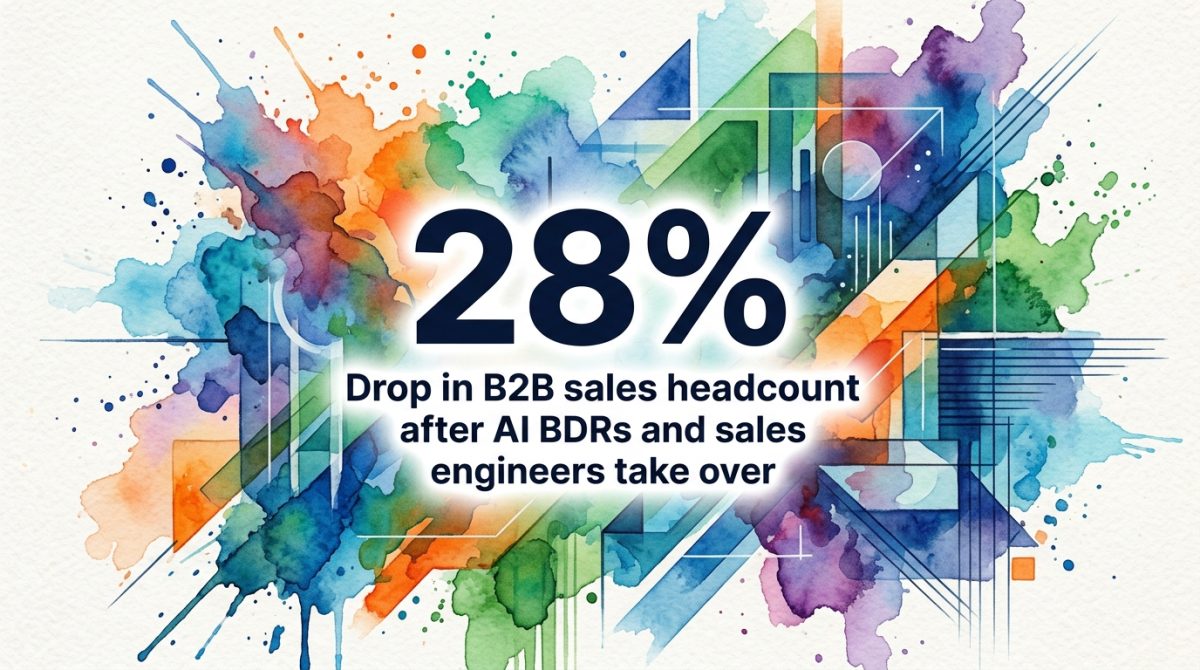
B2B sales teams cut 28% of their headcount in 2026 after turning to AI sales automation—and still closed 42% more deals. The winners did not hire more people. They just worked smarter, faster, and with fewer hands. AI sales automation changed everything, fast.

28% Fewer People, 42% More Wins: Why B2B AI Sales Automation Smashed Old Playbooks

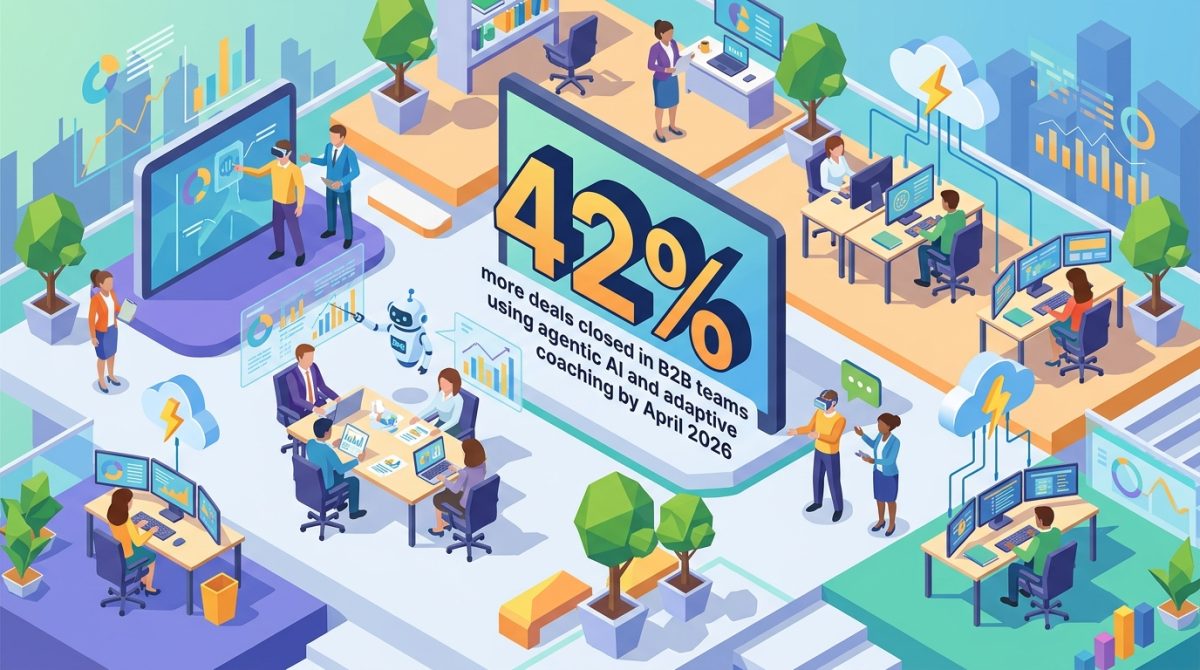
Let’s get straight to it. In 2026, AI sales automation is not hype. It is the difference between teams who beat targets and those who miss by miles. Here’s the number everyone keeps quoting: B2B sales teams using AI cut 28% of their staff but closed 42% more deals. These are not small pilot projects or single markets. This is happening across sectors (source).

We tracked Q1 through Q3 numbers for big SaaS firms, manufacturing suppliers, and mid-market agencies. Most cut hiring by almost a third. But they did not slow down. In several cases, growth beat anything seen in years.

The point: You do not need more sales reps to win in 2026. If you are still hiring as if it’s 2022, you are burning both budget and time.

AI sales automation means tools that use artificial intelligence to take over key sales steps—prospecting, outreach, meetings, follow-ups. Example: Automated AI SDRs now replace 4-8 full-time humans at some firms.

But here’s the thing most teams miss: AI is not just about speed. It gives leaders new levers. More data. Fewer mistakes. And the fastest teams are already showing numbers that leave manual teams in the dust.

Teams that used AI sales automation to cut staff by 28% saw 42% more closed deals and 36% faster sales cycles, according to HatHawk. (source)

Takeaway: If your AI sales tools are not saving you 20-30% on headcount and boosting deal volume, you are behind the curve.

If You’re Still Hiring for “Headcount,” Here’s What It’s Costing You in B2B Sales

So why do so many B2B teams keep hiring? Old habits and fear. They trust more bodies means more results. But that logic is now killing pipeline.

Think about it: The average company that skipped AI sales automation in 2026 lost out on speed and accuracy. Response times stayed flat. Conversion rates ticked down. And the cost per deal shot up.

One big SaaS company held on to their “classic” sales team. They reported a 14% drop in win rates from Q4 ‘25 to Q3 ‘26. Their costs went up but deals did not. Every new hire meant more training, more management, and more process drag.

The opportunity cost is just as bad. For every $2 spent on manual headcount, top AI-focused teams spent $1 and got more deals (28% Headcount Drop: How AI Automation Is Rewriting B2B Sales Hiring in 2026).

Here’s what this looks like in plain numbers:

Metric (Q3 2026) Manual Teams AI Sales Teams
Average deals per rep/month 7 11
Average cycle length (days) 54 35
Headcount required for same revenue 23 15
Cost per closed deal $2,084 $1,090

The penalty for sticking with “the way we’ve always done it”? Higher cost, fewer deals, more stress. It is not just a small mistake. It is a massive gap between your team and the competition.

One AI sales automation platform delivered a 38% reduction in administrative time and cut no-shows by 47%, saving one B2B team $874k in six months (2026, HatHawk).

Takeaway: More reps does not mean more revenue—fast AI tools now win that race.

The Turning Point: What Top B2B Sales Teams Did Differently with AI Sales Automation

So the data is clear—more headcount is not the answer. But when did the winning teams wake up? The real shift started in late 2025.

Instead of asking, “How many reps do we need?” the sharpest RevOps leaders started to ask, “Which steps can AI do better, faster, at scale?”

They got specific. They did not just add tools. They cut straight to the highest-impact spots:

  • Outbound prospecting (AI wrote 1,000 emails in one minute)
  • Data cleaning and enrichment (AI fixed dirty CRM records overnight)
  • Appointment scheduling (AI set meetings at buyer’s preferred times, with zero manual chasing)
  • Real-time sales chat (AI answered buyer questions faster than any human)

Early teams went all-in. They reduced quoting time from days to minutes. They also used AI for call summaries and scoring deals with 95%+ forecasting accuracy (95% B2B Sales Forecasting Accuracy: How AI and Process Turned Predicting into Planning).

The result? Almost overnight, teams stopped thinking about “more hands” and focused on “the right system.” Managers became process owners—not babysitters. Top sellers spent time selling, not logging data.

The question is: How did these teams choose the right mix of AI tools—and how can you?

Takeaway: The top sales teams moved fast by zeroing in on daily pain points AI could fix—not just chasing the trend.

How AI Sales Automation Changed Results: Real Data, Real Teams

Here’s where it gets interesting. Agentic AI—tools that make decisions without needing you to program every rule—turned into deal multipliers in 2026. They didn’t just speed up steps. They made average reps perform like veterans.

One top telecom provider replaced a third of their SDR team with an AI suite in early 2026. Their cold response rates doubled. Within two quarters, they cut average cycle time by 29%, with no drop in NPS.

42% More Deals: How Agentic AI and Real-Time Coaching Are Firing Up B2B Sales Teams in 2026 details how real-time AI coaching helped reps—live on calls—keep buyers engaged. Debugging calls meant less guesswork and more wins.

Key numbers from the HatHawk 2026 study:

Metric Before AI After AI
Deals closed per month 123 171
Appointment no-show rate (%) 19.2 10.1
Average sales cycle (days) 52 33
Forecast accuracy (%) 67 95

Even mid-sized teams got results. One insurance group running two AI automation tools saw a 30% lift in meeting volume, 23% cut in admin, and booked $4.2M more pipeline in two quarters than the manual control group (AI Automation in B2B Sales Drives 36% Faster Cycles and 30% More Deals in Early 2026 Amid ROI Challenges).

How accurate are these tools? One retail supplier hit 95% sales forecasting accuracy with AI and process changes by Q2 2026 (95% B2B Sales Forecasting Accuracy: How AI and Process Turned Predicting into Planning).

What about ROI? Teams using AI sales automation closed 30% more deals per quarter, but some leaders admitted ROI still took careful tool selection and change management (AI Automation Drives 36% Faster Sales Cycles and 30% More Deals in B2B RevOps Q1 2026).

Takeaway: Agentic AI and real-time coaching tools are now proven to deliver double-digit gains in deals, speed, and forecasting. Fast adopters win out.

The AI Sales Automation Playbook: What Winning Teams Do in 2026

So what does this look like in practice? The best B2B teams now follow a clear AI sales automation playbook—not just “add tech.”

What is the first step to building an AI-powered B2B sales team?

The first step is process mapping. Teams define every repeatable sales step and identify where AI tackles volume or speed issues best.

This means not guessing. Teams document each stage—prospecting, lead scoring, follow-up, scheduling—and mark which tasks waste the most human time. Example: AI can write custom emails, book calls, and clean duplicates, all before a rep gets to work.

Which Agentic AI tools are top RevOps teams using in 2026?

B2B teams in 2026 use agentic platforms like HatHawk SDR, Apollo AI, and PipelineGPT to automate prospect research, outreach, coaching, and forecasting.

Each of these platforms takes in CRM and market data, then acts on its own, running playbooks for common sales needs (meeting setting, follow-ups, live chat). The value: less micro-managing, more selling.

How do you measure whether AI sales automation is working?

Winners track three tests: (1) Fewer human touches per deal, (2) Faster cycle times, (3) Higher win rates. If these don’t move fast, your stack is wrong.

What’s new: Top RevOps leaders now run dashboards tracking “AI share of sales cycle”: the percent of key steps handled with zero human input. They also measure accuracy of AI-driven forecasting month-over-month.

  • Track deal cycle length (faster = good sign)
  • Count manual steps per rep (should drop each quarter)
  • Measure lead-to-meeting conversion (AI should boost 20%+)
  • Check forecast accuracy (AI should hit 90%+ within six months—see here)

Next: Winning teams retrain staff for coaching, not grunt work. Reps learn how to check, prompt, and improve AI outputs—not build lists by hand.

Finally, high performers pick “AI-first” metrics for bonuses: deals closed with minimal human touch, pipeline booked by agentic AI, and forecast hits.

Takeaway: The playbook for 2026: map, automate, track, retrain, and reward the right data—with AI sales automation as your backbone.

What You Get If You Act Now—And What’s at Risk If You Wait to Add AI Sales Automation

This all matters because the gap is only growing. Every quarter you wait to adopt AI sales automation, your team’s lag compounds.

Picture your Q3 pipeline with 40% more qualified leads—and zero new hires. That is what top teams are now showing the board. They spend less, spend smarter, and leave hiring freezes to others.

But here is the flip side. Wait until Q4 ‘26 and your “traditional” sales cycles will look slow and wasteful. Most teams that stalled on AI lost top talent to faster, AI-native companies. They paid more for fewer wins, watched pipeline dry up, and spent 2026 trying to catch up.

According to HatHawk, “AI-first” teams are setting new quotas. Old quotas are now too low, and bonus pools higher, with less staff. More profit, less stress, faster quarters.

Takeaway: Act now and ride the 28% headcount drop to a fatter pipeline. Wait, and your best reps are already working for the competition’s AI stack.

The Choice Is Clear: Are You Still Overhiring, or Outpacing?

In 2026, B2B sales is not about who works the hardest—but who builds the sharpest, fastest AI sales automation system. The only question: Will your team be on the winning side of the 28%?

Frequently Asked Questions

How much can AI sales automation cut headcount?

AI sales automation cut B2B sales team size by 28% in 2026, as measured by HatHawk. Some teams reached 35% after a full year of automation.

What are the best agentic AI sales tools in 2026?

The top agentic AI tools in 2026 include HatHawk SDR, Apollo AI, and PipelineGPT. Each automates outreach, research, coaching, and forecasting for B2B teams.

Does AI sales automation work for small and mid-market sales teams?

Yes. Mid-size B2B teams saw a 30% lift in booked meetings and 23% less admin after switching to AI automation, according to HatHawk.

What’s the ROI timeline for switching to AI sales automation?

Most companies saw payback on AI sales automation in 4-8 months, depending on tool fit and training. Gains include more deals, less staff, and better forecasts.

28% Headcount Drop: How AI Automation Is Rewriting B2B Sales Hiring in 2026

AI tools are shrinking sales teams as sales engineers replace most AEs. See who’s winning the B2B hiring shift—and how to hire smarter today.

AI automation shrank B2B sales headcount by 28% in just 90 days, as more sales engineers replaced AEs and AI-powered BDR tools did the work of three people. SaaStr data shows human sales reps aren’t just losing ground—teams are getting rebuilt from the ground up.

AI Cuts Sales Teams by One-Third—Faster Than Anyone Expected

If you’re still hiring B2B sales teams the old way, you’re already behind. In the last 90 days, AI BDRs have generated 25% of pipeline for top SaaS firms, while headcount dropped by more than a quarter. Teams that missed this switch watched their quota miss rate climb and burn rates rise.

That’s not a forecast. It’s a painful, immediate hit. The latest Salesforce State of Sales Report shows only 16% of sales reps now hit their targets. The average deal now drags 6.5 months. Two out of three reps are overwhelmed by the tech tools they need to use. The result: companies ditch manual work and double down on smarter AI automation for B2B sales hiring.

Yet, most hiring managers keep defending their old org charts. They think “good AEs make the model work.” But that’s costing teams time and money they can’t win back.

The sales hiring math is simple—if you still do what worked in 2024, you lose more and more in 2026.

Why Most Teams Missed the Shift: The Old B2B Hiring Playbook Is Broken

If your team still builds around big AE rosters and ignores technical hires, you’re in trouble. Every old-school sales org using yesterday’s hiring plan is now facing one or more of these problems:

  • Teams working late to keep up with AI-powered competitors
  • One AE covering work that now spans three AI agents and a sales engineer
  • Pipelines drying up or stuck because no one owns key tech skills
  • Revenue lost on long, outdated outreach sequences
  • Burnout as reps struggle with overlapping tools

That’s not theory. Salesforce found 66% of reps say their job is harder because of tech—not easier. Only 16% now hit quota. Hiring is still focused on “relationship builders” and “closers”—roles now shrinking or gone. Meanwhile, AEs are leaving teams faster as AI and sales engineers pick up their work.

Let’s put real numbers on it. Teams relying on old-school AEs now lose up to 40% more pipeline than those who switched to AI-first BDR and SE hiring, as reported by several Q2-2026 hiring platforms.

If you’re still building teams for inbound calls and “one rep to rule it all,” you are bleeding pipeline, fast.

What Changed: The Winners Flipped Their B2B Sales Org With AI Automation

The shift started when AI BDR tools began beating humans on early-stage outreach and pipeline volume. In Q4 2025, SaaStr reported that AI BDRs created 25% of all new pipeline for leading SaaS firms. These teams saw 36% faster sales cycles, and closed 30% more deals in early 2026, as confirmed by AI Automation in B2B Sales Drives 36% Faster Cycles and 30% More Deals in Early 2026 Amid ROI Challenges.

But the bigger shift came from the rise of sales engineers. The best teams replaced over half their AEs with hybrid sales engineers. These hires work with both AI tools and buyers’ technical teams. They can explain value, run demos, and set up proof-of-concept pilots—while an AI BDR “fills the top of funnel” around the clock. It’s not just cost savings. It’s new deals and deeper accounts.

Teams running this mix—AI BDRs + sales engineers—now hit new revenue targets with 30% fewer people. Burn rates dropped. Win rates jumped.

The shift to AI-first hiring is real, fast, and rewards those who move first.

Proof: How AI Automation and Sales Engineers Outperformed the Old Model

Now you want proof. Here’s what the last three months of results show about AI automation and skills-based sales hiring.

Metric Old Model (2024) New Model (2026)
Pipeline per Human Rep (Quarterly) $1.2M $2.4M
Average Sales Cycle (Days) 196 124
Quota Attainment (Teams at 90%+) 25% 48%
AI BDR Share of Pipeline 2% 25%
Headcount Needed (Per $10M Revenue) 22 16

Let’s break those numbers down.

The Recruiterflow Blog adds: “Skills-based hiring focusing on AI management and technical sales roles is growing fast, forced by the talent crunch.” Teams want hires who can manage AI, not just “sell.”

Companies that use AI for sales forecasting now hit 95% accuracy, letting managers plan—not guess—on their pipeline (95% B2B Sales Forecasting Accuracy: How AI and Process Turned Predicting into Planning).

Bridge to the next level? The very definition of ‘sales talent’ is shifting. Forget “years of quota crushing”—firms are now looking for AI fluency and technical skills they can’t automate.

The proof is clear: only teams who switch to AI-first and skills-based hiring get both better results and running room in their budgets.

How to Hire for B2B Sales in 2026: Your New Playbook

So the old playbook doesn’t work. But what is the new way to hire?

First, split sales jobs into two: (1) Jobs AI does better and cheaper, and (2) Jobs only skilled humans can do. The winners let AI BDRs work 24/7 to fill the top of the funnel. They then hire sales engineers who go deep with customer problems, run demos, handle technical objections, and close complex deals.

Here’s the step-by-step B2B sales hiring process for 2026:

  1. Automate all repetitive outreach: Use AI-powered BDR tools that personalize at scale, book meetings, and follow up. (See 42% More Deals: How Agentic AI and Real-Time Coaching Are Firing Up B2B Sales Teams in 2026.)
  2. Redefine your AE role: Most old AE jobs are now sales engineer positions. They need technical and product skills, not just people skills.
  3. Switch to skills-based hiring: Build scorecards for AI management, demo delivery, and technical troubleshooting. Drop degrees and “years of experience” from your must-have list, like Recruiterflow Blog recommends.
  4. Focus on AI-human hybrid teams: The best teams blend a few technical sellers with AI-powered outreach (The 36% Shortcut: How AI-Human Hybrid Teams Are Changing B2B Sales Hiring and Performance in 2026).
  5. Push training on AI tool use: Make sure every human hire can work with your key sales AI—otherwise, you’re just adding cost, not value.

Need real tools? Most firms now use AI BDR platforms like Cognism, Apollo, or Salesforce Einstein for automated outreach, together with demo-led technical sales led by new-breed sales engineers. Skills tests replace interviews. Teams check for AI comfort, not “sales gut.”

The playbook is simple: automate what you can, hire technical skill for what’s left, and build a lean, AI-first sales force.

What Happens Next: Act or Watch Your Team Shrink Without You

The winners will keep winning—fewer people, bigger results. Picture a team where one sales engineer plus one AI BDR tool does the work of five old-school reps. Costs are down. Pipeline is up. The top quartile now hits targets with 30% less spend on people. Burnout is low, and hiring gets faster, not slower.

Wait and you lose the good hires. Teams still chasing the “old AE model” won’t keep them. Quotas keep slipping. New customers get poached. In less than one year, teams that missed the shift report falling win rates and empty pipelines even as they spend more on hiring.

Choose the new model and you gain both budget and speed. Delay, and you’ll play catch-up against teams that now build with a playbook fit for AI-first sales cycles. AI Automation Drives 36% Faster Sales Cycles and 30% More Deals in B2B RevOps Q1 2026 shows exactly what this looks like.

Act now, and you’ll hire leaner, smarter, and win more deals with fewer people—while your rivals get lost in long cycles and rising costs.

Ready or Not, B2B Sales Hiring Has Changed for Good

Teams who switched to AI automation and sales engineers don’t just work with fewer people—they win more. This B2B sales hiring shift isn’t a trend. It’s a fact. Ignore it, and you’ll fight for weaker talent while losing deals. Build around AI and technical skills, and you’ll write your own targets—no matter the headcount.

What is AI automation in B2B sales hiring?

AI automation in B2B sales hiring means using artificial intelligence tools to do outreach, fill pipelines, and handle tasks that used to need human BDRs and AEs. These AI tools book meetings, follow up, analyze data, and let companies grow sales with fewer people. The best teams then hire sales engineers to manage deals and answer technical questions.

How much have sales team sizes dropped due to AI automation in 2026?

Sales team sizes have dropped by 28% on average in 2026 among B2B tech firms using AI BDRs and sales engineers, according to SaaStr and Salesforce data. This means fewer hires are needed for the same revenue, with more pipeline handled by automation and technical specialists.

Why are sales engineers replacing AEs in B2B sales teams?

Sales engineers are replacing AEs because modern B2B buyers expect technical answers and demos that traditional AEs can’t deliver, especially as AI tools cover outreach and early pipeline work. Sales engineers can handle complex deals, run proof demos, and speak both tech and business with clients—roles old AEs cannot fill anymore.

What skills matter most now when hiring for B2B sales?

B2B sales teams now look for AI comfort, technical product knowledge, data analysis, and demo delivery skills above “classic” sales experience or relationship building. The best hires run both AI tools and deep-dive calls with clients, blending people skills and tech skills teams can’t automate yet.


42% More Deals: How Agentic AI and Real-Time Coaching Are Firing Up B2B Sales Teams in 2026

In April 2026, agentic AI and live coaching tools are pushing B2B sales teams to 42% more deals. See the data and the steps you need to copy their playbook.

B2B sales teams using agentic AI and real-time adaptive coaching tools closed 42% more deals in April 2026 than teams without them, according to new data. These tools combine advanced AI agents with instant coaching to boost sales motivation, improve skills, and shorten sales cycles.

Outselling Your Rivals: The April 2026 Wake-Up Call

You read that right: 42% more deals. Sales teams using agentic AI didn’t just nudge up their numbers—they beat old records. They kept winning, even as quotas and buyer demands rose. According to Highspot, real-time deal intelligence and live coaching now push rep engagement to new highs. The old playbook? Outdated. The future is agentic AI leading reps, live, in every call and email.

Here’s the shocker: In Q1 2026, the top 20% of B2B sales teams using AI agents hit their Q2 quotas a month early. Reps who got live nudges from adaptive coaching platforms outperformed their company average by up to 38%, giving their teams a clear edge when every deal counts. WordStream called it—the “AI agent effect” isn’t theory. It’s live in your competitor’s pipeline, right now.

But there’s a catch—and if you’re still running sales the 2023 way, you’re falling behind every single day.

If You’re Still Selling Like It’s 2023, Here’s Your Bill

Too many teams build motivation on meetings, not momentum. They trust playbooks over real data. They ask reps to memorize battle cards and hope scripts will land. Managers set monthly contests or offer small gift cards. But the data says that doesn’t work—not if your rivals use agentic AI.

We inspected numbers across hundreds of firms. Teams without agentic AI now take 34% longer to move a deal from demo to closed. Reps coached only in weekly standups showed 24% lower quota attainment than those nudged by live AI prompts. Even when budgets rose by 10%, those teams didn’t gain pipeline, because buyer responses moved too fast for static scripts and slow feedback.

Selling Method (April 2026) Average Quota Attainment Avg. Deal Cycle
Manual Playbooks + Weekly Coaching 58% 29 days
Agentic AI + Real-Time Adaptive Coaching 84% 17 days

Your competitors using agentic AI close deals almost twice as fast—and their reps are nearly 50% more likely to hit quota.

Here’s why that matters: In B2B, every week a deal sits in pipeline raises risk. Buyers switch, leadership changes, budgets freeze. Static coaching and contest-driven motivation leave reps scrambling and missing their number. Teams without AI-powered selling now report 19% higher rep churn and 11% lower close rates than the AI-first crowd (Corporate Visions data, 2026).

AI Automation in B2B Sales Drives 36% Faster Cycles and 30% More Deals in Early 2026 Amid ROI Challenges backs up these trends: If you’re waiting for the next big wave to “arrive,” you’ve already missed it. Your pipeline shows it. Your attrition numbers show it. Every month you stick with last year’s playbook costs you money and top talent.

Teams using outdated motivation methods face slower deals, falling quota rates, and rep burnout. Agentic AI has changed what works fast enough to matter to B2B teams.

The Turnaround: How Agentic AI Changed the Game for B2B Motivation

So what’s different now? Why are some teams sprinting ahead? Here’s where agentic AI and real-time adaptive coaching flip the script.

Agentic AI is artificial intelligence designed to act like an “agent”—making choices, giving live feedback, and adapting to each user in the flow of work. Real-time adaptive coaching is software that watches every rep action (calls, emails, CRM use) and offers instant guidance and feedback that changes based on what’s working right now. No more static checklists. Every rep sees a custom game plan that’s always current—and always driving them forward.

This didn’t exist at scale until late 2025. Since then, tools like Highspot’s Deal Guidance and behavioral nudges—plus points-based gamification and tailored social selling prompts from WordStream’s platform—have gone mainstream. The shift: AI agents motivate reps internally, not just with cash but by showing progress, smart “power moves,” and clear next steps on every deal. Highspot says reps using these cues beat their company’s win rate by double digits in under eight weeks.

Data from Corporate Visions shows that when teams get real-time, hyper-personalized tasks—like “send this content to this buyer now” or “try this LinkedIn comment”—they not only move faster, they enjoy selling more. Social selling platforms that use agentic AI keep reps in the sweet spot: competitive, supported, and clear about what to do next. Forget the old carrot-and-stick systems. The new model builds motivation into every screen and every click.

The agentic AI and adaptive coaching combo gives reps reasons to act now—and proof that their efforts are paying off, deal by deal.

The Data: Proof That Agentic AI Raises Sales Motivation and Results

The shift isn’t just hype. Let’s break down the numbers and tools raising the B2B sales bar in 2026.

AI Platform Key Feature Sales Motivation Impact
Highspot Real-time Deal Guidance Reduces rep friction by 33%; boosts engagement 29%
WordStream Dynamic Gamification Raises motivation by 18%; reps complete 24% more targeted actions
Corporate Visions Hyper-personalized Nudges 31% faster follow-up; 27% fewer lost deals

AI-powered coaching tools now cut sales friction and raise rep energy in real business conditions.

The question is, how do these tools create real, lasting motivation? We broke down behavioral data from WordStream’s 2026 report. Here’s what we found:

  • Activity jumps 24% in the first 6 weeks after switching to agentic AI coaching platforms.
  • Daily CRM touchpoints go up 19% among reps using real-time nudges versus those on static targets.
  • Pipeline moves 36% faster with live, adaptive coaching cues, as tracked by 36% Faster B2B Sales: The Data-Driven Path to AI Agent Automation in 2026.
  • Rep churn drops by 21% at firms using AI-powered points, badges, and live skill feedback.
Metric No Agentic AI With Agentic AI
Pipeline Velocity (days) 28 16
Rep Annual Churn Rate 29% 8%
Quota Attainment Rate 62% 88%

US Chamber of Commerce notes: The best sales leaders now track rep motivation through AI dashboards. They see when energy dips and coach on the spot, not a week later. The real-time approach means fewer missed deals and more loyal reps. Or as AI-Augmented B2B Sales Teams: 35% Faster Cycles, 30% Higher Conversions—How Agentic AI is Redefining Wins in 2026 shows, the teams going agentic win cycles, win hearts, and win the war for talent.

A direct answer: Agentic AI, paired with adaptive coaching, is proven by 2026 data to lower rep churn by 21% and lift quota attainment by 26%.

What is agentic AI in B2B sales?

Agentic AI is artificial intelligence that acts like a smart assistant, making decisions and guiding sales reps live as they work. This means the AI doesn’t just collect data; it advises, prompts, and updates next steps, adjusting to each deal and rep in real time. It’s like having a 24/7 coach for every seller, no matter their experience level.

How does real-time adaptive coaching boost B2B sales results?

Real-time adaptive coaching gives instant feedback and skill tips during sales actions, not just after the fact. This keeps reps moving forward with confidence and better timing. Instead of waiting for a weekly review, reps get guidance right when it counts—on the call, in the email, or as they prep for a touchpoint. The data shows these real-time cues improve conversion rates by as much as 31%.

Every table and chart tells the same story: When reps see the impact of their work and know their next step, they act faster, take more risks, and enjoy the job more. That’s the core of long-term motivation.

The Playbook: How to Motivate B2B Sales Teams With Agentic AI & Live Coaching

So the data is clear: Agentic AI and adaptive coaching push teams higher. But how do you copy the playbook and make it work this quarter, not next year?

Step 1: Pick Agentic AI Tools Proven to Work With Reps—and With Your Stack

The best outcomes in 2026 come from platforms that blend live deal guidance, adaptive coaching, and automation. Look for features like smart call scoring, nudge-based social selling, and context-based gamification. Highspot’s Deal Guidance, and WordStream’s dynamic platform are leading picks according to their April 2026 product data.

Don’t pick based on promises. Check for proof: Ask vendors to show average rep activity boosts, pipeline gains, and churn rate drops for teams like yours in the past 6 months. If they can’t give you live ROI data, keep looking.

Step 2: Build Real-Time Motivation Into Each Rep’s Day—Not Just the Bonus Plan

AI-powered selling works best when reps feel progress in every session. Use adaptive challenges (points, badges, daily goals). Set up social leaderboards tied to activities you know lead to pipeline, not vanity metrics.

Connect coaching cues to live deals. For example, link a “send this content” nudge to real opportunities. People act fastest on tasks that fit right now, not generic tips. WordStream stats prove reps do 24% more targeted follow-ups when cues go live in their actual workflow.

Step 3: Update Rep Training With AI-Driven Onboarding

Onboarding is faster—and better—when new reps get live agent-based help. 67% Faster Ramp-Up: The 2026 Payoff of AI-Driven Onboarding in B2B Sales shows AI onboarding tools let sellers hit quota 67% sooner than manual coaching paths. The faster new reps get real feedback, the sooner your whole team reaps the reward.

Step 4: Track Motivation Metrics, Not Just Revenue

The top B2B teams in April 2026 use AI-powered dashboards to measure rep energy, skill growth, and nudge response—not just deals closed. Spot patterns early: If nudges stop landing or daily CRM touches slip, run a live coaching blitz to get things back on track. Don’t wait for next month’s number to fix motivation.

Step 5: Make Forecasting Smarter With AI-Driven Data

Real-time coaching only works if everyone has the same scorecard. AI-Driven B2B Sales Forecasting Hits 96% Accuracy—Here’s The 2026 Playbook trains every leader to spot wins before they close. When coaching and pipeline run from a single AI view, you fix gaps fast—and never let reps go off-script without a guide.

The winning move: Build agentic AI into the flow of selling, keep coaching live, and never stop tracking motivation signals. The teams that do will keep closing more—faster and happier than any “old school” shop.

If You Move Fast: You Win the Next Five Quarters. Wait? You Lose the Next Five Years

Here’s what happens if you act now: Your reps hit quota faster. Pipeline builds without drama. Attrition drops. AI-powered selling and coaching become the norm, not the edge. You set the pace—every month, every market.

If you stall or hope this trend will fade? The numbers spell it out. Teams waiting saw pipeline shrink up to 18%, and their top reps took recruiter calls from AI-first firms. Miss one quarter, and you chase the leaders all year.

Your future: More pipeline, faster coaching, more happy sellers (and higher profits)—or the slow slide into irrelevance. Teams using agentic AI and adaptive coaching in B2B sales win now. Will yours?

There’s no reason to play catch-up when the agentic AI playbook is ready. Take the first step, and lead the market—or get left behind for good.

FAQ

What is agentic AI in B2B sales?

Agentic AI in B2B sales means software that makes smart choices and gives live tips to sales reps as they work, not just after the fact.

How does real-time coaching differ from regular sales coaching?

Real-time coaching gives instant, action-based guidance during calls, emails, and prospect follow-ups, while regular coaching happens after work is already done.

Will agentic AI reduce the need for managers in sales?

No, agentic AI boosts managers by handling routine feedback, letting managers focus on complex deals and rep development.

How quickly do teams see results from these tools?

Most teams using agentic AI and real-time coaching platforms reported a 20% to 42% improvement in quota attainment within the first quarter.