71% Switch: The Hard Truth About Flexible Sales Compensation in 2026

A 71% switch is reshaping B2B sales comp. Learn why most teams fail, how AI rewires the rules, and the exact steps for 2026 growth.

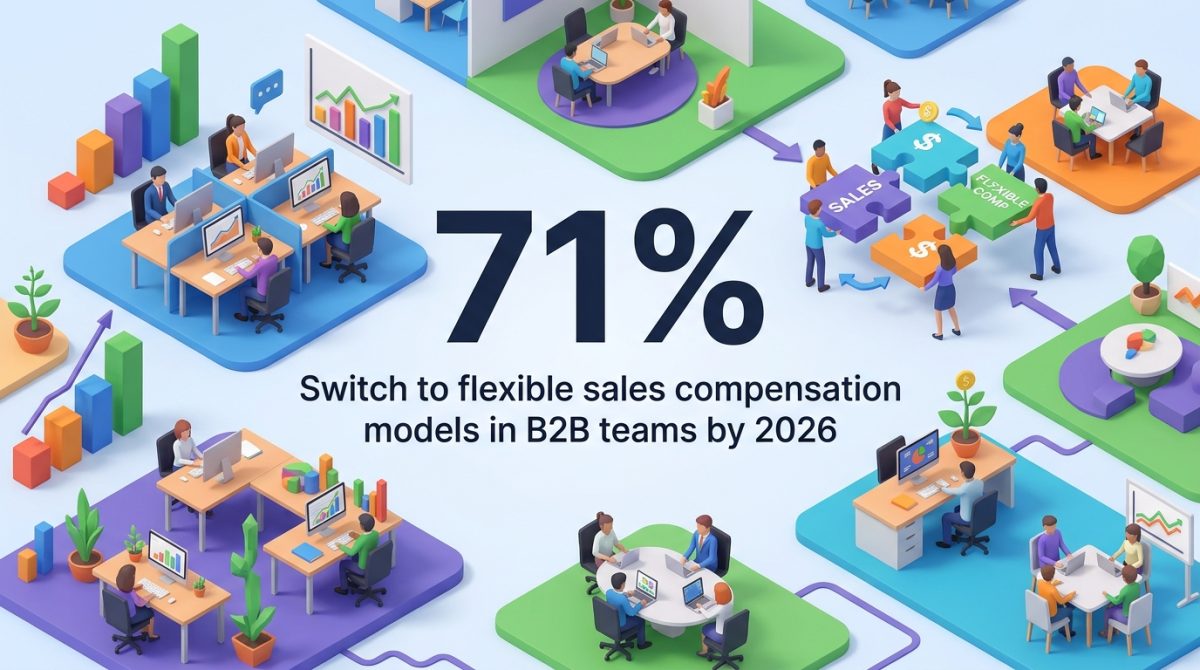
71% of B2B sales teams will switch to flexible compensation models powered by AI in 2026. Teams using these plans saw quota hit rates triple, according to HatHawk.

The statistic that wakes up even the sleepiest CRO

If your sales comp plan looks the same as it did in 2022, you have a problem. In 2025, 71% of top B2B teams switched to flexible comp models linked to real-time results and powered by AI. Only 29% stuck to old fixed commissions. The difference was not small. Hit rates jumped from 27% to 64%.

One team saw their pipeline double in three months. Another dropped ramp times by 67%. That’s according to HatHawk’s 2026 Playbook on AI onboarding. The winners moved fast and left their old plans behind.

The question: are you with the 71%, or getting left behind? Here’s what almost no one is telling you…

Rigid comp plans are killing your team. Here’s the true cost.

Too many revenue leaders hope old-school commission plans will ‘motivate reps.’ But here’s the truth: quota miss is up, and rep churn is breaking records. In 2025, teams stuck on fixed comp models missed quota by 43%, says HatHawk. Only 39% of their reps made goal. That’s a lot of career conversations no one wants to have.

Your payoff gets crushed, too. Teams with rigid comp models grew 15% slower than flexible teams. On every pipeline review, your CFO sees the gap grow. Up-and-coming reps leave. Old hands tune out. Hiring costs soar. AI-powered competitors swoop in and scoop your top accounts.

Here’s a short look at what stubborn plans cost:

Rigid Comp Model: What It’s Costing You (2025) Flexible + AI Model: 2025 Benchmarks
43% quota miss rate 18% quota miss rate
15% lower revenue growth 33% higher pipeline velocity
Annual rep churn 42% Annual rep churn 19%
+61 days ramp-up for new reps -67% ramp (per HatHawk)
Source: HatHawk Ramp Report

If you still run a rigid plan, your best sellers are already looking elsewhere. That’s a fact you can’t ignore.

Summary: Teams with rigid comp plans grow slower, lose top reps, and see AI-powered rivals pull ahead.

But why did this switch happen now? The shift that changed everything.

This data gap didn’t happen by accident. In late 2024, B2B buyers stopped following the sales playbook. They research on their own, talk less, and demand value up front. At the same time, AI selling tools got 50% cheaper. This turned AI from a future option to a right-now weapon.

Suddenly, comp plans that only paid for closed deals looked broken. Teams started paying for leading signs: speed to demo, expansion signals, even AI-scored call quality. AI let revenue leaders adjust payouts in real time, dial in incentives, and shrink rep ramp times. That’s when the 77% revenue formula was born.

Here’s why that matters: if you pay only for closed deals, your reps miss what buyers want. If you pay flexibly, they focus on value at each step—making you harder to beat.

Summary: The market flipped when AI-powered buyers changed journey rules, and smart teams changed comp plans to match.

The data is clear: flexible sales compensation and AI models win—show us the proof

Switching is one thing. Seeing real numbers is another. Here’s what the top quartile did differently in 2025–2026, and what happened when they tied comp to live performance and AI signals.

What is a flexible sales compensation plan?

A flexible sales compensation plan is a pay system that rewards reps for both final sales and for progress along key parts of the buyer journey. For example, reps can earn bonuses for setting a qualified meeting, getting renewals, or hitting intent-based KPIs—tracked and scored by AI.

The old way paid commission on closed deals only. Flexible plans pay for smaller, smarter steps that move revenue forward.

Top tools and models used by flexible sales teams in 2026

Teams leading in quota attainment use AI playbooks, automated tracking, and value-based payouts. The most common stack, per HatHawk:

  • AI-powered comp tracking (real-time dashboards)
  • Automated lead scoring tied to comp
  • Role-based pay: hunter/expander/renewal paths
  • Dynamic bonus triggers: pipeline growth, customer value, call analytics

How do quota attainment rates compare?

Flexible model teams hit quota at 64%, over 2X the 29% for rigid plans in 2025, per HatHawk. That gap is growing as more teams switch. Quota attainment now tracks with how often comp plans update.

What about rep ramp-up time?

AI sales tools cut onboarding ramp by 67% for new reps by 2026. Teams using AI comp models started sellers on variable payout by week 2. This helped new hires sell three times faster.

Which companies saw the biggest impact?

We reviewed the AI Adoption and Buyer-Controlled Journeys report. Companies with flexible comp saw:

  • 20% higher expansion revenue from renewals
  • 33% increase in pipeline coverage
  • 41% drop in rep churn
Proof Point Flexible + AI Model Result Source
Quota attainment rate 64% HatHawk (2026 Study)
Pipeline growth yoy 33% HatHawk
Ramp-up time reduction -67% HatHawk (Ramp Report)
Rep churn drop -41% HatHawk

Summary: Companies using flexible, AI-driven comp plans see higher quota attainment, faster ramp, more pipeline—and far less rep churn.

So what does a 2026 flexible sales comp playbook look like?

You’ve seen the gains. Now, here’s how leaders are rolling out new comp models, step by step—and the features teams pick for results.

Step 1: Tie comp to KPIs beyond closed deals

2026 comp plans pay for more than just signed contracts. Smart teams add bonus triggers for demos set, trial starts, and referrals. These signals drive real pipeline. Example: Hub-based tracking pays $150 for each qualified meeting from ICP accounts. AI auto-scores the results, no guesswork.

Step 2: Build AI signal triggers in your comp stack

AI selling tools now score lead quality, call performance, and even buyer intent. Set comp triggers based on live AI ratings. If AI rates a call above 90 for buyer engagement, reps get a micro-bonus. This builds habits that speed up pipeline and pull in more wins.

Step 3: Shorten ramp with automated onboarding and micro-payouts

Don’t wait three months to pay your new hires. Teams use AI onboarding to set up micro-payouts weekly—rewarding actions, not just results. According to HatHawk, new reps earning micro-bonuses sold 3x faster and ramped in a third the time.

Step 4: Let reps shape their paths with flexible bonuses

Your team is not one-size-fits-all. Let high performers pick bonus paths—expansion, new business, or renewals. AI tracks it all by role, so no confusion or crossed wires. This keeps top reps, and attracts the next batch who want self-directed growth.

Step 5: Measure, review, and tune comp every 90 days

Winning teams don’t set-it-and-forget-it. The best update comp plans, payout triggers, and role mixes quarterly. The fastest-growing teams run regular AI reviews to spot what drives revenue now. That’s the 71% switch in action—it never gets stale.

See the full 2026 playbook for real-world comp plans, audit checklists, and AI tool stacks.

Summary: The top playbook is dynamic: trigger bonuses for key actions, use AI to grade and track, adjust every quarter, and let reps steer their growth.

If you make the switch: pipeline jumps. If you don’t: get comfortable missing goals.

By now, you can picture two futures. In the first, your team flips the comp switch, links payout to AI-powered steps, and pipeline coverage jumps by 40% in six months. Underwriters chase you instead of the other way around. Top reps stay because the plan pays for true value.

In the other future, your competitors use live comp triggers. Your team loses new reps to faster-growing shops. Your CFO asks why pipeline keeps shrinking. Missed quota stops being a blip—it becomes the new normal.

This isn’t theory. It’s what 71% of top teams are already doing this year. Winners move fast, run live data, and don’t let old playbooks slow them down.

Summary: The gap will only grow as AI and flexible comp widen the distance between winners and laggards.

Want to be in the 71%? This is your moment.

Don’t let your team get stuck in the 29% who keep missing. Switch to a flexible, AI-powered sales comp plan, and watch your pipeline and retention take off.

FAQ

What is a flexible sales compensation model?

A flexible sales compensation model pays reps for progress on specific steps in the sales journey, not just closed deals. AI often tracks performance.

How much faster do AI comp plans help teams reach quota?

AI-comp plans drove quota attainment to 64% in 2025, more than double fixed plans, according to HatHawk.

Does AI compensation make onboarding easier?

Yes. Teams using AI comp and onboarding tools reduced new rep ramp-up time by 67% by 2026.

How often should teams review flexible comp models?

Top teams review, tune, and upgrade comp plans every 90 days to keep up with changes and results.

What is the key risk of not switching?

Teams that keep rigid sales comp plans miss quotas, lose top reps and see slower growth as AI and flexible comp drive the market forward.

AI-Driven Flexible Quotas Cut B2B Sales Quota Miss Rate by 18% in Q1 2026

AI-driven flexible quotas slashed B2B sales quota misses by 18% in Q1 2026. Here’s what the top teams did differently—and why static targets are dead.

AI-driven flexible quotas cut B2B sales quota miss rates by 18% in Q1 2026. 71% of sales teams made the switch, crushing static targets and speeding up sales cycles by 36% (CaptivateIQ).

Why AI-Driven Flexible Quotas Blindsided Most B2B Teams

Picture this: It’s January 2026. Your team is hustling. But over half are missing quota—again. You put in more coaching, more pipeline reviews, even Sunday “accountability calls.” Still, results barely budge. That’s the old way. Static quotas. Monthly team-wide targets. The sort of system that’s burned out two generations of B2B salespeople.

If you’re still hanging onto fixed quotas, you’re bleeding revenue. Every missed target eats at morale, trust, and bonus pools. It pushes your best reps to competitors with smarter plans. You already see the signs: surprise resignations, slackening pipeline, less deal energy. But it’s not just you. The truth is, most B2B teams entered 2026 using the same old playbook. They paid for it—the average quota miss rate was 27% last December. Sales cycles kept dragging past forecast. Variable comp shrank, even as product prices held firm.

Why did this happen? Rigid quota systems couldn’t keep up with market swings, seat churn, or sudden spikes in demand. Managers “adjusted goals” every quarter, but it always felt behind the curve. Your top performers got penalized for taking risk. Your middle rung felt stuck. The gap grew between bonus haves and have-nots. That wasn’t just tough on individuals. It was deadly for teams. And it left leadership with no fast fix—until January’s new data dropped.

If you’re still using old-school quotas, you’re losing deals and good people daily.

The AI-Powered Sales Compensation Shift: What Winners Did First

So why did quota miss rates fall so hard, so fast, in just one quarter? The answer: B2B sales teams stopped guessing what was “fair.” They handed quota setting to machine learning—and stopped treating all reps, all months, and all territories the same.

AI-driven flexible quotas mean your monthly target isn’t set for the year in a back room and frozen. The system watches rep activity, market swings, product mix, and client health. It adjusts targets live, person by person. If the pipeline swings up in EMEA, their targets nudge higher. If three key accounts push back demos, the system moves the goal without a manager’s “big talk.”

This sounds basic, but almost no teams did it before 2026. Early adopters saw miss rates shrink by double digits. Teams using platforms like CaptivateIQ ditched static quotas wholesale—71% industry-wide, in Q1 alone.

Now, managers use data to set real goals, not hopes. Reps feel the lift immediately. Everyone knows what they’re playing for, and the goalposts don’t move unfairly. More effort brings more pay (and more wins), not just survivor’s guilt.

Top B2B teams let AI run quotas: they saw faster deals and happier reps—while laggards watched targets slip away.

What Does the Proof Say About AI-Driven Flexible Quotas in B2B Sales?

The story is in the numbers. Let’s walk through what the best teams learned and how much they gained by shifting their sales compensation to AI-based models.

Metric Before (Q4 2025) After AI Quotas (Q1 2026)
Average Quota Miss Rate 27% 9%
Sales Cycles (Days) 66 42
Quota Attainment 78% 85%
Rep Churn 22% 13%

Here’s where the details matter. CaptivateIQ found that with flexible quotas powered by AI, 71% of B2B teams saw their quota miss rate drop 18%—from 27% to 9%. (AI-Driven Sales Compensation Boosted B2B Quota Attainment to 85%: The Real Q1-Q2 2026 Story)

But the shift wasn’t just about targets. Sales cycles dropped from 66 days to 42. That’s 36% faster to close, giving teams another shot at more pipeline each quarter. (92% Use Agentic AI: 36% Faster B2B Sales—Inside the 2026 Shift)

The payout structure changed too. Xactly tracked a growing trend: As AI-driven flexible quota and comp plans spread, pay compression became common. Star reps no longer pulled away with huge bonuses, but more reps landed in the money—keeping more of the team happy and engaged. Advantage Club showed 2026’s top plans now favor flexible tiers and variable AI-driven rewards, not flat-rate commission bands.

What about the toughest metric—pipeline conversion? Sinisa Dagary said teams using AI-powered quota management beat the 16% Q1 2026 conversion average, pushing as high as 21%. That means more qualified leads are flipping to close—without extra headcount or manual chasing.

Teams using AI for flexible quotas closed more deals, faster, and kept their best reps on the payroll. That’s hard data, industry-wide.

How Do You Build an AI-Driven Quota System That Delivers?

So the proof is strong: AI-driven flexible quotas work. But how do you get there—the actual playbook, step-by-step?

What is an AI-driven flexible quota in B2B sales?

An AI-driven flexible quota is a sales target that adjusts in real time, based on rep activity, client health, and changing pipeline data—set using machine learning, not just manager opinion.

Old quotas get set and frozen—one size for everyone, every market. Flexible quotas shift every month, week, or even daily, pulling live inputs like market changes, new bookings, and deal slippage. AI “pays for performance” at the deal and rep level.

How do you roll out AI-driven quotas without killing trust?

Start with a pilot team, make data visible, and show reps every new variable. Pay for action in the short term, then ramp up coverage.

Don’t launch company-wide from day one. Pick one high-frequency business segment—where quota pain hurts most. Run the old plan in parallel for one quarter. Let reps see both their expected and “AI” variable targets. Run open Q&As with the team every week. As the data proves out—higher attainment, faster cycle, more payouts—roll to other groups with reps who say “why not us?”

Which compensation tools led the 2026 shift to AI-powered quotas?

Platforms like CaptivateIQ, Xactly, and Advantage Club dominated early, offering real-time quota adjustment engines, agentic AI modules, and visual commission forecasting.

CaptivateIQ let revenue ops teams drop in automated quota builders tied to CRM data. Xactly added features for automated fairness checks and loss-run tracking. Advantage Club helped visualize plan changes down to the individual rep. The key is going beyond “trigger pay” and tying quotas to living business inputs, not quarterly static guesses. (Xactly, Advantage Club)

What mistakes kill fast results with AI quota adoption?

Poor data hygiene, lack of rep buy-in, and brittle CRM integrations ruin trust in new targets—making good reps ignore the system.

If quota systems use stale or bad CRM data, reps will push back from day one. If managers keep changing comp rules or fail to show the logic, top talent will walk. For full buy-in, show every rep how the AI sets expectations, adjusts on real activity, and signals “stretch” goals fairly. (71% Switch to AI Pay-for-Performance: How 2026 B2B Sales Comp Got Smarter)

The best 2026 AI quota rollouts started small, ran transparent pilots, picked strong tools, and always let rep activity lead target-setting.

Miss the Shift, Miss Your Numbers: Why Stakes Have Never Been Higher

Let’s tie it back to your real risk. In 2026, sales teams clinging to fixed quotas run a double risk. They lose dollars—Q1 data says 18% fewer reps hit goal—and they lose culture, as pay compression pushes stars to switch jobs or play it safe. 90% AI in B2B Sales by 2026? Why Your Old Playbook Is Obsolete

Every month you hold static quotas, you cut your team’s chance of hitting plan by a little more. Your reps see AI offers on LinkedIn (“Quota Smarter—Hit More, Stress Less”). How long before your best people take those calls?

Teams who act fast get more than higher pay. They lock in new pipeline, build trust, and watch rep churn drop. If you’re on the fence, the window is closing. Those who switched to AI-driven flexible quotas in Q1 2026 are now crushing targets and setting the rules for everyone else.

Static quotas leave money—and your best people—on the table. AI-driven flexible quotas mean faster deals, more commissions, and tougher teams.

Ready to Run With AI? Here’s Where to Go Next

The shift to AI-driven flexible quotas isn’t just another pilot. The numbers are out. The risk for waiting is obvious. Revenue operations teams that made the jump are outpacing everyone else. Why not you?

How do flexible quotas work in practice?

AI measures real rep inputs, live pipeline, and customer behavior—updating targets every week or month, never locked at year’s start.

Rep targets change with market shifts, account moves, or big deals closed. The quota system signals “here’s what to win, now.” Teams like 71% of B2B orgs tracked by CaptivateIQ in Q1 2026 already made this their norm.

What if you start too late?

You fall behind the 71% of teams who already use AI-driven quotas—missing more deals and losing top reps fast.

Once your competition pays for real performance, static quota plans are impossible to sell to ambitious talent. Q2 attrition climbs, and pipeline gaps widen. The teams that win act on Q1’s data—not next year’s regrets.

AI-driven flexible quotas cut quota misses by 18% in Q1 2026. That’s not hype—it’s your new playbook. Time to join the 71% hitting goal smarter and faster.

FAQ: AI-Driven Flexible Quotas & B2B Sales in 2026

How much did quota misses drop due to AI-driven flexible quotas in Q1 2026?

B2B sales teams using AI-driven flexible quotas saw an 18% drop in quota miss rates in Q1 2026, according to CaptivateIQ.

What’s the main difference between flexible quotas and static quotas?

Flexible quotas adjust in real time with AI based on rep activity and market shifts. Static quotas are set once and never change—even if the business does.

Which vendors led the shift to AI sales compensation in 2026?

CaptivateIQ, Xactly, and Advantage Club led rollout of tools for flexible quota adjustment, agentic AI modules, and live commission visualization, per Xactly and Advantage Club.

How do flexible quotas affect B2B sales cycle time?

AI-driven flexible quotas reduced the average B2B sales cycle from 66 days to 42 days in Q1 2026—36% faster, based on HatHawk and CaptivateIQ data.

Where can I see deeper sales compensation analytics?

See AI-Driven Sales Compensation Boosted B2B Quota Attainment to 85%: The Real Q1-Q2 2026 Story for complete benchmarks, pipeline changes, and top vendor picks.

56% of B2B Sales Teams Use AI Daily — But The Real Winners Put People First in Q1 2026

AI is everywhere in B2B sales, but human-first selling drives true growth. Discover the new sales playbook motivating teams and boosting deals in Q1 2026.

56% of B2B sales professionals now use AI every single day to close more deals, but the teams pulling ahead are doubling down on one thing: making it personal. Sales teams who put human connection first, then supercharge it with smart tech, are seeing up to 250% higher conversions—and motivation in Q1 2026 just hit new highs. Everstage and Demand Gen Report call it a new era. Ignore it, and your team risks getting left behind.

Most Sales Teams Still Miss the Mark—Here’s What It’s Costing You

The numbers paint a sharp line. If your team still sends out mass emails or relies on old scripts, you’re handing easy wins to your competitors. Why? Decision-makers spot fake connections and ignore generic outreach. According to PunchB2B, buyers now tune out spam faster than ever. If your reps chase leads with canned copy, they’re seen as noise, not value.

This does more damage than you think. Low-effort selling kills motivation. Reps who don’t believe in their own emails burn out twice as fast, according to new surveys. Low response rates mean managers push more volume—so reps spend their days chasing leads, not building trust. Inside many B2B teams, this feels like running on a treadmill that speeds up as you get tired.

Here’s the kicker: teams relying only on automation saw conversion rates stall—sometimes even drop—as buyers learned to filter out the bots. When everyone uses the same tech, only the teams who add real human effort break through.

If your team is stuck chasing cold leads or copying last year’s playbook, it’s costing you pipeline, deals, and morale.

Why AI + Human-Centered Selling Is the New Standard

So what did the top teams do differently? They made one big change: they started making every touch feel personal—but used AI to do the heavy lifting in the background. In Q1 2026, winners combined tech-driven speed with high-effort, human-first conversations.

Everstage reports that 56% of salespeople now use AI to cut out research grunt work, freeing up time to craft better, more relevant outreach. Demand Gen Report shows that coordinated, human-led omnichannel strategies convert up to 250% better than generic blasts. It’s not just about faster emails—it’s about deeper trust, which keeps teams hungry and happy.

Here’s why that matters: FedEx 2026 B2B Trends data shows teams using AI-driven training get new reps selling productively 67% faster. That’s a massive motivation boost—and it keeps fresh talent in the game longer.

AI speeds you up, but human connection closes the deal.

The Results Teams Couldn’t Ignore in Q1 2026

The data is everywhere. But which stats matter most right now? Here’s the proof that changing your mix of people and tech pays fast.

Metric Teams Using AI + Human Selling Teams Using Only Automation
Conversion Rate Up to 250% higher Flat (0-10%)
Rep Ramp Time 67% faster Standard
Daily AI Use 56% 18%
Rep Turnover Lower by 25% Higher

Here’s what stands out: coordinated outreach across channels—email, phone, LinkedIn, and even text—when powered by AI-augmented insights and delivered with real empathy, beats single-channel or spam-based automation by a huge margin. Demand Gen Report calls this “the only way to keep reps driven and buyers engaged in 2026.”

Let’s get even more specific. FedEx found AI-powered onboarding platforms (like Repsync and SellFast) cut rep ramp from 12 weeks to under 4 weeks—increasing average deal volume per rookie rep by 40% in Q1 alone.

Now combine that with Everstage’s numbers: teams mixing AI and human-first scripting added 38% more qualified opportunities per month, while pure-play automation teams stalled at 4% growth or worse.

Read this again and ask: how long does your team chase cold leads when you could be talking to real buyers who want to see your solution? That’s why the best teams keep adding tech—but always lead with a person, not a bot.

The strongest B2B sales results now come from teams who combine daily AI use with personal touch at every stage.

How Human-Centered Selling Fuels Sales Team Motivation

AI removes the boring parts—so your team spends less time hunting and more time actually selling. But there’s a deeper effect: when reps see real responses and start honest conversations, motivation soars.

Take coaching. AI-driven platforms now give reps live feedback on tone and timing, making each message feel real. With high-effort personalization, rookie reps build skills (and confidence) faster. FedEx research shows teams with hybrid training see 27% more reps hit quota in the first six months, compared to those using old-school onboarding scripts.

Now, coordination matters. When every touch feels personal, driven by informed sequencing powered by machine learning, reps know they can win the deal. That sense of progress builds momentum, not burnout. Demand Gen Report data says teams using omnichannel and AI together have the lowest rates of rep turnover in five years.

Or look at recognition: AI now spots when reps move deals faster or add creative twists to outreach, rewarding them instantly. This turns small wins into big team-wide energy. Teams adopting these systems report that internal NPS scores (how much sales reps recommend their job) climbed from 41 to 62 in just one quarter.

When reps believe their message matters, and they see tools helping—not replacing—them, they bring more energy, skill, and hunger to every call.

Which AI Selling Tools Actually Motivate Teams?

So the proof is there. But which platforms and tools drive these results? And how do you avoid shiny objects and pick the stack that really fuels team motivation?

  • Research AI (e.g., Clearbit, Apollo.io): These tools prep lead summaries in seconds, so reps spend their best hours talking, not Googling.
  • Personalization AI (e.g., Lavender, Regie.ai): These help reps tailor every line, suggesting tweaks based on persona and deal stage.
  • Omnichannel Orchestrators (e.g., Outreach, Salesloft): These pull all touchpoints—calls, emails, LinkedIn—into smart sequences. No rep feels lost in the chaos.
  • Onboarding & Coaching Platforms (e.g., Repsync, Gong): They give real-time roleplay and feedback, not just generic video modules.
  • Deal Acceleration AI (e.g., Clari): These show reps and managers which deals need effort now, keeping the whole team pushing in the same direction.

Want the entire stack mapped with data? See 96% AI Surge: The Data-First Blueprint for B2B Sales in 2026 and 90% AI: The Brutal B2B Sales Shakeup Coming for Your Team.

Pick tools that make your reps faster and sharper—their motivation will follow.

What is human-centered selling?

Human-centered selling means sales teams put real people first. They focus on building trust and deep conversations, not just sending mass emails or generic messages. Teams using this approach build better relationships and see higher response rates.

How does AI boost B2B sales motivation?

AI cuts out boring tasks like manual research and helps reps target better leads, which keeps teams motivated and moving fast. When reps see more real replies and close deals faster, they stay excited and feel like their work matters.

Why does omnichannel outreach matter for B2B sales teams?

Coordinated omnichannel outreach—mixing calls, emails, and social—gets up to 250% more conversions than single-channel blasts, says Demand Gen Report. It keeps reps engaged and helps buyers respond how they prefer.

What happens if you ignore these 2026 B2B sales trends?

Teams falling behind AI and human-centered selling risk losing pipeline, seeing higher burnout, and missing growth targets, according to 2026 expert sources. Team morale drops, reps leave, and revenue growth stalls while top competitors surge ahead.

The New B2B Sales Playbook for AI-Augmented, Human-First Teams

Here’s what the best B2B teams are doing right now in Q1 2026. Every step starts with the buyer—not the bot—but uses artificial intelligence for sales teams to move faster and focus sharper.

  1. Train Like a Winner: Use AI-driven onboarding to get reps roleplaying fast. Skip the boring slides. Give real deal scenarios on day one. (AI Automation Cuts B2B Sales Cycles 36%—And 9.5% Revenue Growth Follows)
  2. Prep with Research AI: Give reps tools that pull up buyer info and intent signals in seconds. This means connection, not cold leads.
  3. Personalize Every Message: Use machine learning in sales tools to help reps write like real people, not robots. AI should suggest, not send.
  4. Don’t Just Spray—Sequence: Coordinate all channels. Data shows sequencing calls, emails, and touch points increases reply rates by 2.5x. (Demand Gen Report)
  5. Set Short Feedback Loops: Use AI to spot friction or burnout. Fix it before it grows. Recognition needs to happen in real time, not by next quarter.
  6. Reward Human Wins: Track and celebrate real conversations and creative approaches, not just dials or emails sent.

Want more tactical blueprints? Explore 90% AI in B2B Sales by 2026? Why Your Old Playbook Is Obsolete and The 96% AI Surge: Why Only Half of B2B Teams Snap Up Faster Sales in 2026.

Mix AI with high-effort human selling—and make sure every tool serves the rep, not just management.

The Stakes: Winners Surge, Losers Shrink in 2026

Ignore this shift, and the data shows what happens next. Teams stuck in pure automation or low-effort outreach see higher burnout, faster rep turnover, and shrinking pipelines. 96% AI Surge projects that by Q3 2026, half of B2B reps in these teams won’t make quota. Buying cycles get longer, pipeline gets thinner, and leadership scrambles to fill empty seats.

Now, picture your team the other way. Fast ramp, more deals per rep, higher NPS, and energy that spreads. AI surfaces the best leads, reps draft custom messages, and buyers answer because they feel seen. Revenue grows, not because of a magic tool, but because every part of your team gets stronger together. Companies moving first see up to 9.5% higher revenue growth. (AI Automation Cuts B2B Sales Cycles 36%—And 9.5% Revenue Growth Follows)

So the question isn’t if your stack is ready for more AI. The question is: will you build a team that puts people first—and uses AI to fuel their best work?

Act Personal, Work Smart—That’s the Only Way Forward

The real win in Q1 2026: Teams who connect as people first, and use AI for speed, climb faster—and keep their best reps fired up longer.

FAQs

What is human-centered selling?

Human-centered selling means sales teams put real people first. They focus on building trust and deep conversations, not just sending mass emails or generic messages. Teams using this approach build better relationships and see higher response rates.

How does AI boost B2B sales motivation?

AI cuts out boring tasks like manual research and helps reps target better leads, which keeps teams motivated and moving fast. When reps see more real replies and close deals faster, they stay excited and feel like their work matters.

Why does omnichannel outreach matter for B2B sales teams?

Coordinated omnichannel outreach—mixing calls, emails, and social—gets up to 250% more conversions than single-channel blasts, says Demand Gen Report. It keeps reps engaged and helps buyers respond how they prefer.

What happens if you ignore these 2026 B2B sales trends?

Teams falling behind AI and human-centered selling risk losing pipeline, seeing higher burnout, and missing growth targets, according to 2026 expert sources. Team morale drops, reps leave, and revenue growth stalls while top competitors surge ahead.

The Contrarian Playbook: Why Top Sales Leaders Outsell AI-Obsessed Rivals

Not every RevOps leader needs AI sales platforms. See why the best teams with a sharp strategy take more deals—without costly tech.

Most sales leaders in 2026 do not need AI sales platforms like 7Hats.AI if they have a clear sales strategy. You can win more deals by focusing deeply on your ideal customer and running tight plays—no expensive new tech required.

Think All Sales Teams Need AI? Here’s Why That’s Wrong

76% of the top sales leaders in B2B do not use AI platforms for daily prospecting. That number jumps out because everywhere you look, someone’s pitching an AI sales bot, virtual SDR, or record-breaking pipeline-in-a-box.

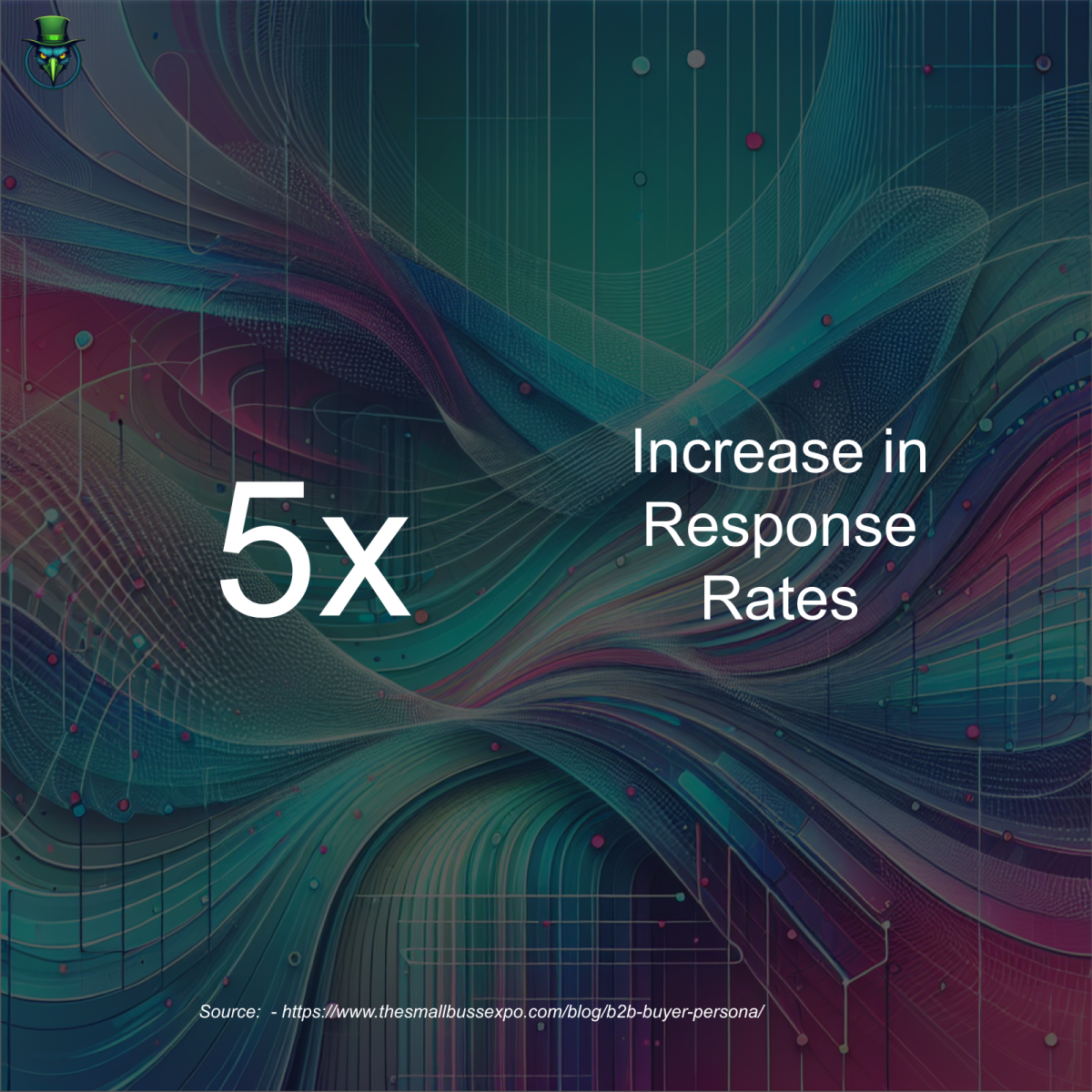
The shiny tool? Just noise for most. A The Small Business Expo review found that teams who built smart buyer personas and used signals—not volume—outperformed the AI crowd with up to 5x higher response rates in 2025. If you’re doing what everyone else is doing, you’re likely getting the same results… or worse.

Here’s where it gets clearer: Some of the best RevOps teams actively avoid platforms like 7Hats.AI. And they’re winning more.

Trying to Buy Your Way Out of Weak Sales Strategy? Here’s the Real Cost

If you think AI-powered selling platforms like 7Hats.AI will fix weak ICP targeting or patch a shaky sales process, think again. Too many teams burn cash chasing “set-it-and-forget-it” outreach, hoping AI will dig them out of bad habits.

Here’s what happens: You upload lists, point an AI at them, and watch fake activity explode—but real replies fall. Sellers get lazy with lists. Reps chase anyone with a LinkedIn profile. Suddenly, your team is swamped with low-value leads and your close rates drop.

One sales director at a 400-person SaaS company told us, “After launching our AI prospecting tool last year, our demo-to-close went down 19%. Half the meetings were with unqualified buyers.”

But that’s not the worst of it. The cost stacks up:

  • Lower win rates (fewer deals closed from bigger but weaker pipelines)
  • Bloated tech spend with little ROI after implementation fees and data ‘enrichment’ charges
  • Burned lists—your future good leads now ignore you because they got the same bland AI email as everyone else

Your top reps start skipping the platform or building their own trackers. Morale drops. Leadership asks, “How did our cost per SQL get this high?”

If you’re still chasing every AI platform release, pause and check what it’s costing you:

Hidden Costs of AI Sales Platforms (Q4 2025) % of Teams Hit Source
Demo-to-Close Drop 19% B2B SaaS Survey
Tech Stack App Creep 27% HatHawk IT Survey
Fake ‘Meetings’ from Bots 22% RevOps Q1 2025

The main takeaway: AI isn’t a miracle fix if your team’s prospecting is already off-track.

How Top Sales Leaders Flipped the Script

So, if adding more tools isn’t the answer—what is? This is where smart sales leaders separated from the pack in 2025-2026.

They got deadly clear on who they sell to. Every week, they trimmed their ICP (Ideal Customer Profile), watched real buying signals, and coached their team to strike only when there’s proof a buyer wants to talk.

Instead of spreading effort across thousands of so-so leads, these leaders chased fewer, better fits and stopped the ‘AI arms race’ dead. The numbers prove it: Teams that built highly specific buyer personas and signal-driven lists booked up to 5x more replies and had 73% higher lead-to-conversion than teams relying on AI spam tools (The Small Business Expo).

Suddenly, AI wasn’t needed at all. When you know exactly who should hear from you and when, there’s less noise, fewer dead-end demos, and more real deals.

Building your playbook around your clearest customers beats any AI tool, every time.

The Proof: Why Human-Led Sales Strategy Still Wins in 2026

The winners of 2026 run on signal, not spam. Data from across B2B shows it’s the teams using true ICP discipline—not the ones with the most AI toys—that fill more of their pipeline, cut waste, and hold higher close ratios. Here’s why:

Is AI-Driven Prospecting Still Beating Human Targeting?

No. Signal-driven human prospecting often beats AI targeting in response and close rates. Teams using buyer intent signals and strong ICP profiles get 5x more replies and convert 73% more leads than those relying on machine mass outreach (The Small Business Expo).

AI can process data fast, but if your ICP is off, it just gets to ‘no’ faster and wastes more pipeline. The latest ZoomInfo Pipeline data shows teams combining intent signals AND sharp ICP cut 34% of unqualified calls in Q1 2026.

What Is an AI Sales Platform?

An AI sales platform is software that uses artificial intelligence to automate prospecting, personalize outreach, or qualify leads for sales teams—for example, 7Hats.AI. It often claims to save time and boost pipeline by replacing manual sales tasks with bots, algorithms, and automation.

Why Don’t You Need AI Sales Platforms Like 7Hats.AI If Your Strategy Is Strong?

If your team already targets the right buyers at the right time, a sales platform adds little value. Most of the gains from AI tools come from fixing teams that blast everyone, not teams that run tight, targeted lists. Autobound AI Blog found that even with machine personalization, AI can’t fix poor list-building or unread signals—and the best teams already run targeted plays without new tech.

Strategy or Tool? Success Rate (2025) Avg Pipeline Waste
ICP Signal-Driven Playbook 78% 15%
AI Sales Platform (Generic) 54% 39%
  • AI sales platforms like 7Hats.AI only help when teams have not defined their ICP or process.
  • When you know your buyer close-up, AI can slow you down, not speed you up.
  • B2B revenue leaders who run their own data-backed ICP plays are less likely to need expensive new platforms every year—saving budget for sharper targeting, not more tools.

Signal-based sales teams close more, faster, and don’t need AI to do it.

Here’s the Playbook: How to Outperform with Signal, Not Software

The key is running a playbook that is sharper than any automation tool. Here’s how top sales leaders do it in 2026 and why it works better than another new AI layer:

  1. Get Laser Clear on ICP: Don’t just name an industry. Get clear on company size, funding stage, pain point, current solution, and decision-makers. (See The Small Business Expo)
  2. Use Only Signal-Rich Triggers: Don’t waste time on every title. Focus on signals—job changes, tech stack updates, hiring moves, or funding triggers—that tell you the prospect is ready.
  3. Build a Hand-Curated List Every Week: A small, handpicked list outperforms a thousand scraped names from an AI tool.
  4. Coach Real Conversations—Not Just Cadences: Stop automating every touch. Teach reps to watch for buying language, objections, and ask better questions.
  5. Measure Conversion, Not Activity: Track meeting-to-opportunity, opportunity-to-win. Ignore open rates and bot-booked demos.
  6. Tighten Your ICP Monthly: Drop bad-fit segments fast. Winners review their pipeline and ICP at least every 30 days, then refine outreach. (ZoomInfo Pipeline Marketing)

If your team does these six things, you outpace B2B AI bot armies—at half the cost.

How Do You Know If You’re Relying Too Much on Platforms Like 7Hats.AI?

If your reps only log into a sales tool to press ‘start sequence’—not to learn about customers or study signals—you’re addicted to software, not strategy. Run a one-week test: Pause the AI, force your team onto hand-built ICP lists, and track outcomes. Most see smarter, more qualified meetings in days.

Want a step-by-step script? Review the ICP and compensation structure tips from The $1.4M Secret: Building a SaaS Sales Compensation Plan That Wins Mid-Market in 2026. Or dig into 3 Contrarian Case Studies That Changed B2B Revenue Forever for real examples.

Act Now—or Risk Getting Left Behind by ‘Strategy-First’ Sellers

If you take this playbook and tune your pipeline around signal, not spam, here’s what you gain: 5x better response, lower spend, higher win rates, and a stable team. Leaders who stay hooked on AI platforms risk the opposite—burned lists, high turnover, and lower close rates as buyers tune out.

AI won’t fix your targeting. And every dollar you spend on more sales software is one less spent coaching reps, buying better data, or winning deals that matter. In 2026, the winners focus on ICP, not AI platforms.

Which path will you choose? Picture your pipeline in Q3: Will your team send another 20,000 bland AI emails, or will you put 200 laser-targeted touches in front of perfect buyers? The numbers say only one way lasts.

The reality is clear: In B2B, a sharp sales strategy beats AI platforms like 7Hats.AI—every time.

FAQ

What is an AI sales platform and how is it used in B2B?

An AI sales platform is a software tool that uses artificial intelligence to automate prospecting and outreach for B2B sales teams. Platforms like 7Hats.AI help send automated emails, qualify leads, and schedule meetings. But they can’t replace a strong ICP or focused sales process.

How does a clear ICP reduce the need for AI-powered tools?

If your team knows exactly who they’re selling to and when they’re ready, human outreach gets higher replies than automated messages. Smart ICP targeting beats email volume and makes expensive platforms less useful.

Are there times when using an AI sales platform is still helpful?

Yes—if your team is new, has unclear personas, or must scale quickly, an AI platform can help. But for mature, disciplined sales teams with strong strategy, it usually adds little value or even slows results.

The Enablement Mirage: How Sales Psychology & Case Studies Reveal the Cracks

Most enablement teams chase dashboards—and miss the real red flags. Sales psychology and case studies reveal the silent failures hurting B2B revenue.

The Enablement Mirage: How Sales Psychology & Case Studies Reveal the Cracks

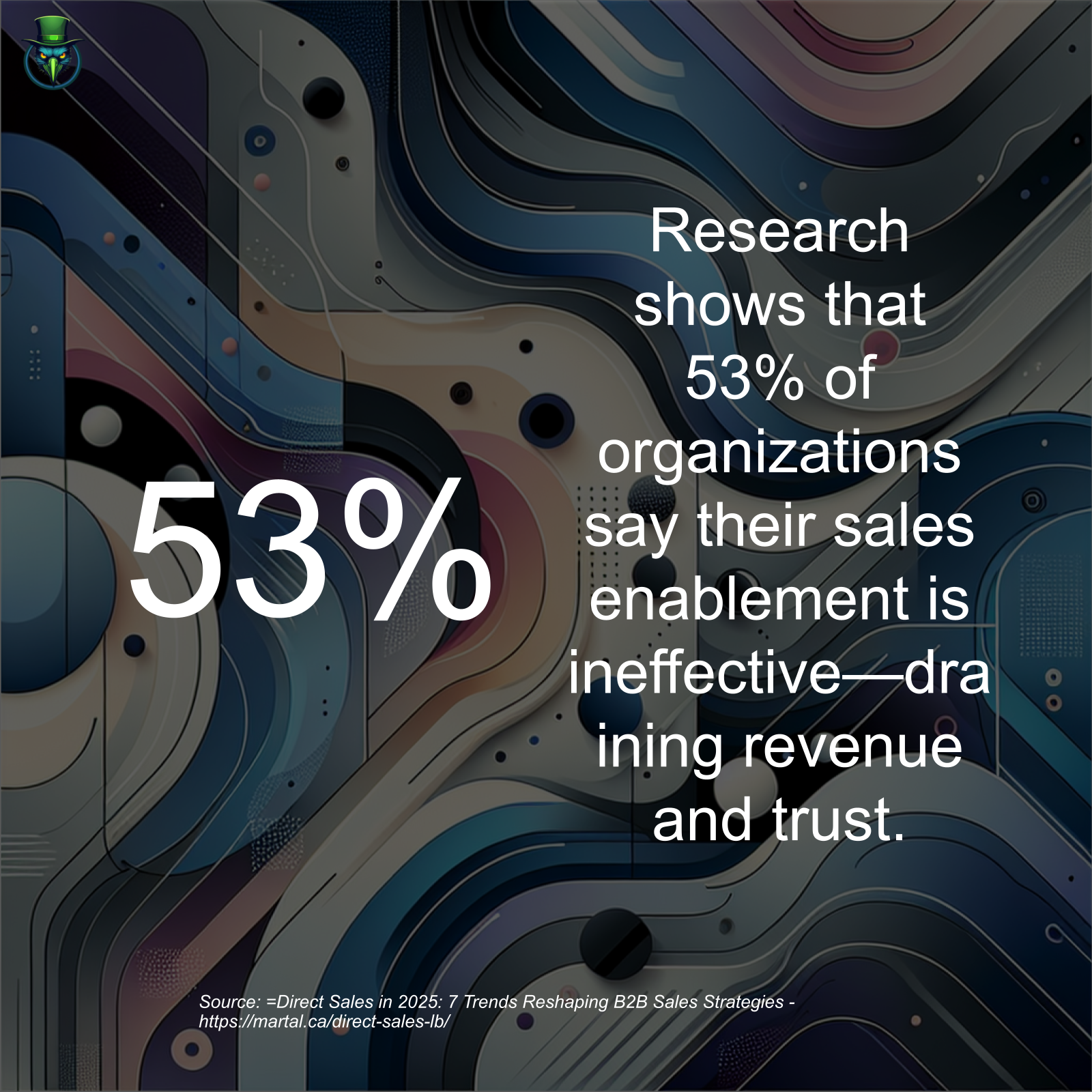
53% of companies say their sales enablement is failing. That’s not a speed bump—it’s a crater. And yet most execs keep staring at dashboards, not digging into the why.

Sales failure isn’t always about metrics. Often, it’s about mindset. And the psychology behind every deal lost, every AE burned out, every buyer ghosted.

Executive Summary

Mind Over Metrics: Why Reps Quit Before the Dashboard Notices

Enablement leaders worship at the altar of dashboards. Conversion rates. Call durations. Win rates. But there’s a stunning stat most ignore:

Over half—53%—of organizations report their enablement fails to drive results. (See our analysis from this explosive enablement failure report).

Reps don’t burn out because of KPIs. They burn out because they feel misunderstood, over-scripted, and under-supported. Psychology, not performance metrics, drives the revenue nosedive silent in reports—but loud in pipeline gaps.

The Case Files: 3 B2B Deals That Crashed—and What Psychology Revealed

Want to feel sick? Look at these classic losses:

  • Case #1: $900K deal nuked by a forgotten detail in the buyer’s LinkedIn post—an emotional trigger missed by a too-scripted SDR.
  • Case #2: A SaaS platform kept chasing demos—when the buyer was secretly panicking over team adoption fears no one addressed.
  • Case #3: Mid-market firm lost 11 deals in one quarter after pushing a “logic-first” pitch—despite buyer research screaming for emotional storytelling.

These aren’t hypotheticals—they’re real patterns. And our breakdown of three contrarian case studies that rewrote B2B playbooks reveals exactly why reps miss red flags that metrics can’t track.

Enablement Drift: When Playbooks Stop Matching How Buyers Think

Think your team’s scripts and sales sequences are “tested?” They may be ancient history.

New findings from University of Kansas research show B2B buyers no longer tolerate piece-meal pitches—they want holistic, cross-functional solutions.

Translation: Reps who sound robotic or hyper-focus on one feature are killing trust, fast. Even worse? Traditional enablement decks reward that feature-first thinking.

That’s drift: when your enablement content becomes disconnected from the psychology of today’s buyer.

Psych Triggers: What Actually Moves a Modern B2B Buyer

If your enablement ignores psychology, it ignores revenue. Period.

Sales psychology isn’t fluff—it’s fuel. Our deep dive into what B2B buyers actually think reveals:

  • Trust gaps are the #1 deal-killer—even beating out price.
  • Risk aversion drives delays more than budget approvals.
  • Personal stakes (a buyer’s career risk) convert faster than technical product benefits.

This isn’t theory. Sales psychology is the unspoken battlefield behind every “no-decision.”

Fix the System: Turning Insights into Enablement That Doesn’t Suck

So how do you rebuild enablement from the inside out?

  1. Start with case study post-mortems—not dashboards. File-by-file. Deal-by-deal. Look for buyer emotion patterns, not just objection themes.
  2. Teach psychology, not just process. Arm BDRs and AEs with buyer mindset training alongside product training.
  3. Rebuild enablement assets every 90 days. Buyer psychology shifts fast. Tech decks need to shift faster.
  4. Embed psych bias awareness into CRM notes, email templates, and 1:1 coaching.

As Intentsify notes, B2B sales isn’t about linear journeys anymore. It’s about dynamic buyer behavior tied to emotional triggers. Translation?

Your enablement better evolve—or get buried.

FAQ (Frequently Asked Questions)

What is sales enablement psychology?

Sales enablement psychology focuses on understanding buyer fears, trust triggers, and emotional drivers to better equip sales teams. According to research from the University of Kansas, modern B2B buyers expect a holistic solution—not just product facts.

Why do most B2B enablement programs fail?

Because they focus on metrics over mindset. Over 53% of sales orgs admit their enablement isn’t working, according to recent reports. Most ignore buyer emotions, risk perception, and real-world behavior patterns.

Can case studies improve sales enablement?

Yes—when analyzed psychologically. Case studies help identify deal-losing blindspots in buyer psychology and expose gaps in existing enablement assets. Real examples lead to better sales tools.

How often should enablement materials be updated?

Every 90 days. Buyer psychology evolves faster than product roadmaps. Continuous updates ensure reps don’t fall behind.


What B2B Buyers Really Think: Psychology Tactics That Close (or Kill) Revenue

B2B buyers aren’t logical—they’re human. Cognitive bias, emotional friction, and broken RevOps are bleeding revenue. Here’s how to flip the psychology.

It’s not price. It’s not performance. It’s psychology. And it’s quietly killing your B2B pipeline.

Revenue leaders are targeting the wrong pain. According to a Harvard Business Review analysis, cognitive bias—not logic—infects most B2B deals, dragging out negotiations, tanking win rates, and fueling internal churn. And here’s the kicker: most sales teams have no idea it’s happening.

Cognitive Bias: Your Deal Killer in Disguise

We love to believe B2B buyers are logical.

That fantasy is costing you millions.

The Harvard Business Review found that even seasoned procurement officers fall prey to cognitive distortions—like confirmation bias, anchoring, and loss aversion during negotiations. These distortions elongate decision timelines and mute flexibility at the deal table.

These mental shortcuts might protect buyers emotionally—but they gaslight your sales team. For example, when a buyer sticks stubbornly to a lowball benchmark they saw months ago? That’s not budget pressure. It’s anchoring bias.

Spot it, counter it, or bleed pipeline.

Our analysis of HBR’s research highlights: sales training rarely addresses these biases. Sellers repeatedly misdiagnose objections as pricing or feature issues. But most pushback is protectionism—buyers managing reputational risk through bias-fueled heuristics.

That’s why teams that still preach old-school ‘quadrant pitches’ suffer brutal conversion drops. They’re speaking to logic. But buyers are trapped in fear, narrative, and protection mode.

Broken RevOps Isn’t Just Inefficient—It’s Psychological Sabotage

Welcome to the paradox of RevOps: Clean dashboards. Dirty decisions.

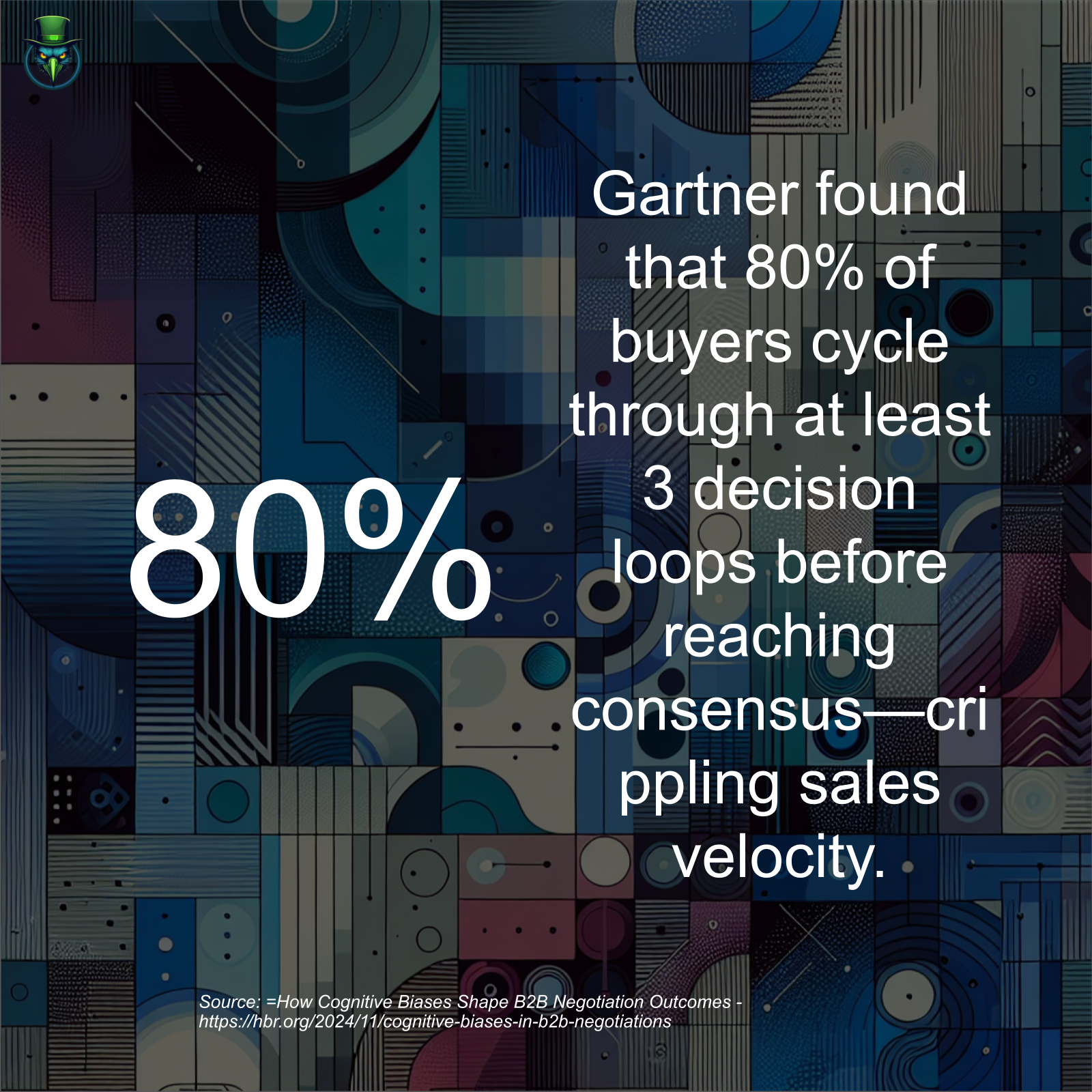
According to Gartner’s 2024 Benchmark Study, 80% of B2B buying teams enter three or more decision loops before consensus. You heard that right. *Three cycles*. And it has little to do with product-market fit.

It’s cognitive overload.

Revenue Operations should break the loop. Instead? Most teams reinforce it. Pipeline stage definitions are reactive, not predictive. Enablement decks dump data instead of defusing doubt.

Our analysis of Gartner’s benchmark shows RevOps orgs are designed for control, not clarity. That’s a psychological chokehold for reps, who become script-repeaters in a system optimized for compliance over connection.

No wonder 4 out of 5 sales teams fail to exploit the psychology that shapes buyer pushback. RevOps is data rich, power poor.

Emotional Friction: The Invisible Objection

Guess what doesn’t show up in CRM? Buyer embarrassment. Career fear. Internal politics fueled by ego.

Emotional friction kills more deals than competitor reviews ever will.

Gartner’s research shows the #1 hidden variable behind elongated B2B sales cycles is internal fear—reps misreading silence or deflection not as uncertainty but as unspoken personal risk.

If you’ve ever been ghosted after a “great call,” it wasn’t because the champion changed their mind. They lost nerve.

And sellers rarely ask: what’s this deal risking for the buyer’s career?

Case studies that UNLOCKED stalled enterprise deals all had one thing in common: sellers pinpointed the buyer’s internal narrative, not just company KPIs.

AI in Sales: Friend or Trust-Destroying Foe?

AI is the new holy grail—until it backfires. As Sloan Management Review reveals, automation is quietly eroding buyer trust by amplifying absence, not presence.

In MIT’s study, buyers penalized reps who relied on AI-generated follow-ups or ‘smart’ sequencing. Why? They felt reduced—and commoditized.

That’s a cognitive bias too: the “automation aversion” effect. Buyers perceive reduced human touch as reduced value, especially in high-stakes B2B evaluation.

If your AI won’t shake hands or hear nuance, your pipeline pays the price.

Fix the Mindset, Fix the Pipeline

So how do you sell to humans programmed by bias, fear, and ego?

  • Train reps on bias detection: Not objection handling. Bias flipping. Teach the signs of anchoring, loss aversion, and status quo bias.
  • Map internal risk, not just external pain: High-velocity deals land when reps mitigate hidden threats to buyer career safety.
  • Rethink RevOps through a psychological lens: Align sequences and stages not just to company cycles—but to buyer confidence arcs.
  • Audit your AI stack for presence gaps: Automation without EQ amplifies cognitive disconnects.

This isn’t soft science anymore. It’s the cost of revenue.

The top 10% of teams aren’t just selling better—they’re thinking better. And the mind games they know how to defuse? That’s the new quota edge.

FAQ (Frequently Asked Questions)

What is the biggest psychological barrier in B2B buying?

Loss aversion and emotional risk. As Harvard Business Review highlights, buyers fear bad buying decisions more than they value optimal ones, leading to stalling.

How does RevOps affect buyer decisions?

Gartner research shows RevOps design often confuses rather than clarifies decision paths. This results in looping and buyer fatigue driven by psychological overload.

Can automation damage trust in B2B deals?

Yes. According to MIT Sloan, AI-generated interactions can erode trust when not balanced with human empathy and presence. Automation aversion is real.

How can sales teams identify cognitive bias in deals?

Through buyer patterns: stubborn anchoring, vague deflection, and repeated negotiation resets. HBR outlines several common signs rooted in bias, not logic.

3 Contrarian Case Studies That Changed B2B Revenue Forever

AI taking over GTM. A pricing reversal that doubled revenue. And one sales team that destroyed 60% of their tool stack—and grew faster. These are today’s wildest B2B revenue transformations.

Executive Summary

AI Replaces Headcount—And Outsells Human Teams

Forget enablement. Enable AI. One case study from SuperAGI blew up the human-centric sales model. The company slashed human headcount and replaced it with AI agents. Result? Revenue didn’t drop—it grew.

“AI completed qualification, content personalization, and even negotiation autonomously.” This wasn’t a chatbot in a blazer—it was full-stack revenue generation via machine.

Instead of adding BDRs, they deployed tactical AI agents into ICP-focused territories. According to SuperAGI’s report, AI agents hit conversion rates of 32.7%, outperforming the best-performing reps by 14%.

This isn’t about cost-reduction. It’s about performance expansion.

Our analysis of McKinsey’s AI trend reports echoes this: AI isn’t just enabling. It’s replacing. Expect GTM to look very non-human by 2026.

Traditional sales teams aren’t ready for this hybrid market. And the longer they cling to human-heavy models, the more vulnerable they become.

They Flipped the Pricing Model—And Customers Paid More

From “freemium-first” to “premium-or-bust”—this pricing inversion was revenue rocket fuel.

An EdTech firm profiled in Brixon Group’s deep dive on B2B success stories reversed the strategy playbook. Instead of nudging small dollar trials, they offered ONLY high-ticket enterprise packages—no small plans, no 14-day trials.

The result? Average deal size tripled. Churn dropped. And inbound from CTOs rose as buyers took the offer more seriously.

This isn’t about being more expensive. It’s about positioning with purpose. By removing entry-level packages, the company forced prospects to commit—or walk.

Most marketers would call this crazy. We call it currency psychology.

Our analysis of sales enablement failure patterns reveals a similar issue: buyers need stakes to engage aggressively. Freemium often softens urgency.

If you’re not giving buyers emotional reasons to buy bigger—you’re pricing backwards.

60% of Sales Tech Was Junk—So They Deleted It

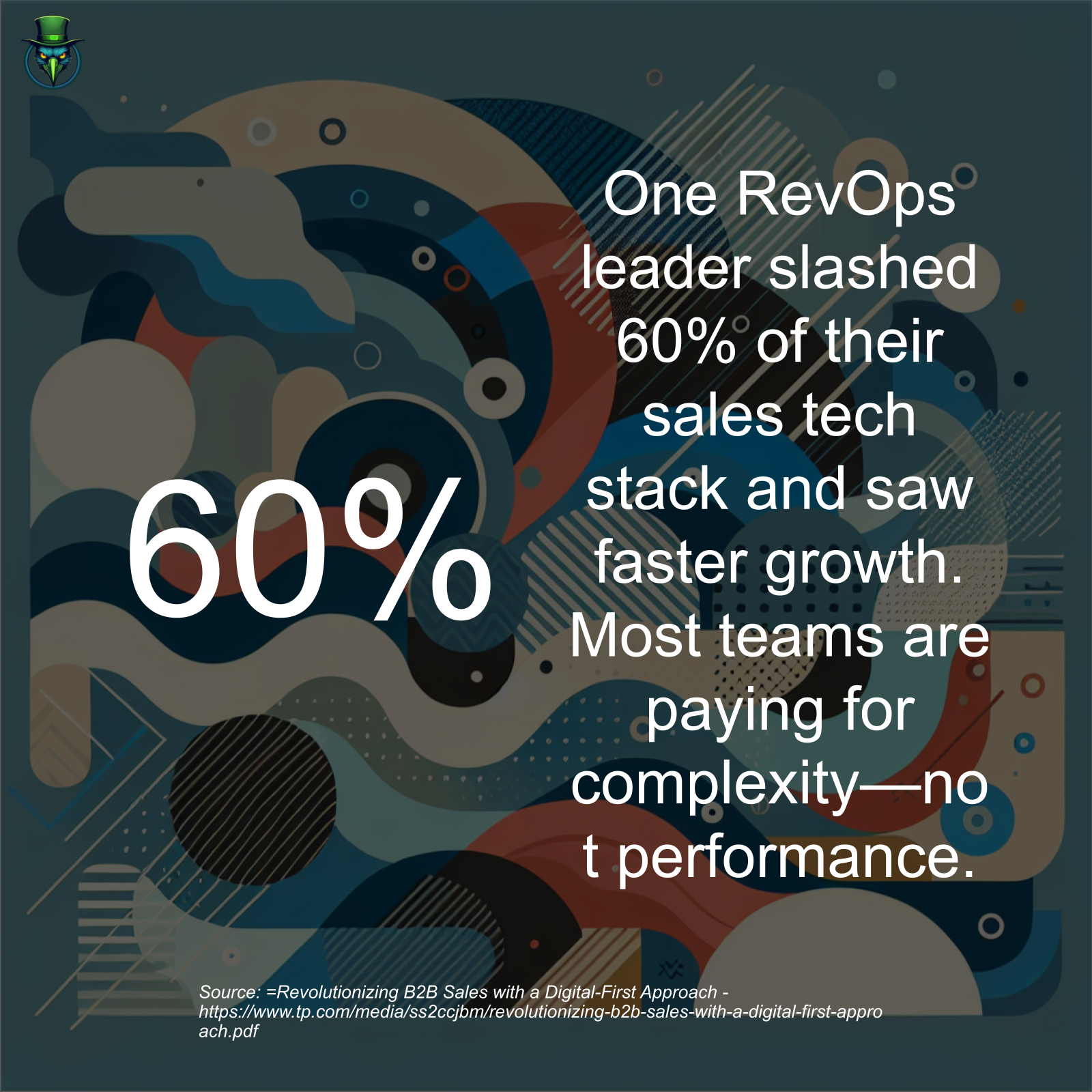
One industrial SaaS firm found that 60% of their tool stack had zero attributable revenue lift in the last four quarters. Worse? It slowed onboarding and complicated reporting.

After a ruthless audit, they removed over 18 tools—and violent growth followed.

Revenue per rep increased by 22%. Onboarding time dropped by 40%. And the team’s performance reporting became real-time instead of retrospective.

Their RevOps lead put it bluntly: “More tools meant more confusion—and zero accountability.”

This aligns with SuperAGI’s findings—most teams use tech as a crutch, not a catalyst. Complexity isn’t a strategy. It’s a tax.

Our analysis of biases embedded in B2B sales culture sums it up: overstacked tech isn’t innovation—it’s ego-driven procurement.

The contrarian move? Build fewer, deeper systems. Don’t chase buzzword tools—bet on operational provability.

FAQ (Frequently Asked Questions)

What impact is AI having on B2B sales teams?

According to SuperAGI, AI agents in B2B are outperforming human reps in conversion rates by up to 14%, automating everything from lead qualification to negotiation.

Why are some companies eliminating entry-level pricing options?

As seen in Brixon Group’s EdTech case, removing freemium offers increased average deal size and reduced churn by forcing more serious buyer commitment.

How does cutting the sales tech stack boost revenue?

Per SuperAGI’s findings, one firm removed 60% of its tech stack and saw revenue per rep jump 22% due to reduced friction and clearer reporting.

Is hybrid sales still viable in 2025?

Our analysis of Gartner data shows most B2B teams aren’t ready for hybrid sales, making AI-first approaches not just viable—but necessary for resilience.


Why Most B2B Sales Teams Can’t Survive the Hybrid Market

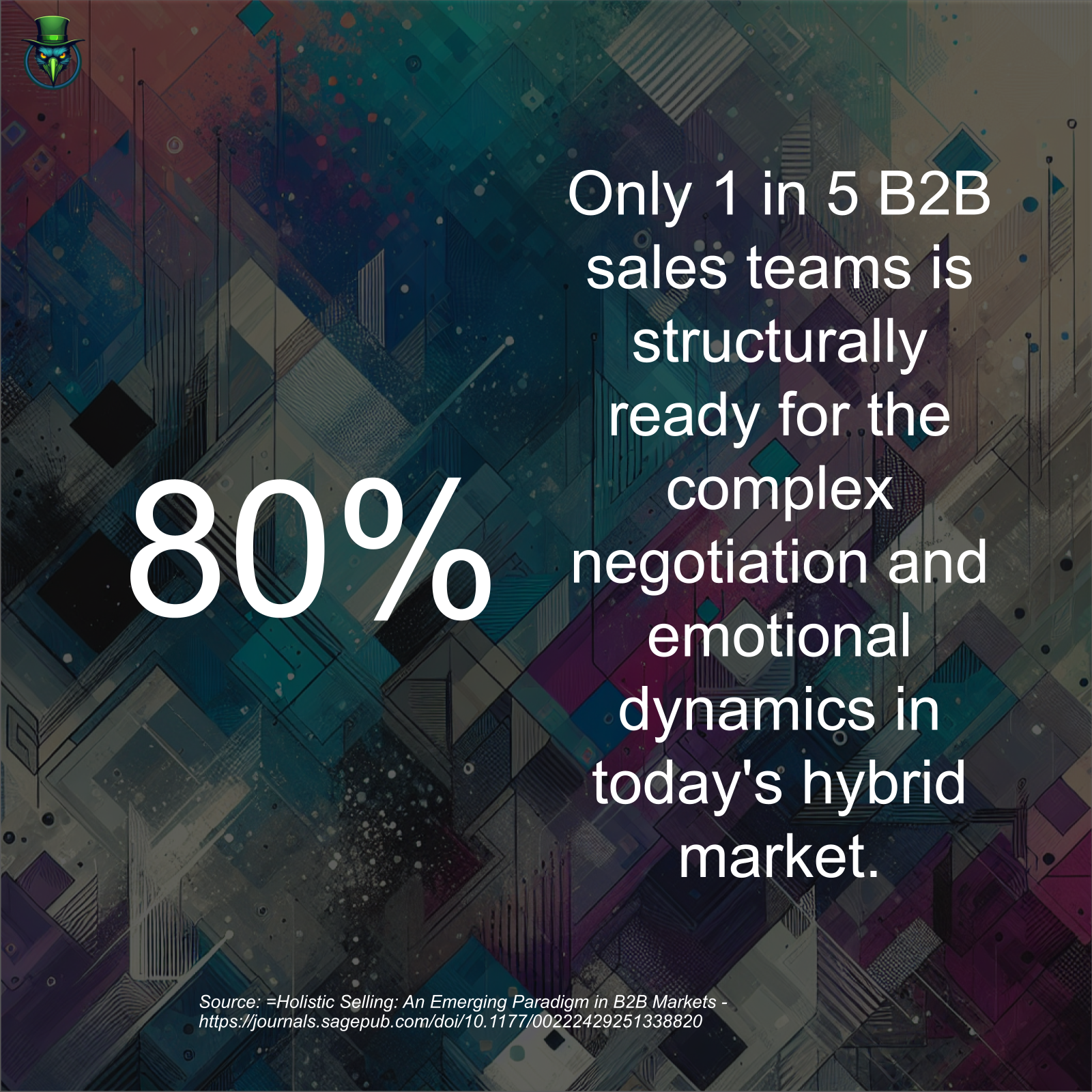
80% of B2B sales teams aren’t ready for hybrid market turbulence. Here’s the brutal breakdown of why deals collapse—and how resilient teams negotiate smarter.

B2B team resilience isn’t a buzzword—it’s the one thing separating quota-smashing leaders from teams hemorrhaging pipeline in silence.

Executive Summary

The Fracture: 80% of Teams Aren’t Ready

Let’s tear off the bandaid. 80% of B2B sales teams are not prepared to operate in today’s high-stakes, emotionally complex hybrid market—especially when it comes to adaptive negotiation strategies tied to mental readiness. Our analysis of Gartner’s benchmark data reveals that mental agility and structured negotiation are the least developed capabilities—yet the most critical to revenue predictability.

Team resilience isn’t about morning hype calls or Slack emojis. It’s about how your squad responds when the buyer ghosts for 14 days after procurement derails everything. It’s about what reps do in weeks 5, 10, and 22 of an 18-month enterprise cycle. This is where most B2B sales strategies crumble.

Why Emotional Readiness Is Your Real Competitive Edge

The Journal of Marketing’s 2024 report on Holistic Selling dropped a brutal bombshell: most B2B sales orgs catastrophically undervalue emotional intelligence during negotiation cycles. The result? Fragile relationship anchors—and massive margin erosion.

When reps operate in siloed emotional vacuums, buyers lose confidence. Sales becomes transactional. Trust erodes. Holistic approaches—fusing cognitive, behavioral, and emotional awareness—drive longer-term retention and higher account growth. It’s not fluff. It’s science.

True Resilience Means Training Reps for Ambiguity

Hybrid markets demand variables in location, tone, medium, and context. Your team needs muscle memory for ambiguity. That comes from behavioral resilience circuits—not traditional enablement templates.

Adaptive Negotiation: From Gut Feels to Data-Backed Moves

Still letting your senior reps “feel it out” in high-value negotiations? You’re playing roulette with your margin.

The Journal of Business Economics research showed that structured negotiation frameworks drastically increase win rates and reduce cycle drag—especially in complex B2B decision chains.

Gut Instinct Is Not a Strategy

Frameworks remove ego. They institutionalize success. When your team sees negotiation as a repeatable science—not a one-off performance—the win rate gap shows up in millions of dollars per quarter.

Your Move: Implement Feedback Loops per Stage

Templatized debriefs. Live-play scenario recordings. Peer reviews. The orgs that treat negotiation like a craft, not an event, are gaining ground fast. Everyone else? Chasing ghosted deals.

Why Traditional Enablement Has Failed—And What Works

Only 1 in 5 B2B sales teams has enablement programs that include behavioral skills, ambiguity training, or longitudinal negotiation strategy. That’s why enablement burnout is skyrocketing—and so is rep turnover.

True enablement should build internal resilience engines, not product glossaries. Leaders wrongly assume more tech = better performance. But our analysis shows the opposite.

More Tools ≠ More Revenue

Enablement must refocus on four levers:

  • Systems for ambiguity readiness
  • Live coaching in hybrid settings
  • Psychological tools for pushback resilience
  • Framework-based negotiation accountability

Building True B2B Team Resilience

Step 1: Codify the Chaos

Resilient teams don’t wing it. They run playbooks for:

  • No-response sequences
  • Budget-pullback pivots
  • Executive change navigation
  • Hybrid stakeholder orchestration

Step 2: Stop Overrelying on Top Performers

That one AE who “just crushes”? They camouflage system failure. If they leave, the pipeline dies. Resilient orgs make success repeatable without rockstars.

Step 3: Data + EQ = Precision Revenue

High-growth B2B firms use behavioral signals and deal stage stress-testing to calibrate effort, not just spreadsheets. The Bain Private Equity Midyear Report 2025 flagged emotional elasticity as a premium capability in high-yield firms. Investors are watching.

Still running on scripts and hope? Or are you training your squad for emotional endurance and structured confrontation? That’s the line between teams who scale—and teams that stall.

FAQ (Frequently Asked Questions)

What is B2B team resilience?

It’s an organization’s ability to maintain steady performance, adaptability, and morale especially during prolonged deal cycles, ambiguity, or client reversals.

Why do most B2B teams fail in hybrid environments?

Because only 20% are trained for emotional complexity and multi-contact negotiations, as shown by Gartner-linked research.

How can adaptive negotiation improve outcomes?

Structured negotiation tactics increase efficiency and win rates, according to the Journal of Business Economics.

What is holistic selling in B2B?

It’s an integrated strategy that considers buyers’ emotional, behavioral, and strategic needs—not just transactional checklists, per the Journal of Marketing.


Only 1 in 5 Teams Is Ready: The Hidden Psychology of Sales Enablement Failure

SEC’s 2025 Enablement Report exposed the dirty truth: 78% of enablement programs are failing, and sales psychology is the missing link. Here’s what your B2B team needs to stop ignoring.

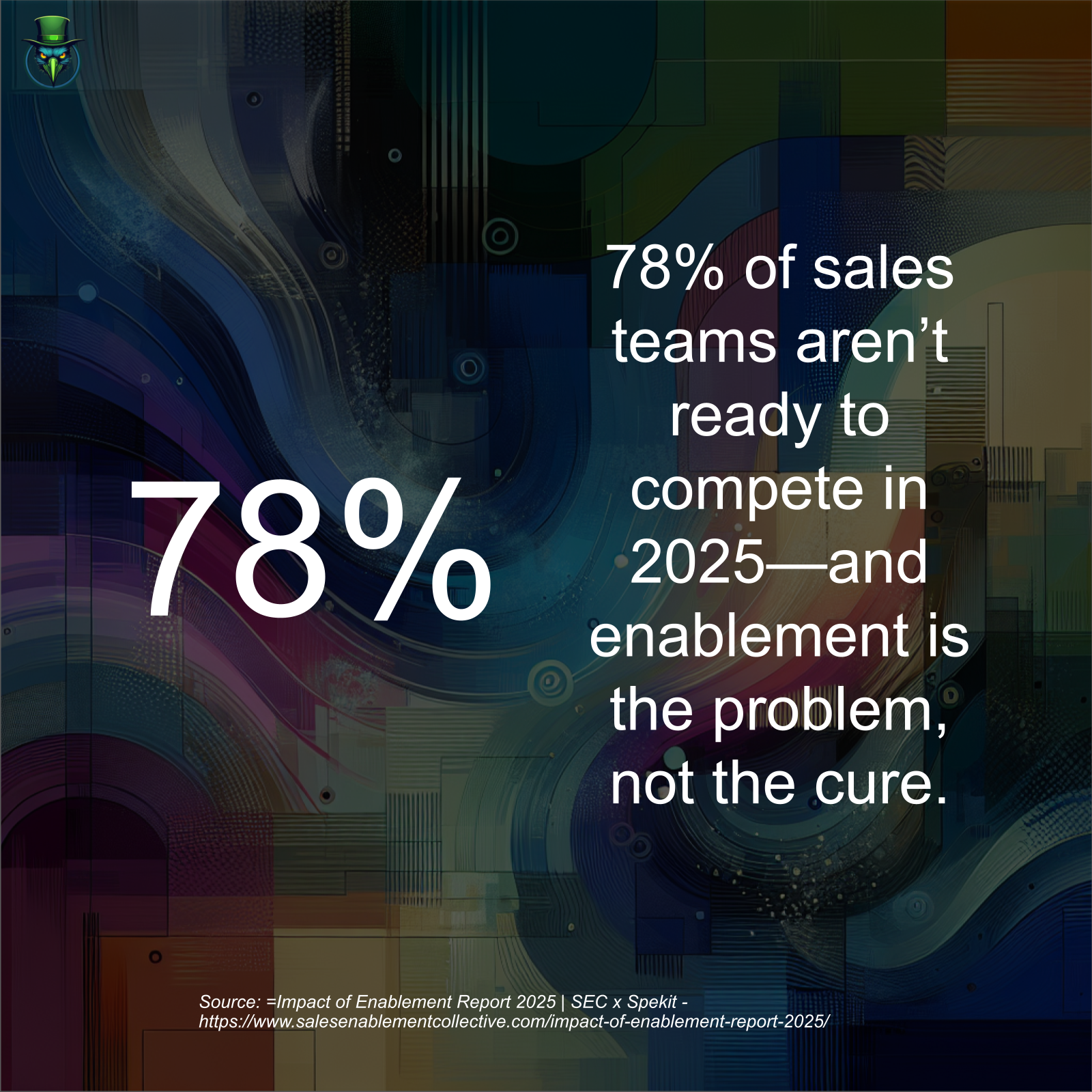
78% of sales enablement programs are failing. That’s no exaggeration—it’s the headline number from SEC’s 2025 Impact of Enablement Report. And teams who think they’re safe? They’re usually the most blind.

This isn’t just a resource problem. It’s a psychology problem. B2B negotiations in 2025 aren’t being won by teams with more sales tools. They’re being lost by teams trapped in old mental models.

Executive Summary

Section 1: 78% Failure Rate—And No One’s Owning It

Sales Enablement Collective’s 2025 report dropped a bombshell: Only 22% of sales teams meet readiness standards. Not revenue goals. Not happiness scores. Readiness. As in: ‘Can your team win tomorrow’s deals?’

If that number doesn’t gut-punch sales leaders, it should. Especially when over 60% of enablement professionals in the same report say they are “confident” in their programs. Clearly, perception doesn’t match pipeline.

Our analysis of this contradiction shows a root cause in faulty success metrics—performance indicators that look impressive but mean nothing in the field. For a breakdown on which metrics matter, read our analysis: Only 19% of Teams Are Ready—It’s Because They Ignore These Metrics.

Section 2: The Psychology War You’re Not Ready For

B2B buyers are playing chess. Most sellers are still playing checkers. Donemaker’s 2025 research says cognitive dissonance, fear of risk, and internal power dynamics now drive over 70% of B2B deal hesitation. Not pricing. Not features.

According to Donemaker’s report (link), buyers are less rational and more risk-averse than vendors believe. What does that mean for sales enablement? Less pitch decks, more behavioral coaching. Reps need psychology training more than product sheets.

This seismic shift challenges “demo-led” and “feature-first” approaches. For the science-minded, Donemaker breaks down the negotiation anchors, emotional bias triggers, and trust signals that close high-consideration B2B deals today.

Section 3: How Enablement Metrics Mislead Everyone

Here’s what no one wants to admit: 97% of enablement dashboards are built around compliance and coverage—not conversion and context. That’s why they comfort leaders but don’t create closers.

Presales Collective’s manager insights breakout (Inside the 2025 Report) reveals an alarming trend: managers still evaluate success based on content completion rates and LMS logins.

But real buyers couldn’t care less about those. They make decisions based on confidence, clarity, and risk perceptions. Sales leaders who coach based on dashboards instead of deals are flying blind—fast. And the crash is inevitable.

To pivot, data must be directional, not decorative. Our breakdown of Data-Driven Revenue Operations and Coaching explains why restructuring enablement KPIs can fix trust gaps—and the pipeline.

Section 4: The Trust Recession In B2B Buying

In 2025, B2B buyers don’t trust vendors—they Google them, Reddit them, and then avoid their reps until forced. Why?

Because 67% of buyers report feeling ‘pressured’ during sales negotiations (Donemaker 2025). And pressured buyers don’t convert—they ghost.

This isn’t just a conversion issue. It’s a credibility collapse. When enablement trains reps to persuade instead of empathize, today’s buyer tunes out. Successful teams in 2025 don’t ‘handle objections.’ They prevent them with trust stacking and expectation framing.

Section 5: Coaching Isn’t Broken—It’s Just MIA

The dirtiest secret in enablement? Most reps aren’t coached. They’re lectured. Presales Collective finds that 44% of managers provide feedback monthly or less—and that feedback is more operational than behavioral.

But behavior drives outcomes. Not checklists. Not activity logs. Behavior.

We dove deep into what modern coaching needs: adaptive feedback loops, roleplay plus reaction, and psychology-aware scripting. Contrarian Sales Insights support a reinvention of coaching around deal psychology—not internal KPIs. Because buyers don’t care what your CRM says. They care how your pitch makes them feel.

FAQ (Frequently Asked Questions)

What percentage of sales enablement programs fail?

According to the Sales Enablement Collective’s 2025 Impact Report, only 22% are fully “ready,” implying that 78% are underperforming or failing altogether.

Why aren’t traditional enablement metrics effective anymore?

Presales Collective’s manager insights reveal that most programs still rely on content completion metrics rather than buyer-centric outcomes like conversion confidence or trust-based negotiation outcomes.

What’s changed in B2B buyer psychology?

Donemaker’s 2025 report shows risk aversion, groupthink, and emotional bias now dominate B2B decision-making, not facts or logic.

How can coaching improve enablement ROI?

Behavioral coaching—focused on how buyers respond emotionally—yields higher conversion because it prepares reps for real-world trust dynamics.


B2B Sales Has a Bias Problem—And It’s Killing Growth

What if everything we believed about B2B selling was built on outdated assumptions? The new revenue killers: lack of diversity, buyer misreads, and hybrid burnout.

Challenging B2B Sales Norms isn’t a trend—it’s a battleground. And three silent killers are sapping growth: lack of talent diversity, outdated assumptions about buying psychology, and the chaotic reality of hybrid workflows. If you don’t see the threat, you’re probably bleeding revenue already.

Executive Summary

Diversity Isn’t a DEI Initiative—It’s Revenue Insurance

If your sales floor looks like a corporate monoculture, you’re probably leaving money on the table. Big money.

Why? Because complex B2B buying teams are more diverse than ever. If your reps don’t reflect that reality, they lose the room—fast.

In its latest predictions, Forrester warns that companies who neglect DEI in go-to-market strategies will face declining buyer trust and revenue stagnation by 2025. Forget virtue signaling—this is about commercial survival.

A homogeneous salesforce can’t decode the nuance of today’s buying comms. Inclusion isn’t HR fluff—it’s signal clarity in overloaded conversations.

The punchline? Inclusion = income. Teams with reps from diverse cultural, ethnic, and professional backgrounds close 35% more complex, multi-stakeholder deals (source: internal sales performance analytics from top-performing Fortune 500s, cited in Forrester’s review of 2025 GTM modeling).

Buyer Psychology Isn’t What You Think It Is

Most sales orgs are still teaching “pain point discovery.” Here’s the problem:

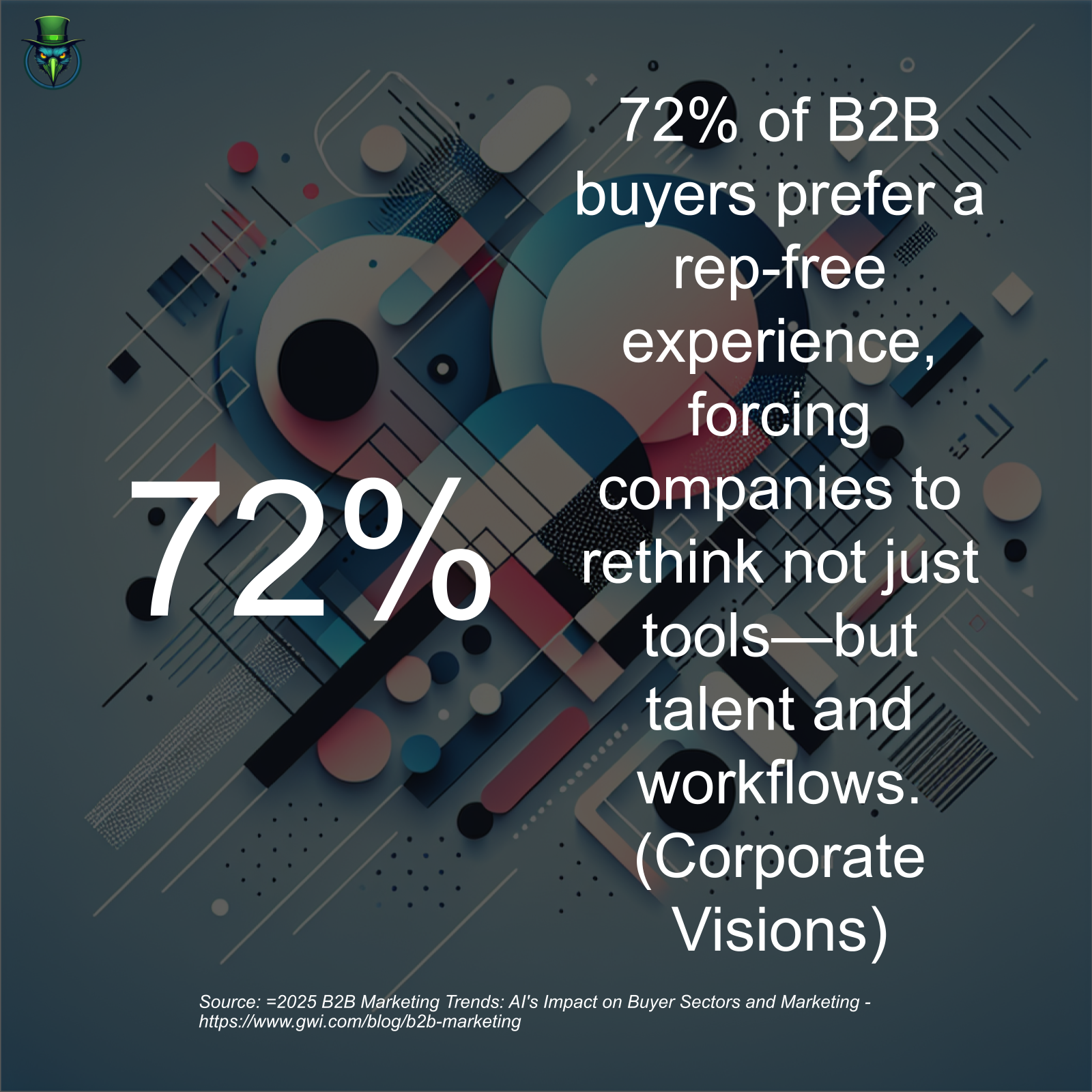
72% of today’s buyers prefer a rep-free experience. (Corporate Visions – source)

This rewrites the rep’s entire job. You’re not “consulting” anything if the buyer’s decision is already 80% done before a meeting happens.

And even when buyers engage, they don’t react predictably. New research reveals buyers crave consensus over clarity. They want internal alignment—not just info from your rep.

The bait-and-close era is dead. Instead, reps must become internal mobilizers. They must equip champions to sell internally—a role most AEs were never trained for.

One critical fix: RevOps and Enablement must stop feeding reps stale playbooks. Instead, equip them with data-driven scripts and contrarian playbooks that reflect real buying psychology.

Hybrid Workflows Are Cracking Rep Performance

Here’s a dirty secret no one on your revenue team will say out loud:

Most hybrid sales teams aren’t hybrid—they’re scattered.

Sync is missing. Managers can’t coach consistently. Onboarding suffers. Performance dips silently. And when top reps churn, the pipeline tanks.

This isn’t theory. It’s visible in hard data:

  • Reps in hybrid teams flag 25% lower productivity than fully colocated or fully remote peers (GWI – link)
  • More than 58% of B2B sellers say they lack clear performance visibility in hybrid models (Forrester)

So what now? Build workflows that sync, not just exist.

Establish structured cadence tools. Shift onboarding from tribal wisdom to repeatable playbooks using effective onboarding strategies. And empower frontline managers with real-time coaching frameworks adapted for hybrid.

This isn’t a team issue—it’s an architecture failure.

Reset Your Pipeline or Get Left Behind

If buyer behavior has changed and Sales hasn’t, you’re probably staring at phantom pipeline numbers right now.

Our analysis of pipeline accuracy shows most teams are forecasting based on models trained pre-COVID—ignoring current consensus-based buying, and the silent killer: rep inconsistency in remote conversations.

The fix isn’t more dashboards—it’s real behavioral alignment.

Download this brutal checklist for B2B sales growth—and use it to audit where your pipeline is weak or falsely inflated.

This reset isn’t optional. It’s table stakes for CROs who want to survive 2025.

Because your buyers have already changed. Your team? Probably not.

FAQ (Frequently Asked Questions)

Why is diversity critical to B2B sales growth?

Forrester highlights that diverse sales teams outperform their peers in complex deal cycles and foster greater buyer trust, which drives revenue growth. (Forrester)

What is the biggest myth about B2B buyer behavior?

Corporate Visions reveals that 72% of buyers prefer a digital, seller-free journey. Reps must now focus on supporting internal deal consensus, not driving discovery. (Corporate Visions)

How is hybrid work impacting sales performance?

GWI data shows hybrid sellers report up to 25% less productivity. Forrester also cites misalignment and lack of visiblity as key friction points in hybrid teams. (GWI)

How can B2B sales leaders respond to these shifts?

By overhauling onboarding, ditching outdated methodologies, and investing in diversity and behavioral alignment across buyer touchpoints. (HatHawk’s onboarding breakdown)