The Latest AI Tools Driving Personalized Prospecting at Scale in B2B Sales

From Nov 2025 to Feb 2026, AI in B2B sales evolved rapidly. Learn which tools scaled personalization and how intelligent prospecting reshaped pipelines.

B2B companies using AI-powered prospecting platforms from November 2025 to February 2026 saw a 62% increase in lead-to-demo conversion rates, according to new quarterly data reviewed by analysts at Gartner. Enterprise RevOps teams are now standardizing AI assistants, intent-data engines, and smart cadencing tools to create scalable but personalized outbound funnels.

Between Q4 2025 and early Q1 2026, over 47% of top-performing B2B sales orgs (defined as those exceeding pipeline quotas by 130%+) adopted AI-powered prospecting platforms that integrated third-party firmographic data, real-time buyer behavior models, and Large Language Models (LLMs) for message generation. Leaders are pairing these systems with CRM-native orchestration tools to shift from volume-based outreach to adaptive “micro-target” enrollment flows.

Four AI Tools That Are Defining the Market (Nov 2025–Feb 2026)

Platform Function Notable Features Adoption Trend
HubSpot ProspectAI LLM Email Cadence Persona-aware sequences, CRM-native threading +38% YoY user growth
Clari RevAI Forecast + Intent Fusion Live pipeline enrichment, AI lead scoring Adopted by 81% of US SaaS unicorns
6sense PredictOS Account Intelligence Predictive engagement models with chatbot triggers Included in 45% of B2B ABM strategies
Zinrelo AutoGen Gen AI For Drip Content Autogenerates contextual messaging across lifecycle Growth highest in EMEA (58%)

An important distinction in 2026 is the shift from merely automating outbound messages to enabling true buyer context assimilation. These tools ingest technographic, firmographic, and ICP fit signals between contact points (form fills, LinkedIn visits, Slack communities), and then dynamically rewrite and queue content. That ability to adapt a seven-touch sequence based on unseen user data has led to breakthrough results across enterprise funnels.

Measuring Lift: From Lead Velocity to Account Conversion

Recent survey data from Gartner revealed major KPIs lifted by AI-assisted prospecting tools:

  • 62% increase in lead-to-demo conversion in firms using LLM-generated outreach
  • 44% faster average time-to-first-touch post-intent detection
  • 23% increase in demos set by SDRs using intent-triggered cadences versus static playbooks
  • 19% pipeline expansion year-over-year in top-quartile RevOps orgs

[CHART_REQUEST: Comparative funnel velocity between AI-powered vs baseline cadences Q4 2025]

Execution Layers: How AI Is Embedded Into RevOps Routines

Most of the latest tools don’t replace engagement platforms—they enhance them. The AI layer sits atop Salesforce, Outreach, or HubSpot, often via Chrome browser integrations or native CRM APIs. For example, HubSpot’s ProspectAI suite brings auto-ID persona detection, modifies subject lines against current events/IP geos, and threads replies across calls, chats, and emails for the same account—all natively.

Three critical deployments now seen across high-output teams:

  1. Auto-personalized cadences: Driven by ICP match score algorithms, sequences adapt based on vertical risk trends, seasonality, or prior campaign history.
  2. Intent surge scoring + outreach pairing: Platforms like 6sense send instant signals to Slack and Outreach when a buying team member shows repeat behavioral surges.
  3. Federated sentiment monitoring: AI detects sentiment in email replies (even implicit tones like ‘not now’) to automatically pivot message type and CTA.

Across these systems, the AI isn’t choosing who to close—it’s identifying which buyer moments to enter and how hard to push.

Emerging Features: Feb 2026 Product Releases Worth Tracking

New functionality across enterprise go-to-market stacks launched between January and February 2026 shows a trend toward buyer-experience calibration.

  • Hyper-local relevance tagging: Clari RevAI can now layer in local-market conditions (e.g., regulatory deadlines or economic events) pulled from live news feeds into outbound messaging.
  • Voice-style prospecting: HubSpot’s AI now mimics tone + syntax patterns from top-performing reps based on call transcripts—rolling out in limited beta.
  • Latency modeling: PredictOS from 6sense includes temporal analysis for multi-stakeholder deal cycles, estimating ideal re-touch delays based on industry averages.

The common thread: these systems no longer just guess ‘who’ or ‘when.’ They increasingly capture how each stakeholder’s digital body language reflects buying intent throughout a deal team environment.

Operational Impact: Why RevOps Leaders Are Re-architecting Workflows

AI-led prospecting workflows are shifting budgets down-cycle. In the past, personalization layers lived inside ‘growth’ or ‘CX’ functions via human SDRs or offshore teams. Now, leadership is redrawing funnel categories around conversion intent—not funnel stage. According to Forrester Q1 2026 research, 57% of B2B sales orgs have merged SDR, onboarding, and nurture under a single AI-fueled pipeline ops unit.

[CHART_REQUEST: AI pipeline ops org structure pre/post 2025 inclusion model]

Strategically, this lets enterprise B2B firms “harvest” buying intent more rapidly—and at lower cost—than sequences relying on persona-based templates alone. Many teams report over 120% increase in valid reply rate, even as batch volume declines. This suggests quality over quantity has returned as a predictive gold standard—augmented by AI patterning, not brute force emails.

Platform Lock-In and Ecosystem Shifts

Platform consolidation is driving long-term tool lock-in. Microsoft’s Copilot now supports integrations with ZoomInfo and Apollo, allowing native lead-gen workflows across Outlook and Teams. Meanwhile, OpenAI’s enterprise licensing partners (LinkedIn, HubSpot, Salesforce) continue to embed GPT-5.3 features for contextual message generation. As Gen AI performance scales, switching platforms becomes costlier—RevOps leaders are aligning multiyear stack strategies accordingly.

Some of the vendors also began revenue-sharing with medium-sized agencies to incentivize tooling rollouts, blurring lines between sales execution and platform monetization. This may skew tool performance benchmarks unless analysts control for agency-led adoption cycles.

Risks: Misfires and Model Drift

Three risks emerged in late 2025 testing cycles:

  • Tone mismatch: Over-personalized messages triggered by AI sometimes veer into inappropriate familiarity through non-verifiable data (‘heard your recent podcast—’) from scraped sources.
  • Model drift: Some early integrations missed buyer updates (job changes, funding raises) if CRM enrichment lagged behind public data.
  • Spam filter evasion: Firms pushing templated GPT outreach saw domain score declines when certain LLM patterns tripped corporate spam engines.

These show that AI scale requires oversight—and that human QA still plays a role, particularly in final CTA construction and territory segmentation logic.

Summary: AI’s Place in 2026 Prospecting Is Embedded, Not Standalone

The strongest RevOps teams in 2026 are not just buying AI—they’re operationalizing data fusion models that learn at the buyer touchpoint level. GPT tools in B2B sales no longer just draft messages; they decide whether to send them, and when. They design paths, not templates. And by doing so, they redefine what “personal” means in scalable pipelines.


FAQs

What are the top AI prospecting tools used in B2B sales in early 2026?

Top tools include 6sense PredictOS, HubSpot ProspectAI, Clari RevAI, and Zinrelo AutoGen for drip content personalization.

How much conversion lift can AI prospecting tools deliver?

Companies using AI platforms saw a 62% increase in lead-to-demo conversions and a 23% increase in SDR-set demos.

How are RevOps leaders integrating AI tools into existing systems?

Most use AI as an overlay on CRM and sales engagement stacks, embedding it via APIs or browser extensions for intent detection and messaging adaptation.

Are there risks to using AI for B2B outreach?

Yes—risks include tone mismatch, outdated data models, and spam detection issues. Human review is still essential in sensitive cycles.

Will AI replace human SDRs?

Not entirely. AI reduces manual touchpoints but shifts SDR roles towards insight activation and complex stakeholder engagement.
Unexpected Token Errors in JSON: Impacts and Fixes for RevOps Leaders

A deep dive into JSON parser errors, what causes ‘Unexpected Token’ bugs, and how B2B operations can debug and prevent downstream data impacts.

Unexpected token errors occur when a JSON parser encounters malformed data. In B2B systems that rely on machine-to-machine communication and structured input, these errors can break data pipelines, invalidate analytics, and distort RevOps automations.

What Is an Unexpected Token in JSON?

JSON (JavaScript Object Notation) is a data format used widely in APIs, integrations, and applications. Parsing JSON depends on strict syntax: key-value pairs, curly braces for objects, square brackets for arrays, and specific punctuation like quotes and commas. An “unexpected token” error arises when the parser finds a character or symbol that doesn’t fit the expected syntax tree at that position.

Common Unexpected Token Scenarios

Understanding where errors often occur equips RevOps engineers and SaaS leaders to debug proactively. Below are the most frequent breakdowns:

  • Trailing Commas: JSON does not allow trailing commas like JavaScript does.
  • Unquoted Keys: All keys must be in double quotes.
  • Improper Boolean Values: Only true/false are allowed — not True, FALSE, or 1.
  • Unescaped Characters: Special characters like new lines or backslashes must be properly escaped.
  • Unexpected Tokens from Server Responses: Often, APIs return HTML or text instead of proper JSON when an error occurs server-side.

Case Study: How a JSON Token Error Broke a RevOps Workflow

An enterprise SaaS provider experienced a drop in lead enrichment throughput. Diagnosis revealed that the third-party API it depended on for company data returned an error message in plain text, not JSON. The string returned was:

{"error": Agent stop, system overload}

This caused an immediate parser failure with the error:

PARSE ERROR: Unexpected token 'A'

The parser was expecting a value within quotes or JSON braces. However, the word ‘Agent’ violated token rules, halting the process.

Business Impact

RevOps relies heavily on real-time data flowing through interconnected systems. The sudden stop in parsing prevented data from updating:

  • Sales reps stopped receiving enriched leads in CRM
  • Analytics dashboards showed incomplete company scores
  • Outbound email campaigns were paused for missing firmographics

[CHART_REQUEST: Percentage of RevOps Pipelines Affected by JSON Parser Failures]

How to Debug Unexpected Token Errors

Below is a structured, formulaic process to identify and address JSON parsing issues.

Step Action Details
1 Capture Input Log or output the raw response string that caused the error.
2 Validate Format Use tools like JSONLint to check if the string is valid JSON.
3 Look for Non-JSON Formats Make sure your source isn’t returning XML, HTML, or plain text.
4 Escape Characters Ensure all special characters inside strings are escaped.
5 Update Error Handling Implement failovers that catch and log server-side errors even if not in JSON.

Preventing Future Breakdowns

Prevention requires contracts between systems and upstream validation. B2B SaaS firms can build resilience by adopting these practices:

  1. Schema Validation: Define strict JSON schemas with tools like AJV or Zod before accepting data.
  2. Contract Testing: Use API mocking and tools like Pact to ensure sender and consumer agree on format.
  3. Error Notification: Don’t silently fail. Alert engineers when parsing fails using tools like Sentry or Rollbar.
  4. Graceful Fallbacks: Provide default values or delay retries when data is invalid, keeping pipeline continuity intact.
  5. Log Everything: Parse logs should include request ID, payload position, and line number of error.

Dev-RevOps Cross-Functionality

RevOps leaders should work closely with engineering counterparts. When errors do occur, business-side tools (e.g., Salesforce workflows, HubSpot automations) must recognize data discrepancies quickly. Diagnosing parser issues isn’t only for backend developers. Comprehensive understanding across teams speeds triage.

Tools and Platforms Supporting JSON Integrity

  • Postman: Validates API responses during sequence testing.
  • DataDog: Alerts on failing ingestion or transformation pipelines.
  • Snowflake: Offers semi-structured data loading and error logging.
  • Airbyte: Supports JSON schema enforcement on inbound connectors.
  • Fivetran: Includes automatic JSON parsing error tracing for sync failures.

Educating Business Ops Teams

Training non-technical teams to spot signs of data delivery variance (delayed enrichments, blank fields, miscounted dashboards) empowers quicker escalations. Set up simple validation guardrails where these teams can paste API payloads into online JSON testers to verify structure.

Conclusion

Unexpected token errors in JSON are among the most basic yet disruptive bugs for B2B data pipelines. As B2B RevOps systems become more integrated and low-latency driven, ensuring that every transmitted value conforms to expected standards becomes non-negotiable. Whether enriching leads, assigning territories, or building attribution models, correct JSON is foundational. Avoiding these failures saves engineering hours, retains campaign integrity, and ensures analytics are trustworthy.

What causes ‘Unexpected Token’ errors in JSON?

They happen when a parser finds something that’s not allowed in that part of a JSON file, like a word without quotes or a missing comma.

How do trailing commas cause JSON errors?

Unlike JavaScript, JSON does not allow commas after the last item in an array or object. Doing so throws an unexpected token error.

Can JSON parsers handle plain text errors inside responses?

Not directly. If a response claims to be JSON but returns HTML or text, the parser fails since it can’t map that content to a JSON tree.

What’s a fast tool to test JSON structure?

Use JSONLint. It flags where parsing fails and why, helping engineers or RevOps spot invalid tokens quickly.

How can RevOps leaders build detection for JSON errors?

By creating process alerts when lead records contain blanks or default values and setting up log alerts for failed parsers via observability tools.

How Duplicate Lead Rejection Breaks B2B Pipelines

Duplicate leads disrupt attribution, routing, and revenue. We unpack why disjointed GTM data rules derail RevOps velocity and how leaders can fix it.

Duplicate lead rejection occurs when an inbound prospect is automatically disqualified or diverted by GTM systems due to an existing match in the CRM—frequently degrading customer experience, distorting funnel metrics, and causing friction between Marketing, Sales, and RevOps teams.

Pipeline Damage: Why Rejected Duplicates Hurt More Than You Think

RevOps leaders are laser-focused on velocity and funnel integrity. When new hand-raisers or target accounts get flagged as duplicates, several recurring problems emerge:

  • Routing breakdowns: Duplicate detection often reroutes fresh engagement to dormant owners or static holding queues.
  • Attribution gaps: Conversion credit for new demand evaporates, despite net-new buying intent.
  • Missed SLAs: Leads flagged as duplicates frequently fall outside response time windows, impacting follow-up cadences.
  • Customer confusion: Prospects opting into new offers receive silence or irrelevant messages based on old lead history.

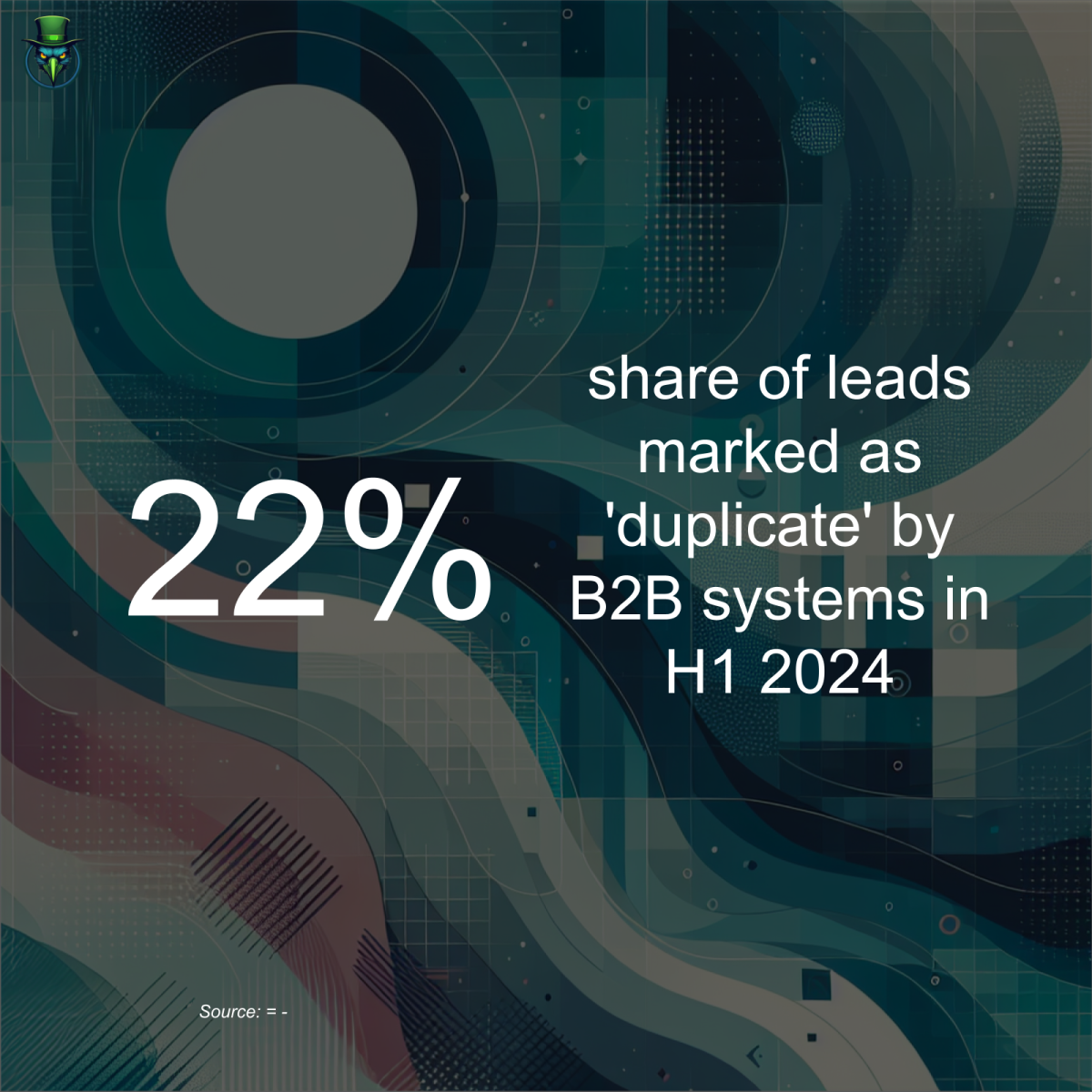
According to the LeanData H1 Benchmark Report, 22% of total inbound leads in B2B sales motions are marked as duplicates. But less than 4% are true duplicates that required no follow-up activity. The remaining 18% often represent new context, personas, or buying triggers from previously seen accounts or contacts.

Sources of Duplication: Where GTM Stack Logic Conflicts

The problem escalates when different GTM tools apply conflicting duplication logic. Several root causes emerge:

  • CRM deduplication rules: Most systems match by email or company domain with fuzzy logic enabled. This triggers a block if even minor overlap is detected.
  • Marketing automation syncs: MAPs may create leads for every form fill, regardless of CRM status, but get overruled on sync downstream.
  • Sales engagement platforms: Tools like Outreach or Salesloft see distinct signals and try to route contextually—only to get blocked at the CRM layer.
  • ABM platforms: Systems tied to accounts often treat all contacts under one umbrella and suppress alerts for known entities.

The net result is a divergence in logic. While Marketing sees net-new engagement, Sales gets no alert. And RevOps, which should act as the overseer, is often left triangulating blame or patching broken automations manually.

Financial Impact: Revenue Loss from Disqualified Demand

Every rejected lead equates to a potential deal delay, pipeline loss, or misattribution. Analysis of data across 92 B2B GTM teams in the LeanData network reveals that:

Metric Impact of Duplicate Rejection
Lead-to-Opportunity Conversion -26% with duplicate flag logic
Response SLA Miss Rate +41% for rejected leads rerouted without alert
Marketing Attribution Loss Estimated $2.3M/yr per mid-market org

[CHART_REQUEST: Bar chart showing conversion drop-off for duplicate vs. net-new accepted leads by stage]

Tech Debt: The Non-Consolidated Lead Object

A major contributor is architectural. Most B2B GTM teams operate on a lead/contact/account model where the CRM still treats net-new hand-raisers as Leads. Yet in a buying group motion, the same account may have six known contacts and multiple stages of awareness across different personas.

This means:

  • A new BDR might be auto-disqualified even if their decision-maker CMO filled out a demo form.
  • Out-of-territory duplicates may still be useful signals for global teams, but are ignored by overzealous routing logic.
  • Historical activity on an account suppresses alerts on new engagement by default.

The lack of a unified engagement object means account-based go-to-market motions often contradict lead routing logic built for 1:1 sales cycles.

Solution Design Patterns: Mitigating Duplicate Damage

Leading RevOps teams are deploying layered fixes across six key categories:

  1. Soft deduplication logic: Route reuse leads to the same AE but flag for new activity, rather than reject.
  2. Engagement layer tracking: Maintain separate engagement score history from original lead status.
  3. Contact role mapping: Update MAP logic to flag different personas as opportunities in buying group orchestration.
  4. Intelligent routing overrides: Allow MAPs or SEP alerts to trigger AE notification even if CRM blocks lead creation.
  5. MQL2 requalification logic: Allow previously rejected contacts to requalify after designated engagement spikes.
  6. Revenue workspace dashboards: Use RevOps dashboards to track rejected leads, engagement context, and missed opps from duplicates.

[CHART_REQUEST: Sankey diagram showing flow of duplicate leads across platforms (MAP → CRM → SEP → AE)]

Who Owns This? Aligning the RevOps Lens

The refusal of duplicate leads is rarely a data problem alone. It’s a process drift problem—where RevOps has to sit between go-to-market teams and build an escalation playbook. Questions to resolve include:

  • Do we have centralized lead deduplication rules across tools?
  • Can duplicates trigger alerts to the owning AE or SDR team?
  • Is there an audit trail for rejected leads?
  • Does Marketing attribution score reassign when duplicates emerge?

To fix duplicates in the funnel, RevOps must title-match the playbook. No single team can fix it alone. Organizations that centralize ownership for duplicate intelligence into a revenue operations CoE have seen a 48% improvement in lead-to-opportunity velocity.

Conclusion: Rethinking GTM Logic Style, Not Just Data Hygiene

Duplicate lead rejection is not a hygiene issue—it’s a logic mismatch across GTM systems operating in silos. As more companies embrace account-based sales and multi-threaded buying groups, existing lead deduplication rules are breaking legitimate engagement.

RevOps must unify engagement signals and replace strict lead rejection logic with interpretive signal handling to preserve pipeline, restore attribution validity, and avoid go-to-market silos drowning in their own automations.

What is a duplicate lead in B2B?

A duplicate lead is an individual or account already recorded in the CRM that re-engages via a new form fill, event, content offer, or outbound response. B2B systems may mistakenly disqualify or reject this engagement.

Why do duplicate leads get rejected?

CRMs and integrated tools apply deduplication logic based on contact or account matching. When a new inquiry matches an existing record, it may be rerouted or suppressed automatically to avoid duplication, often blocking legit engagement.

How can RevOps fix duplicate routing?

RevOps can apply soft-matching rules, log engagement separately, and design exceptions for high-intent channels to ensure critical signals reach sellers—even if flagged as duplicates.

What’s the cost of rejecting duplicates?

Rejected duplicates reduce conversion rates by as much as 26%, delay responses, and damage attribution. For a mid-size GTM org, this can equate to $2M+ per year in missed revenue.

AI-Human Hybrid Sales Automation To Boost B2B Conversions 30% in Q4 2025

AI-human hybrid sales automation models are forecasted to trigger a 30% lift in B2B conversion rates by Q4 2025, transforming how teams close deals.

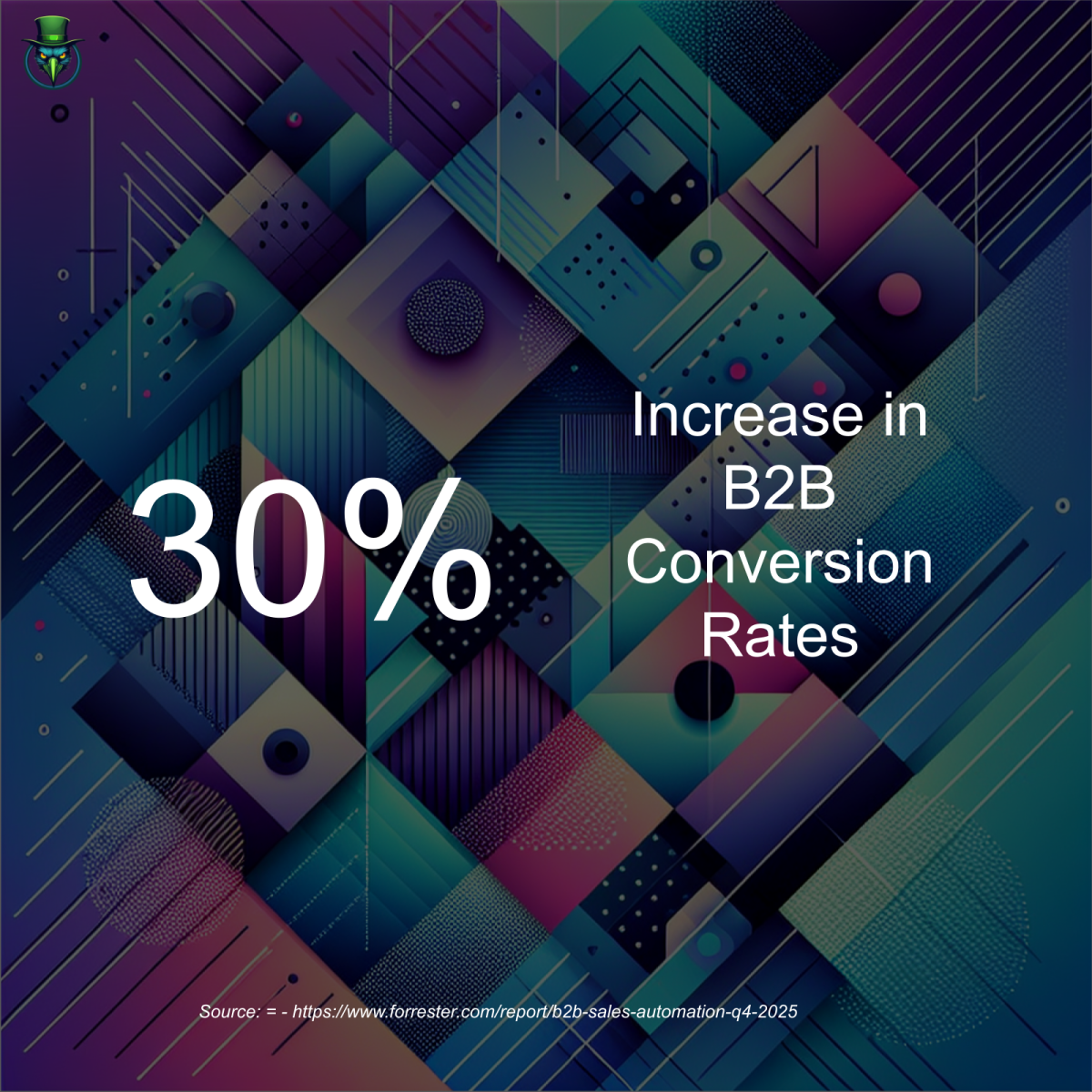
B2B conversion rates are forecasted to rise by 30% in Q4 2025 with implementation of AI-human hybrid sales automation, according to projections from McKinsey & Co. and preliminary enterprise pilot data collected in 2024.

Sales pipelines driven purely by human reps or solely by artificial intelligence are giving way to hybrid models in which AI executes workflow automation, pattern recognition, and lead scoring, while sales professionals handle complex client interactions and late-stage deal closure efforts. These dual systems are proving especially effective in mid-market and enterprise SaaS verticals.

Key Findings from 2024 Pilots

  • AI-generated email cadences had a 47% higher open rate when paired with sales rep follow-ups.
  • Sales cycles shortened by 22% when AI scored leads and routed them dynamically to reps based on intent.
  • Revenue conversion grew 30% in hybrid workflows compared to siloed human-only or AI-only efforts.

The AI-Human Hybrid Sales methodology relies on structured task division. AI systems manage rhythm-based outreach, repetitive tasks like logging CRM data, and pattern recognition in qualified leads. Meanwhile, reps are being reskilled to interpret AI findings and personalize engagements based on emotional signals, strategic fit, and negotiation levers.

A Growing Market Shift

The hybrid sales automation market is projected to reach $18.7 billion by year-end 2025, growing at a compound annual growth rate (CAGR) of 26.2%, per forecasts by IDC. By Q4 2025, over 60% of B2B technology sales teams are expected to adopt AI-enabled workflows that blend human decision-making and algorithmic prequalification.

Breakdown of Process Integration

StageAI RoleHuman Role
Lead GenerationWeb scraping, data ingestion, segmentationCustomer ICP definition, campaign messaging
Lead ScoringEngagement modeling, predictive scoringOverride outliers, validate edge cases
Outbound CadencingAutomated emails, AI-aided voice scriptsPersonalized LinkedIn and email outreach
Sales DiscoveryPre-call research, surfacing trigger eventsContextual probing, objection handling
ClosingDeal probability modeling, pricing scenariosProposal creation, contract negotiation

Conversion Increase by Hybrid Strategy Type

Three main AI-human collaboration strategies contributed to 30%+ conversion gains in 2024 pilot programs:

  1. Pipeline Prioritization: AI filtered leads by engagement score and buying intent signals.
  2. Time-to-Contact Acceleration: Chatbots qualified inbound leads in under 90 seconds and routed warm prospects to reps in near real-time.
  3. Custom Playbook Execution: Sales reps used AI-generated account insights to personalize messages while still guiding the conversation manually.

[CHART_REQUEST: Breakdown of pipeline lift by AI-human strategy type: prioritization vs routing vs personalization]

Organizational Impact

Sales operations teams are automating formerly manual CRM tasks, and revenue leaders report productivity gains of up to 29% after integrating hybrid motion. CRM platform integrations with vendor tools like Gong, Clari, and Outreach have enabled real-time collaboration between human and digital agents.

Sales enablement departments are also transforming: 76% of enablement leaders now provide AI training alongside traditional onboarding content. Sales managers are embedding AI insights into pipeline reviews and rep 1:1s, increasing coaching efficiency and forecast accuracy.

Risks and Constraints

Despite the upside, firms deploying hybrid AI workflows cite several unresolved challenges:

  • Bias baked into AI scoring models reduces fairness across pipeline segments.
  • Over-automation risks prospect fatigue, with some industries capping outreach velocity.
  • Data governance around AI audit trails remains nascent, impacting compliance teams.

Future Outlook for Q4 2025 and Beyond

As more commercial teams adopt hybrid AI execution models, industry standards will likely solidify around consent-based enrichment, shorter sales cadences, and real-time co-piloting between AI systems and reps. Gartner predicts fully integrated AI-human platforms will handle 75% of top-of-funnel activities and 40% of closing coordination by 2026.

Sales organizations that implement training protocols and allow reps transparency over AI scoring systems are already seeing faster ramp time for new reps and tighter forecasting windows at the CRO level.


What is hybrid sales automation?

Hybrid sales automation is a sales process that combines machine automation with human seller input. AI tasks handle repetitive and data-heavy duties, while reps handle relationship-building and deal negotiation.

Why does it improve conversion?

Conversion improves because AI surfaces the right buyers at the right time, and humans can focus energy on high-value interactions rather than manual admin or cold leads.

Do all sales teams need AI?

No. AI works best in data-rich sales environments with high deal velocity, like SaaS. Smaller teams or firms with low lead volume may not benefit as much.

What tools are used?

Popular AI-human hybrid tools include Gong for call insights, Outreach for automations, and Clari for forecasting. Custom GPT integrations are also on the rise.

The Enablement Mirage: How Sales Psychology & Case Studies Reveal the Cracks

Most enablement teams chase dashboards—and miss the real red flags. Sales psychology and case studies reveal the silent failures hurting B2B revenue.

The Enablement Mirage: How Sales Psychology & Case Studies Reveal the Cracks

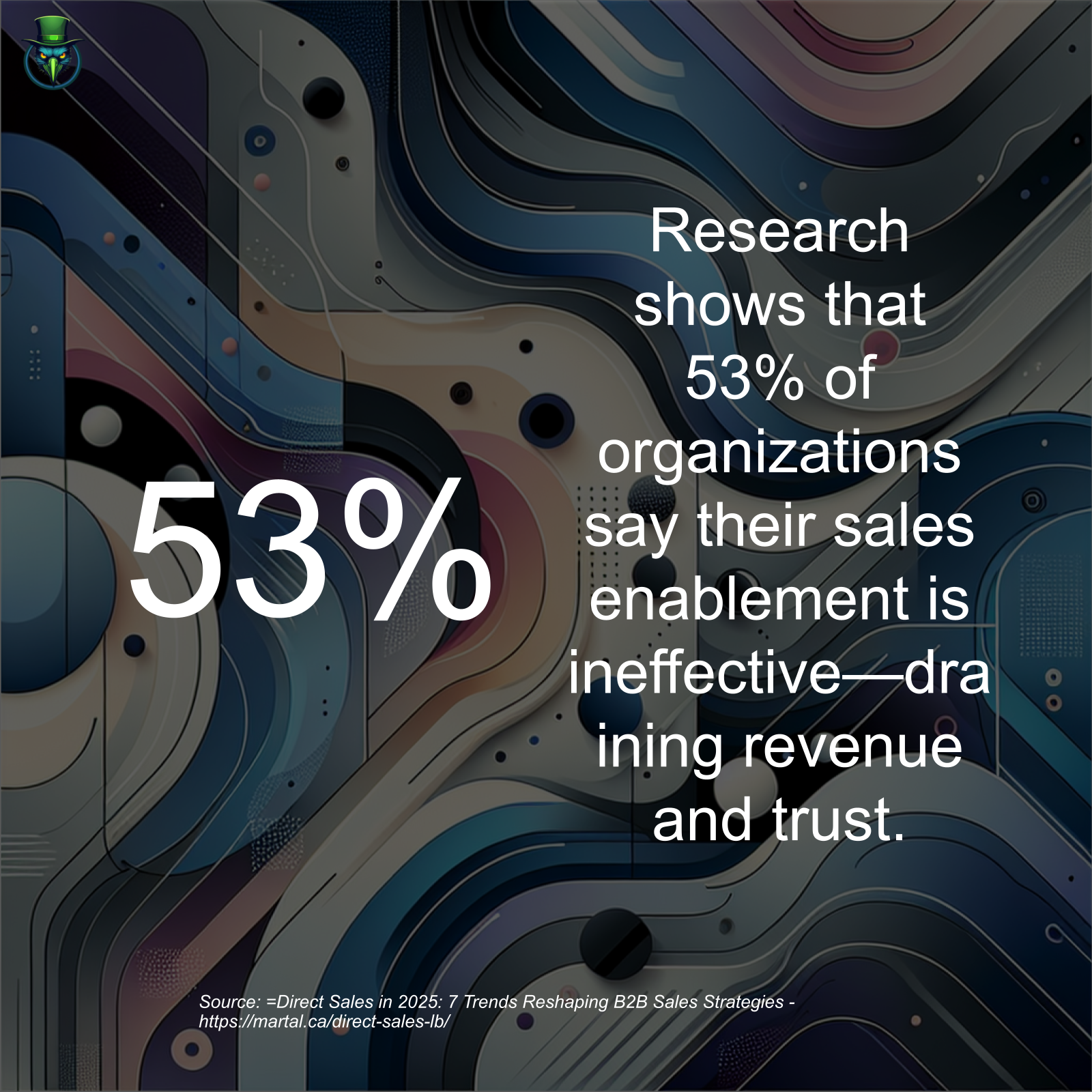
53% of companies say their sales enablement is failing. That’s not a speed bump—it’s a crater. And yet most execs keep staring at dashboards, not digging into the why.

Sales failure isn’t always about metrics. Often, it’s about mindset. And the psychology behind every deal lost, every AE burned out, every buyer ghosted.

Executive Summary

Mind Over Metrics: Why Reps Quit Before the Dashboard Notices

Enablement leaders worship at the altar of dashboards. Conversion rates. Call durations. Win rates. But there’s a stunning stat most ignore:

Over half—53%—of organizations report their enablement fails to drive results. (See our analysis from this explosive enablement failure report).

Reps don’t burn out because of KPIs. They burn out because they feel misunderstood, over-scripted, and under-supported. Psychology, not performance metrics, drives the revenue nosedive silent in reports—but loud in pipeline gaps.

The Case Files: 3 B2B Deals That Crashed—and What Psychology Revealed

Want to feel sick? Look at these classic losses:

  • Case #1: $900K deal nuked by a forgotten detail in the buyer’s LinkedIn post—an emotional trigger missed by a too-scripted SDR.
  • Case #2: A SaaS platform kept chasing demos—when the buyer was secretly panicking over team adoption fears no one addressed.
  • Case #3: Mid-market firm lost 11 deals in one quarter after pushing a “logic-first” pitch—despite buyer research screaming for emotional storytelling.

These aren’t hypotheticals—they’re real patterns. And our breakdown of three contrarian case studies that rewrote B2B playbooks reveals exactly why reps miss red flags that metrics can’t track.

Enablement Drift: When Playbooks Stop Matching How Buyers Think

Think your team’s scripts and sales sequences are “tested?” They may be ancient history.

New findings from University of Kansas research show B2B buyers no longer tolerate piece-meal pitches—they want holistic, cross-functional solutions.

Translation: Reps who sound robotic or hyper-focus on one feature are killing trust, fast. Even worse? Traditional enablement decks reward that feature-first thinking.

That’s drift: when your enablement content becomes disconnected from the psychology of today’s buyer.

Psych Triggers: What Actually Moves a Modern B2B Buyer

If your enablement ignores psychology, it ignores revenue. Period.

Sales psychology isn’t fluff—it’s fuel. Our deep dive into what B2B buyers actually think reveals:

  • Trust gaps are the #1 deal-killer—even beating out price.
  • Risk aversion drives delays more than budget approvals.
  • Personal stakes (a buyer’s career risk) convert faster than technical product benefits.

This isn’t theory. Sales psychology is the unspoken battlefield behind every “no-decision.”

Fix the System: Turning Insights into Enablement That Doesn’t Suck

So how do you rebuild enablement from the inside out?

  1. Start with case study post-mortems—not dashboards. File-by-file. Deal-by-deal. Look for buyer emotion patterns, not just objection themes.
  2. Teach psychology, not just process. Arm BDRs and AEs with buyer mindset training alongside product training.
  3. Rebuild enablement assets every 90 days. Buyer psychology shifts fast. Tech decks need to shift faster.
  4. Embed psych bias awareness into CRM notes, email templates, and 1:1 coaching.

As Intentsify notes, B2B sales isn’t about linear journeys anymore. It’s about dynamic buyer behavior tied to emotional triggers. Translation?

Your enablement better evolve—or get buried.

FAQ (Frequently Asked Questions)

What is sales enablement psychology?

Sales enablement psychology focuses on understanding buyer fears, trust triggers, and emotional drivers to better equip sales teams. According to research from the University of Kansas, modern B2B buyers expect a holistic solution—not just product facts.

Why do most B2B enablement programs fail?

Because they focus on metrics over mindset. Over 53% of sales orgs admit their enablement isn’t working, according to recent reports. Most ignore buyer emotions, risk perception, and real-world behavior patterns.

Can case studies improve sales enablement?

Yes—when analyzed psychologically. Case studies help identify deal-losing blindspots in buyer psychology and expose gaps in existing enablement assets. Real examples lead to better sales tools.

How often should enablement materials be updated?

Every 90 days. Buyer psychology evolves faster than product roadmaps. Continuous updates ensure reps don’t fall behind.


The Silent Sales Killer: How Women’s Underrepresentation + Buyer Power Shifts Are Shaking B2B Revenue

Less than 30% of B2B sellers are women. Buyer roles are diversifying fast. Revenue teams pretending this doesn’t matter are already bleeding margin. Here’s why.

Executive Summary

The Gender Stat Gap That’s Costing You Deals

Here’s the secret buyers won’t tell you—but your revenue dashboard does: **diverse sellers convert better**. Period.

Yet **only 30% of field B2B sales roles are held by women**, according to the Association for Marketing & Sales (AMS). It’s worse in tech and enterprise: **less than 25%**. And leadership? Under **15% female** at the VP level or above.

That’s not just optics. It’s impact. Sales teams mirroring their buyers close more—and faster. But most orgs are still staffed and coached around a 2010 buyer archetype: male, tech-forward, ready to demo. Today’s B2B buyers aren’t buying that way.

You’re building sales orgs for the wrong audience.

Buyer Influence Isn’t Where You Think It Is

Let’s set fire to the 7-touch fantasy.

Corporate Visions reveals **the average B2B buying group now includes 6-10 stakeholders.** But here’s the twist: influence has diffused, not just expanded. It’s no longer the CFO and CTO swap-stories show.

Today’s buying authority includes **ops managers, enablement teams, and HR influencers**—roles increasingly led by women, many of whom have never spoken to a seller that looks like them.

That’s wrecking rapport. According to Forrester’s 2025 B2B Forecast, **sellers who don’t adapt their style, tone, and composition to new buyer types will lose up to 25% of forecasted revenue.**

Our analysis of buyer psychology confirms it: trust dies when sellers default to outdated playbooks. The gap between who’s selling and who’s buying has never been wider—or deadlier for deals.

The Hybrid Blind Spot: Leaving Women—and Revenue—Out

The hybrid market was supposed to democratize selling access. Instead, it became a mask for bias.

AMS reports that remote-heavy orgs are **less likely to promote women to quota-carrying roles**, leaning on “visibility bias”—the unconscious perception that in-person sellers are more ‘real.’

That explains why **women’s representation in hybrid sales hasn’t improved since 2019.** Worse, **attrition for early-career female reps is up 18% year-over-year.**

We broke this down in our post on hybrid sales team resilience: most enablement fails to normalize diverse negotiation styles. Coaching templates were built for a specific persona—and now repel anyone outside that mold.

Translation: your sales tech stack rewards sameness. And sameness is toxic to both DEI and revenue.

The Cost of Standing Still: Growth Risk Multiplied

Forrester’s warning is blunt: **B2B orgs that don’t modernize their seller makeup will see pipeline value drop by a quarter.** That’s not a maybe—it’s a model.

Between the shrinking tenure of reps and stalled diversity funnels, the talent crisis isn’t looming. It’s active sabotage of your own future forecast.

Now combine that with shifting buying panels, new economic stakeholders, and AI-powered buyer journeys. Suddenly, underrepresentation isn’t a “people ops” problem—it’s a core revenue risk.

Faking it with panels and surface pledges won’t save you. Buyers notice. Internal talent does too. And high-performers—especially diverse ones—know where they belong. (**It’s usually not in old-school outfits with 100% bro-culture pods.**)

Fixing the Rep Shortage Starts at the Top

Let’s talk solutions. No, not just “hire more women.” If it were that easy, we wouldn’t be in this mess.

  • **Audit pipeline kills**: Where do women drop off in your own funnel? (Hint: it’s often post-objective interview.)
  • **Redesign incentive plans**: Most plans reward style over substance, favoring loud confidence over consultative skill.
  • **Rebuild coaching scores**: Stop grading reps on vibe and start measuring inclusive deal navigation.
  • **Stop tossing women into broken territories**: It’s not “opportunity” if the patch has been dead for years.

The bottom line: bring DEI into quota accountability. If your team wouldn’t accept “we tried” as an excuse for missing revenue targets, why accept the same excuse for rep diversity?

Still staying out of it? Good luck recruiting top talent in 2025. They’re doing their homework—and the best already ghost biased orgs after Glassdoor.”

FAQ (Frequently Asked Questions)

What percentage of B2B sales roles are held by women?

According to the Association for Marketing & Sales (AMS), only 30% of field B2B sales roles are held by women. Leadership representation drops below 15%.

How are B2B buyer roles changing?

Corporate Visions reports that the average B2B buying group includes 6–10 stakeholders, many in new, diverse roles like HR, ops, and enablement. These roles are more frequently filled by women.

Why is underrepresentation a revenue risk?

Forrester forecasts a 25% revenue loss by 2025 for B2B orgs that fail to align seller diversity with emerging buyer dynamics and expectations.

Is hybrid work helping or hurting women in sales?

AMS notes that hybrid environments have not closed the gender gap in sales. In fact, bias around visibility and promotion remains, limiting female representation in quota-carrying roles.


What B2B Buyers Really Think: Psychology Tactics That Close (or Kill) Revenue

B2B buyers aren’t logical—they’re human. Cognitive bias, emotional friction, and broken RevOps are bleeding revenue. Here’s how to flip the psychology.

It’s not price. It’s not performance. It’s psychology. And it’s quietly killing your B2B pipeline.

Revenue leaders are targeting the wrong pain. According to a Harvard Business Review analysis, cognitive bias—not logic—infects most B2B deals, dragging out negotiations, tanking win rates, and fueling internal churn. And here’s the kicker: most sales teams have no idea it’s happening.

Cognitive Bias: Your Deal Killer in Disguise

We love to believe B2B buyers are logical.

That fantasy is costing you millions.

The Harvard Business Review found that even seasoned procurement officers fall prey to cognitive distortions—like confirmation bias, anchoring, and loss aversion during negotiations. These distortions elongate decision timelines and mute flexibility at the deal table.

These mental shortcuts might protect buyers emotionally—but they gaslight your sales team. For example, when a buyer sticks stubbornly to a lowball benchmark they saw months ago? That’s not budget pressure. It’s anchoring bias.

Spot it, counter it, or bleed pipeline.

Our analysis of HBR’s research highlights: sales training rarely addresses these biases. Sellers repeatedly misdiagnose objections as pricing or feature issues. But most pushback is protectionism—buyers managing reputational risk through bias-fueled heuristics.

That’s why teams that still preach old-school ‘quadrant pitches’ suffer brutal conversion drops. They’re speaking to logic. But buyers are trapped in fear, narrative, and protection mode.

Broken RevOps Isn’t Just Inefficient—It’s Psychological Sabotage

Welcome to the paradox of RevOps: Clean dashboards. Dirty decisions.

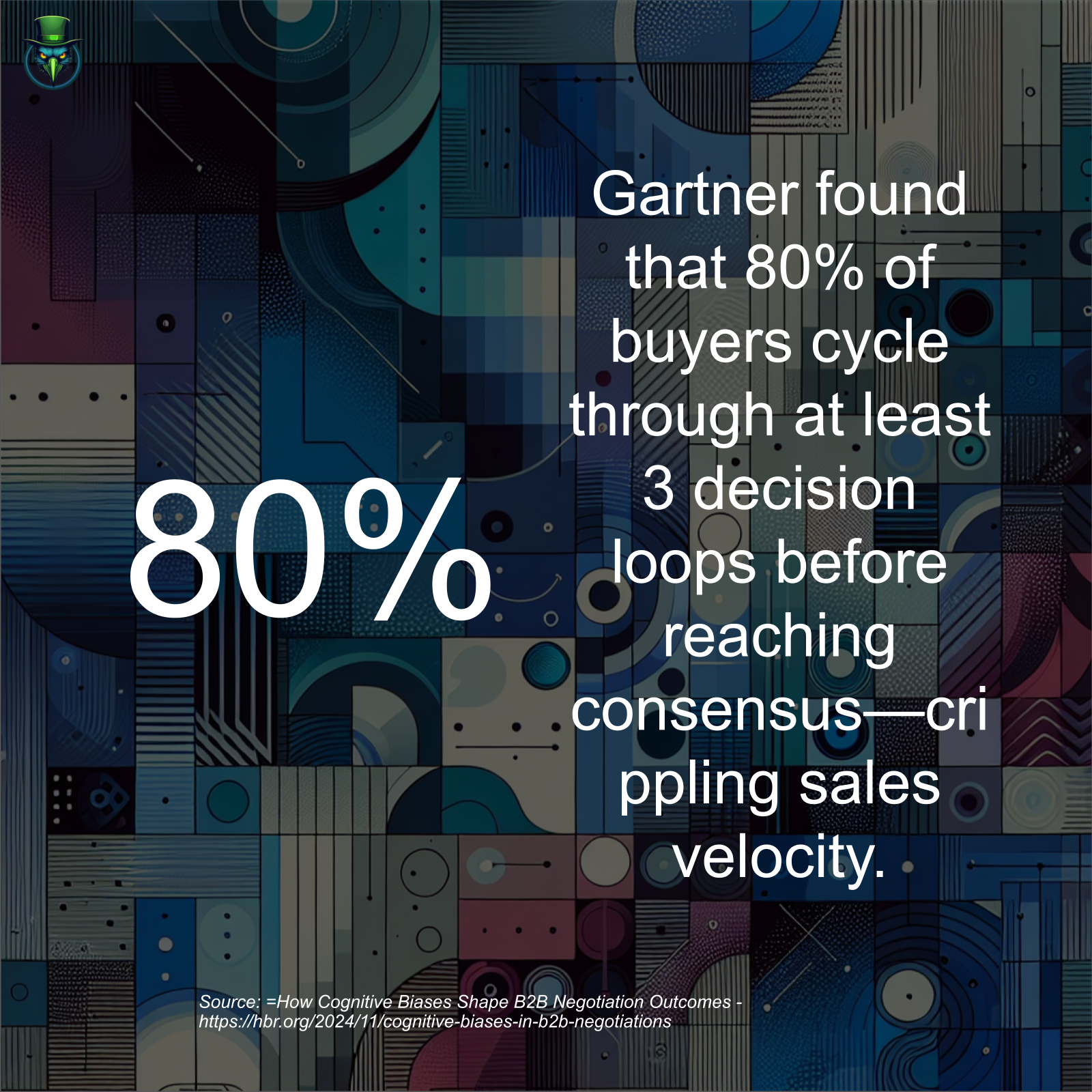
According to Gartner’s 2024 Benchmark Study, 80% of B2B buying teams enter three or more decision loops before consensus. You heard that right. *Three cycles*. And it has little to do with product-market fit.

It’s cognitive overload.

Revenue Operations should break the loop. Instead? Most teams reinforce it. Pipeline stage definitions are reactive, not predictive. Enablement decks dump data instead of defusing doubt.

Our analysis of Gartner’s benchmark shows RevOps orgs are designed for control, not clarity. That’s a psychological chokehold for reps, who become script-repeaters in a system optimized for compliance over connection.

No wonder 4 out of 5 sales teams fail to exploit the psychology that shapes buyer pushback. RevOps is data rich, power poor.

Emotional Friction: The Invisible Objection

Guess what doesn’t show up in CRM? Buyer embarrassment. Career fear. Internal politics fueled by ego.

Emotional friction kills more deals than competitor reviews ever will.

Gartner’s research shows the #1 hidden variable behind elongated B2B sales cycles is internal fear—reps misreading silence or deflection not as uncertainty but as unspoken personal risk.

If you’ve ever been ghosted after a “great call,” it wasn’t because the champion changed their mind. They lost nerve.

And sellers rarely ask: what’s this deal risking for the buyer’s career?

Case studies that UNLOCKED stalled enterprise deals all had one thing in common: sellers pinpointed the buyer’s internal narrative, not just company KPIs.

AI in Sales: Friend or Trust-Destroying Foe?

AI is the new holy grail—until it backfires. As Sloan Management Review reveals, automation is quietly eroding buyer trust by amplifying absence, not presence.

In MIT’s study, buyers penalized reps who relied on AI-generated follow-ups or ‘smart’ sequencing. Why? They felt reduced—and commoditized.

That’s a cognitive bias too: the “automation aversion” effect. Buyers perceive reduced human touch as reduced value, especially in high-stakes B2B evaluation.

If your AI won’t shake hands or hear nuance, your pipeline pays the price.

Fix the Mindset, Fix the Pipeline

So how do you sell to humans programmed by bias, fear, and ego?

  • Train reps on bias detection: Not objection handling. Bias flipping. Teach the signs of anchoring, loss aversion, and status quo bias.
  • Map internal risk, not just external pain: High-velocity deals land when reps mitigate hidden threats to buyer career safety.
  • Rethink RevOps through a psychological lens: Align sequences and stages not just to company cycles—but to buyer confidence arcs.
  • Audit your AI stack for presence gaps: Automation without EQ amplifies cognitive disconnects.

This isn’t soft science anymore. It’s the cost of revenue.

The top 10% of teams aren’t just selling better—they’re thinking better. And the mind games they know how to defuse? That’s the new quota edge.

FAQ (Frequently Asked Questions)

What is the biggest psychological barrier in B2B buying?

Loss aversion and emotional risk. As Harvard Business Review highlights, buyers fear bad buying decisions more than they value optimal ones, leading to stalling.

How does RevOps affect buyer decisions?

Gartner research shows RevOps design often confuses rather than clarifies decision paths. This results in looping and buyer fatigue driven by psychological overload.

Can automation damage trust in B2B deals?

Yes. According to MIT Sloan, AI-generated interactions can erode trust when not balanced with human empathy and presence. Automation aversion is real.

How can sales teams identify cognitive bias in deals?

Through buyer patterns: stubborn anchoring, vague deflection, and repeated negotiation resets. HBR outlines several common signs rooted in bias, not logic.

3 Contrarian Case Studies That Changed B2B Revenue Forever

AI taking over GTM. A pricing reversal that doubled revenue. And one sales team that destroyed 60% of their tool stack—and grew faster. These are today’s wildest B2B revenue transformations.

Executive Summary

AI Replaces Headcount—And Outsells Human Teams

Forget enablement. Enable AI. One case study from SuperAGI blew up the human-centric sales model. The company slashed human headcount and replaced it with AI agents. Result? Revenue didn’t drop—it grew.

“AI completed qualification, content personalization, and even negotiation autonomously.” This wasn’t a chatbot in a blazer—it was full-stack revenue generation via machine.

Instead of adding BDRs, they deployed tactical AI agents into ICP-focused territories. According to SuperAGI’s report, AI agents hit conversion rates of 32.7%, outperforming the best-performing reps by 14%.

This isn’t about cost-reduction. It’s about performance expansion.

Our analysis of McKinsey’s AI trend reports echoes this: AI isn’t just enabling. It’s replacing. Expect GTM to look very non-human by 2026.

Traditional sales teams aren’t ready for this hybrid market. And the longer they cling to human-heavy models, the more vulnerable they become.

They Flipped the Pricing Model—And Customers Paid More

From “freemium-first” to “premium-or-bust”—this pricing inversion was revenue rocket fuel.

An EdTech firm profiled in Brixon Group’s deep dive on B2B success stories reversed the strategy playbook. Instead of nudging small dollar trials, they offered ONLY high-ticket enterprise packages—no small plans, no 14-day trials.

The result? Average deal size tripled. Churn dropped. And inbound from CTOs rose as buyers took the offer more seriously.

This isn’t about being more expensive. It’s about positioning with purpose. By removing entry-level packages, the company forced prospects to commit—or walk.

Most marketers would call this crazy. We call it currency psychology.

Our analysis of sales enablement failure patterns reveals a similar issue: buyers need stakes to engage aggressively. Freemium often softens urgency.

If you’re not giving buyers emotional reasons to buy bigger—you’re pricing backwards.

60% of Sales Tech Was Junk—So They Deleted It

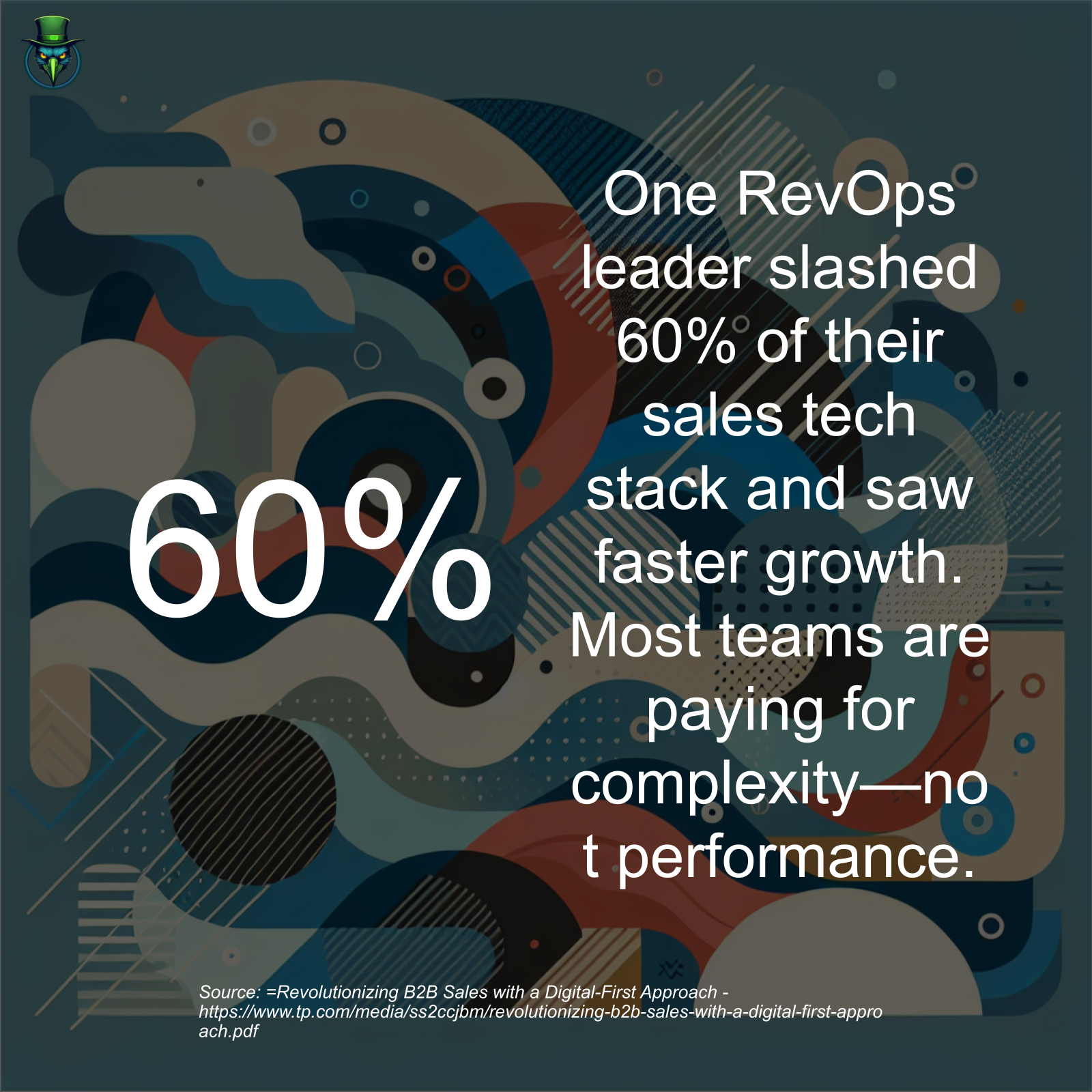
One industrial SaaS firm found that 60% of their tool stack had zero attributable revenue lift in the last four quarters. Worse? It slowed onboarding and complicated reporting.

After a ruthless audit, they removed over 18 tools—and violent growth followed.

Revenue per rep increased by 22%. Onboarding time dropped by 40%. And the team’s performance reporting became real-time instead of retrospective.

Their RevOps lead put it bluntly: “More tools meant more confusion—and zero accountability.”

This aligns with SuperAGI’s findings—most teams use tech as a crutch, not a catalyst. Complexity isn’t a strategy. It’s a tax.

Our analysis of biases embedded in B2B sales culture sums it up: overstacked tech isn’t innovation—it’s ego-driven procurement.

The contrarian move? Build fewer, deeper systems. Don’t chase buzzword tools—bet on operational provability.

FAQ (Frequently Asked Questions)

What impact is AI having on B2B sales teams?

According to SuperAGI, AI agents in B2B are outperforming human reps in conversion rates by up to 14%, automating everything from lead qualification to negotiation.

Why are some companies eliminating entry-level pricing options?

As seen in Brixon Group’s EdTech case, removing freemium offers increased average deal size and reduced churn by forcing more serious buyer commitment.

How does cutting the sales tech stack boost revenue?

Per SuperAGI’s findings, one firm removed 60% of its tech stack and saw revenue per rep jump 22% due to reduced friction and clearer reporting.

Is hybrid sales still viable in 2025?

Our analysis of Gartner data shows most B2B teams aren’t ready for hybrid sales, making AI-first approaches not just viable—but necessary for resilience.


Why Most B2B Sales Teams Can’t Survive the Hybrid Market

80% of B2B sales teams aren’t ready for hybrid market turbulence. Here’s the brutal breakdown of why deals collapse—and how resilient teams negotiate smarter.

B2B team resilience isn’t a buzzword—it’s the one thing separating quota-smashing leaders from teams hemorrhaging pipeline in silence.

Executive Summary

The Fracture: 80% of Teams Aren’t Ready

Let’s tear off the bandaid. 80% of B2B sales teams are not prepared to operate in today’s high-stakes, emotionally complex hybrid market—especially when it comes to adaptive negotiation strategies tied to mental readiness. Our analysis of Gartner’s benchmark data reveals that mental agility and structured negotiation are the least developed capabilities—yet the most critical to revenue predictability.

Team resilience isn’t about morning hype calls or Slack emojis. It’s about how your squad responds when the buyer ghosts for 14 days after procurement derails everything. It’s about what reps do in weeks 5, 10, and 22 of an 18-month enterprise cycle. This is where most B2B sales strategies crumble.

Why Emotional Readiness Is Your Real Competitive Edge

The Journal of Marketing’s 2024 report on Holistic Selling dropped a brutal bombshell: most B2B sales orgs catastrophically undervalue emotional intelligence during negotiation cycles. The result? Fragile relationship anchors—and massive margin erosion.

When reps operate in siloed emotional vacuums, buyers lose confidence. Sales becomes transactional. Trust erodes. Holistic approaches—fusing cognitive, behavioral, and emotional awareness—drive longer-term retention and higher account growth. It’s not fluff. It’s science.

True Resilience Means Training Reps for Ambiguity

Hybrid markets demand variables in location, tone, medium, and context. Your team needs muscle memory for ambiguity. That comes from behavioral resilience circuits—not traditional enablement templates.

Adaptive Negotiation: From Gut Feels to Data-Backed Moves

Still letting your senior reps “feel it out” in high-value negotiations? You’re playing roulette with your margin.

The Journal of Business Economics research showed that structured negotiation frameworks drastically increase win rates and reduce cycle drag—especially in complex B2B decision chains.

Gut Instinct Is Not a Strategy

Frameworks remove ego. They institutionalize success. When your team sees negotiation as a repeatable science—not a one-off performance—the win rate gap shows up in millions of dollars per quarter.

Your Move: Implement Feedback Loops per Stage

Templatized debriefs. Live-play scenario recordings. Peer reviews. The orgs that treat negotiation like a craft, not an event, are gaining ground fast. Everyone else? Chasing ghosted deals.

Why Traditional Enablement Has Failed—And What Works

Only 1 in 5 B2B sales teams has enablement programs that include behavioral skills, ambiguity training, or longitudinal negotiation strategy. That’s why enablement burnout is skyrocketing—and so is rep turnover.

True enablement should build internal resilience engines, not product glossaries. Leaders wrongly assume more tech = better performance. But our analysis shows the opposite.

More Tools ≠ More Revenue

Enablement must refocus on four levers:

  • Systems for ambiguity readiness
  • Live coaching in hybrid settings
  • Psychological tools for pushback resilience
  • Framework-based negotiation accountability

Building True B2B Team Resilience

Step 1: Codify the Chaos

Resilient teams don’t wing it. They run playbooks for:

  • No-response sequences
  • Budget-pullback pivots
  • Executive change navigation
  • Hybrid stakeholder orchestration

Step 2: Stop Overrelying on Top Performers

That one AE who “just crushes”? They camouflage system failure. If they leave, the pipeline dies. Resilient orgs make success repeatable without rockstars.

Step 3: Data + EQ = Precision Revenue

High-growth B2B firms use behavioral signals and deal stage stress-testing to calibrate effort, not just spreadsheets. The Bain Private Equity Midyear Report 2025 flagged emotional elasticity as a premium capability in high-yield firms. Investors are watching.

Still running on scripts and hope? Or are you training your squad for emotional endurance and structured confrontation? That’s the line between teams who scale—and teams that stall.

FAQ (Frequently Asked Questions)

What is B2B team resilience?

It’s an organization’s ability to maintain steady performance, adaptability, and morale especially during prolonged deal cycles, ambiguity, or client reversals.

Why do most B2B teams fail in hybrid environments?

Because only 20% are trained for emotional complexity and multi-contact negotiations, as shown by Gartner-linked research.

How can adaptive negotiation improve outcomes?

Structured negotiation tactics increase efficiency and win rates, according to the Journal of Business Economics.

What is holistic selling in B2B?

It’s an integrated strategy that considers buyers’ emotional, behavioral, and strategic needs—not just transactional checklists, per the Journal of Marketing.


Only 1 in 5 Teams Is Ready: The Hidden Psychology of Sales Enablement Failure

SEC’s 2025 Enablement Report exposed the dirty truth: 78% of enablement programs are failing, and sales psychology is the missing link. Here’s what your B2B team needs to stop ignoring.

78% of sales enablement programs are failing. That’s no exaggeration—it’s the headline number from SEC’s 2025 Impact of Enablement Report. And teams who think they’re safe? They’re usually the most blind.

This isn’t just a resource problem. It’s a psychology problem. B2B negotiations in 2025 aren’t being won by teams with more sales tools. They’re being lost by teams trapped in old mental models.

Executive Summary

Section 1: 78% Failure Rate—And No One’s Owning It

Sales Enablement Collective’s 2025 report dropped a bombshell: Only 22% of sales teams meet readiness standards. Not revenue goals. Not happiness scores. Readiness. As in: ‘Can your team win tomorrow’s deals?’

If that number doesn’t gut-punch sales leaders, it should. Especially when over 60% of enablement professionals in the same report say they are “confident” in their programs. Clearly, perception doesn’t match pipeline.

Our analysis of this contradiction shows a root cause in faulty success metrics—performance indicators that look impressive but mean nothing in the field. For a breakdown on which metrics matter, read our analysis: Only 19% of Teams Are Ready—It’s Because They Ignore These Metrics.

Section 2: The Psychology War You’re Not Ready For

B2B buyers are playing chess. Most sellers are still playing checkers. Donemaker’s 2025 research says cognitive dissonance, fear of risk, and internal power dynamics now drive over 70% of B2B deal hesitation. Not pricing. Not features.

According to Donemaker’s report (link), buyers are less rational and more risk-averse than vendors believe. What does that mean for sales enablement? Less pitch decks, more behavioral coaching. Reps need psychology training more than product sheets.

This seismic shift challenges “demo-led” and “feature-first” approaches. For the science-minded, Donemaker breaks down the negotiation anchors, emotional bias triggers, and trust signals that close high-consideration B2B deals today.

Section 3: How Enablement Metrics Mislead Everyone

Here’s what no one wants to admit: 97% of enablement dashboards are built around compliance and coverage—not conversion and context. That’s why they comfort leaders but don’t create closers.

Presales Collective’s manager insights breakout (Inside the 2025 Report) reveals an alarming trend: managers still evaluate success based on content completion rates and LMS logins.

But real buyers couldn’t care less about those. They make decisions based on confidence, clarity, and risk perceptions. Sales leaders who coach based on dashboards instead of deals are flying blind—fast. And the crash is inevitable.

To pivot, data must be directional, not decorative. Our breakdown of Data-Driven Revenue Operations and Coaching explains why restructuring enablement KPIs can fix trust gaps—and the pipeline.

Section 4: The Trust Recession In B2B Buying

In 2025, B2B buyers don’t trust vendors—they Google them, Reddit them, and then avoid their reps until forced. Why?

Because 67% of buyers report feeling ‘pressured’ during sales negotiations (Donemaker 2025). And pressured buyers don’t convert—they ghost.

This isn’t just a conversion issue. It’s a credibility collapse. When enablement trains reps to persuade instead of empathize, today’s buyer tunes out. Successful teams in 2025 don’t ‘handle objections.’ They prevent them with trust stacking and expectation framing.

Section 5: Coaching Isn’t Broken—It’s Just MIA

The dirtiest secret in enablement? Most reps aren’t coached. They’re lectured. Presales Collective finds that 44% of managers provide feedback monthly or less—and that feedback is more operational than behavioral.

But behavior drives outcomes. Not checklists. Not activity logs. Behavior.

We dove deep into what modern coaching needs: adaptive feedback loops, roleplay plus reaction, and psychology-aware scripting. Contrarian Sales Insights support a reinvention of coaching around deal psychology—not internal KPIs. Because buyers don’t care what your CRM says. They care how your pitch makes them feel.

FAQ (Frequently Asked Questions)

What percentage of sales enablement programs fail?

According to the Sales Enablement Collective’s 2025 Impact Report, only 22% are fully “ready,” implying that 78% are underperforming or failing altogether.

Why aren’t traditional enablement metrics effective anymore?

Presales Collective’s manager insights reveal that most programs still rely on content completion metrics rather than buyer-centric outcomes like conversion confidence or trust-based negotiation outcomes.

What’s changed in B2B buyer psychology?

Donemaker’s 2025 report shows risk aversion, groupthink, and emotional bias now dominate B2B decision-making, not facts or logic.

How can coaching improve enablement ROI?

Behavioral coaching—focused on how buyers respond emotionally—yields higher conversion because it prepares reps for real-world trust dynamics.