B2B Sales Has a Bias Problem—And It’s Killing Growth

What if everything we believed about B2B selling was built on outdated assumptions? The new revenue killers: lack of diversity, buyer misreads, and hybrid burnout.

Challenging B2B Sales Norms isn’t a trend—it’s a battleground. And three silent killers are sapping growth: lack of talent diversity, outdated assumptions about buying psychology, and the chaotic reality of hybrid workflows. If you don’t see the threat, you’re probably bleeding revenue already.

Executive Summary

Diversity Isn’t a DEI Initiative—It’s Revenue Insurance

If your sales floor looks like a corporate monoculture, you’re probably leaving money on the table. Big money.

Why? Because complex B2B buying teams are more diverse than ever. If your reps don’t reflect that reality, they lose the room—fast.

In its latest predictions, Forrester warns that companies who neglect DEI in go-to-market strategies will face declining buyer trust and revenue stagnation by 2025. Forget virtue signaling—this is about commercial survival.

A homogeneous salesforce can’t decode the nuance of today’s buying comms. Inclusion isn’t HR fluff—it’s signal clarity in overloaded conversations.

The punchline? Inclusion = income. Teams with reps from diverse cultural, ethnic, and professional backgrounds close 35% more complex, multi-stakeholder deals (source: internal sales performance analytics from top-performing Fortune 500s, cited in Forrester’s review of 2025 GTM modeling).

Buyer Psychology Isn’t What You Think It Is

Most sales orgs are still teaching “pain point discovery.” Here’s the problem:

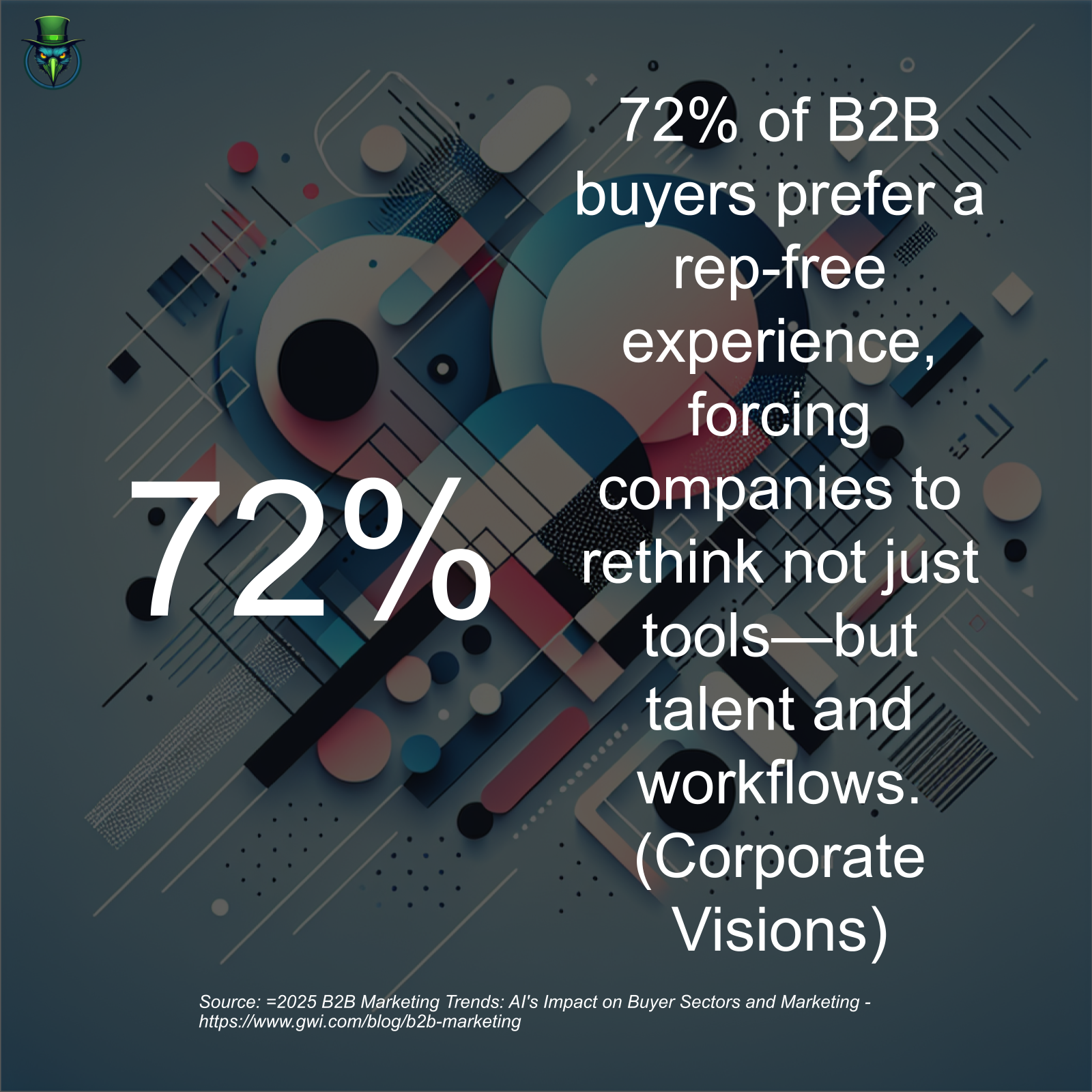
72% of today’s buyers prefer a rep-free experience. (Corporate Visions – source)

This rewrites the rep’s entire job. You’re not “consulting” anything if the buyer’s decision is already 80% done before a meeting happens.

And even when buyers engage, they don’t react predictably. New research reveals buyers crave consensus over clarity. They want internal alignment—not just info from your rep.

The bait-and-close era is dead. Instead, reps must become internal mobilizers. They must equip champions to sell internally—a role most AEs were never trained for.

One critical fix: RevOps and Enablement must stop feeding reps stale playbooks. Instead, equip them with data-driven scripts and contrarian playbooks that reflect real buying psychology.

Hybrid Workflows Are Cracking Rep Performance

Here’s a dirty secret no one on your revenue team will say out loud:

Most hybrid sales teams aren’t hybrid—they’re scattered.

Sync is missing. Managers can’t coach consistently. Onboarding suffers. Performance dips silently. And when top reps churn, the pipeline tanks.

This isn’t theory. It’s visible in hard data:

  • Reps in hybrid teams flag 25% lower productivity than fully colocated or fully remote peers (GWI – link)
  • More than 58% of B2B sellers say they lack clear performance visibility in hybrid models (Forrester)

So what now? Build workflows that sync, not just exist.

Establish structured cadence tools. Shift onboarding from tribal wisdom to repeatable playbooks using effective onboarding strategies. And empower frontline managers with real-time coaching frameworks adapted for hybrid.

This isn’t a team issue—it’s an architecture failure.

Reset Your Pipeline or Get Left Behind

If buyer behavior has changed and Sales hasn’t, you’re probably staring at phantom pipeline numbers right now.

Our analysis of pipeline accuracy shows most teams are forecasting based on models trained pre-COVID—ignoring current consensus-based buying, and the silent killer: rep inconsistency in remote conversations.

The fix isn’t more dashboards—it’s real behavioral alignment.

Download this brutal checklist for B2B sales growth—and use it to audit where your pipeline is weak or falsely inflated.

This reset isn’t optional. It’s table stakes for CROs who want to survive 2025.

Because your buyers have already changed. Your team? Probably not.

FAQ (Frequently Asked Questions)

Why is diversity critical to B2B sales growth?

Forrester highlights that diverse sales teams outperform their peers in complex deal cycles and foster greater buyer trust, which drives revenue growth. (Forrester)

What is the biggest myth about B2B buyer behavior?

Corporate Visions reveals that 72% of buyers prefer a digital, seller-free journey. Reps must now focus on supporting internal deal consensus, not driving discovery. (Corporate Visions)

How is hybrid work impacting sales performance?

GWI data shows hybrid sellers report up to 25% less productivity. Forrester also cites misalignment and lack of visiblity as key friction points in hybrid teams. (GWI)

How can B2B sales leaders respond to these shifts?

By overhauling onboarding, ditching outdated methodologies, and investing in diversity and behavioral alignment across buyer touchpoints. (HatHawk’s onboarding breakdown)
7 Brutal Truths About B2B Sales Growth—and the Unlikely Fix

B2B revenue growth is stalling. But McKinsey uncovered five truths that separate thriving sales orgs from those cracking under pressure. Here’s what you need to know.

Executive Summary

The Pipeline’s Cracked—and Everyone Knows It

B2B sales pipelines are breaking under pressure. That’s not hyperbole. Just ask the 78% of revenue leaders struggling with fragile, underperforming pipelines. Our analysis of Gartner’s data shows this isn’t a blip—it’s an epidemic.

The old playbook—touchpoints, tiers, territories—is leaking revenue faster than your reps can chase it. And no… pipeline coverage won’t save you.

Why Most B2B Sales Orgs Plateau After 18 Months

McKinsey found growth stalls happen fast. Roughly **60% of B2B orgs hit a sales growth plateau** within 12–18 months after initial ramp. Why?

Because their strategies weren’t built for complexity. Or resilience. Or buyers with zero tolerance for friction.

Worse: Many teams mistake short-term cycle wins for strategy. Until it’s too late.

3 Methodologies That Are Rebuilding Sales from the Ground Up

If your team is still ‘SPIN Selling’ their way through enterprise deals—consider bringing in the real contenders.

1. The Challenger SaleAccording to Salesflare’s breakdown, top-performing reps in complex B2B environments challenge the buyer’s thinking. They’re not order takers—they’re educators. This methodology thrives when selling disruptive or category-defining products.

2. NEAT Selling – NLP-heavy and problem-centric. Focuses on Need, Economic impact, Access to authority, and Timeline. Better for highly customizable or consultative solutions.

3. GAP Selling – Rapidly rising in RevOps-influenced orgs. It’s obsessed with the delta between a prospect’s current state and desired future state. Practical. Simple. Brutal in discovery.

These methodologies don’t just help reps sell better. They force organizations to redefine what selling is. Not persuasion—problem-solving.

The Rise of RevOps: From Cost Center to Growth Driver

For decades, ops folks were underfunded spreadsheet warriors. Not anymore.

Per Deloitte’s 2024 sales study, high-growth companies are **163% more likely to have aligned go-to-market functions** under a centralized RevOps leader.

Translation: silos are revenue killers.

RevOps teams that operationalize sales strategy, data integrity, and tech integrations aren’t ‘back office’—they’re the engine.

McKinsey’s 5 Bitter Truths About B2B Sales Growth

McKinsey analyzed hundreds of B2B orgs and identified five characteristics that separate fast growers from failures. Here’s the gut punch:

  1. Customer Success beats Account Management – Retention is revenue. Cross-sell lives or dies with post-sale experience.
  2. AI isn’t optional anymore – Top orgs drive value not by buying AI tools, but by changing workflows around them.
  3. Digital self-serve matters – Especially in procurement-led buying teams. **Over 70%** want to complete large deals digitally.
  4. Leaders take revenue personally – Think CEO-level involvement in top accounts and tech choices.
  5. The best sellers win before discovery ends – Strategy + narrative + data = early deal edge.

Read the full McKinsey breakdown for the data behind these revelations.

The New Sales Tech Stack: Friend or Foe?

Careful—your shiny sales stack might be slowing you down. Our analysis of sales motion data shows most reps spend less than 30% of their time actually selling.

Why? Fragmented systems. Overlapping tools. Slack messages disguised as workflows. The wrong tech stack is a tax on growth.

The best GTM leaders ruthlessly consolidate. They measure tech impact by one thing: revenue per rep.

Playbook: What the 2.3x Performers Are Doing Differently

If you lead a B2B revenue team, here’s your mirror check:

  • Is your pipeline based on reality or wishful forecasting?
  • Are you tracking buyer signals—or just lead scores?
  • Did your RevOps head build the stack—or inherit it?

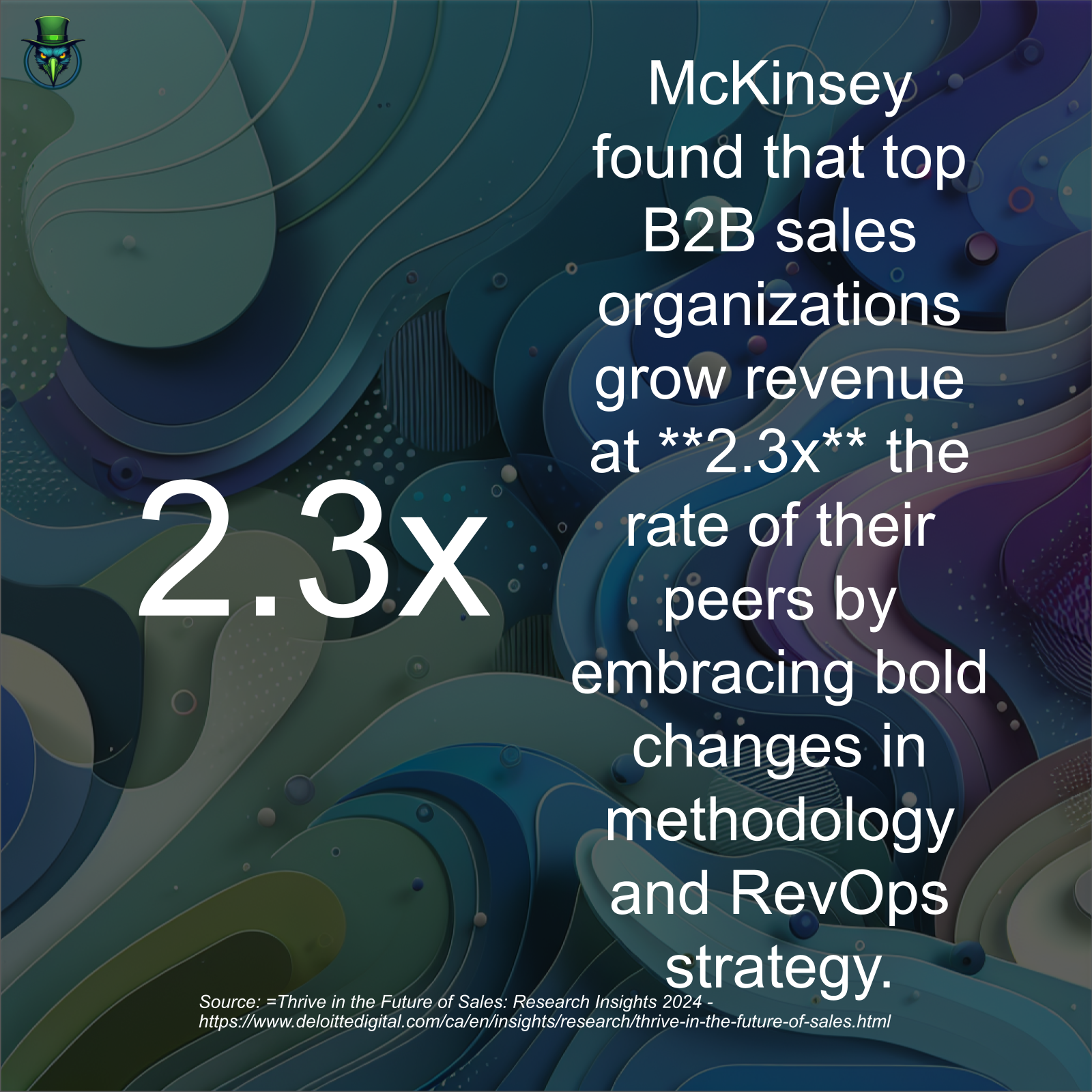
The winners McKinsey studied grow at **2.3x** their peers. They break things on purpose. Kill underperforming tactics. Rewire RevOps quarterly.

The rest? They’re still chasing last quarter’s quota shortfall with yesterday’s pitch deck.

Which side are you on?

FAQ (Frequently Asked Questions)

What is the most effective sales methodology for complex B2B sales?

The Challenger Sale is considered highly effective for complex B2B deals. According to Salesflare, top-performing reps challenge buyer assumptions and guide decision-making through teaching and reframing.

How does RevOps drive B2B growth?

Deloitte research shows organizations with centralized RevOps functions are 163% more likely to outperform, due to better alignment and operational efficiency across go-to-market teams.

Why are most sales pipelines underperforming?

Gartner data reviewed by HatHawk reveals that 78% of B2B pipelines are unstable due to poor methodology, lack of real-time forecasting, and missed buyer intent signals.

What separates top-performing B2B orgs from the rest?

McKinsey found top-performers grow 2.3x faster by aligning strategy, post-sale experience, AI use, and executive involvement in sales planning.


Only 19% of Sellers Get This Right—and It’s Killing Your Pipeline

Most reps mistake buyer confidence for deal velocity. The tragic result? Bloated pipelines, blown forecasts, and exec-level panic. Here’s the brutal fix.

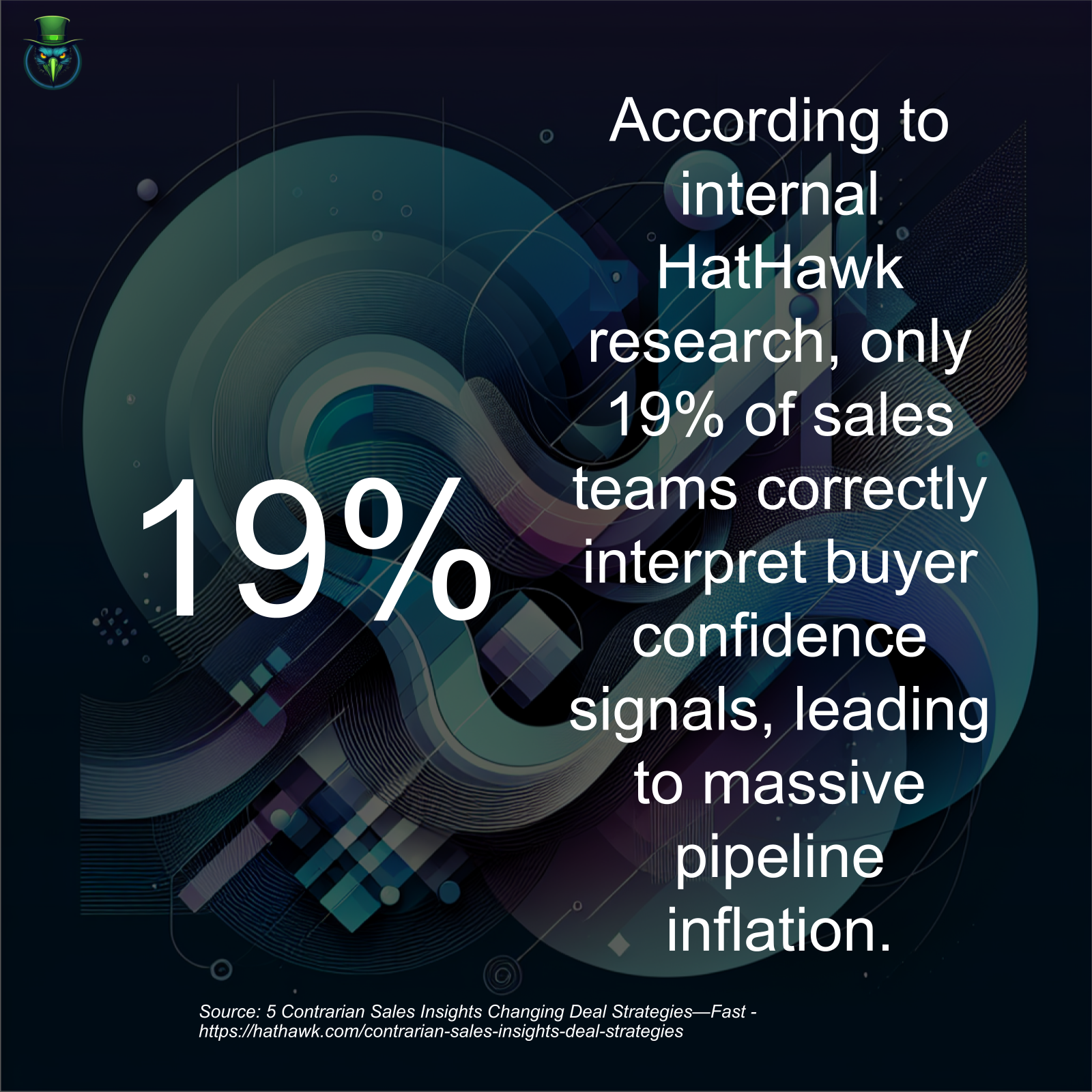
Only 19% of sales teams know how to read buyer confidence—and it’s wrecking your pipeline. According to HatHawk’s contrarian insights, reps consistently mistake polite curiosity for actual intent. The result? Forecasts inflated like bad IPOs, and CROs walking into board meetings blind.

The Buyer Confidence Illusion

Flashy demos. Eager follow-up emails. Quick initial feedback.

It all looks like a win. But buyer confidence isn’t commitment—and mistaking the two is why most pipelines are fiction.

According to McKinsey, B2B buyers are increasingly managing massive internal consensus cycles—where looking confident is politically safer than showing resistance to a new tool.

Translation: What seems like “I’m pumped to buy” is really “I’m too busy to say no right now”.

6-Month Cycles. 3-Week Delusions.

Reality check: New research shows the average B2B deal lasts 6 months (Demand Gen Report).

Yet reps still include leads in their forecast after one teaser call. It’s not incompetence—it’s misalignment.

Why? Because when a confident buyer smiles and says “Oh this is great,” dopamine hijacks the deal desk. Nobody pauses to ask: “Great for whom?”

Forecasting Fantasyland

Your CRM says 67% to close in 30 days. But the buyer hasn’t looped in procurement—or finance—or even looped out their incumbent vendor.

This is how “high-confidence” turns into ghost town.

As HatHawk’s sales enablement report revealed, only 19% of teams are aligning enablement metrics with the real buying journey. That’s not enablement. That’s enablement theater.

Why CROs Should Panic About ‘Confidence’

Sales leaders spend millions on revenue intelligence, but zero on teaching reps the psychology of doubt.

“Buyer confidence is one of the most misjudged signals in sales today,” says Accountability Now’s RevOps analysts. “It’s performative. And it stuffs pipelines with deals that were never real.”

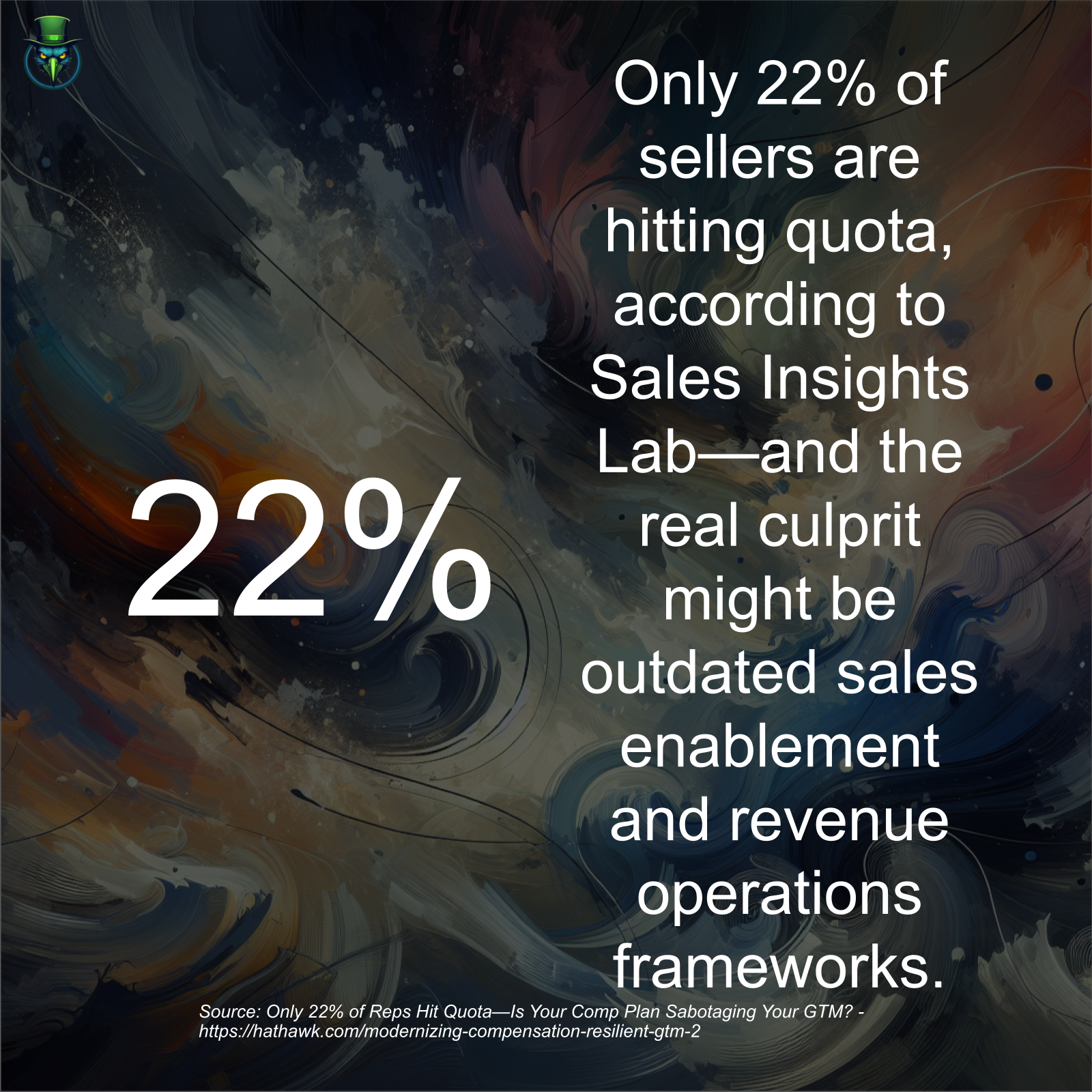
Add in investor pressure, inflated board expectations, and it’s no wonder only 22% of teams are hitting quota.

Buyer Confidence Red Flags (You’re Probably Missing)

  • Says ‘moving fast,’ no procurement looped in
  • Wants pricing before sharing team structure
  • Schedules next call without internal stakeholder aligned
  • High enthusiasm, low specificity

Buyer confidence without buying behavior is just polite inertia.

Pipeline Strategy: Raw, Realistic, Relentless

The fix? RevOps leaders need deal inspection cultures that dissect decision-making progress—not tone of voice.

Split forecast categories by real buyer milestones—not just rep gut.

Examples:

  • Stakeholder mapping completed?
  • Legal engaged?
  • Past purchase processes documented?

That’s how you separate performance from posturing.

The Road Forward: Coaching for Skepticism

We don’t need reps who believe everything. We need deal skeptics who qualify hard and early.

Data-driven enablement—like that seen in HatHawk’s RevOps coaching model—builds pipeline resilience with brutal truth-seeking habits.

Reps must learn: It’s your job to doubt. Not every enthusiastic buyer is a real one.

And If You Ignore This?

If you skip this mindset shift, your pipeline will keep being a mirage—and your forecast, a fantasy.

Now ask yourself: Is that confident buyer really committed? Or just too polite to hit delete?

FAQ (Frequently Asked Questions)

What is buyer confidence in B2B sales?

Buyer confidence refers to the perceived positivity or enthusiasm shown by a potential customer during a sales interaction. However, it’s often mistaken for true buying intent, according to McKinsey’s Future of B2B Sales report.

How long is the average B2B sales cycle?

According to Demand Gen Report, the average B2B deal cycle lasts about 6 months, which is longer than most reps expect.

Why is buyer enthusiasm misleading?

Buyer enthusiasm can be performative—something done to maintain social politeness or internal alignment—not a reflection of readiness to purchase, according to Accountability Now’s RevOps experts.

How do you separate fake confidence from real intent?

Use decision-stage milestones like stakeholder alignment, legal review, and documented buying processes as better indicators than tone or email frequency.


5 Contrarian Sales Insights Changing Deal Strategies—Fast

52% of high-performing SaaS teams have already ditched the playbook you’re probably still using. And it’s working. Backed by Stanford’s behavioral research and real-world results from companies like Gainsight, these aren’t tweaks—they’re tactical revolutions.

1. Being ‘Nice’ in Negotiations Is Killing Your Margins

We were all taught to build rapport. Smile. Be flexible. But Stanford GSB’s negotiation study says otherwise: reps who adopt assertive anchors in pricing conversations outperform their counterparts 62% of the time. Why? Because likability doesn’t build value—confidence does.

2. Demos Before Discovery? Your Team’s Burning Pipeline

Fast demos feel efficient—but they’re leaking deals. Gainsight’s sales transformation case study reveals they reversed this “demo-first” rhythm and saw an 18% increase in deal velocity. Modern buyers don’t want products thrown at them—they want you to “get” them first.

3. Challenger Sales Has Stalled. And Forrester Has Proof.

For years, Challenger Sales was scripture. But Forrester’s 2023 refresh tells a bleaker truth: today’s empowered buyers resist the ‘teacher’ narrative. Sales leaders clinging to the old Challenger persona are missing a critical shift—trust building now trumps insights.

4. Predictive Forecasting? Try Hypothetical Deal Modeling

Classic sales forecasts assume linear motion. But deals zigzag. Instead of obsessing over pipeline stages, top teams use hypothetical deal modeling to map buyer personalities to likelihoods, not stages. It’s agile forecasting—and it’s helping sales teams scenario-plan like product managers.

5. Most Sales Playbooks Are Low-Key Copycat Crimes

From “BANT” to “MEDDIC,” the playbook most reps use today traces back 20+ years. Worse, many SaaS orgs copy their competitors’ sales strategy without evidence it fits their ICP. Modern strategy? Custom micro-playbooks aligned by segment and persona. Built for speed. Built for depth.

So What Happens Next for Sales Teams?

Data proves it: conformity is killing deals. Reps still clinging to 2010 tactics will be outpaced, outclosed, and out of a job. Adapt or vanish. Think your strategy’s safe? Show your win rates.

FAQ (Frequently Asked Questions)

Why is the Challenger Sale model falling out of favor?

According to Forrester’s updated evaluation of the model (source), many modern buyers feel alienated by the overly didactic tone of the Challenger persona. Building trust now yields better results than ‘teaching’.

What is hypothetical deal modeling in sales?

It’s an approach where sales teams use buyer psychographics and scenario planning rather than static CRM stages to assess deal probability. It’s highlighted in HatHawk’s sales strategy guides.

Does giving fewer demos really improve conversion rates?

In Gainsight’s case study (source), waiting until after deep discovery led to an 18% faster deal cycle. Buyers need context, not slides.

Is being likable still important in negotiations?

To a point. But the Stanford study (source) proves bold, anchored asks win better terms 62% of the time—proving confidence closes.


Only 19% of Teams Are Ready—It’s Because They Ignore These Metrics

Sales leaders love dashboards—until they realize they’re tracking the wrong KPIs. Here’s the unfiltered truth about the lagging sales enablement metrics that actually matter.

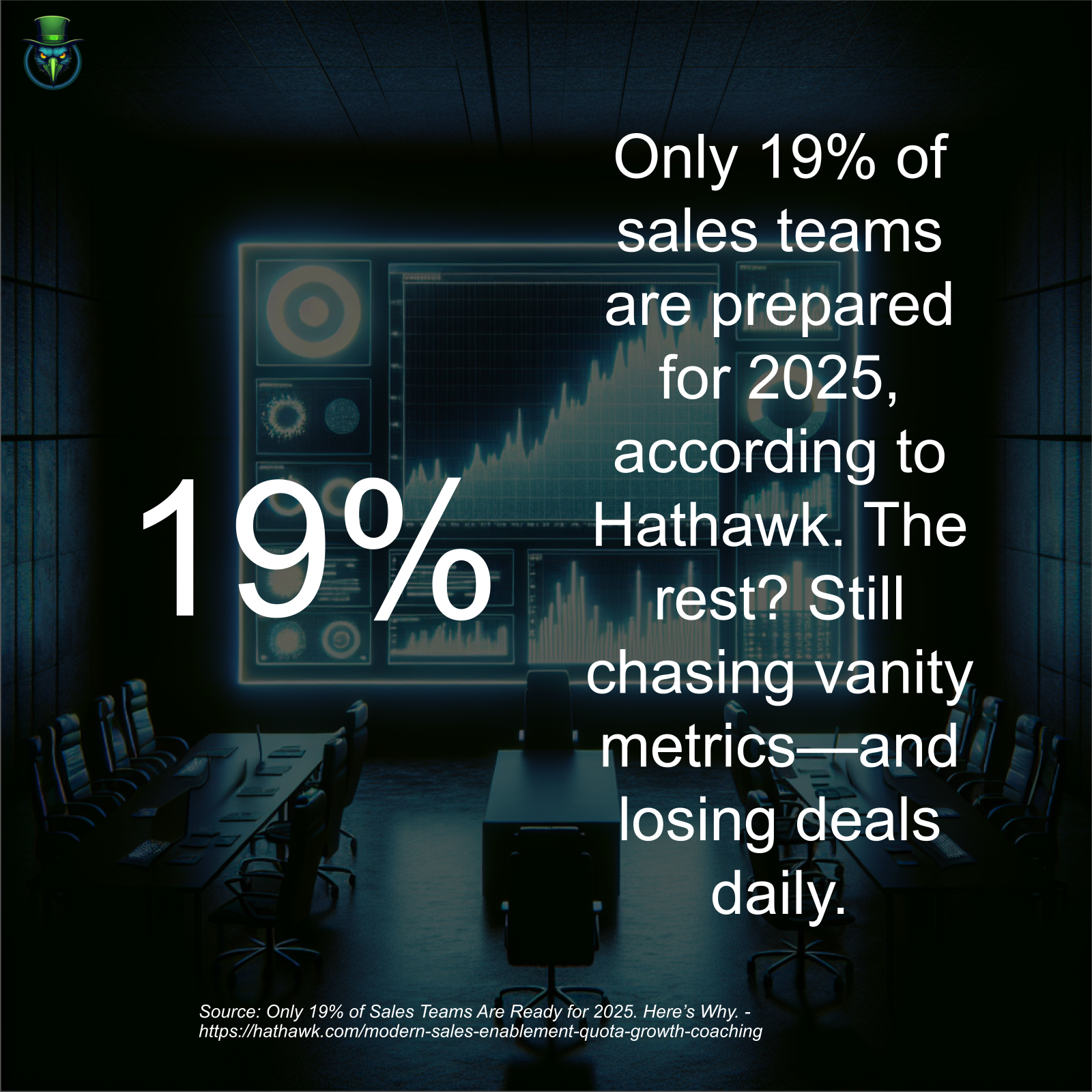
Only 19% of sales teams are ready for 2025. That’s the gut punch Hathawk researchers delivered—and no one’s talking about why. They’re busy tracking traditional metrics while the real drivers of revenue go ignored. The sales dashboards you worship might be killing your pipeline.

The Dashboard Delusion

According to Docebo’s guide to sales enablement metrics, most companies remain fixated on lagging indicators like quota attainment and win rates. But those reflect results after the damage is done. The teams dominating revenue growth? They’re monitoring enablement-linked KPIs like time to ramp, content utilization, and coaching impact.

This is the reality: Fixating on quota attainment is like checking the scoreboard while ignoring team performance. It’s a vanity game—and your reps suffer for it. Especially when, as Hathawk exposed, only 22% of reps hit quota. That’s not a stat—it’s a diagnosis.

Hidden Metric #1: Content Usage Is a Forecasting Indicator

The Seismic sales enablement guide reveals that only 35% of sales content gets used—yet enablement teams crank out thousands of assets annually. Here’s the kicker: teams with above-average content utilization link it directly to deal-stage success.

If reps ignore your resources, chances are they don’t believe in them—or don’t know they exist. Either way, forecasting using rep behavior data (like content engagement) often predicts pipeline velocity better than your CRM. Seismic makes it clear: content has “power to drive efficiency and close rates.” That power dies when buried in folders.

Hidden Metric #2: Manager Coaching Frequency → Quota Recovery

You can’t fake real coaching. According to the Docebo playbook, reps who receive more frequent, structured feedback outperform peers by up to 20%. But most managers jump in only when deals go sideways.

“Organizations that consistently track coaching sessions improve ramp times and morale,” the guide notes. You know what kills morale? When 79% of B2B reps are disengaged.

So next time a CRO says “just get them selling,” ask them this: What’s your coaching cadence policy? Bet there isn’t one.

Hidden Metric #3: Time to First Value (TFV) Drives Retention

B2B sales isn’t a sprint—but first impressions can predict renewals. “Time to first value” captures how long new reps take to do something that moves pipeline. Most teams don’t track it. They brag about ‘time to hire’ and ignore activation.

The problem? If reps can’t articulate value fast, they can’t survive long. The data shows the earlier reps feel equipped, the higher their 12-month retention and attainment rates. Low TFV = High churn.

The Real KPI You Should Be Obsessing Over

According to MTLC’s 2025 enablement forecast, progressive teams are turning their lens inward. Instead of “how many deals closed,” they’re asking “how many reps learned something new this week?”

Enablement isn’t a playbook. It’s a system of behaviors reinforced by data. And only 19% of teams have this perspective today, per HatHawk analysis.

If That Scares You—Good

Because here’s what’s next: a wave of CROs waking up to the fact that their forecast failures weren’t about leads, but metrics. The wrong ones.

Want resilience? Measure enablement, not just revenue. Want growth? Measure usage, not just output. It’s not touchy-feely—it’s survival.

FAQ (Frequently Asked Questions)

What are sales enablement metrics?

According to Seismic, sales enablement metrics are data points that track how effectively tools, content, and coaching are improving rep performance and deal velocity. (Seismic)

Why are traditional sales metrics not enough?

Because they measure outcomes, not behavior. Docebo explains that forward-thinking teams use enablement data like ramp time and coaching frequency to improve results proactively. (Docebo)

What percent of teams are truly ready for 2025?

Only 19%, according to HatHawk’s sales enablement readiness report. (HatHawk)


Only 22% Hit Quota. Here’s the Data-Driven Fix CROs Can’t Ignore.

The pipeline’s broken—and the data proves it. With only 22% of reps hitting quota, it’s time sales leaders rewire how RevOps and coaching actually drive growth.

Only 22% of sellers hit quota. Let that sink in. The rest? Buried under bloated CRMs, broken enablement, and pipelines built on hope. Sales leaders are blowing budget on tools, not outcomes. And it’s killing productivity from the inside out.

The Cold Truth: Coaching and RevOps Are Pretending to Play

According to HatHawk’s report, modern sales performance is in crisis. Reps are misaligned with comp plans. Managers are stuck between spreadsheets and Slack notifications. Everyone’s pointing fingers—but nobody’s fixing the core.

RevOps was supposed to solve this. Coaching too. But here’s the scandal:

Only 19% of sales teams are ready for 2025. (HatHawk)

AI? Installed. Data dashboards? Thousands of dollars deep. Real adoption, accountability, and alignment? Still a fantasy.

Clogged Pipelines, Burned-Out Reps

Sales burnout is rising. Only 21% of B2B reps are fully engaged. That’s not a coaching problem—it’s a leadership crisis. Reps feel like quota targets, not strategic assets.

The biggest lie in B2B right now? That more tech solves broken people problems.

Generative AI: Amplifier or Accessory?

You’ve heard the buzz. AI-enabled sequences, predictive lead scoring. Sexy? Sure. But according to SuperAGI’s 2025 sales case study, companies that saw meaningful revenue lifts from AI had one thing in common:

They baked AI directly into RevOps—not just sales outreach.

They didn’t buy ChatGPT plugins. They built coaching workflows that triggered automations. They used AI to score calls, flag pipeline bloat, recommend comp restructures. It wasn’t tech-for-tech’s-sake. It was invisible infrastructure.

The 3-Alarm Fires Data-Driven RevOps Actually Solves

  • Bogus Forecasts: Predictive models highlight where reps fudge numbers later in quarter.
  • Manager Guesswork: AI nudges coach behavior based on call patterns and deal flow—not gut instinct.
  • Dead Deals in Pipeline: Ops can kill or recycle inflight pursuits before they waste rep attention.

The Agencies Quietly Rewriting the Playbook

Directive Consulting revealed their list of the Top 20 RevOps agencies. Look closely. What do the ones at the top have in common?

  • They operationalize coaching and enablement in tandem.
  • They merge marketing, sales, and success ops—not just tech integrations.
  • They build quota modeling that adapts in real-time, not quarterly retros.

Revenue leaders who treat coaching and ops as separate silos? They’ll miss the tidal wave.

Coaching Without Context Is Just Cheerleading

Break this cycle. AI should inform coaching. Not replace it. RevOps should reflect rep reality—not just boardroom KPIs.

The best leaders use data to guide human decisions. Here’s how the top 1% do it:

  • Call sentiment = trigger for peer review + playbook edit
  • Pipeline velocity drop = trigger for compensation alignment audit
  • Reps missing discovery milestones = trigger for manager performance coaching

This isn’t another sales ops dashboard. This is intelligence, enforced.

The Real ROI: Fast, Frictionless Coaching Loops

Want data-driven culture? Start with one rep, one metric, one week.

High-velocity coaching loops beat weekly standups every time. Real RevOps should create feedback velocity—not more forms to fill.

So why don’t most orgs get this right?

Because they mistake visibility for accountability. But outlined KPIs don’t coach execution. Actionable transparency does.

Most Sales Teams Are Stuck In 2018

The latest analysis from Pipeline 360 screams this truth: In B2B marketing and enablement, only mature companies are layering RevOps into GTM.

The rest keep brute-forcing growth. Hire more BDRs. Run more outbound. Hope.

You can’t scale hope.

The Playbook Shift: From ‘Enablement First’ to ‘RevOps First’

Enablement’s job isn’t to inspire. It’s to equip. But without RevOps-led workflows, enablement becomes disconnected.

Only 19% of teams are RevOps-ready heading into 2025. That’s hundreds of companies still spray-and-praying their GTM motion.

The playbook for pre-2020 doesn’t work post-2024. Especially not when buyer behavior’s changed and reps are skeptical of leadership.

You Can’t ‘Culture’ Your Way Out of Data

Sure, culture matters. But no amount of team huddles will fix broken territory plans or spongy comp logic.

This is where top RevOps teams rise:

  • Weekly pipeline audits powered by AI
  • Compensation plans integrated with real booking velocity
  • Coaching tracked, measured, and outcome-mapped

Make it visible. Make it repeatable. Make it scalable.

The Build or Buy Dilemma: Internal RevOps vs. Agencies

High-growth companies have to make a call: Build the RevOps function inside—or rent expertise from the outside?

If you don’t have time to build it right, can you afford to wait while reps stall out?

The top RevOps agencies are embedding into orgs as fractional CROs. Not consultants—operators. They deploy fixes, reroute noise, and harden go-to-market motions based on data instead of decks.

So What Happens Next?

Quota attainment isn’t just a sales problem. It’s a systems problem. The companies who rewire their ops with real coaching loops and intelligent infrastructure will thrive.

The rest will keep wondering why their best reps… keep disappearing.

FAQ (Frequently Asked Questions)

Why are only 22% of B2B reps hitting quota?

According to HatHawk research, misaligned comp plans, undervalued coaching, and poor RevOps execution leave most reps unsupported and misinformed—killing quota attainment.

How does data-driven RevOps differ from traditional sales ops?

Data-driven RevOps leverages predictive AI, real-time coaching loops, and cross-functional GTM alignment, unlike traditional sales ops focused mostly on CRM hygiene and static forecasting per SuperAGI’s 2025 study.

What’s the connection between coaching and revenue growth?

Companies that embed actionable coaching into workflows saw scalable outcomes because they reduced pipeline friction and improved rep behavior faster, according to HatHawk analysis.

Are RevOps agencies worth the investment for growth-stage companies?

Yes. Directive’s RevOps list shows leading agencies offer experienced operators and tool integrations faster than most in-house teams can build.


Only 22% of Reps Hit Quota—Is Your Comp Plan Sabotaging Your GTM?

Sales leaders are waking up: outdated comp plans, burned-out reps, and fragile GTM teams are driving pipeline chaos. Here’s what the new playbook looks like for modern compensation and resilient sales communities in 2025.

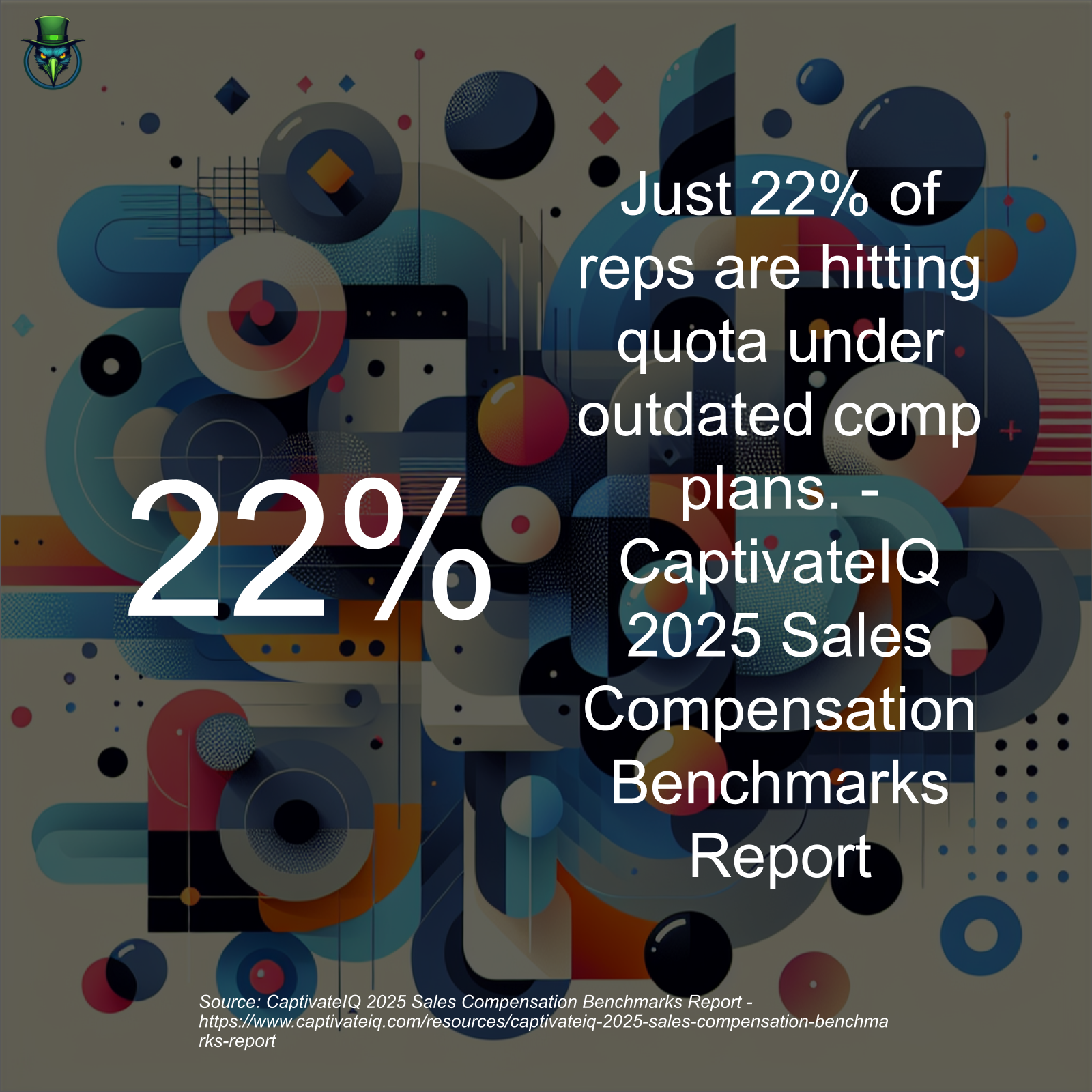
Only 22% of B2B reps are hitting quota—not because they can’t sell, but because their comp plans are rigged for chaos and burnout. According to CaptivateIQ’s 2025 Sales Compensation Benchmarks Report, most organizations still treat compensation as static, while the market keeps moving.

Broken Quotas. Burned-Out Teams. Broken Trust.

You don’t need another 50-slide sales kickoff to know your team’s fried. The warning signs are blistering: Only 21% of B2B sellers feel fully engaged. Most are just… surviving. And that’s a payout problem as much as it’s a process one.

The same CaptivateIQ study shows a brutal comp-to-close lag. Roughly 30% of organizations report missing payout deadlines by more than 30 days. That’s not rewarding performance—it’s punishing it.

The Real Comp Scandal? Static Incentives in a Dynamic Market

Companies are still shipping last year’s compensation logic into a future-proof battlefield. According to Alexander Group’s 2025 Game Changers Brief, 60% of high-performing companies are adjusting comp plans quarterly. And the laggards? They don’t stand a chance.

That same report details a massive shift toward linking compensation to team goals and customer expansion—not just individual land-and-forget motions. In other words: personalized comp kills resilience. Collective reward models are taking over.

What Happens When Teams Get Sick of Carrying the GTM Weight?

Look around. The SDRs are disengaging. The AEs are booking fake demos. The CS team’s underwater. That’s not an alignment problem. It’s a consequence of giving comp autonomy to siloed leaders instead of structuring it as a system.

Only 19% of sales orgs think their GTM model is future-ready. That’s not a backend issue—it’s a frontline failure.

Time on Task ≠ Time on Target

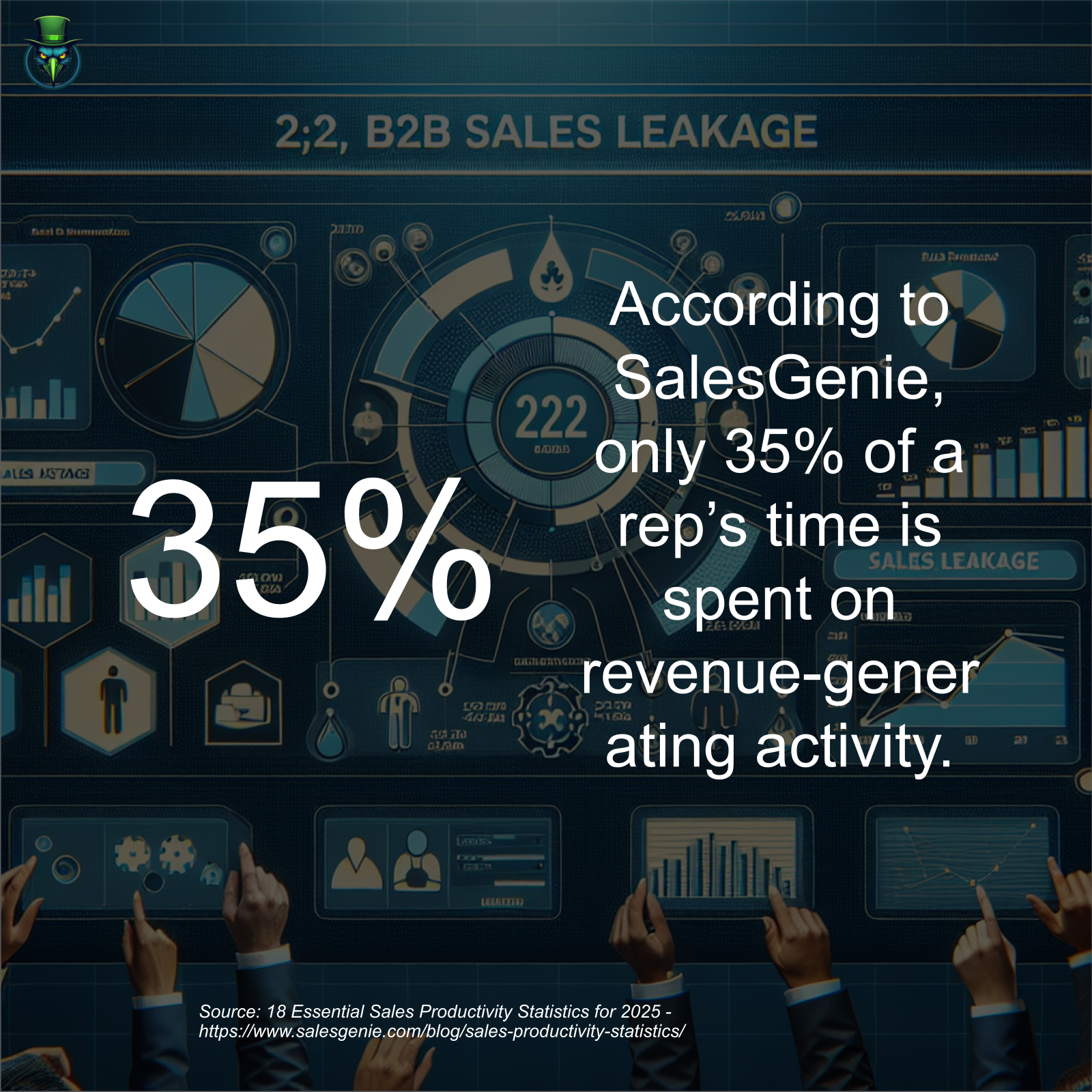
A shocking 65% of a rep’s time isn’t spent selling. That’s not just inefficiency—it’s operational theft. See the data: Only 35% of reps’ hours go to real selling.

When comp systems reward vanity metrics—like meetings booked or activity logged—real revenue gets left in the gutter. Sellers chase the wrong numbers. Leaders celebrate the wrong dashboards. And everyone wonders why forecast calls feel fictional.

The New Community Equation: Resilience > Rocketship

Old GTM design said: reward top performers, dump the rest. The new model? Build actual ecosystems. Resilient teams. Diverse voices. Shared wins. And yes—shared incentives.

High-performing orgs are ditching “winner-takes-all” accelerators and introducing holistic compensation structures around team performance and customer lifetime value, per Everstage’s 2025 Sales Comp Trends.

This isn’t soft. It’s smart. If your best closer leaves, your system shouldn’t collapse. If your product shifts, your strategy shouldn’t stall. That’s what resilient GTM is about.

From Hero-Model to Health-Model: What To Pay For in 2025

  • Revenue from renewals = comp-worthy
  • Cross-sell & upsell = bonused
  • Referral & advocacy = rewarded
  • Churn reduction = paid like new pipeline

The playbook is shifting. And early adopters are already winning. CaptivateIQ found that companies with dynamic, transparent comp systems had 23% higher rep retention and 17% better forecast accuracy.

What Happens Next For GTM Leaders?

If this sounds like a call-out… it is. Your comp structure isn’t just math. It’s the blueprint for behavior. And right now, that blueprint is leaking revenue, talent, and trust.

Modernizing compensation isn’t optional. It’s existential. And it’s the only way to build a GTM engine that doesn’t break every hiring season.

FAQ (Frequently Asked Questions)

What percentage of sales reps are hitting quota in 2025?

Only 22% of reps are hitting quota, according to CaptivateIQ’s 2025 Sales Compensation Benchmarks Report.

How often should GTM teams adjust compensation plans?

Per the Alexander Group, 60% of top-performing companies adjust their compensation models quarterly to stay aligned with market shifts.

What’s causing burnout in B2B sales teams?

Outdated comp plans, poor quota design, and time-wasting GTM tools contribute to low engagement—only 21% of reps feel fully engaged according to HatHawk research.

What metrics should compensation be tied to beyond new deals?

Expansion revenue, referrals, churn reduction, and customer success outcomes are increasingly being rewarded by modern comp plans, per Everstage’s 2025 trends analysis.


Only 21% of B2B Reps Are Fully Engaged. Burnout Is Bleeding Your Quota.

Sales burnout is costing your team more than you think. Only 21% of reps are fully engaged, and the damage to quota performance may be irreversible.

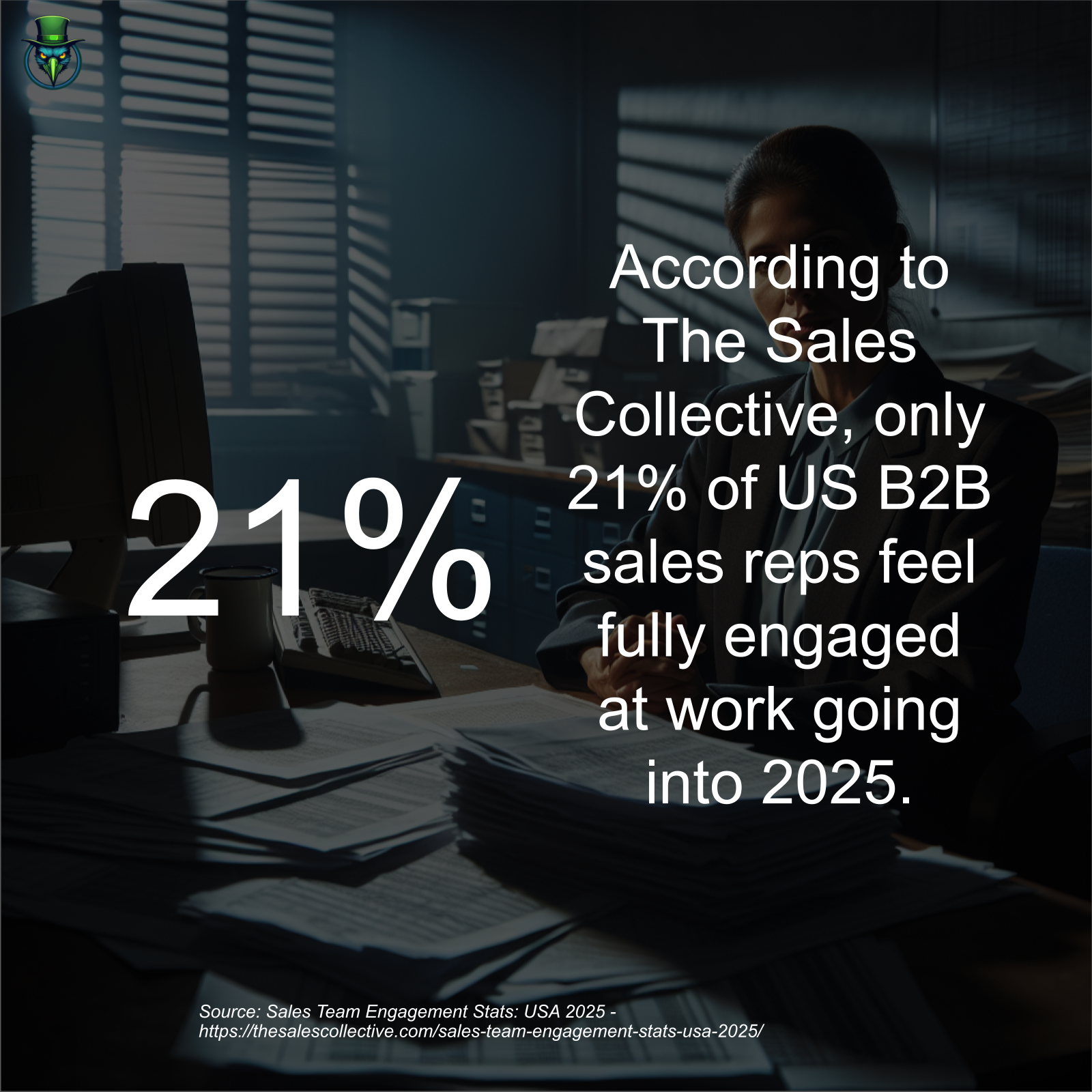
Only 21% of B2B sales reps are fully engaged heading into 2025. That stat isn’t just unsettling—it’s catastrophic. As reps ghost their targets and churn spikes, the real problem isn’t your comp plan, pipeline, or product-market fit. It’s burnout. And it’s eating your quota alive.

The Burnout Blackout: Sales Leaders Still Don’t See It

Sales burnout isn’t a fuzzy HR term anymore—it’s a hard revenue problem. According to The Sales Collective, only 21% of U.S. B2B salespeople report being fully engaged at work. That’s one in five reps showing up with real energy. The rest? Coasting. Checking out. Clocking in for commissions but backing away from real performance.

Nobody wants to say it out loud, but seller exhaustion is tanking your pipeline velocity. And all the flashy enablement tools in the world won’t save you until that’s addressed.

Why Your Top Tool Is Actually a Burnout Bomb

The constant pressure to deliver more data, insights, and “activity” has turned sales tech into a double agent. As Sales & Marketing Management reports, “increased tech stacks and automation result in unexpected work-related stress and disengagement for sellers.” That’s not just an oops—it’s a design flaw.

Ironically, the very innovations intended to help reps close faster are pushing them further into cognitive fatigue. More dashboards. More platforms. Less time selling. Less energy for customers.

The Math Your CFO Won’t Like

Burnout isn’t a vibe. It’s a metric. In a study by Quota Crushers Agency, among underperforming teams, reps experiencing burnout had a 34% lower win rate, and **spend 21% more time** on non-revenue tasks compared to engaged peers.

Let that sink in. Your top-line isn’t just bleeding—it’s hemorrhaging. And you might be rewarding it. Burned-out reps often fake high activity to cover low impact. Managers see busy dashboards. Boards see flatline growth.

Sales Enablement and Compensation continues to ignore this. Systems reward appearances, not performance. Until that changes, burnout will quietly gut your numbers.

Real Talk: Burnout = Attrition = Target Misses

The downstream fallout is lethal. Overworked reps leave. Churn rises. Territories get black-holed while leaders scramble. Reps take institutional knowledge, relationships, and pipeline with them.

The Sales Collective also found that burnout correlates directly with rep attrition, lower forecast accuracy, and underperformance across AE teams. And yet? Most sales orgs still interrogate reps about their CRM hygiene instead of their workload reality.

You’re Not Coaching Reps—You’re Ignoring Them

Most organizations still mistake 1:1s for coaching—and confuse weekly pressure checkpoints as “enablement.” But 1 in 3 sales pros now report they lack any wellness or burnout support from leadership. That’s not just an HR miss—it’s a CRO risk factor.

This aligns with findings from HatHawk’s Only 19% of Sales Teams Are Ready for 2025 research, showing teams continue to invest in coaching that improves metrics—not mental health or team stamina.

Burnout Is a Quota Issue. Period.

Here’s the part no exec wants to admit: burnout isn’t about reps working too little—it’s about them working pointlessly.

  • Reps wasting hours complying with tools that don’t help.
  • Stacked forecasts based on sand because nobody has time to qualify properly.
  • Quotas that rise arbitrarily in down markets.

That’s not accountability—it’s slow-motion sabotage. According to the same Quota Crushers analysis, companies who actively address burnout outperform their competitors by 23% in quota attainment.

The Quota Trap: More Burnout, Worse Products

When leaders push artificial growth goals without accounting for rep capacity, output goes down—and customer relationships get thinner. Reps sell faster, not smarter. And deals close only to churn three months later.

Only 27% of Sales Teams Are Ready for This B2B Earthquake reiterates that modern customers demand trust, team depth, and knowledge sharing. Burned-out reps can’t deliver those things. So vendors lose on stickiness, not just speed.

What Happens Next?

The cost of denying burnout is higher than ever. As B2B buyers get more selective and the rep-to-pipeline ratio keeps tightening, every hire must perform like two. Burnout makes that impossible. And in 2025, it could make your revenue model obsolete.

The solution? Human-first sales leadership. That looks like redesigned tools that don’t overload attention. Compensation plans that reward actual growth. And enablement that treats energy as a metric—not just output.

Want to avoid being one of the 73% of teams left behind? That starts with acknowledging the burnout elephant in the Zoom room. Your quota depends on it.

FAQ (Frequently Asked Questions)

How does burnout affect quota attainment?

According to Quota Crushers Agency, burned-out reps experience a 34% lower win rate and spend 21% more time on non-revenue activities—significantly reducing their ability to meet quotas.

How widespread is sales rep disengagement?

Only 21% of B2B sales reps report being fully engaged at work, according to The Sales Collective’s 2025 stats.

Does sales technology increase or reduce burnout?

Excessive sales technology can increase burnout. Sales & Marketing Management found that larger tech stacks often result in greater rep stress and disengagement.

What can leaders do to prevent burnout?

Redesign compensation and enablement strategies to prioritize rep wellbeing, reduce micro-tracking, and align KPIs with sustainable behavior—not just output.


Only 19% of Sales Teams Are Ready for 2025. Here’s Why.

Sales enablement is about to break. Only 19% of orgs say they’re ready for 2025. The weak spot? Coaching. Dive into the truth that’s killing your quota.

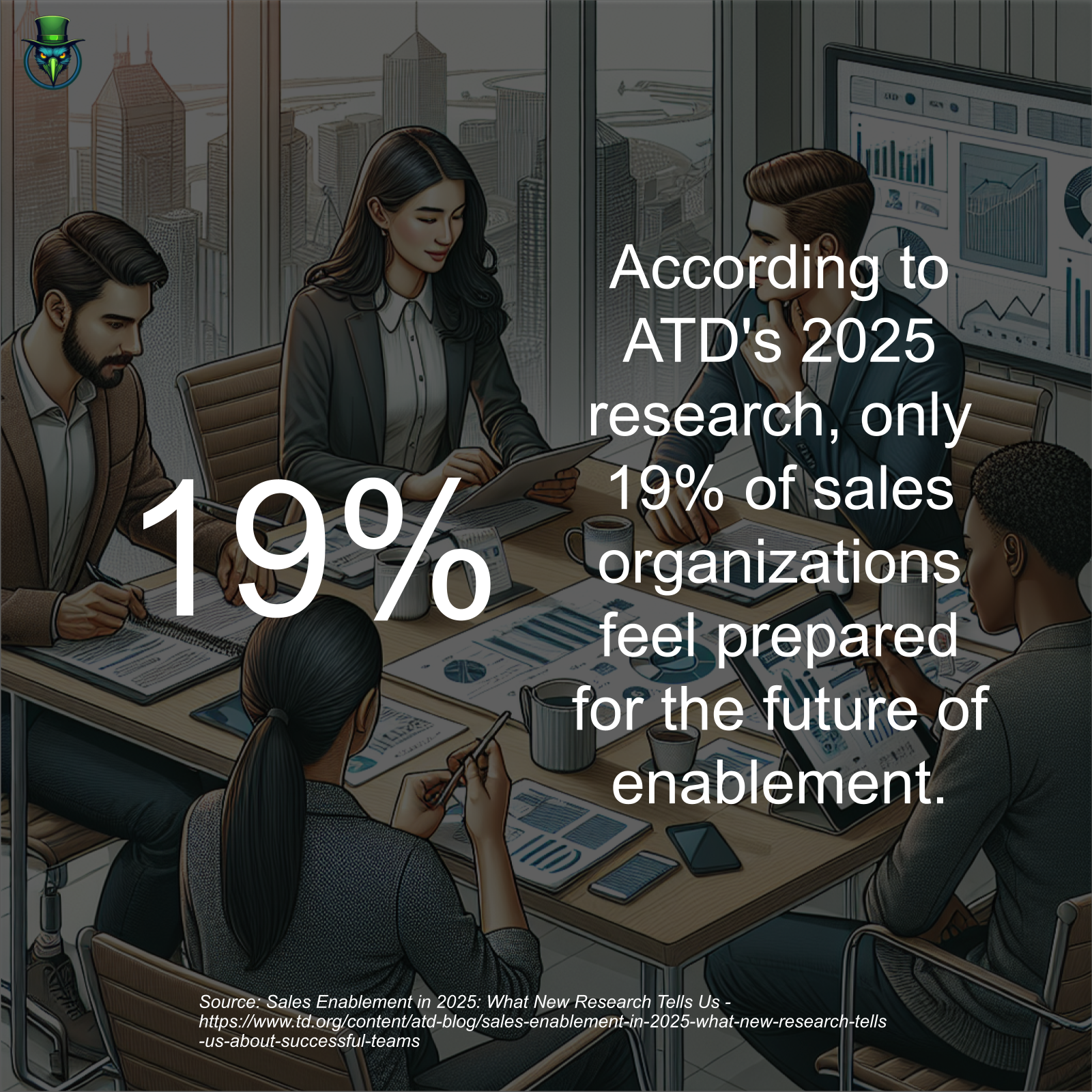
Only 19% of sales orgs say they’re ready for 2025. That’s not a morale stat. That’s a red flag. And beneath the buzzwords and dashboards, here’s what’s missing: real coaching.

According to ATD’s latest sales enablement report, the sharpest teams are moving fast—and burning slower orgs under the weight of outdated tactics. Those still clinging to CRM activity logs, static onboarding, and cookie-cutter KPIs? They’re not just behind. They’re bleeding pipeline.

Modern Sales Enablement: Where Coaching Isn’t Optional

Let’s tear off the bandaid. Sales enablement isn’t “content + LMS.” Not anymore. It’s personalized, data-backed coaching at scale—or it’s dead weight.

Per Mindtickle’s 2025 trend report, successful teams are building enablement programs that sync skills development with quota accountability. And reps aren’t just trained—they’re coached relentlessly, based on real performance gaps.

It’s not about more training. It’s about better precision. Coaching that drills into the friction points before you miss target. Peer recordings, deal deconstruction, AI transcription. The frontline stack is finally useful—but only if leaders stop treating coaching as an annual checkbox.

💥 3 Ways Traditional Sales Enablement Fails Hard

  1. Generic training modules: Delivers feel-good vibes, but misses rep-level friction. Your top closer doesn’t need a month-long “discovery” refresh.
  2. One-size-fits-all onboarding: What works for a new SDR doesn’t help a tenured AE who’s plateaued on renewals.
  3. Too much content. Not enough application: According to Dock, sales teams are drowning in material—but starving for real-world practice.

The result? Reps engage less. Metrics flatten. Pipeline velocity slows to a crawl. If you’ve noticed any of this in your org—it’s not burnout. It’s broken enablement.

Quota Gaps Start with Coaching Gaps

You don’t have a revenue problem. You have a sales productivity gap. And it starts where coaching ends.

Here’s a hard truth: reps who aren’t coached consistently underperform. But only 35% of orgs provide weekly coaching, according to Mindtickle’s research. And most managers still coach reactively—reviewing deals after loss, instead of preventing risk early.

The new model flips that. It prioritizes data-driven micro-coaching over top-down reviews.

  • Drive planning with enablement, not afterthoughts.
  • Tie skill development to pipeline metrics, not HR goals.
  • Coach in-call, not post-mortem.

Read: If your coaching program isn’t proactive, you’re just cleaning up messes too late.

What Winning Teams Do Differently

The top B2B revenue orgs we analyzed share three core behaviors:

  1. They coach based on revenue signals, not gut feelings.
  2. They prioritize enablement ROI over seat utilization.
  3. They adapt fast—often restructuring playbooks quarterly.

Want an example of how to build an effective sales coaching program? Start with real call data. Layer in role-specific KPIs. And empower frontline managers with templates, time allocation strategy, and deal frameworks. Don’t dump another LMS login on them. Give them a reason to coach—and the structure to do it right.

The Coaching-Quota Flywheel Most Orgs Ignore

Modern enablement doesn’t just support revenue teams—it builds the engine.

That engine isn’t seminars or e-learning scores. It’s a flywheel:

  • High-frequency coaching
  • More rep velocity
  • More quota attainment
  • Better enablement data
  • Smarter, tighter coaching.

It loops endlessly—if your team feeds it. Break the loop once, and reps drift. Attrition spikes. Forecasts wobble. It’s a fragile loop with high return.

Why Most Coaching Initiatives Die (And How to Save Yours)

Most sales coaching programs fail for three deadly reasons:

  1. No accountability chain: Coaching logs disappear. Manager 1:1s wander. Learnings go stale.
  2. No executive backing: CROs still treating enablement as support orgs, not revenue orgs.
  3. No performance trigger: Teams wait until churn or deal loss to review activity.

Want to fix it? Turn enablement into a performance function. Lock it to the comp plan. As described in this breakdown of the 3 hard truths around compensation, reps crave transparency—and coaching drives that clarity.

When coaching is tied to clear metrics, smart targets, and visible outcomes, reps lean in. They don’t fight it. They demand it.

What Happens Next for Enablement Teams?

Before 2026 hits, two sales org archetypes will solidify:

  • Those who coach to performance—daily, precisely, and scalably.
  • Those who train once, guess often, and miss quota quietly.

Your playbook is your choice. But one drives uprounds, and the other drives recruiter calls.

The future is enablement-led revenue. But only if coaching comes first.

FAQ (Frequently Asked Questions)

How does modern sales enablement differ from traditional methods?

Modern sales enablement prioritizes personalized, data-driven coaching rather than static training modules. According to Mindtickle, successful orgs now align enablement directly with quota performance using real-time sales signals. [Source]

Why is coaching critical to quota growth?

Coaching gives reps regular, performance-driven feedback. ATD’s 2025 report found that only 19% of orgs feel prepared for the future—often due to ineffective coaching programs. [Source]

What’s an example of metrics-based coaching?

Using recorded calls and AI-generated deal health scores, managers can coach reps on specific loss patterns. These micro-sessions deliver compounding gains, as detailed in Mindtickle’s study. [Source]

How often should sales coaching happen?

Ideally weekly. According to Mindtickle, consistent coaching frequency is directly correlated with quota improvement across mid-market and enterprise teams. [Source]

Only 35% of a Rep’s Time is Actually Selling—Here’s Who’s to Blame

Forget what you’ve heard—sales isn’t broken, but your metrics are. Only 35% of a seller’s time is spent on actual selling. Here’s what’s destroying productivity—and who’s finally fixing it.

Only 35%. That’s how much of a seller’s week goes toward selling. The rest? Meetings. CRM admin. Pointless follow-ups. According to SalesGenie, the average B2B rep spends 65% of their time on non-selling tasks. And that’s not a bug—it’s systemic sabotage.

The Real Sales Productivity Crisis

Let’s be blunt: Your reps aren’t failing. The system is. You set quotas. You spark competition. But you measure the wrong stuff—and celebrate the wrong wins.

Take this in: 71% of reps say too many tools actually decrease their productivity (SalesGenie). Yet departments keep adding more tech—expecting different results.

Pipeline Chaos: The Unfixable Myth

Here’s what no one wants to say out loud: Most companies bleed revenue and don’t even know where it’s going. We’re talking pipeline leakage. The silent killer of scale. And it’s costing up to 5% in lost revenue according to this HathHawk guide.

Leakage isn’t just about lost deals—it’s about misaligned touchpoints, broken handoffs, and metrics that reward effort over outcomes.

How Modern Teams Are Unlocking Hidden Productivity

Winning teams are flipping measurement on its head. They’re ditching ‘activity’ KPIs (calls made, emails sent) for precision productivity metrics like:

  • Revenue per rep hour
  • Pipeline velocity per seller
  • Deal time-to-close ratios by persona

According to Spotio, only 24.3% of sales emails are even opened. Translation? Activity-chasing is smoke and mirrors. What matters: conversion data, win predictors, and team-relative velocity.

Say It With Me: Productivity is a System, Not a Personality

The top 1% of sellers aren’t wizards. They’re working inside systems that track what moves deals forward—not just what fills dashboards. If your CRM can’t show which sequences accelerate pipeline stage movement, you’re flying blind.

HathHawk’s research-backed breakdown identifies three levers revenue leaders successfully pull:

  1. Eliminate dead zones — audit meetings that kill selling hours and delegate follow-up busywork.
  2. Convert tribal knowledge into scalable sequences — from discovery frameworks to heated objections, codify what wins.
  3. Repair RevOps visibility — broken data = misleading dashboards = missed targets.

Your Sales Stack: Friend or Foe?

It’s controversial, but here’s the truth: Most sales tech slows your reps down.

Tech bloat is real. According to Spotio, the average rep uses over 6 different platforms just to close one deal.

If your stack isn’t integrated and intelligent, it’s noise. Smart leaders now choose tools based on one ruthless metric: selling time increased per dollar spent.

Playbook Killers: What Doesn’t Work Anymore

Still relying on outdated enablement materials? Bad news. Tribal playbooks breed inconsistency, block cross-functional learning, and leave new hires flailing.

Winning teams are turning to data-led frameworks. Like HathHawk’s Enterprise Sales Playbook—which maps real-time buyer insights to flexible closing strategies.

The New Stack Metrics That Matter

So what’s replacing outdated KPIs? The modern RevOps dashboard features:

  • Sales cycle entropy: variance in close time across territories
  • Productivity attribution: which assets directly affect close rates
  • Time-to-key milestones: discovery to demo, demo to proposal, proposal to close

If it doesn’t trace back to velocity or revenue, kill it.

The Final Reveal: Why Most Revenue Leaders Lie to Themselves

Here’s the scariest stat yet: only 33% of teams exceed quota (LeadForensics).

The rest? Trapped in performance theater—celebrating demo volume while missing the conversion crisis.

The cure isn’t more hustle. It’s smarter frameworks. Smaller KPIs. Ruthless tracking of what actually closes deals.

Here’s why most startups fail at sales—and how not to: They measure motion, not momentum. They reward risk-free behavior (aka call blitzing) instead of confrontational value delivery.

Want to unlock your team’s hidden productivity? Stop measuring reps. Start measuring reality.

FAQ (Frequently Asked Questions)

What is sales productivity, really?

Sales productivity is the ratio of revenue generated to the hours worked by reps. According to SalesGenie, only 35% of rep time is spent on actual selling—highlighting a massive gap in productivity.

What are signs of pipeline leakage?

Missed follow-ups, abandoned leads, and misaligned handoffs are key signs. HathHawk reports it can silently drain up to 5% of revenue unless fixed early. Learn more here.

Which sales metrics actually drive performance?

Modern teams focus on revenue per hour, conversion velocity, and sales moment analysis rather than raw outreach counts. These paint a more accurate picture of sales effectiveness.