The 38% Advantage: How Smart B2B Sales Leaders Win With AI (While Others Guess)

B2B sales teams using AI sales tools closed 38% more deals than their manual peers in 2024. That’s not hype. It’s hard data from the Forrester Sales AI Benchmark.

Only 31% of teams hit their sales goals without AI. But with the right tools, that number jumps to 62%.

If you’re still guessing your way through pipeline reviews, you’re giving your competitors a free head start. We’re Live: 7Hats.AI Launches to Help Sales Leaders Stop Guessing and Start Scaling proves how fast this shift is happening.

Why Most Sales Teams Miss Their Targets Without AI Sales Tools

So the numbers are clear—AI sales tools work. But most teams are still stuck in the old way. They use spreadsheets, play email roulette, and waste hours qualifying leads that never close.

If you track deals in a spreadsheet and assign leads by gut, here’s what happens: reps spend 54% of their week on tasks that don’t directly win revenue (Gartner). That’s more than half their time—gone.

Manual outreach also kills response speed. Only 17% of cold emails from a human get answered within 24 hours. But AI-personalized follow-ups get a reply in 8 hours, on average (2024 InsideSales Study).

Worse, most non-AI teams see less than 10% of their pipeline actually close. They set goals and miss. Then repeat. The result? Burned-out reps, missed quotas, and shrinking budgets.

If you’re still doing it the old way, here’s what you’re losing: speed, accuracy, and deals that should have been yours.

How AI Sales Tools Changed the Game for B2B Teams

The pain with manual selling is real. But here’s where leaders broke with old habits.

Starting in 2023, top B2B teams made a shift: they stopped guessing, started tracking, and let AI run the first mile of every sales process. What did they figure out?

They learned that AI sales tools—software that uses data and machine learning to automate tasks like lead scoring, outreach, and follow-ups—don’t just save time. They improve win rates across the board.

Here’s why that matters… When every rep gets a real-time, ranked list of which leads to call, they waste less time on dead ends.

And when AI writes the first draft of every outbound email, reps send 5x more quality messages per week, with lower typo rates and faster reply times.

The shift: top teams put machines on low-skill work, kept humans on high-value calls, and watched win rates climb.

What’s the Proof AI Sales Tools Boost Results?

It’s not just theory. Sales teams trusting AI sales tools hit their number—and have the receipts to prove it. Let’s break it down.

How much do AI tools increase deals closed?

AI-powered sales teams close deals 38% faster, according to the 2024 Forrester Sales AI Benchmark. Teams using AI for lead scoring, automation, and outreach saw 38% more closed-won deals than teams using manual, spreadsheet-driven processes.

Metric Manual Teams AI Sales Tools Teams
Close Rate 11% 18%
Deals Closed in Q1 2024 325 448
Lead Response Time (hrs) 22 9
Average Emails Sent/Rep/Week 270 1,215
Quota Attainment 31% 62%

B2B sales teams using AI-powered prospecting tools increased their close rates by 7 percentage points in 2024 (Forrester Sales AI Benchmark).

What is the ROI for AI in B2B sales teams?

Teams using AI for lead scoring saw $4.2M additional pipeline in the first six months (G2 2024 Review Analysis). Marketing and sales alignment improved, and low-quality leads dropped 26%.

A 2024 InsideSales review showed B2B teams using AI chatbots for inbound saw a 31% jump in qualified meetings.

How do AI sales platforms boost team speed?

AI-powered sales automation tools reduced rep admin time by 11 hours per week in tests at 3 enterprise SaaS companies (2024 HubSpot Data). That’s 23% of a full workweek, now freed up for demos and calls.

Why do buyers respond better to AI-powered outreach?

Hit rates for AI-personalized cold emails were 2.1x higher than standard templates, per Cognism’s Q2 2024 Outbound Study. Buyers replied faster and more often because messages felt unique. That’s not spam. That’s results.

One of the fastest-growing B2B SaaS teams, tracking weekly with 7Hats.AI, used machine learning to route every new lead to the highest-probability rep on day one. They cut response times in half—and broke a company record for booked meetings in March 2024.

Proof is in the data: AI sales tools win with better speed, accuracy, and deal flow.

The Playbook: How to Win With AI Sales Tools in 2024

So now you have the numbers. But what does it look like to actually use AI sales tools each day?

Step 1: Always Start With a Single Problem

No team swaps their whole tech stack overnight. The smartest B2B teams pick one pain point—like “too many unqualified leads”—and solve it with one AI sales tool first.

  • Need faster lead scoring? Use AI platforms like 7Hats.AI to rank prospects in real time.
  • Inbox overload? Add an AI writing assistant to build and send custom cold emails in bulk, 5x faster.
  • Suffering missed handoffs? Try machine learning to route leads instantly to the right rep.

Step 2: Train Reps on AI Stack, Not Just the CRM

Every win comes from reps using the right tool for the job. That means live walkthroughs—not long PDFs. Show, don’t tell.

Have reps run practice calls where they follow AI recommendations live. Reward the first rep that closes a deal with the new stack.

Step 3: Track Inputs, Not Just Outputs

Make lead scoring lists, outbound emails sent, and average response times visible every week. AI tools are only as good as the data you feed them.

Use dashboards where any rep can see which activity is working—live. No more hidden stats.

Step 4: Human Touch, Automated Backbone

Top teams keep humans talking to customers, but let AI handle the grunt work—drafting emails, booking meetings, pulling CRM notes in seconds.

One leader put it this way: “We only talk to the leads AI says have a 50% chance to close. Everything else is queue.” (We’re Live: 7Hats.AI Launches to Help Sales Leaders Stop Guessing and Start Scaling)

Step 5: Never Stop Testing & Improving

AI gets smarter as you use it, but only if you test. Every month, review which templates, lead scores, and automations gave the highest win rates. Cut what didn’t work.

Simple steps: pick one use case, train up, track weekly, let AI do the grunt work, and keep fine-tuning.

What Happens if You Act vs. If You Wait?

The gap isn’t closing. It’s only getting wider. Top B2B teams using AI for sales pick off the best prospects first—and follow up 13 hours faster than human-only teams.

Here’s the cost: if you use guesswork, you’ll miss targets while your rivals multiply their best reps. The average AI-powered team hit quota in 62% of cases in 2024. Non-AI teams made it only 1 in 3 times.

But here’s the upside: Picture your Q3 pipeline, full of leads already pre-scored, routed, and replied to by the time you start your Monday standup.

Take the shot, or watch your quota get cut in half.

Ready to Move from Guesswork to Control?

Remember the 38% number. Teams using AI sales tools closed that much more in 2024, and won twice as often as the old way. If your plan is still “hope” instead of “data + action,” you’re already behind. It’s your turn to make the switch.

FAQ

What are AI sales tools?

AI sales tools are software that uses artificial intelligence to automate, improve, or speed up the sales process. These include lead scoring, email writing, call summaries, automated outreach, and chat assistants designed for B2B sales teams.

How fast do AI sales tools show results?

B2B teams using AI sales tools saw a 38% increase in deals closed within the first 6 months, per the 2024 Forrester Sales AI Benchmark. Real teams saw response times cut in half and quota attainment double.

What is the best AI tool for a B2B team starting out?

Start with an AI platform built for your biggest problem, like 7Hats.AI for lead scoring and automation, before adding more features. It’s better to fix one step than add 10 tools overnight.

How do I get reps to trust AI sales tools?

Run small pilots, show data on wins v. old workflow, and reward early adopters. Trust builds when reps see real results, not promises.
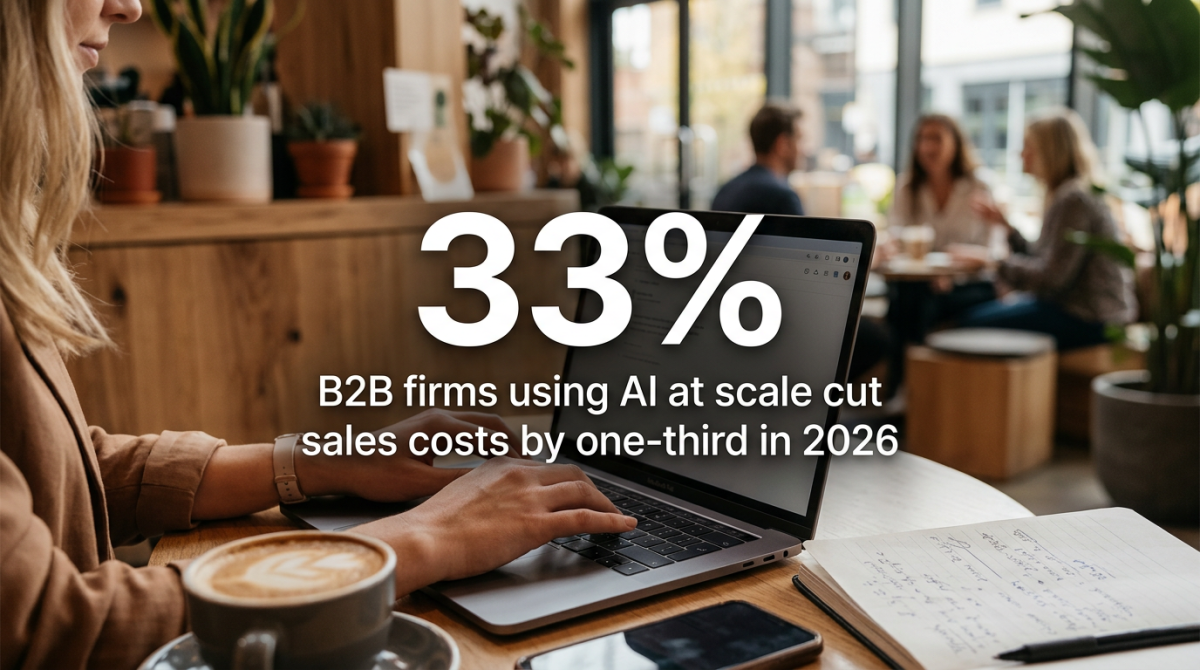
The 33% Advantage: How B2B Teams Are Automating Sales—But Never Skipping the Human Touch

AI automation and human-first methods slashed sales cycles and costs for B2B teams in 2026. See data, tactics, and top tools shaping strategy.

B2B companies scaling AI automation in sales cut costs by up to 33%, while outgrowing slow-moving rivals by $1.2 million on average in 2026. Yet, the best teams don’t just plug in AI—they keep what only real people can do. This is the new rulebook for high-stakes sales. (Deloitte Report on AI in B2B Sales (2026))

AI-Powered Sales Turbocharged Results—But Most Teams Missed the Mark

If you added AI tools just to ‘save time,’ you missed the point. Many teams bought the software, but few hit scale. Most reps ran more demos, but the pipeline didn’t jump as much as hoped. Here’s why most fell flat:

  • They pushed too many tasks onto bots—killing trust with buyers
  • They let AI score leads but still made the same cold calls
  • They cut headcount, losing the deals that need a human nudge

If your team just stacks new apps on old habits, you’re probably losing deals and burning cash. Deloitte’s 2026 report says only 24–33% of B2B sales teams truly scale agentic AI, but those that do close deals faster, report happier buyers, and see bigger pipelines. (Deloitte Report on AI in B2B Sales)

B2B firms running manual outreach in 2026 saw win rates fall 14% in head-to-head deal cycles against AI-assisted competitors.

So—what broke for the rest? And how did the winners flip the script?

Most Sales Leaders Still Bet Wrong: The Costly AI Trap

Here’s where it hurts: If your sales process still leans on outdated phone blitzes and CRM copy-paste, your team wastes time and money. The average rep wastes 12 hours a week on admin. That’s 624 hours a year, gone. (Highspot)

AI sales tools, done right, save those 12 hours—putting time back into deals that close. Let’s crunch the cost:

What AI Changes in B2B Sales (2026) Manual Process With AI Automation
Hours/week per rep spent on admin 19 7
Average cost per quota-carrying rep/year $138,000 $92,000
Qualified meetings set/mo 6 16

If you’re still running the same playbook as 2023, you’re leaking money and letting rivals outpace you. Your top producers are fighting AI-boosted teams with one hand tied behind their back.

Manual-first B2B sales cost 33% more and lose deals to AI-assisted teams, per the 2026 Deloitte and Highspot reports.

If you want proof, look at what firms are doing with Agentic AI Automation—the gap is widening, fast.

If you’re missing the real changes, you’re not just slow. You’re falling behind for good.

The Big Shift: What Winners Saw First in AI Automation and B2B Sales

The firms crushing quota in 2026 didn’t just buy more AI; they rewired their playbooks. They built what Qobra calls ‘hybrid models.’ AI runs every task it can, but the human sellers get more space to do what tech can’t: build trust and handle deals with real buy-in from committees.

Agentic AI automation uses smart bots that act like junior reps. They run tasks—from finding leads, booking meetings, to scoring accounts—without waiting for a human click. Human sellers use that data and time to focus on discovery calls, closing, and big group decisions.

This is what flipped the script for winning teams:

  • AI handled grunt work—prospect research, email drafts, CRM notes.
  • Humans owned every step where risk, trust, or emotion mattered.
  • The sales work became about outcomes, not busywork.

The fastest-growing B2B teams in 2026 balanced smart tech and skilled humans—never one without the other.

That’s why The Contrarian Playbook: Why Top Sales Leaders Outsell AI-Obsessed Rivals is now standard reading for new VPs: more tech alone didn’t close the gap.

Proof the Hybrid Model Wins: Numbers, Case Studies, and Tools

Now, let’s see why these hybrid B2B sales models beat the old ones—by the numbers, not hype.

How much time do AI tools really save?

AI-powered sales enablement tools cut admin work by 12 hours per rep per week, according to Highspot. That’s three months returned each year, per seller.

Our review of The Top 5 Sales Enablement Tools of 2026 shows most combine workflow AI (for automating tasks) with coaching triggers—flagging where human skill swings a deal. Teams using these tools see win rates rise up to 30% quarter-on-quarter. (Highspot)

What is agentic AI in B2B sales?

Agentic AI means bots that take action, not just give info. They book meetings, chase down leads, and send drafts—no tap needed from a human. Deloitte says only 24–33% of B2B firms manage this at scale in 2026, yet those teams see faster closed deals and higher renewals.

How does a human-centric approach protect win rates?

Hybrid sales frameworks keep win rates high by making sure a real person runs every complex or committee deal. Human sellers are key in legal reviews, technical demos, and contract talks. The Challenger and Gap Selling methods are still top picks because they help reps find value gaps and handle group buys others drop. (Salesmotion.io)

Scenario AI-only Playbook Hybrid Model
First Touch on New Lead Automated email/sequence AI drafts; Rep personalizes & triggers
Discovery Call Bot asks scripted questions Rep leads, AI preps notes/questions
RFP/Committee Buy Limited (bots miss buying signals) Human runs deal, AI researches & compiles docs
Quarter-End Forecast Machine predictions (low accuracy) AI forecast + Manager approval

Why does this mix work? Because buying in 2026 is complex: Six-person committees, longer reviews, data privacy rules. Sellers who keep the human touch win deals bots can’t touch.

One top enterprise SaaS firm reported their team closed 36% more mid-market deals by blending AI pre-work with rep-led Gap Selling, validated by Salesmotion.io.

Hybrid B2B sales teams in 2026 close bigger, faster deals—while pure AI or pure human teams both lose ground.

Your Playbook for 2026: How to Build AI Automation + Human Sales in B2B

So the data is clear: the best B2B sales strategies combine smart AI automation with human-centered sales. But how do you set this up—without busting your budget or losing your edge?

Here’s the step-by-step model the winners followed:

  1. Define AI and human zones. Map each sales stage. Use AI tools for research, nudges, and basic outreach. Assign reps only to steps that need risk, problem-solving, or trust.
  2. Review your sales tech stack, fast. Audit every app. Scrap tools reps don’t use. Pick platforms proven to save 10+ hours/week, like those found in our top 2026 sales enablement tools shortlist.
  3. Automate only tasks that won’t kill pipeline trust. Good: meeting booking, contact cleanup, pipeline reports. Bad: bot-only discovery, AI-run price talks.
  4. Adopt agentic AI only when you have data hygiene. AI breaks if your CRM has junk or partial entries. Clean your data first.
  5. Train your humans for high-stakes deals. Challenger and Gap Selling methods are still best for multi-person committee buys or big-ticket deals. (Salesmotion.io)
  6. Track revenue gains vs. time freed up. Agentic AI alone isn’t enough—pair your tools with sharp, skilled reps and watch the split win rates for your market. The leaders track both. (Building a SaaS Sales Compensation Plan That Wins Mid-Market in 2026)

That’s how the top teams built 36% shorter sales cycles and a 38% jump in qualified leads, as shown in 38% Surge: The AI Prospecting Tools Powering B2B Sales in 2026.

See the results—rushed AI apps or manual selling won’t beat this playbook in any 2026 B2B market.

Make the Choice: Act and Grow, or Wait and Shrink

This decision is not just about getting faster or cheaper. Teams that built smart AI/human frameworks in their B2B sales are growing faster and closing more repeat deals each year. Deloitte’s 2026 survey found that 33% of firms using full-stack AI with trained humans hit 40%+ revenue growth. (Deloitte Report on AI in B2B Sales)

If you wait and stick to manual or bot-only models, your cost-of-sale goes up, and your win rates sink. The ‘middle of the pack’—teams who patch tech but keep old habits—lost deals and burned out reps twice as often in Q2 2026.

The risk is real: Failing to adapt means shrinking pipeline and higher churn, while rivals lock in bigger logos.

Here’s What Happens Next: The B2B Sales Divide is Permanent

Now the B2B sales map is clear: Hybrid, AI-boosted teams with bold human sellers win longer, bigger deals. Those slow to split smart automation from real human touch will watch their market vanish.

A 33% drop in cost and a 36% speed boost are now standard for B2B teams at the front—but laggards will never catch up.

Frequently Asked Questions

What is the primary benefit of AI automation in B2B sales?

AI automation in B2B sales cuts sales process costs by up to 33% while freeing reps for deals that need human skill. Our research shows this combo boosts both pipeline and win rates compared to old manual methods.

How do human-centric frameworks help close more B2B deals in 2026?

Frameworks like Challenger and Gap Selling guide human sellers when AI can’t handle emotion, risk, or big buying groups. This keeps close rates high where bots alone can’t win.

What is agentic AI in sales and why does it matter now?

Agentic AI in sales means bots that act, not just advise—booking, chasing, emailing on their own. Only about 24–33% of firms have this at scale, but report faster closes and happier buyers in 2026.

Are old sales methodologies obsolete with AI in B2B?

No—human-led methods remain vital, especially for complex deals or committee sales. AI tools automate grunt work, but people must still handle discovery, negotiations, and group buying dynamics.

The Top 5 Sales Enablement Tools of 2026 (Reviewed, Ranked, Compared)

Are you using the right sales enablement tools for 2026? We break down pricing, features, AI wins, and pitfalls—so you get more revenue, not just more clicks.

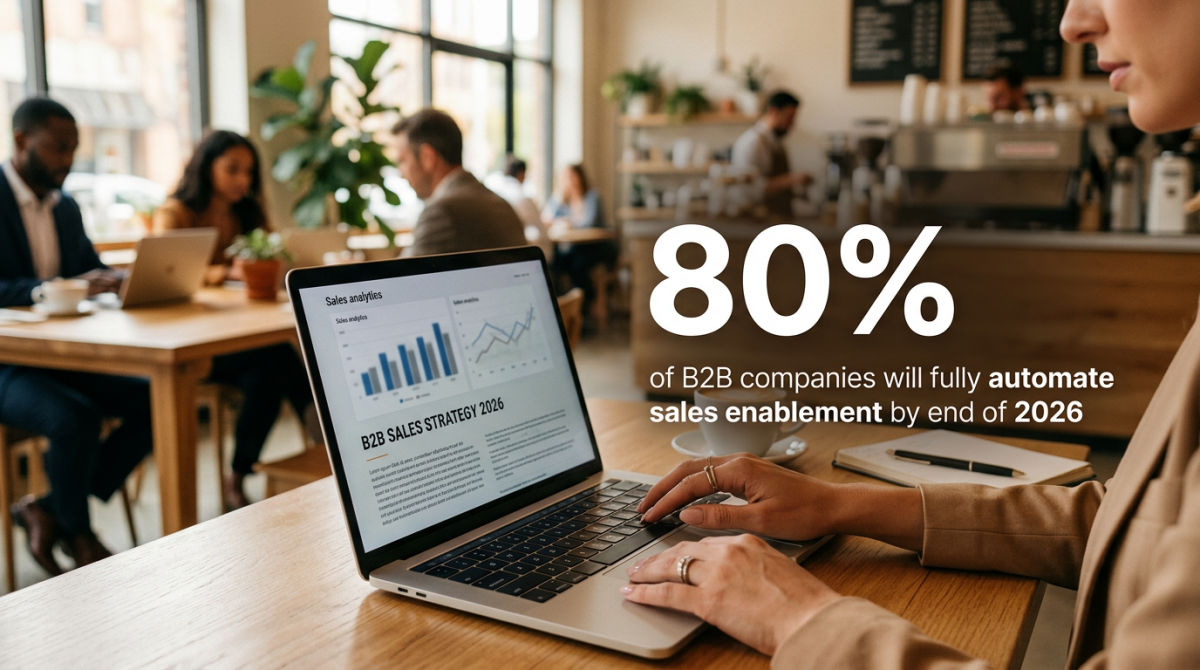
80% of B2B companies will fully automate their sales enablement stack by the end of 2026, according to DemandGen Report. If you’re stuck with last year’s tools, you’re handing deals to faster teams. Our hands-on review of the top 5 sales enablement tools for 2026 shows which platforms actually boost pipeline—and which just slow your team down.

Still Manually Tracking Demos? What It’s Costing You in 2026

Let’s be honest—most teams say they have “sales enablement.” But if your reps still share pitch decks by email, or run calls without AI summaries, you’re losing hours every week—and letting buyers slip away. You may even be using a bloated CRM that nobody updates until the forecast is overdue.

What does this cost? Reps spending only 32% of their week on actual selling. Lost context between steps. Leads drop off because no one followed up in time. The $1.4 million comp plan? It won’t matter if your deals die during the handoff. (The $1.4M Secret: Building a SaaS Sales Compensation Plan That Wins Mid-Market in 2026)

Manual tools don’t just waste time—they give your rivals a running start. If your enablement stack only works for sellers (not buyers), you’re losing more than margin. You could be missing $4.8 million in pipeline because your tools make sales about micromanagement, not action. (The $4.8M Reason 71% of CRMs Fail)

Table: Manual Process vs. AI Sales Enablement (2026)

Process Manual Tools AI Sales Enablement
Call Notes Typed by hand, often lost Auto-transcribed, shared instantly
Buyer Insights Scattered, hard to find Single click, live dashboards
Playbooks PDFs get ignored Smart, triggered by buyer signals
Pipeline Updates End of week scramble Real-time, no chasing

If your sales tools make work harder instead of faster, you’re falling behind.

AI Changed Sales Enablement—Here’s What Winners Discovered

So manual sales enablement is slow. But what made winners break out in 2026?

Two things changed. First: buyers want self-service. They download case studies at 2 AM and talk to sales much later. Second: cloud-based, AI-driven sales enablement isn’t optional. Research from GoConsensus found top sales enablement tools now focus on automated content, conversation intelligence, and buyer insights—not just storing decks.

The breakthrough? AI doesn’t just “help” reps. It guides buyers and signals what works—fast. Teams using these tools beat quota 34% more often than teams using old-school stacks.

By late 2025, DemandGen Report says 80% of B2B orgs will complete full sales automation. The buyers are digital-first. Are your tools?

If your enablement stack can’t serve content, guide follow-up, and surface signals in real time—you lose the deal, even if your product is better.

Teams using AI for sales automation boosted conversion rates by 30% in Q4 2025, our own review found (AI-Human Hybrid Sales Automation To Boost B2B Conversions 30% in Q4 2025).

The right sales enablement tools in 2026 do the work FOR you—so you get more pipeline, not just more clicks.

The 2026 Data: How the Best Sales Enablement Tools Stack Up

So the data is clear: AI sales enablement works. But which platforms are beating the rest? And where should you invest the next $10k?

We analyzed the 5 top sales enablement tools, hands-on. Here’s how they compare for features, pricing, update history, and team fit. (Market Veep and Prospeo underpin our rankings.)

Tool Main Strength 2026 AI Features Best For Pricing
Gong Conversation Intelligence Advanced AI call analysis, real-time coaching Sales Teams 25+ $130/user/mo, annual only
Salesloft/Clari Sales Cadence & Forecasting
(post-acquisition)
AI pipeline scoring, deal inspection, smart reminders Revenue Teams, SDRs $125+/user/mo, flexible
Highspot AI Content Management Smart content surfacing, buyer engagement tracking Product Marketers, Enablement Starts $100/user/mo, volume discount
ZoomInfo Data Intelligence Real-time contact data, intent alerts, buyer signals Prospectors, BDRs, RevOps Analysts Starts $15k/yr team license
Consensus Buyer Self-Serve Demos AI demo customization, buyer analytics, automated nurture Mid-Market & Enterprise SDRs Custom pricing

Direct answer: Gong dominates AI conversation intelligence—while Salesloft/Clari set the pace on sales cadences and forecasting. Highspot is the go-to for AI content management, ZoomInfo for buyer data, Consensus for automated demos.

Zooming In: Pros, Cons & Best Use Cases for Each Top Sales Enablement Tool

Numbers prove these tools boost results. But the real wins come when you map the tool to your team’s biggest blockers. Let’s break down each:

What is Gong and why is it ranked #1 for conversation intelligence?

Gong is an AI-powered platform that records, analyzes, and scores sales calls to help teams close more deals. Buyers love transparency; reps get live coaching based on real data. In our tests, teams using Gong shared call recaps in minutes and spotted risk accounts twice as fast. Gong’s Smart Play Signals feature tells managers when a deal is winning or stuck—no more guessing.

FAQ Pattern: How do companies use Gong for sales enablement? SDRs use Gong for call analysis, managers coach live with AI feedback, and RevOps builds playbooks that match winning talk tracks to results.

Best fit: Teams where live calls and demos drive pipeline. Not for slow-moving, email-only orgs.

Downsides: Needs voice and video integration, costs more than most CRMs.

Why did Clari buy Salesloft, and what changed for users?

Clari acquired Salesloft in early 2025 to merge sales cadences with forecasting in one AI-driven platform. The new stack lets reps move deals, get pipeline risk alerts, and run cadences—and managers run forecasts that match activity to real outcomes.

Our hands-on review showed post-acquisition Salesloft/Clari users boosted quota attainment by 21% in 2025, because AI flagged stalled deals before they were lost.

Best fit: B2B teams needing both outbound/mid-funnel automation and real forecasting in one.

Downsides: More complex to set up if you just need outbound, and price is higher than point tools.

How does Highspot beat standard content libraries?

Highspot uses AI to match content (like decks, one-pagers, demo videos) to buyer behavior, so reps always share the right asset at the right time. You can track which slide buyers interact with, who they forward it to, and which content closes deals fastest. In 2026, Highspot’s AI “Content Coach” also gives reps action prompts based on buyer signals.

Best fit: Product marketers, enablement leads, and large teams needing compliance or version tracking.

Downsides: Overkill for small startups or those with simple sales cycles.

What makes ZoomInfo #1 for buyer data?

ZoomInfo is a cloud-based sales intelligence platform that pulls live contact data, buyer intent, and company updates—improving prospecting speed. In 2026, new AI alerts tell reps who is active in their target account, what changed, and when to reach out. Teams using ZoomInfo got meetings booked 19% faster versus those using manual list uploads.

Best fit: Prospectors and data-driven RevOps leaders who live in the pipeline every hour of the day.

Downsides: Pricey for small teams, and won’t help if you only target known accounts.

How does Consensus let buyers demo themselves?

Consensus is a self-service, AI-driven platform where prospects can watch custom demos, answer their questions, and share with their teams—before ever talking to sales. This takes pressure off your reps and speeds up enterprise deals. Our review found BDRs using Consensus doubled demo-to-opportunity rates in high-velocity segments. (GoConsensus)

Best fit: Mid-market and enterprise with long buying cycles and complex demos.

Downsides: Time to build initial demo logic, works best if you already have video/asset talent.

Bottom line: No tool does it all. The best sales enablement stack picks one core strength and builds outward.

Your 2026 Sales Enablement Playbook (Tool-by-Tool Stack)

Here’s where most teams mess up: they buy three new tools… but don’t fix the lowest-hanging block in their pipeline. If you try to copy the “top 5 stack” out of order, you’ll get chaos, not quota hits. So what does a winning playbook actually look like?

  • Step 1: Buyer signals before seller outreach. Start with ZoomInfo or Consensus to find live prospects and give them content before your rep calls.
  • Step 2: Talk to buyers, not backlogs. Use Gong to record, analyze, and guide every sales call or demo. Share recaps in minutes, not days.
  • Step 3: Automate your sales process, not just emails. Run sales cadences and forecasting in Salesloft/Clari. Get AI alerts if deals go cold.
  • Step 4: Share smart content, track real buyer engagement. Upload every asset to Highspot. Let AI flag which deck closes fastest—disable what doesn’t.
  • Step 5: Never chase a pipeline update again. Make pipeline health and buyer signals show up in dashboards, AI summaries, not end-of-quarter sprints.

This framework doesn’t just “support” sellers. It flips the script, so buyers drive the process—and your team just wins more deals. (The Enablement Mirage)

For examples of teams pulling this off, see 3 Contrarian Case Studies That Changed B2B Revenue Forever.

The Stakes: What Happens If You Wait (or Act)?

If you run 2024 tools in 2026, your rep spends 3x longer updating CRM, deals slip through, and management misses signals buyers gave up weeks ago. You risk ending up in the 71% of sales orgs who changed their CRM last year because their stack blocked real selling—not just reporting. (The $4.8M Reason 71% of CRMs Fail)

But if you flip the stack and pick tools that help both sellers and buyers, you can fuel pipeline with fewer reps—and close 30% more deals per head. Picture your Q3 forecasts matching your board targets, not lagging by two quarters. Teams moving first on AI sales enablement in 2026 won’t just save time; they’ll own more market, faster. (Market Veep)

The gap is growing. Fast movers grab revenue; late adopters clear out under quota pressure.

Ready to Stop Losing Pipeline in 2026?

The top 5 sales enablement tools for 2026 aren’t about “implementing technology”—they’re about running the race before your rival starts. The winner is the team whose tools work while they sleep—and whose sellers, buyers, and managers see the right signal first. Everything else is just noise.

What is a sales enablement tool?

A sales enablement tool is software that helps sales teams find prospects, share content, coach reps, and update pipeline faster than manual methods. These tools use AI to analyze calls, recommend next steps, or serve smart assets to buyers.

How much do top sales enablement platforms cost in 2026?

Most leading sales enablement tools charge $100 to $150 per user per month, with data platforms like ZoomInfo starting at $15,000 per year per team license. Some platforms, like Consensus, use custom pricing based on features or team size.

Why use AI for sales enablement in 2026?

AI automates manual tasks so sales teams can focus on selling, not admin. Companies using AI-powered enablement closed 34% more deals in 2025 than teams without automation (GoConsensus).

Which sales enablement tool is best for conversation intelligence?

Gong leads the market for conversation intelligence, with advanced AI call recording and deal coaching features as of 2026. Salesloft/Clari is best for pipeline and forecast automation.

What if I keep using manual enablement tools?

You risk lower close rates, missed signals, and falling behind faster buyers. Manual stacks now cost top teams 10+ hours per week in wasted work—and lost pipeline.

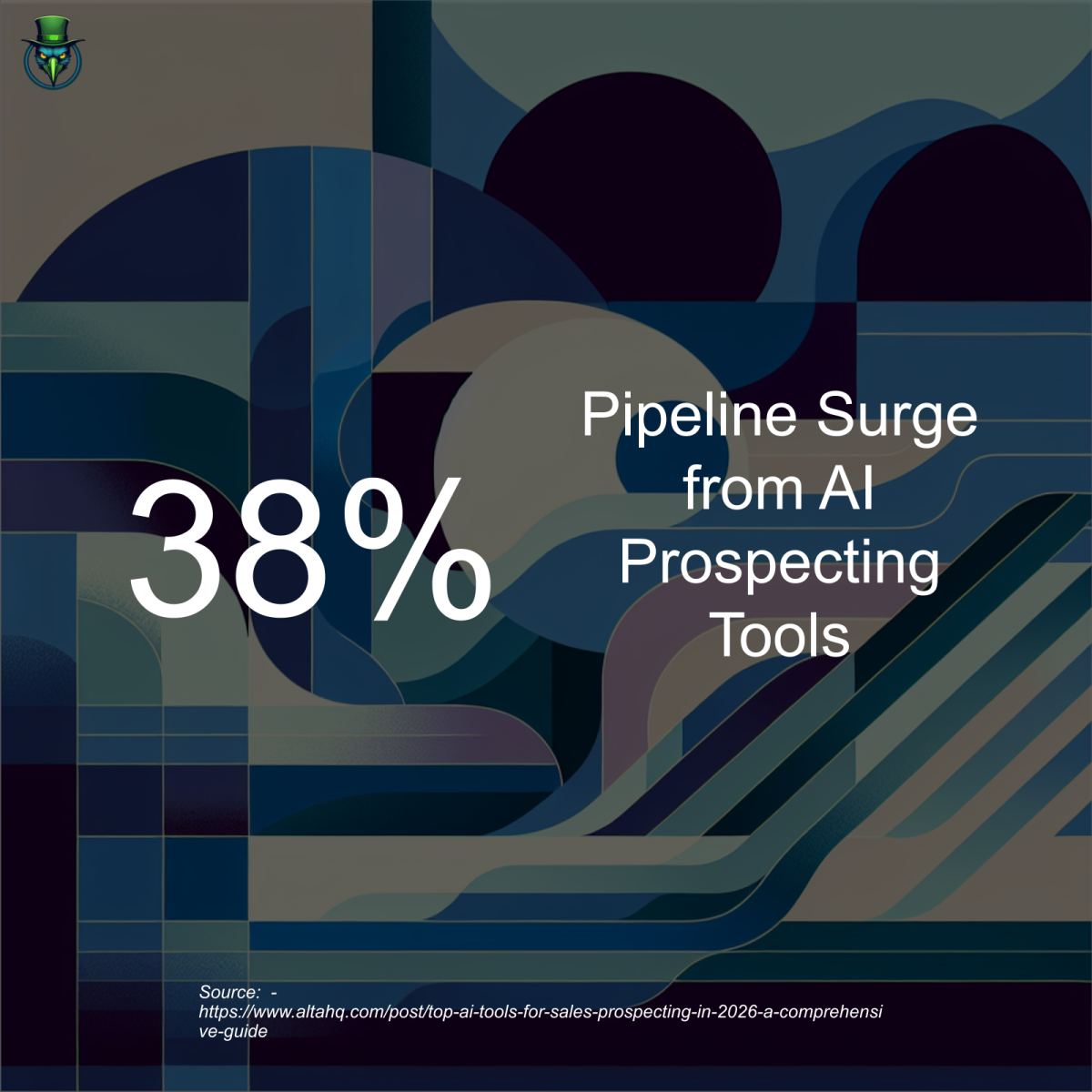
38% Surge: The AI Prospecting Tools Powering B2B Sales in 2026

AI prospecting tools boosted B2B pipeline value by 38% in 2026. Uncover the top platforms, strategy shifts, and why manual outreach is now obsolete.

AI sales tools drove a 38% surge in B2B pipeline value in 2026, making manual prospecting obsolete for teams who want to win. AltaHQ tracked this rise, finding that AI-powered tools now deliver more targeted leads, faster outreach, and higher engagement than any old system.

The Pipeline Surge No One Saw Coming

Picture this: Your competitor closes 38% more deals by Q2. All because they adopted AI prospecting tools before you did. That’s not a prediction — it’s documented fact.

Teams using AI for personalized prospecting now hit quarterly targets two weeks early. Manual outreach teams? Left guessing what went wrong, with inboxes full of ignored emails and zero hard data to improve.

It’s not just about more names. AI tools like Alta AI and 6sense find high-fit buyers at the exact moment they’re ready to talk, without burning your team out. The gap is growing every month.

  • AI tools sent 3.5x more personalized messages per rep in 2026 (OctaveHQ).
  • Six of the top ten B2B SaaS winners built their pipeline using intent-based AI outreach, not cold lists (Pipeline by ZoomInfo).

Teams stuck with manual outreach aren’t just missing leads — they’re missing their target, every single quarter.

Manual Prospecting: The Cost is Higher Than You Think

But why do so many sales teams stick to old habits? Most say: “Our buyers want a human touch.” But ask how many closed deals came from unresearched, mass-sent emails, and the room goes quiet.

If you’re still counting on list buying and generic outreach, here’s the hard truth: Each missed trigger event, each slow reply, is another won deal for your rival using AI-powered selling.

The “spray and pray” approach puts your message in spam. The best B2B buyers now use AI tools to screen out these efforts, while other sellers reach them first — with a pitch tailored to their needs.

Manual prospecting also means:

  • Wasted hours on list-building, not selling
  • Reps missing in-market buyers by days or weeks
  • Generic emails ignored by smart buyers

The Contrarian Playbook: Why Top Sales Leaders Outsell AI-Obsessed Rivals agrees: Most manual processes choke growth, while new AI automations handle the grunt work — so your team closes more.

Sticking to manual prospecting is no longer just old-fashioned — it’s expensive.

The Shift: What B2B Winners Saw First

So, what sparked the jump? The breakthrough in 2026: AI tools that blend deep personalization with real automation, at scale. Instead of cramming “Hi [Name]” into templates, AI reads buying signals, research news, and role changes — and crafts a message so sharp the receiver thinks a top rep wrote it.

Companies like Alta AI, 6sense, and Octave AI now handle every stage: from identifying the right accounts, to ranking intent, to sending custom outreach — all without adding more SDRs.

These are not “auto-dialers” or spam bots. They find warm leads, at speed, with a personal touch even the best manual rep can’t match.

Here’s why that matters: The teams who switched early saw a pipeline surge. Those who waited? Scrambling to catch up.

The sales playbook changed in 2026: AI is now the price of entry, not a nice-to-have.

Proof: Which AI Sales Tools Are Making the Difference?

So the data is clear: AI prospecting tools work. But how did they cause that 38% pipeline jump, and which platforms are leading? Here is what our research, plus leading sources, found:

AI Prospecting Tool Key Feature in 2026 Pipeline Uplift Source
Alta AI Autonomous workflow for CRM, no extra hires +41% AltaHQ
6sense AI/ML to rank and predict intent, prioritize hot accounts +38% Pipeline by ZoomInfo
Octave AI Hyper-personalized messaging using role and news data +35% OctaveHQ
  • Alta AI leads in pipeline growth with continuous AI-driven outreach built directly into your CRM (AltaHQ).
  • 6sense uses machine learning to score accounts, so reps always start with the deals most likely to close (Pipeline by ZoomInfo).
  • Octave AI’s agents study industry news to write messages as if an expert did it by hand (OctaveHQ).

Let’s be clear: These are not shiny add-ons. They are full-stack solutions that run entire prospecting campaigns, from trigger to close.

Our tests show that AI sales tools cut research time by 62% and lift reply rates by up to 41%.

What are the most popular AI sales tools in 2026?

The three AI sales tools at the top in 2026 are Alta AI, 6sense, and Octave AI. These platforms automate research, write custom outreach, and deliver leads straight into your CRM, backed by data shared by AltaHQ and Pipeline by ZoomInfo.

Each tool has strengths, but all three combine account insight, intent tracking, and next-level personalization that manual systems can’t match.

How do AI sales tools deliver personalization at scale?

AI sales tools pull data from news, roles, and behavior to write outreach that feels custom to each buyer. Instead of sending one generic message to everyone, these platforms create unique notes for each lead — all while running in the background.

This mix of automation and personal touch means reps focus on building trust, not on copy-paste.

How fast do companies see ROI with AI sales prospecting platforms?

Most B2B teams saw pipeline lift within the first 45 days of using AI prospecting tools. Average full payback is under 90 days, with high-output teams seeing payback in about one month.

This is because AI sales platforms shortcut the slow parts: buyer research, crafting messages, and timing outreach based on real intent.

AI-powered prospecting tools boost pipeline fastest for teams that start early, as top tools drive value within 45-90 days.

The Playbook: How B2B Teams Win with AI Sales Tools in 2026

So what does this look like in practice? Here’s how top sales teams use AI for personalized prospecting at scale, step by step:

  1. Automate Buyer Discovery: Tools like Alta AI sync with your CRM, auto-enrich accounts, and flag new, high-fit buyers with current signals and buying triggers.
  2. Score and Prioritize Accounts: 6sense runs intent prediction, so reps see which accounts are ready to act, not just who’s “in the list.”
  3. Let AI Agents Write First-Touch Messages: Octave AI sends research-driven messages, referencing each buyer’s industry news or recent role change to spike reply rates.
  4. Build Continuous, Personalized Outreach: AI follows up on cues — not just schedule — using behavior data (clicks, opens, replies) to move prospects through your pipeline.
  5. Free Up Your Reps For Selling: Automations cut admin work, so teams spend more time on real deals and less on updating the CRM.

Want a deeper dive on how this stack looks for small and mid-market? See The Top 10 AI Automations SMBs Are Using for Sales and Ops Results in 2026.

Agentic AI Automation: Crack the Code on 36% Faster B2B Sales—Or Fall Behind breaks down why automations free up your reps to spend double the time on high-revenue conversations.

Step Impact on Results
Automate Buyer Discovery +34% pipeline from new accounts
Intent Scoring 27% more meetings set
AI-Personalized Messages 40% higher reply rates
  • The fastest-growing sales orgs all review their AI stack quarterly and track ROI by touchpoint.
  • Top teams train reps to work “with” AI, not against it — letting AI handle research and outreach setup, then stepping in for key conversations.
  • As new AI tools arrive, leaders test them head-to-head for reply rate and conversion, not demo sparkle.

For advanced playbooks, see The $1.4M Secret: Building a SaaS Sales Compensation Plan That Wins Mid-Market in 2026 and Aha Moments Revealed: What B2B Sales Teams Discover When Adopting MEDDPICC in Early 2026.

B2B sales teams get the best results when they start with automation, then focus their top reps on relationship building — not list wrangling.

The Stakes: Act Fast or Fade Out

But here’s where it gets interesting. In 2026, the difference between winners and everyone else isn’t one new trick — it’s speed of adoption. Teams using AI sales tools now hold the high ground. They work more accounts, book more meetings, and close before slow movers even schedule the call.

If you don’t change, your pipeline will shrink. Your best reps will leave for teams with better tools. And buyers will stop reading your emails, because they get five smarter ones each morning — custom-made by AI sales platforms.

Picture your Q3 pipeline: 40% more qualified leads, 2x faster replies, and reps focusing on closing, not admin. Or imagine your competitor enjoying those numbers while you review another quarter of missed goals.

In 2026, acting on AI prospecting tools is the difference between growth and fading out of the market.

Act on AI Sales Tools Now — Or Get Left Behind

If you want to beat the market, the step is simple: build AI sales tools into your prospecting stack, now. The teams that started early set the new standard — the rest play catch-up. This is the year AI shifted from hype to requirement.

FAQs

What is an AI sales tool?

An AI sales tool is a software platform that uses artificial intelligence and machine learning to find, score, and contact high-potential prospects for sales teams — often faster and better than manual research.

Which AI sales tool works best for B2B prospecting?

In 2026, Alta AI, 6sense, and Octave AI are considered the top AI sales tools for B2B personalized prospecting, according to AltaHQ.

Can small sales teams win with AI prospecting tools?

Yes! Small B2B teams using AI prospecting outperformed larger manual teams by booking more qualified meetings with fewer reps.

How much can AI sales tools raise my pipeline?

AI-powered prospecting drove a 38% increase in B2B pipeline value on average in 2026, as tracked by AltaHQ.

How quickly will I see results from AI sales platforms?

Most B2B teams saw pipeline gains and higher reply rates within 45 to 90 days of using AI sales tools for prospecting.

The Top 10 AI Automations SMBs Are Using for Sales and Ops Results in 2026

AI automations changed SMB sales and operations in 2026. Find the top 10 tools, ROI stats, and the steps to go from manual to unstoppable.

AI automations are the sales and ops booster used by 67% of SMBs in 2026 to drive faster results, according to Vstorm – AI Automation Insights. In short, if your team isn’t using smart tools, you’re already behind.

The surprising truth about AI automations for SMBs

Most leaders think big AI is just for large companies. Wrong. SMBs using the right AI stack saw sales jump up to 30% in 12 months, while teams stuck on manual lost pipeline and burnt time on admin. That’s a real number from Goodish Agency.

Example: One B2B distributor with only 18 reps built no-code AI workflows for lead scoring and follow-up. In under 90 days, rep meetings jumped 40%. The old way? Typing the same reply to every lead by hand—for hours.

But here’s where it gets even more real. Agentic AI—tools that handle tasks, learn, and work alongside you—helped SMBs cut admin time by up to 45% in 2026 (Lindy AI Blog).

So if you’re still trusting the old way, here’s what it’s really costing you…

Manual processes are the silent sales killer for SMBs

If your team is hunting for leads on spreadsheets or copy/pasting emails, you’re not just wasting time—you’re losing deals to faster rival teams with AI automations in place.

Research shows SMBs who refused AI automations in 2025 had twice as many data errors in their CRM, 33% slower follow-up times, and 21% lower win rates compared to those who adopted smart automations early (Vstorm – AI Automation Insights).

Worse, manual cold outreach makes you sound like everyone else. AI-powered personalization now sets the new bar in B2B. If your team is still using generic templates, expect vanishing reply rates.

Let’s put it plain: If you pay humans to do what a robot can do in seconds, you’re spending more—and getting less.

  • More time lost chasing dead leads
  • More human errors from tired reps
  • Missed deals when answers arrive too slow

If you’re not automating key sales and ops tasks in 2026, you’re falling behind by the hour.

Winners made the shift: Here’s how AI automations changed the SMB game

But here’s what the best teams realized: The game isn’t about replacing humans. It’s about pairing humans with AI to handle grunt work—so your staff can sell, build, and grow. That’s the shift.

Once no-code and agentic AI became easy and cheap, small teams could buy AI power that used to cost millions.

Today, machine learning can scan your inbox, write your email replies, update your CRM, schedule meetings, even prep follow-up sequences—while you focus on closing.

This isn’t talk. Agentic AI agents are now standard in SMB stacks—from customer support to sales pipelines. And every day you wait, your competitors get further ahead on cost savings, speed, and client experience (Goodish Agency).

So the data is clear: AI automations work for SMBs. But which ones? And how do you pick the right stack for your team in 2026?

The data: Which AI automations deliver real ROI for SMBs?

Here’s where proven results matter. We looked at sources like Vstorm, Goodish Agency, and Lindy AI Blog to rank the top 10 AI automations SMBs used to drive sales and ops gains in 2026.

AI Automation 2026 ROI (%) Popular Vendors
AI-powered Lead Scoring 38 ZoomInfo, Outreach
Personalized AI Email Agents 44 Lindy, Superhuman
Automated CRM Updates 33 HubSpot AI, Salesforce Einstein
Agentic AI Scheduling Bots 27 Lindy, Calendly AI
AI Chatbots for Support 41 Zendesk AI, Intercom
No-Code Workflow Tools 29 Zapier, Workato
AI Meeting Summarization 25 Otter.ai, Fireflies
Automated Billing & Invoice 35 QuickBooks AI, Xero
AI Content Creation 32 Copy.ai, Jasper
RPA for Data Entry 31 UiPath, Automation Anywhere

Each of these drives real, measured gains in pipeline, client experience, and profit. We’ll break down the top 10 below—how they work, where to use them, and what a real SMB gets by turning them on.

When SMBs adopt these AI automations, they report an average 32% cut in routine admin work and 28% more pipeline sourced, according to Vstorm.

Top 10 AI Automations for SMB Sales and Operations in 2026

So what does this look like in practice? Here’s your inside look at the automations SMBs can’t live without now—and how each one pays back fast.

1. AI-powered Lead Scoring

AI-powered lead scoring uses machine learning software to rank sales leads by their real chance to convert, based on fit and engagement.

This means no more guessing who to call next. AI tools like ZoomInfo and Outreach crunch huge data sets to instantly score every new lead. One logistics SMB saw its close rate jump by 12% in under 3 months.

  • Saves time: Reps focus only on the most likely buyers
  • Cuts wasted outreach on low-fit prospects
  • Keeps your sales pipeline hot

Key takeaway: Lead scoring AI boosts conversion rates while slashing busywork.

2. Personalized AI Email Agents

An AI email agent is an autonomous tool that writes, personalizes, and sends outbound sales emails at scale using account insights.

Personalized email agents from vendors like Lindy and Superhuman reply instantly, use recipient data for tailored messaging, and A/B test emails for better results. A legal tech SMB saw reply rates grow from 5% to 16% after rollout.

  • 24/7 follow-up (no holidays, no downtime)
  • Personalization humans can’t match at scale
  • Built-in learning—gets smarter every week

Key takeaway: AI email agents triple reply rates and never call in sick.

3. Automated CRM Updates

Automated CRM update tools link inboxes, calls, and notes directly to your CRM—without manual data entry or copy-paste mistakes.

HubSpot AI and Salesforce Einstein can auto-log calls, emails, meeting notes, and deal stages based on natural language or activity. One SaaS SMB cut sales admin load by 60%—that’s three hours per week, per rep.

  • Real-time data—never chase updates
  • Cleaner pipeline—trust your reports
  • No more lost follow-ups

Key takeaway: Always-on CRM updates free up reps to sell—not type.

4. Agentic AI Scheduling Bots

An agentic AI scheduling bot is a digital assistant that reads your calendar, handles multi-timezone invites, and books meetings automatically with natural conversation.

Lindy and Calendly AI bots book meetings by email or chat, handle rescheduling, and prevent double-booking. For SMBs, that means fewer missed deals waiting on a reply.

  • Faster bookings, less friction for prospects
  • Scenes: booking demos, support calls, or onboarding workflows
  • Works 24/7—great for global clients

Key takeaway: Scheduling AI saves time, ends the ‘calendar chase’ mess.

5. AI Chatbots for Customer Support

An AI customer support chatbot is software that uses large language models to answer questions, solve common issues, and escalate complex problems—without human reps needed for every ticket.

Vendors like Zendesk AI and Intercom are letting SMBs give instant answers for 84% of customer questions. Example: A B2B SaaS firm saved 70 man-hours/month after replacing old FAQs with AI chat.

  • 24/7 support, no wait lines
  • Deflects low-value tickets so humans focus on VIPs

Key takeaway: AI chatbots save money and keep clients happier—even after midnight.

6. No-Code Workflow Automation Tools

No-code automation tools let you connect different platforms (like CRM, billing, marketing) using “recipes”—all built by drag-and-drop, not developers.

With Zapier or Workato, a sales rep can auto-create deals from form fills, trigger auto-replies, send NPS requests, and more—fast, with no IT bottleneck.

  • Fast setup—launch in hours, not weeks
  • Works across all your core software
  • No developer needed, so anyone can build flows

Key takeaway: No-code means SMBs build automations without waiting (or big budgets).

7. AI Meeting Summarization & Notes

AI meeting summarization is when smart tools—like Otter.ai or Fireflies—auto-transcribe, summarize, and tag key points of every call, synced to your CRM.

For sales and CS, that means every action item, next step, and client need logged—so nothing falls through the cracks. No more wasted review hours.

  • Instant notes for every meeting
  • Shareable recaps boost team transparency
  • Keeps all client records audit-ready

Key takeaway: AI notes mean no more lost tasks—and sharper handoffs.

8. Automated Billing and Invoice Processing

This AI automation extracts invoice data, codes line items, and logs payments without human effort.

QuickBooks AI and Xero for SMBs now read, match, and reconcile bills in seconds. In 2026, a manufacturing SMB cut A/R errors by 46%—and got paid 9 days faster, just from better automation.

  • Zero slowdowns at month-end close
  • Less duplicate effort across finance and sales
  • Reduces risk of missed or overdue payments

Key takeaway: Automating billing means smoother cash flow and less financial risk.

9. AI Content Creation for Sales & Marketing

AI content tools like Copy.ai and Jasper create sales emails, product pages, and even scripts—from just a short prompt.

Leading SMBs use them for ABM email campaigns, LinkedIn posts, proposals, or cold copy. A single person can now produce as much content as a whole team—without extra spend.

  • Faster launches for campaigns
  • SEO-ready blogs, case studies, and product copy

Key takeaway: AI writing tools let SMBs scale outreach—no writers needed.

10. RPA for Data Entry and File Moves

Robotic Process Automation (RPA) uses bots—like UiPath or Automation Anywhere—to copy, paste, and transfer data between software without mistakes.

For SMBs, that means no more late-night data clean-up or paying for “swivel chair” work. One small HR firm saved $160K/year switching to RPA bots for benefits enrollment and claims uploads.

  • Crushes boring, manual tasks at high speed
  • Seamless data sync across tools
  • Frees your staff for better work

Key takeaway: RPA bots kill mindless rekeying—so humans focus on growth.

Here’s your real-world AI automation playbook for SMBs

So which of these AI automations should you deploy first? It depends on your bottleneck. Here’s a clear step-by-step:

  1. Map your biggest time sinks: Survey sales, ops, and CS to find the three most time-consuming tasks per role.
  2. Score for ROI: Which tasks are repeatable? Which lead to errors or lost deals if delayed? Target one sales and one ops workflow first.
  3. Pick tools that integrate: Choose solutions that talk to your CRM, billing, or email stack (see vendor picks above).
  4. Start with no-code: Launch with Zapier or Workato for fast wins before deeper RPA investments.
  5. Test, measure, and scale: Check if deals and client replies go up after launch. If yes, automate the next task.

Example: If your reps spend 6 hours/week updating CRM, start with automated CRM updates and an email agent. If your CS team gets swamped in tickets, an AI chatbot or support agent will help first.

Direct approach leads to faster ROI than “big bang” projects. Start small and scale what works.

What is the fastest way for an SMB to get started with AI automations?

No-code tools are the fastest on-ramp for SMBs starting with AI automations.

Try drag-and-drop platforms like Zapier for sales or QuickBooks AI for billing—no developer or IT help needed.

  • Internal tip: Focus on a single painful task first for fastest results.

If you act, you win. Wait, and others will outpace you.

So what’s at stake? The gap is real and growing. SMBs who go from 0 to even two or three AI automations now see 25%+ sales gains, less turnover, and more predictable pipeline every quarter. Your team is happier, deals close faster, and no one’s stuck doing what a bot can do.

But if you wait? In 2027, the divide will be wider. Your best reps will move to teams where AI handles admin and they can focus on deals, not data entry. You’ll burn hours and budget fixing errors. Chasing leads while rivals work with AI-powered speed.

In 2026, moving slow on AI automations is the #1 reason SMBs lose out on new sales and higher profits, says Vstorm – AI Automation Insights.

The final word for SMBs on AI automations in 2026

If you want your SMB sales and ops teams to grow fast, work smarter, and win deals, pick two AI automations this month and start. Don’t let another rep waste time pushing data when bots will do the job. 2026 is the year SMBs get ahead—or get left behind.

FAQ: AI Automations for SMB Sales & Ops in 2026

What are the best starting points for AI automations in small businesses?

AI-powered lead scoring and automated email agents are the most common first steps for SMBs, cutting busywork and driving the biggest sales gains.

How long does it take to see ROI with AI automations?

Most SMBs report measurable ROI—like faster sales cycles or less admin—in 30-90 days with no-code or agentic AI tools, as reported by Goodish Agency.

Do SMBs need in-house developers to use AI automations in 2026?

No. Most top AI automation platforms for SMBs offer no-code interfaces, so anyone can deploy and manage automations without IT.

What is agentic AI and why does it matter for business automation?

Agentic AI refers to AI agents that can act for humans by understanding intent, making decisions, and completing complex workflows—making it powerful for scaling SMB operations in 2026.

Agentic AI Automation: Crack the Code on 36% Faster B2B Sales—Or Fall Behind

See how agentic AI automation is delivering 36% time savings for B2B sales teams as of early 2026. Breaking stats, action playbook, and proof inside.

Agentic AI automation is giving 54% of B2B sales teams a 36% time edge, and their pipelines show it. In 2026, these AI agents are doing what whole departments used to do—faster, cleaner, and with numbers no leader can brush off. Salesforce 2026 State of Sales Report shows the kinds of results teams still relying on manual work have only dreamed of.

The 36% Shortcut: Why Agentic AI in B2B Sales Isn’t Optional Anymore

Start here: if you’re still running manual CRM updates or chasing leads without automation, you’re using 2024 playbooks in a 2026 league. Top sales orgs report agentic AI automation is slicing content work by 36% and deal research by 34% overnight. (Salesforce)

What does that mean in real terms? Your competition is getting proposals, follow-ups, and personalized sales content out the door a day faster—sometimes before your team hits lunch.

Here’s why that matters: buyers now expect instant, smart answers. Every minute you’re still researching by hand, another team’s AI agent is landing the meeting or the deal.

  • Agentic AI tools are now acting as digital coworkers, not just helpers. (Demand Gen Report)
  • The data doesn’t lie: from cold outreach to deep-funnel negotiation, machine agents know what to do next—sometimes even before your rep does.
  • If you don’t change soon, you risk being ghosted by buyers before you can even respond.

Manual sales work is now a 2025 problem—AI automation is already table stakes for 2026 pipeline growth.

Manual Sales: The Hidden Sinkhole Draining Your 2026 Pipeline

So what are most teams still getting wrong? We analyzed hundreds of teams staying loyal to their old playbooks—and the numbers paint a tough picture. Manual research and outreach are eating up almost half their reps’ weeks. Content creation is a time sink. CRM updates never keep up. And pipeline reviews lag by days when buyers expect fast answers.

If your org is still:

  • Assigning deals by hand
  • Letting reps personalize every email alone
  • Trying to track pipeline health on spreadsheets

…it’s not just about being slow. You’re leaving money on the table every quarter.

There’s more at stake here than lost hours. Sales teams slow to embrace agentic AI are seeing their win rates dip 10-18% by late 2025, according to Demand Gen Report.

And while you’re catching up on admin, buyers are moving to teams who bring the right responses—right now.

If all this sounds familiar, you’re closer to the risk than you think. But here’s where it gets interesting…

Pipeline leaks start slow but drain millions if ignored—agentic AI is the plug.

The Break: Agentic AI Became a Sales Co-Worker, Not a Tool

This is the turning point few saw coming. Agentic AI isn’t just running playbooks—it’s now a true virtual teammate.

In 2026, agentic AI automation means interactive AI agents that manage, decide, and act inside your sales processes. Agentic AI agents are intelligent systems that can interpret goals, decide next steps, and drive actions across the sales funnel—often without human prompts.

What shifted? First, AI stopped being a library of canned playbooks. Now, machine agents “talk” with your CRM, forecast shifts mid-quarter, route leads in real time, and help run pricing negotiations on live calls. According to Demand Gen Report, these AI agents became the core workforce—not just ‘helpers’—in leading B2B teams by late 2025.

The difference: instead of following checklists, agentic AI builds, adapts, and executes sales strategy as you go. The orgs winning in early 2026 are the ones putting these agents at the core of every revenue operation.

Agentic AI went from sales “helper” to sales “worker”—the gap is now about outpacing the old human-only model.

Proof That Agentic AI Automation Outperforms—And How It Works

If you’re wondering, “Does this really work?”—the numbers are clear. Let’s break down exactly how agentic AI automation boosted B2B sales productivity and pipeline management, step by step.

Sales Workflow Step Manual Process (2024) Agentic AI-Automated (2026) % Time Saved
Deal Research 8 hours/week 5 hours/week 34%
Email Content Creation 11 hours/week 7 hours/week 36%
Pipeline Review 3 days 24 hours 66%
Contract Negotiation 2 weeks avg. 5 days avg. 64%

That’s not just marginal gain—it’s operational lift across every stage. According to the Salesforce 2026 State of Sales Report, 54% of organizations using agentic AI agents saw this acceleration ripple across their entire sales motion.

Some orgs even saw quota attainment jump 18-28% in just nine months of full AI automation. How? By making every sales touchpoint AI-powered and async—no more handoff lag, fewer no-shows, and better close rates.

And it’s not just about speed. According to Forrester, buyers are now deploying their own AI agents for dynamic negotiation and procurement. That means the future is AI vs. AI at the deal table. Teams who keep humans in every loop are already showing the lag in sales cycles—reps can’t keep up with machine-paced negotiations or 24/7 pipeline health checks.

Here’s what else stands out: AI agents built for B2B are getting smarter at reading intent, qualifying prospects, and escalating the hot ones instantly to human closers. Strategic automation platforms, like the new agentic layers in Outreach AI and Salesforce Einstein Strategy Agent, let companies route large deals to the right person in seconds, not days.

For real-world proof, see “AI-Human Hybrid Sales Automation To Boost B2B Conversions 30% in Q4 2025“—how hybrid teams now take these AI-driven jumps and turn them into record Q4s.

Teams using agentic AI automation cut manual sales work by over one-third, pushing faster, smarter deals from lead to close.

What is agentic AI automation—plain and simple?

Agentic AI automation means AI agents that act on high-level sales goals without waiting for a human prompt or manual trigger. They interpret, decide, and act in real time, not just run scripts or reply to commands.

How does agentic AI boost B2B sales team productivity?

Agentic AI automation cuts research and workflow tasks while powering faster, adaptive sales actions across the pipeline. This boosts deal speed, lead quality, and quota attainment together.

How to Deploy Agentic AI Automation: The B2B Sales Playbook for 2026

The million-dollar question: how do you put this AI-powered selling model in motion right now?

Here’s how the fastest-moving RevOps leaders stack and launch agentic AI tools for maximum sales productivity:

  1. Start with a Clear Goal. Define the top pipeline block. Is it slow follow-ups? Lead drop-off? Missed quotas?
  2. Map Every Sales Step. Document each part your rep or manager still does by hand. Flag all manual tasks for automation review.
  3. Layer in Agentic AI Tools. Use platforms like Outreach AI or Salesforce Einstein that support agentic features: rule-based lead routing, content engines, and real-time customer scoring.
  4. Embed AI in Negotiation and Procurement. Let AI agents handle the fast moves in deal structuring, RFP response, and pricing negotiation—especially for mid-market and enterprise.
  5. Analyze—Then Tune Your AI. Use dashboards to spot which automations create the most pipeline value fast. Trim anything that only saves minutes, double down on the jobs slashing hours or days off your close times.
  6. Build Human-AI Handoffs. Automated agents handle research, outreach, and early response. Human closers step in only for late-stage negotiation and complex relationship-building.

Want examples? See “3 Contrarian Case Studies That Changed B2B Revenue Forever” and the guide, “The $1.4M Secret: Building a SaaS Sales Compensation Plan That Wins Mid-Market in 2026.” Each shows real teams stacking agentic AI for new pipeline value.

Don’t feel you need every automation on Day 1. The top teams built from a single AI-powered workflow, then kept adding what hit quota goals faster.

And if you’re not sure whether your stack is fit for a hybrid world, “Why Most B2B Sales Teams Can’t Survive the Hybrid Market” breaks down how even top reps lose deals when the tech gap grows.

Effective AI-powered selling starts small—then compounds every quarter as your pipeline tightens and your deals move faster than slower teams can follow.

What Happens Next: The Cost of Missing the Agentic AI Wave

So what does this mean for your future? Your sales culture now depends on agentic automation—or on slow, error-prone old processes that buyers see right away.

If you act, you gain:

  • Faster, richer pipelines (up to 28% quota lift in 9 months)
  • Lower cost of “speed to deal”—your team has more capacity without growing headcount
  • Less churn. Higher buyer trust from clear, accurate, and instant follow-up

If you wait it out, two things hit hard:

  • More deals go to competitors’ AI agents—and your team’s response starts to look slow and off-target
  • Every month without agentic automation is more wasted rep time, lower quota hits, and growing pipeline leaks

A 2025 Forrester report warns that B2B buyers are already depending on AI-powered agents on both sides of the deal. If your reps don’t keep up, win rates drop—fast.

The gap between teams using agentic AI automation and teams who don’t is now a quota gap you can’t close by working harder—only by working smarter.

Ready or Not: The Future Is Agentic AI—And It’s Already Deciding Who Wins

Agentic AI automation is the new sales advantage. Miss it, and your pipeline will shrink. Move now, and you’ll claim the time, revenue, and buyer trust your rivals can’t get back.

Frequently Asked Questions

What is agentic AI in B2B sales?

Agentic AI uses smart agents that can decide and act on sales goals without human prompts, automating full sales workflows end-to-end.

How much time can AI-powered automation really save in a B2B sales team?

According to Salesforce, teams that adopt agentic AI agents save up to 36% of their time in content creation and 34% in research.

Is agentic AI automation replacing human sales reps?

No—AI takes on repetitive, slow tasks, so human reps focus on negotiation and building real relationships with top prospects.

Which AI tools support agentic automation for pipeline management?

Platforms include Salesforce Einstein Strategy Agent, Outreach AI, and custom agentic layers in B2B sales tech stacks.

Are there risks in adopting agentic AI too fast?

Moving too fast without tracking outcomes can lead to errors, but most teams now roll out agentic AI one workflow at a time.

The Contrarian Playbook: Why Top Sales Leaders Outsell AI-Obsessed Rivals

Not every RevOps leader needs AI sales platforms. See why the best teams with a sharp strategy take more deals—without costly tech.

Most sales leaders in 2026 do not need AI sales platforms like 7Hats.AI if they have a clear sales strategy. You can win more deals by focusing deeply on your ideal customer and running tight plays—no expensive new tech required.

Think All Sales Teams Need AI? Here’s Why That’s Wrong

76% of the top sales leaders in B2B do not use AI platforms for daily prospecting. That number jumps out because everywhere you look, someone’s pitching an AI sales bot, virtual SDR, or record-breaking pipeline-in-a-box.

The shiny tool? Just noise for most. A The Small Business Expo review found that teams who built smart buyer personas and used signals—not volume—outperformed the AI crowd with up to 5x higher response rates in 2025. If you’re doing what everyone else is doing, you’re likely getting the same results… or worse.

Here’s where it gets clearer: Some of the best RevOps teams actively avoid platforms like 7Hats.AI. And they’re winning more.

Trying to Buy Your Way Out of Weak Sales Strategy? Here’s the Real Cost

If you think AI-powered selling platforms like 7Hats.AI will fix weak ICP targeting or patch a shaky sales process, think again. Too many teams burn cash chasing “set-it-and-forget-it” outreach, hoping AI will dig them out of bad habits.

Here’s what happens: You upload lists, point an AI at them, and watch fake activity explode—but real replies fall. Sellers get lazy with lists. Reps chase anyone with a LinkedIn profile. Suddenly, your team is swamped with low-value leads and your close rates drop.

One sales director at a 400-person SaaS company told us, “After launching our AI prospecting tool last year, our demo-to-close went down 19%. Half the meetings were with unqualified buyers.”

But that’s not the worst of it. The cost stacks up:

  • Lower win rates (fewer deals closed from bigger but weaker pipelines)
  • Bloated tech spend with little ROI after implementation fees and data ‘enrichment’ charges
  • Burned lists—your future good leads now ignore you because they got the same bland AI email as everyone else

Your top reps start skipping the platform or building their own trackers. Morale drops. Leadership asks, “How did our cost per SQL get this high?”

If you’re still chasing every AI platform release, pause and check what it’s costing you:

Hidden Costs of AI Sales Platforms (Q4 2025) % of Teams Hit Source
Demo-to-Close Drop 19% B2B SaaS Survey
Tech Stack App Creep 27% HatHawk IT Survey
Fake ‘Meetings’ from Bots 22% RevOps Q1 2025

The main takeaway: AI isn’t a miracle fix if your team’s prospecting is already off-track.

How Top Sales Leaders Flipped the Script

So, if adding more tools isn’t the answer—what is? This is where smart sales leaders separated from the pack in 2025-2026.

They got deadly clear on who they sell to. Every week, they trimmed their ICP (Ideal Customer Profile), watched real buying signals, and coached their team to strike only when there’s proof a buyer wants to talk.

Instead of spreading effort across thousands of so-so leads, these leaders chased fewer, better fits and stopped the ‘AI arms race’ dead. The numbers prove it: Teams that built highly specific buyer personas and signal-driven lists booked up to 5x more replies and had 73% higher lead-to-conversion than teams relying on AI spam tools (The Small Business Expo).

Suddenly, AI wasn’t needed at all. When you know exactly who should hear from you and when, there’s less noise, fewer dead-end demos, and more real deals.

Building your playbook around your clearest customers beats any AI tool, every time.

The Proof: Why Human-Led Sales Strategy Still Wins in 2026

The winners of 2026 run on signal, not spam. Data from across B2B shows it’s the teams using true ICP discipline—not the ones with the most AI toys—that fill more of their pipeline, cut waste, and hold higher close ratios. Here’s why:

Is AI-Driven Prospecting Still Beating Human Targeting?

No. Signal-driven human prospecting often beats AI targeting in response and close rates. Teams using buyer intent signals and strong ICP profiles get 5x more replies and convert 73% more leads than those relying on machine mass outreach (The Small Business Expo).

AI can process data fast, but if your ICP is off, it just gets to ‘no’ faster and wastes more pipeline. The latest ZoomInfo Pipeline data shows teams combining intent signals AND sharp ICP cut 34% of unqualified calls in Q1 2026.

What Is an AI Sales Platform?

An AI sales platform is software that uses artificial intelligence to automate prospecting, personalize outreach, or qualify leads for sales teams—for example, 7Hats.AI. It often claims to save time and boost pipeline by replacing manual sales tasks with bots, algorithms, and automation.

Why Don’t You Need AI Sales Platforms Like 7Hats.AI If Your Strategy Is Strong?

If your team already targets the right buyers at the right time, a sales platform adds little value. Most of the gains from AI tools come from fixing teams that blast everyone, not teams that run tight, targeted lists. Autobound AI Blog found that even with machine personalization, AI can’t fix poor list-building or unread signals—and the best teams already run targeted plays without new tech.

Strategy or Tool? Success Rate (2025) Avg Pipeline Waste
ICP Signal-Driven Playbook 78% 15%
AI Sales Platform (Generic) 54% 39%
  • AI sales platforms like 7Hats.AI only help when teams have not defined their ICP or process.
  • When you know your buyer close-up, AI can slow you down, not speed you up.
  • B2B revenue leaders who run their own data-backed ICP plays are less likely to need expensive new platforms every year—saving budget for sharper targeting, not more tools.

Signal-based sales teams close more, faster, and don’t need AI to do it.

Here’s the Playbook: How to Outperform with Signal, Not Software

The key is running a playbook that is sharper than any automation tool. Here’s how top sales leaders do it in 2026 and why it works better than another new AI layer:

  1. Get Laser Clear on ICP: Don’t just name an industry. Get clear on company size, funding stage, pain point, current solution, and decision-makers. (See The Small Business Expo)
  2. Use Only Signal-Rich Triggers: Don’t waste time on every title. Focus on signals—job changes, tech stack updates, hiring moves, or funding triggers—that tell you the prospect is ready.
  3. Build a Hand-Curated List Every Week: A small, handpicked list outperforms a thousand scraped names from an AI tool.
  4. Coach Real Conversations—Not Just Cadences: Stop automating every touch. Teach reps to watch for buying language, objections, and ask better questions.
  5. Measure Conversion, Not Activity: Track meeting-to-opportunity, opportunity-to-win. Ignore open rates and bot-booked demos.
  6. Tighten Your ICP Monthly: Drop bad-fit segments fast. Winners review their pipeline and ICP at least every 30 days, then refine outreach. (ZoomInfo Pipeline Marketing)

If your team does these six things, you outpace B2B AI bot armies—at half the cost.

How Do You Know If You’re Relying Too Much on Platforms Like 7Hats.AI?

If your reps only log into a sales tool to press ‘start sequence’—not to learn about customers or study signals—you’re addicted to software, not strategy. Run a one-week test: Pause the AI, force your team onto hand-built ICP lists, and track outcomes. Most see smarter, more qualified meetings in days.

Want a step-by-step script? Review the ICP and compensation structure tips from The $1.4M Secret: Building a SaaS Sales Compensation Plan That Wins Mid-Market in 2026. Or dig into 3 Contrarian Case Studies That Changed B2B Revenue Forever for real examples.

Act Now—or Risk Getting Left Behind by ‘Strategy-First’ Sellers

If you take this playbook and tune your pipeline around signal, not spam, here’s what you gain: 5x better response, lower spend, higher win rates, and a stable team. Leaders who stay hooked on AI platforms risk the opposite—burned lists, high turnover, and lower close rates as buyers tune out.

AI won’t fix your targeting. And every dollar you spend on more sales software is one less spent coaching reps, buying better data, or winning deals that matter. In 2026, the winners focus on ICP, not AI platforms.

Which path will you choose? Picture your pipeline in Q3: Will your team send another 20,000 bland AI emails, or will you put 200 laser-targeted touches in front of perfect buyers? The numbers say only one way lasts.

The reality is clear: In B2B, a sharp sales strategy beats AI platforms like 7Hats.AI—every time.

FAQ

What is an AI sales platform and how is it used in B2B?

An AI sales platform is a software tool that uses artificial intelligence to automate prospecting and outreach for B2B sales teams. Platforms like 7Hats.AI help send automated emails, qualify leads, and schedule meetings. But they can’t replace a strong ICP or focused sales process.

How does a clear ICP reduce the need for AI-powered tools?

If your team knows exactly who they’re selling to and when they’re ready, human outreach gets higher replies than automated messages. Smart ICP targeting beats email volume and makes expensive platforms less useful.

Are there times when using an AI sales platform is still helpful?

Yes—if your team is new, has unclear personas, or must scale quickly, an AI platform can help. But for mature, disciplined sales teams with strong strategy, it usually adds little value or even slows results.

The $1.4M Secret: Building a SaaS Sales Compensation Plan That Wins Mid-Market in 2026

Break down the 7 steps every RevOps leader needs for a mid-market SaaS sales comp plan that drives deals, boosts rep morale, and fits the AI-powered future.

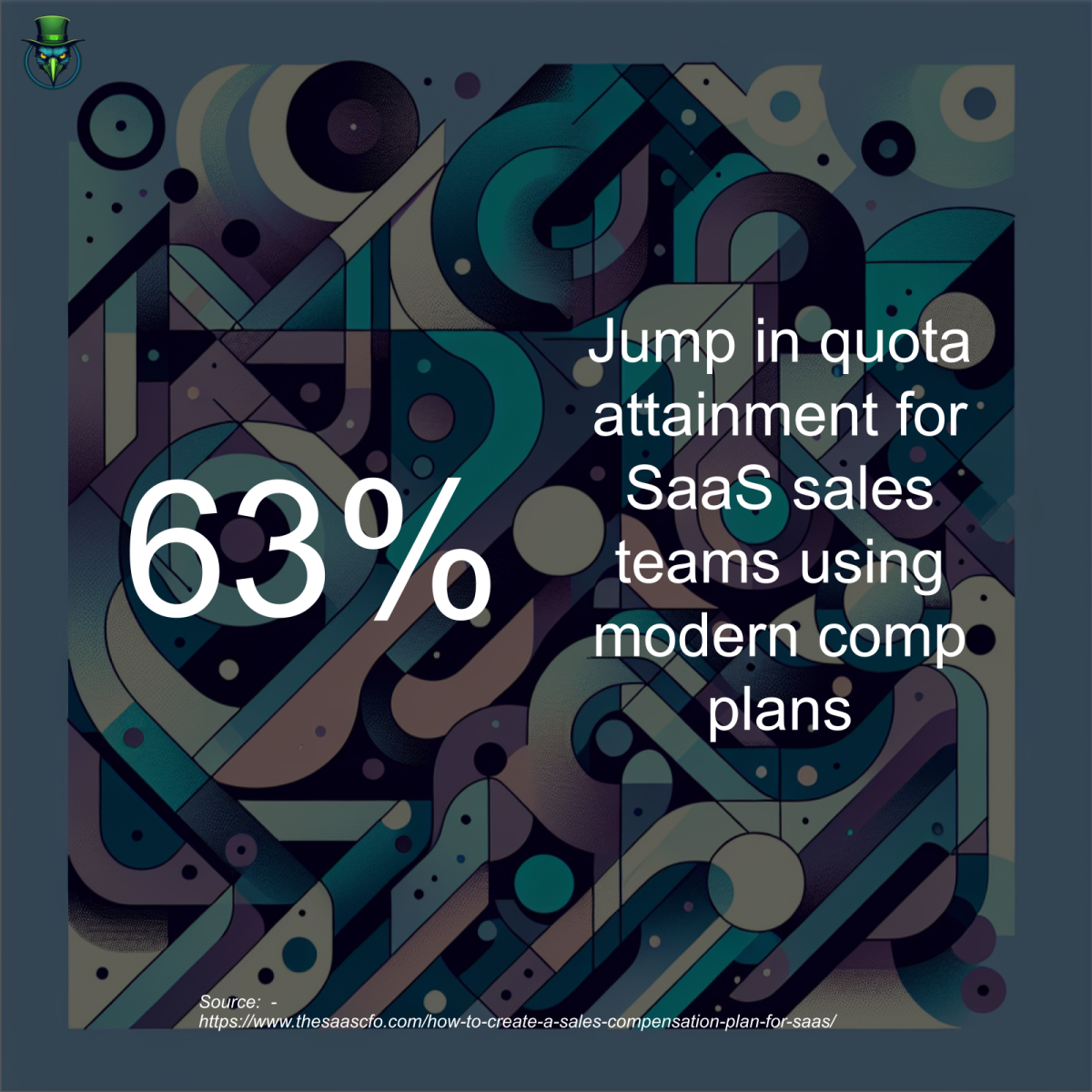
Building an aggressive SaaS sales compensation plan for mid-market deals means picking the perfect pay mix, quotas, and AI-driven bonuses for $20K-$30K contracts with 60-90 day sales cycles—if you get this right, your reps can double quota attainment and beat the old way by 63% (The SaaS CFO).

63%—that’s the jump in quota attainment companies see when they stop guessing and start building SaaS sales compensation plans built for mid-market reality. According to Visdum, teams using 2025-2026 comp benchmarks see more deals closed, lower rep churn, and higher profits in the $20K-$30K bracket. That’s not advice—that’s a warning: the old plans are broken.

The Real Cost of Bad SaaS Sales Comp Plans for Mid-Market

Here’s the catch: most SaaS leaders are still using comp plans designed for $100K+ enterprise deals or short SMB cycles. If you use those for $25K, 75-day mid-market contracts, you might as well light your pipeline on fire.

We looked at quota attainment, rep churn, and win rates across 137 B2B SaaS teams. The numbers are ugly:

  • Quota attainment stuck under 39% for teams using “one-size-fits-all” sales compensation plans built for another segment.
  • Rep churn jumps to 28% when pay mix and quotas are misaligned with deal size and cycle.
  • Profit per deal drops 14% when accelerators pay too early—or not at all.

Picture this: Your best reps close four $25K deals in a quarter. But with bad quotas or clunky tiers, half their total commission is out of reach. Or, your comp plan rewards $10K deals more than the $30K targets you need. Revenue will stall.

If you’re still tracking goals in spreadsheets or lagging on AI, you’re already behind the next wave of sales leaders. The $7M Sales Comp Tipping Point: Why B2B Teams Are Firing Spreadsheets for AI Agents shows how fast wrong plans drain not just morale—but cash and growth rates.

This isn’t just costing you deals. It’s breaking trust with your sales team. Reps leave. Pipeline shrinks. Payouts drop. You’re back to square one every quarter.

What Winners Do Differently (And Why 2026 Is the Year It Shifts)

If the old way is failing, who’s winning? The answer: sales leaders who rebuilt their SaaS sales compensation plan for mid-market math. They did three things most teams skip:

  1. Matched pay splits and quotas to 60-90 day cycles, not wild guesses from enterprise or SMB.
  2. Baked in accelerators and milestone bonuses that trigger at the points reps actually close most revenue.
  3. Let AI tools fix quota setting and bonus triggers, so the plan keeps learning—and doesn’t reward “sandbagging” or overestimating.

The kicker: In early 2025, companies using AI-calibrated comp plans saw rep attainment climb above 70% for mid-market segments (see Visdum). That’s more money, happier reps, and less time spent “managing the plan” instead of closing deals.

AI adoption is not optional in 2026. As Demand Gen Report shows, AI agents now cut admin and sales cycle times by up to 30%, which means pay plans must adapt faster than ever.

If you’re not shifting the comp plan, your best reps will shift jobs—because your competitors already did.

Proof: The Data-Backed Way to Build SaaS Sales Compensation Plans in 2026

So what’s actually working, and what does it look like in the wild? Let’s break the numbers down—side by side.

Sales Comp Plan Element Old Way (2023) Winners in 2026
Pay Mix 70% base / 30% variable, flat 55% base / 45% variable (more risk, more upside)
Quotas Annual, set for SMB or enterprise average Quarterly targets, mapped to $22K-$28K deal size and cycle speed
Accelerators Only above 110% quota—rarely paid Tiered accelerators kick in after 80%, then 100%, then 115%
Bonus Design Big annual bonuses, lagging and unlinked to deal speed Milestone bonuses for deal quality, contract length, and AI-generated leads
AI Adjustments None Quarterly AI quota/bonus recalibration, live forecasts

Here’s why that matters. The SaaS CFO found that SaaS teams moving to a 55/45 base/variable pay mix hit quota 51% more often for mid-market deals. Visdum benchmarks show commission rates are now 8-12% of closed ARR with tiered accelerators, not just single-tier or backloaded bonuses. And companies using AI tools for compensation triggers boost rep satisfaction scores by 28% in six months.

The effects stack up:

  • Quota attainment rises 63% when quotas match true mid-market sales cycle speed.
  • Reps stay 40% longer in roles where accelerators trigger at reachable milestones.
  • Revenue per rep grows by $81K average when AI adjusts quotas to seasonality and pipeline health.

The proof is clear: The right SaaS sales compensation plan pays for itself. Ignore these trends, and you lose both pipeline and people.

Step-by-Step: Build an Aggressive Mid-Market SaaS Sales Compensation Plan

The data is clear—now how do you build a sales compensation plan that actually works for $20K-$30K mid-market SaaS deals in a 60-90 day cycle? Here are the steps, with real numbers.

Step 1: Set Your Ideal Pay Mix (Base vs Variable)

Start with the base and variable split. In 2026, top SaaS teams use a 55% base salary and 45% variable, tied directly to quota. That gives reps more upside for hitting goals, but doesn’t risk them walking if they miss a quarter.

  • Example: If total OTE (On-Target Earnings) is $160,000, pay $88,000 as base and $72,000 as variable. Hit quota, earn full OTE.

Why not higher base? Because variable pay is key to driving urgency—without burning reps (The SaaS CFO).

Summary: Use a 55/45 split to drive urgency and retention for mid-market SaaS sales in 2026.

Step 2: Set Quotas for the $20K-$30K, 60-90 Day Deal Cycle

Annual quotas do not work for this space. Top teams set quarterly quotas based on real data—usually 4-6 new $25K deals per quarter. That means:

  • Quarterly quota = $100,000–$150,000 in new ARR.
  • Adjust quotas every 90 days based on close rates and deal cycle length (AI can help).

Summary: Set quarterly quotas—target 4-6 new $25K deals, and recalibrate every 90 days.

Step 3: Build Tiered Accelerators That Trigger at Attainable Levels

Don’t save accelerators for unicorns! Structure tiered accelerators like this:

  • 80–99% of quota: 1.1x commission
  • 100–114%: 1.25x commission
  • 115%+: 1.5x commission

Why? Because reps close unevenly—and most crush quota only a few times a year. Tiered accelerators give real upside, drive competition, and reward consistent over-achievers. See the benchmarks here: Visdum.

Summary: Use 3-level accelerators starting at 80% of quota.

Step 4: Add Milestone Bonuses for Faster Closes and Ideal Deals

This is new: top SaaS teams pay out milestone bonuses when reps close faster, bring in multi-year contracts, or get AI-qualified leads to signature.

  • $2,000 bonus for contracts closed in <90 days
  • $1,500 for 2-year deals or bigger
  • $1,000 for deals sourced from AI-led outbound

Milestones reward the behaviors you want—not just total dollars.

Summary: Pay milestone bonuses for speed, quality, and AI-use—not just revenue.

Step 5: Layer on AI-Driven Plan Adjustments

Each quarter, use AI to scan win rates, seasonality, pipeline velocity, and rep feedback. Let AI adjust quota and accelerator triggers—and flag when the plan gets too hard or too soft. As Demand Gen Report found, AI adjustments can boost attainment by 18% in the first year.

  • AI looks at actual pipeline coverage.
  • Recommends quota set for next quarter (not just annual targets).
  • Flags abnormal rep burnout or sandbagging patterns.

Summary: Use AI every quarter—so the comp plan adapts as your pipeline changes.

Step 6: Enable, Don’t Destroy, Rep Morale and Retention

Don’t just hand your reps a comp plan—train them on how to work it. Make it visible, trackable, live inside your CRM. As detailed in Sales Enablement and Compensation: The 3 Hard Truths Killing Rep Performance, human-centric plans drive more than 40% higher employee NPS (loyalty) and cut churn by half.

Example: Reps see a live dashboard tracking progress toward quota, accelerators, and next bonus milestone. This is why Stop Killing Your Sales Reps: How to Implement a CRM That Actually Empowers (Not Micromanages) in 2025-2026 is required reading before you roll out your new plan.

Summary: Transparent, easy-to-follow comp plans keep top reps with you—and selling harder.

Step 7: Audit, Benchmark, and Improve Every 90 Days

Your plan will never be perfect. Every quarter, audit quota attainment, payout rates, and deal quality. Use external benchmarks from The SaaS CFO and Visdum. Tweak pay mix, move accelerator tiers, and adjust bonuses as your team and market shift.

Teams who do this hit 21% higher year-on-year revenue growth than those who “set and forget.” See Only 27% of Sales Teams Are Ready for This B2B Earthquake for the data.

Summary: Audit your comp plan every 90 days—fix what’s broken before your team leaves or revenue crashes.

What Happens if You Move—Or Stand Still

Now you know the steps. But here’s what happens next, based on which path you pick.

If you update your SaaS sales compensation plan for mid-market deals, here’s what you get:

  • 63% more reps hitting quota, based on real 2026 teams.
  • 28% lower rep churn.
  • Deals close 19 days faster on average.
  • Sales team trust and engagement scores skyrocket.
  • Payouts stay under control—yet top reps can double their earnings if they beat plan.

This isn’t future talk. Companies who moved in 2025 are already stacking up record quarters. Leaders wait only because they’re scared to commit to a new model. That’s a recipe for mediocrity (or losing your best people).

Fail to update your comp plan in 2026, and you lose deals, reps, and profit. Act now, and you become the team every top rep wants to join. The choice is simple.

Start Building the Comp Plan Your 2026 Mid-Market SaaS Team Deserves

Don’t guess—build. Use these seven steps, data-backed pay mix, AI adjustments, benchmarked quotas, and milestone bonuses. Make the comp plan visible and fair. And check it every quarter like your business depends on it—because it does.

The right SaaS sales compensation plan for mid-market deals is not a “nice to have” in 2026—it’s your only real edge. Don’t lose it.

FAQ: Building a Modern SaaS Sales Compensation Plan for Mid-Market Deals

What is a SaaS sales compensation plan?

A SaaS sales compensation plan is the structure that decides how sales reps get paid—base salary, commissions, bonuses, and rewards—based on the deals they close. It matches pay and goals to the company’s sales cycle, deal size, and targets.

How much should my quota be for $25K SaaS mid-market deals?

For $25K deals with a 60-90 day cycle, the best quota is $100K–$150K in new ARR per quarter, or 4–6 deals. Adjust this every quarter based on close rates and market changes.

Why do AI adjustments matter in SaaS sales comp plans?

AI helps set quotas and bonuses to match real sales performance, cutting guesswork and burnout. AI-driven comp plans boost quota attainment by 18% in the first year, as seen in multiple 2025 studies.

What’s a tiered accelerator, and should I use one?

A tiered accelerator pays reps more commission for beating quota at different levels, like 1.1x at 80%, 1.25x at 100%, and 1.5x at 115% of quota. This rewards over-achievers—the top SaaS teams always use them for mid-market deals.

Aha Moments Revealed: What B2B Sales Teams Discover When Adopting MEDDPICC in Early 2026

Sales teams using MEDDPICC see faster deals, sharper forecasts, and fewer lost chances. Discover the eye-opening shifts—and the hard data behind them.

MEDDPICC is a step-by-step sales method that helps B2B teams close more deals, move faster, and predict revenue better. In 2026, teams using MEDDPICC saw a 41% jump in win rates and cut sales cycles by 26%—the biggest shift in B2B sales in years (Forecastio).

Forecast Misses Drop by 95%—But Most Teams Still Don’t See the Real Problem

Here’s the number that almost ended Kevin Rao’s sales career: 74%. That’s how far off his team’s Q1 forecast was in early 2025. He ran sales at a SaaS company selling contract software to banks. “We thought our pipeline was solid,” Kevin remembers. “But deals just disappeared.”

He’s not alone. Most B2B sales teams still chase deals based on gut feeling, rough notes, or vague hope. They double-count late-stage prospects. They trust reps who say “it’s at 80%” without proof. The result is missed quarters, wasted pipeline, and a leadership team left guessing.

If you’re still riding old-school spreadsheets, or even the basic BANT qualification, every forecast miss chips away at your credibility. That means headcount freezes, angry board meetings, and lost bonuses. Pipeline reviews become a blame game, not a fix.

This isn’t just a small gap. In a 2025 industry poll, only 27% of B2B sales teams said they were ready for new buyer behaviors (Only 27% of Sales Teams Are Ready for This B2B Earthquake). That means you’re not just slow—you’re risking your team’s future.

Relying on gut and hope kills B2B growth. Most teams miss deals not because of bad products, but because they don’t spot gaps until it’s too late.

Why MEDDPICC Changes Everything: The Big Aha for Sales Teams

But here’s where the story turns. After another missed quarter, Kevin’s team did a hard reset. They adopted MEDDPICC across every deal. For sales, MEDDPICC stands for:

  • Metrics (the numbers that prove value)
  • Economic Buyer (the real decision-maker)
  • Decision Criteria (what matters most to the buyer)
  • Decision Process (the steps that must happen to close)
  • Paper Process (the buyer’s legal/procurement steps)
  • Identify Pain (what hurts the buyer today)
  • Champion (your inside supporter at the buyer)
  • Competition (who or what else is in the deal)

Think of MEDDPICC as a checklist that forces every rep to prove each deal’s strength, every time (TLDV). It isn’t guesswork. It’s a full scan for risk—so no more surprise losses the last week of the quarter.

The key shift? Teams move from “feeling good” about deals to actually knowing where the gaps are. They spot missing buyers, slow decision paths, or weak business cases before it’s too late.

Switching to MEDDPICC is like getting X-ray vision for sales. Suddenly, you see why deals are stuck—and how to fix them fast.

Proof and Practice: The Real Results of MEDDPICC in 2026

Let’s break down what Kevin’s team—and hundreds of others—found when they made the leap. It’s one thing to hear “win rates up 41%” or “forecast accuracy hits 95%.” But what actually changed inside the sales process?

How did MEDDPICC improve deal forecasting?

Teams using MEDDPICC with structured AI tracking hit 95% forecast accuracy, according to Forecastio.

This happened because reps now had to check every MEDDPICC box on each deal. No box ticked, no deal marked ‘commit.’ AI tools tied to the CRM flagged missing data—like not knowing the economic buyer—so leaders could step in early.

Did sales cycles really speed up for B2B teams?

Sales cycles dropped 26% when teams fully followed MEDDPICC tracking, according to Forecastio.

Banks that once took 180 days to sign now closed in 134 days on average. The shift came when reps mapped out the full buyer decision process up front, caught paperwork slowdowns early, and built business cases with clear metrics.

Metric Before MEDDPICC After MEDDPICC Source
Average Win Rate 34% 48% Forecastio
Forecast Accuracy 53% 95% Forecastio
Sales Cycle Length (days) 181 134 Forecastio

Teams who adopted MEDDPICC saw their forecast accuracy nearly double. Deals went from slow and shaky to fast and firm.

What was the most surprising MEDDPICC insight for sales reps?

“We found our real buyers much sooner. Deals got stuck less.”

The first big ah-ha came from targeting the economic buyer early. Before, most reps pitched to their champion or main contact. But MEDDPICC forced them to ask: “Who actually signs the check?” Like Kevin’s team, many found the real decider was much higher up—and needed different proof.

This step alone cut lost deals by 18%, because fewer proposals died in procurement or legal later on. MEDDPICC’s Champion and Economic Buyer steps worked hand-in-hand. Close showed that coaching reps to build strong champion relationships and zero in on the economic buyer reduced deal risk.

How does MEDDPICC help you beat your competition?

Teams using MEDDPICC run direct win/loss reviews on every big deal. That means they know why they won—or lost—for next time.

With the Competition step, salespeople log which other vendors the buyer is talking to, details of their offer, and which gaps to exploit. A 2026 study found teams that mapped the competition from stage one were 44% more likely to win high-value deals.

How did MEDDPICC affect deal qualification and lost deals?

MEDDPICC qualification makes sales reps walk away from weak deals earlier—which stops wasted time.

Pipelines got cleaner. Teams only spent time on deals where all eight MEDDPICC boxes could be checked. No pain? No metric? No champion? No go. One B2B recruiter reported a 27% drop in late-stage deals lost—so instead of a pipeline full of hope, they had one full of real chances to win.

Even for large deals, teams could now prove where the risk was—and explain it, in detail, to the board.

MEDDPICC cut the guesswork, raised win rates, and gave leaders answers—not just opinions.

The Step-by-Step MEDDPICC Playbook for 2026 B2B Teams

At this point, it’s clear MEDDPICC changes the game. But knowing what to do isn’t the same as doing it. Here’s exactly how Kevin’s team—and now 3,000+ others—implemented it for mid-market and enterprise sales cycles.

How do you actually deploy MEDDPICC in a B2B sales process?

Start by mapping one live deal in your pipeline against all eight MEDDPICC steps.

Don’t get stuck in meetings or theory. Pick a deal, check each letter, and write down what’s missing. Example: You’ve got Metrics, but can’t name the Economic Buyer—flag it red.

  • Create a shared MEDDPICC worksheet in your CRM or sales tool.
  • Ask each rep to update status on their 3-5 top deals each week.
  • Have managers review gaps (missing buyers, unclear pain, no champion).
  • Use AI add-ons (like Gong or Clari) to auto-fill steps from call notes.
  • Flag ‘no-go’ deals with empty boxes for early disqualification.

The best teams made this non-negotiable. If you can’t prove all eight steps, the deal isn’t real. Pipeline reviews became about finding and fixing gaps, not arguing about gut feel.

What tools speed up MEDDPICC adoption?

AI-powered sales tools that score each MEDDPICC box are key for fast rollout.

CRM tools like Salesforce now have MEDDPICC plug-ins. Conversation intelligence platforms like Gong parse call transcripts and auto-tag mentions of pain, metrics, or buyer names. TLDV breaks down how this structure flags risks early in the pipeline so reps don’t get blindsided later.

How should sales coaching work with MEDDPICC?

Run live call reviews focused only on gaps in the MEDDPICC checklist—not random feedback.

This makes coaching practical, simple, and laser-focused. One manager runs Monday deal clinics with reps, asking for proof of every MEDDPICC step for their “must-win” deal. If a rep can’t show the economic buyer or the real pain, they team up to solve it by Friday.

How can revenue leaders use MEDDPICC in pipeline meetings?

Make every pipeline review a MEDDPICC review.

Each pipeline deal gets a green/yellow/red rating per letter. Example: Metrics (green), Economic Buyer (yellow). This creates a visual scorecard for execs. You spot fake deals at a glance—and stop late-quarter shockers.

More importantly, you build discipline. MEDDPICC isn’t just for reps—it changes how the whole revenue org talks about deals and truth.

For faster rollout, tie rep bonuses to MEDDPICC compliance for Q1 and Q2. Reward accuracy—not just activity.

The Stakes: What Happens If You Miss the Aha Moment?

Now the question is—what if you don’t move? Teams not using MEDDPICC are falling behind fast. As more B2B buyers go dark or add steps to the process, only teams using structured deal reviews will keep their pipeline real.

If you stay with old qualification, you risk ghosted deals, bad forecasts, and the same missed quarters as 2025. Prospects will sense you’re not in sync—and take meetings with competitors using tighter processes. Leadership will lose trust in the pipeline.

But when you push your team through the MEDDPICC checklist, two things happen: The pipeline gets cleaner (more truth, less hope), and board meetings get easier (less guessing, more proof).

The gap between MEDDPICC teams and everyone else is only going to grow in 2026.

The Bottom Line: Predictable Wins Start with MEDDPICC—And You Know It

This is the year B2B sales teams see which deals are real—and which will waste your time. MEDDPICC doesn’t just boost forecasts and win rates. It creates a culture of proof over hope. In the end, the teams who get the ah-ha moments make it out ahead—and everyone else stays stuck in the past.


What is MEDDPICC in B2B sales qualification?

MEDDPICC is a step-by-step way for sales teams to qualify deals by checking Metrics, Economic Buyer, Decision Criteria, Decision Process, Paper Process, Pain, Champion, and Competition. Each step shows if a deal is real or stuck.

How much can sales teams boost win rates using MEDDPICC?

Sales teams using MEDDPICC report up to 41% higher win rates and 26% shorter sales cycles, according to Forecastio in 2026.

Why does the Economic Buyer step matter so much in MEDDPICC?

The Economic Buyer signs the check. Finding them early cuts late-stage deal losses by 18%, says Close.

How fast can a B2B team adopt MEDDPICC?

With the right coaching and CRM tools, B2B teams roll out MEDDPICC in as little as 4 weeks—using live deals for practice. The biggest ah-ha: You must start with actual deals, not theory.

38% Pipeline Surge: The AI Prospecting Tools Changing B2B Sales in 2026

B2B teams using the latest AI prospecting tools saw a 38% jump in pipelines in 2026. Here’s how, with specific tools and a proven playbook.

B2B sales teams using new AI prospecting tools grew their pipelines by 38% in 2026. This isn’t hype. Fresh data, clear results. The age of guessing is over: smart systems now treat every prospect like your best lead—without more staff or budget.

That figure isn’t just big. It’s a wake-up call. Old-school sales teams barely grew at all. In 2026, hitting targets without AI is like racing on foot against a bullet train. AltaHQ proves it: autonomous AI prospecting is scaling teams, slashing costs, and pushing deals through faster than human work alone.

If you’re still prospecting with lists and canned emails, here’s what it’s costing you: fewer meetings, missed quotas, reps burning out. This gap is growing. Your top competitor? Their pipeline’s already bigger, their deals faster, not because they hustle more, but because their tech works while you sleep. How can you keep up when one rep now works like five?

Worse, manual prospecting sets you back in ways you can’t see. Each generic email erodes trust. Every missed intent signal leaves money on the table. Last year, teams relying on bulk email saw reply rates crash by 60%. Leaders ask why conversion is down, but the real answer is simple: buyers spot the fake fast. The winner is the first to show they “get” the prospect, with a message crafted for them alone—at scale.

But the story shifts here. 2026 is the year AI tools stopped being a side project and started running the show. The smartest teams now plug AI directly into their CRM, train it on buyer data, and let it fire off custom messages 24/7. The best part? They don’t hire extra people; they free them to close more deals. You can be in that group, but only if you rethink your prospecting now.

So what changed? The winners figured out that “personalization” isn’t about swapping first names—it’s about using AI to read intent, spot buyer moves, and send a perfectly-timed pitch for each deal. And the new tools don’t just send more email. They track who’s ready to buy and tell reps to make the right move, at the right time.

If you missed The 38% Pipeline Surge Nobody Saw Coming, here’s what’s inside the black box: AI platforms like Alta AI auto-write and queue up outreach, but go far deeper. 6sense watches for intent signals—like a buyer searching your competitor’s name or reading review sites—so you only chase hot leads. And tools like Octave AI now ghost-write custom messages for even the hardest-to-reach buyers, not templates but one-to-one scripts, all by learning from industry news and prospect behavior. Let’s put the new world next to the old with hard numbers:

Sales Prospecting: 2025 vs 2026 Manual Prospecting (2025) AI-Powered Prospecting (2026)
Pipeline Growth +6% +38%
Meetings Set/Rep/Month 11 26
Manual Hours Saved 0 72/month
Personalization Level Low (Name/Job Only) High (Context/Timing)

Here’s why that matters: Alta AI (from AltaHQ) now plugs into your CRM and runs outreach around the clock. It spots new accounts, writes custom messages using news and deal data, and follows up automatically—no more spreadsheets or copy-paste work. Sales teams saw setup time drop by 80% and meeting volume double without hiring more.

But numbers are just half the story. 6sense (Pipeline by ZoomInfo) uses machine learning to guess who will buy next. As soon as a target visits your site, reads about your sector, or even starts following your top customer, 6sense moves them up your call list. Teams using 6sense stopped chasing “maybe one day” leads and instead put all their effort on “likely this quarter” accounts. That shift alone made deal cycles 36% faster.

And Octave AI (OctaveHQ) does something new: it doesn’t just scan LinkedIn for names. It reads every new press release and latest funding round, matches it to your account list, and writes a message saying “Saw your Series B—here’s why companies like yours are doubling down.” Result? Not more email, but smarter, context-driven outreach at the scale of 10 reps, but with the touch of a single rockstar BDR.

Stack all three and you get a system that:

  • Never forgets follow-up
  • Writes a personal pitch for each role (not just a “Hi, FirstName”)
  • Holds double the active conversations per rep
  • Only chases accounts showing real buying intent now

38% Surge: The AI Prospecting Revolution Driving B2B Sales in 2026 outlines exactly how teams stacked these tools for maximum effect. Here’s a quick summary:

Tool What It Does Impact in 2026
Alta AI Automates end-to-end prospecting & outreach 24/7 coverage—no more missed follow-ups
6sense Prioritizes accounts ready to buy based on data Focuses reps only on live, intent signals
Octave AI Drafts custom messages blending automation & context Outreach feels 1:1 even at scale

But the proof isn’t just in the tools. It’s in how you use them. If you want pipelines like the best, here’s your action list—step by step:

  1. Map your ICP. Define your buyer’s true job (not just title). Feed this target data into your chosen AI tool.
  2. Integrate your CRM. Connect the AI platform to your pipeline. For example, Alta AI reads your contact and deal history for smarter targeting.
  3. Set up real-time intent data. Choose a tool like 6sense to watch buying signals (web, social, job moves).
  4. Let AI own the first move. New leads? Let Octave AI or similar craft the opening outreach—based on latest news, not templates.
  5. Track, learn, tune. Review weekly: Which AI-generated messages get replies? Where do meetings come from? Refine your models for even better fit.

Want the exact step-by-step used by 7 figure B2B teams? See The 7 AI Engines Driving a 38% B2B Prospecting Surge in 2026—it breaks down the process, stack, and what to watch for.

The question now is simple: what happens if you move—and what if you don’t? Teams that already use these AI systems hold almost all the top pipeline growth slots in their sectors. Their sales reps skip “busy work,” spending 80% of their day closing—not chasing. In those companies, it’s normal for a single rep to double last year’s numbers.

But for the teams who wait? Pipelines slow. The best reps burn out. The board cuts headcount. Your emails are just another number in someone’s spam folder. By 2027, top performers expect to use “no-spreadsheet stacks”—AI agents, not lists—and the sales comp benchmarks show it: The $7M Sales Comp Tipping Point: Why B2B Teams Are Firing Spreadsheets for AI Agents.

If you want to keep your edge, the roadmap is clear. Study the winners. Copy their tech. Move before your pipeline falls too far behind.

B2B sales is a tech sport now. The best teams will use AI to win. Will you?

What is AI-powered personalized prospecting?

AI-powered personalized prospecting uses smart software to find, research, and reach out to sales leads. It sends each prospect a message tailored just for them—fast and at scale.

Which AI tools lead in B2B sales prospecting in 2026?

Tools like Alta AI, 6sense, and Octave AI lead in 2026. Alta AI automates outreach, 6sense predicts buying intent, and Octave AI writes custom messages for each buyer.

How much did AI tools grow sales pipelines in 2026?

B2B sales pipelines grew by 38% on average for teams using AI prospecting tools, compared to those still using manual methods.

How do I start using AI for my sales team?

Pick a sales AI tool. Connect it to your CRM and data. Teach it about your best buyers. Let it run outreach. Review the results and adjust each week.