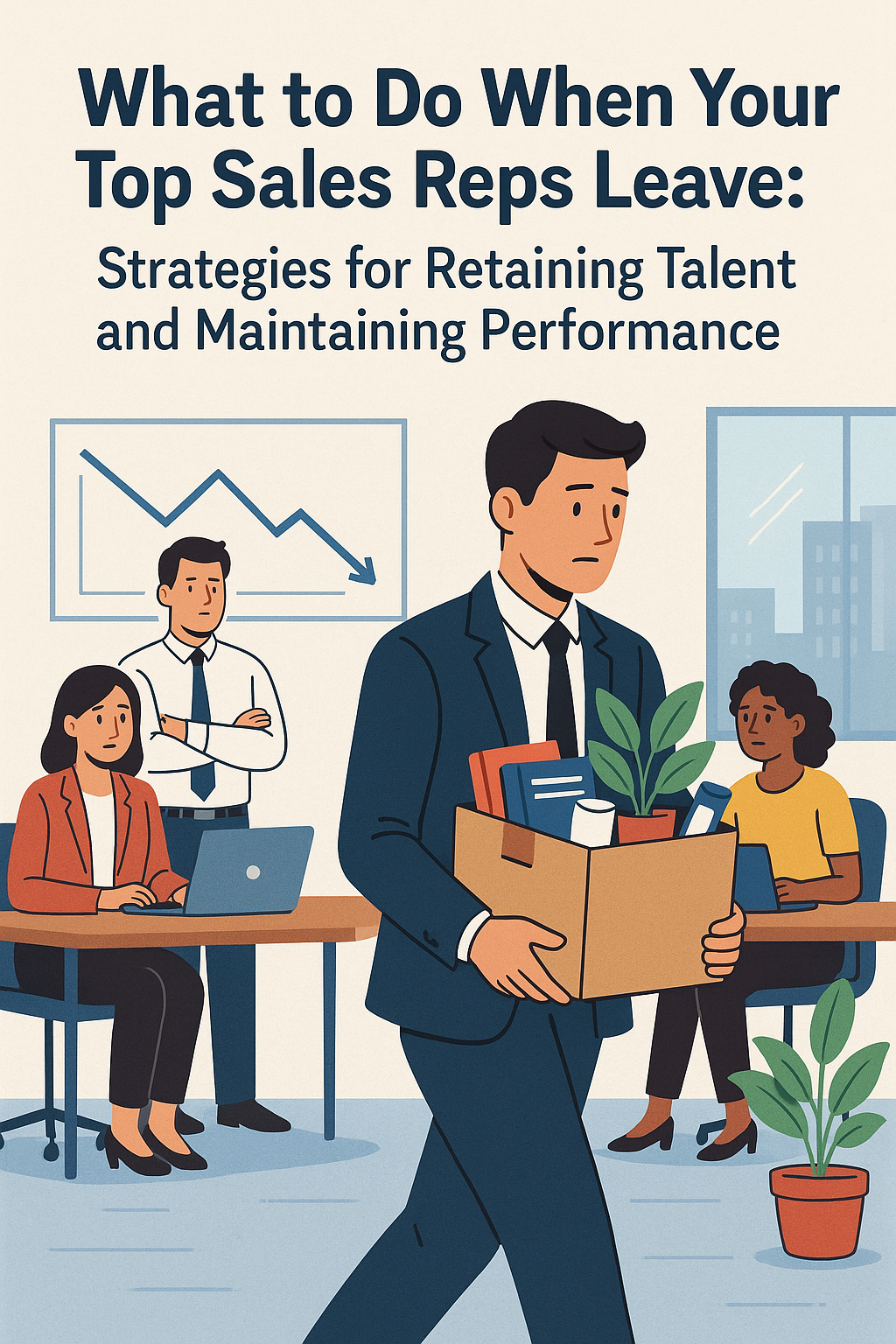
What to Do When Your Top Sales Reps Leave: Strategies for Retaining Talent and Maintaining Performance

Losing top sales reps can cripple your business. Uncover powerful strategies to keep your best talent, maintain performance, and build a winning culture. Don’t wait until it’s too late!

When Your Top Sales Reps Leave: The Shockwave Effect

It’s a gut punch when your top sales reps leave. You might feel like you’re losing the backbone of your sales team, and that’s no exaggeration. These are the people who bring in the big bucks, who close deals with finesse, and who often mentor newer team members. Their departure can send shockwaves through your entire organization. But what can you do? How can you navigate this challenge and come out stronger on the other side?

Understanding Why Top Sales Reps Leave

Before diving into solutions, let’s unpack why your top sales reps might decide to jump ship. It’s often not just about money. Sure, salary plays a role, but other factors are at play, too. A lack of growth opportunities, poor management, or a toxic culture can drive even your best performers away.

For instance, a study from Gartner highlights that over 50% of employees leave their jobs because they feel undervalued. If your reps don’t feel appreciated or if they see no path to advancement, they’ll start looking elsewhere. Can you blame them?

How to Retain Your Top Talent

Retention starts with understanding and addressing the core issues. Here are some strategies to keep your top sales reps engaged and committed to your organization.

1. Create a Winning Culture

Culture is everything. It’s the glue that holds your team together. A positive, supportive environment encourages collaboration and innovation. Make sure your team feels like they belong. Celebrating wins, both big and small, fosters camaraderie. It’s not just about the numbers; it’s about the journey.

At your next team meeting, try this: start with a shout-out to the top performers, but also recognize the effort of those who are improving. Create a culture where everyone feels they can contribute and grow. When people feel valued, they’re less likely to leave.

2. Offer Competitive Compensation

Let’s not sugarcoat it: money matters. While it’s not the only factor, it’s certainly a significant one. Make sure your compensation package is competitive. Research what similar companies are offering. A report from HubSpot suggests that 70% of sales reps are motivated by money. If you’re not keeping up, you risk losing your best talent.

Consider not just salary but also bonuses, commissions, and other incentives. A well-structured commission plan can motivate your reps to push harder and stay longer. Make it clear that their hard work pays off.

3. Invest in Training and Development

Your top sales reps want to grow. They want to learn new skills and expand their expertise. If you’re not investing in their development, they’ll seek opportunities elsewhere. Regular training sessions, workshops, and conferences can keep your team sharp and engaged.

For example, consider bringing in industry experts for workshops or sponsoring attendance at relevant conferences. This not only benefits your reps but also enhances your entire organization’s knowledge base. As McKinsey research shows, companies that invest in employee development see 20% higher retention rates.

4. Build Strong Relationships

Sales is about relationships. It’s essential to build strong relationships with your team. Make time for one-on-one meetings. Listen to their concerns and ideas. When they feel heard, they’re more likely to stay.

Encourage open communication. Create a safe space where your reps can share their thoughts without fear of judgment. If they know they can approach you about their challenges or career aspirations, they’re more likely to feel invested in the company’s success.

5. Offer Flexibility

Flexibility is key in today’s work environment. Your top sales reps value their time and work-life balance. Offering flexible hours or remote work options can make a significant difference. A recent study revealed that 80% of employees would choose a job that offers flexible working conditions over one that doesn’t.

Consider implementing a hybrid work model where reps can choose when to work in the office and when to work from home. This not only shows you trust them but also helps them maintain a healthy work-life balance, which is crucial for long-term retention.

What to Do When They Leave

Despite your best efforts, sometimes your top sales reps will leave. It’s frustrating, but it happens. The key is to have a plan in place to minimize disruption. Here’s how to handle it:

1. Conduct Exit Interviews

Don’t let their departure go unnoticed. Conduct exit interviews to understand why they left. This feedback can be invaluable. It might reveal issues you weren’t aware of. Take their insights seriously and make changes where necessary.

2. Reassess Your Team Structure

When a top rep leaves, it’s a perfect opportunity to reassess your team structure. Who will take over their accounts? Is there someone ready to step up? Often, a rising star can fill the gap if they’re given the chance. Promote from within when possible; it boosts morale and shows others that hard work pays off.

3. Communicate with Your Team

Transparency is crucial. Let your remaining team know what’s happening. Share your plans to fill the role and reassure them that you’re committed to maintaining performance. This helps to quell any anxiety and keeps the team focused on their goals.

4. Maintain Performance Standards

Just because one person has left doesn’t mean the rest of the team should lower their standards. Set clear performance expectations. Regular check-ins can help ensure everyone stays on track. Celebrate small wins to keep motivation high.

Final Thoughts: Don’t Wait for the Next Departure

It’s time to take a proactive approach. The moment you notice a top sales rep showing signs of disengagement, act. Address concerns before they escalate. Retaining top sales reps is about creating an environment where they feel valued, challenged, and supported. Losing top talent can be devastating, but it’s also an opportunity to strengthen your team and culture.

Have a plan. Make retention a priority. Your sales team is your greatest asset. Treat them well, and they’ll treat your business well in return.

How to Maintain Sales Momentum When a Top Performer Decides to Leave the Company

Losing a top sales performer? Don’t panic. Here’s how to maintain sales momentum, empower your team, and turn this challenge into an opportunity.

When a top performer decides to leave, it’s like a punch in the gut. Your sales numbers don’t just take a hit; the entire vibe of the team can shift. Everyone starts asking, “What now?” But here’s the reality: you can’t afford to wallow in self-pity. You need to maintain sales momentum and keep the fire burning. It’s time to get your hustle on and turn this challenge into an opportunity.

The Impact of Losing a Star

Losing a top sales performer can feel catastrophic. They’re usually the ones closing the biggest deals, mentoring others, and driving the overall success of the team. Their departure leaves a gap. But guess what? Every challenge is a chance to level up your game.

Understand the metrics. According to a study by Gartner, companies with strong sales leadership experience 12% higher revenue growth. So, how do you pivot and keep that momentum going? It’s all about strategy.

1. Communicate, Communicate, Communicate

Don’t hide from the situation. Talk to your team. Transparency is key. When a top performer leaves, the last thing you want is for the rest of your team to feel anxious or uncertain. Hold a team meeting. Acknowledge the loss, but shift the focus to the future.

Share your vision. Let them know that you believe in the team’s ability to adapt and thrive. Use this moment to inspire. Remind them of past challenges overcome and the strength of the team. As Harvard Business Review suggests, leaders should emphasize resilience and adaptability in times of change. Make them feel like they’re part of the solution, not the problem.

2. Identify the Gaps

What did that top performer bring to the table? Identify their strengths and the gaps they left behind. Was it their ability to close deals? Their network? Their expertise in a specific market? Pinpoint these areas and act fast. Don’t let the momentum drop.

Involve the team in identifying how to fill these gaps. Encourage collaboration. This is a perfect moment to empower your existing team members. They might surprise you with their potential. It’s all about fostering an environment where everyone feels they can contribute.

3. Upskill and Cross-Train

Invest in your people. Use this opportunity to upskill your team. Cross-training is critical. If one person is a top closer, another could be a whiz at lead generation. Get everyone involved in the sales process. As you maintain sales momentum, diversify your team’s skill sets. This way, you’re not reliant on one star player.

Set up training sessions, role-playing exercises, and workshops. Get external experts in. And don’t forget about digital resources. Online platforms like HubSpot offer invaluable content on sales strategies. Leverage these tools and let your team learn and grow together.

4. Keep the Pipeline Flowing

This is non-negotiable. Maintain a robust pipeline. Review your current leads and opportunities. Are there any that can be pushed forward? Who can take over those relationships? Your existing customers should never feel abandoned. Touch base with them, reassure them, and keep the deals moving.

Establish clear expectations and goals for your team. Make it a challenge. Set short-term targets that can be hit quickly to boost morale. Celebrate every little win. Each closed deal is a testament to the team’s resilience. It’s about keeping the energy high.

5. Onboard a Successor Strategically

If you’re bringing in a new hire to fill the void, do it right. Don’t just toss them into the deep end. Have a structured onboarding process. Pair them with your existing team members who can guide them through the ropes.

As they settle in, keep the lines of communication open. Encourage your new hire to share their experiences and insights. Fresh perspectives can drive innovation and spark new ideas. Your team needs to see that this isn’t just a replacement; it’s an opportunity for growth.

6. Leverage Technology

Now’s the time to utilize the right tools. CRM systems, sales automation software, and analytics platforms can help you keep track of your sales process and performance. As you maintain sales momentum, data-driven insights become your best friend.

Using platforms like Forrester can help you assess your sales strategies and understand market trends. Use these insights to adjust your approach. Don’t just react; be proactive. Technology is a game changer.

7. Reinforce Team Culture

Culture is everything. Your team needs to feel supported, motivated, and connected. Celebrate your wins, big or small. Foster an environment where everyone feels valued. Keep the energy up. Encourage team bonding activities, whether virtual or in-person. Create a sense of belonging.

As you work through this transition, emphasize the importance of collaboration. The more connected your team feels, the more likely they are to pull together and push through the tough times. This is not just about maintaining sales momentum; it’s about building a legacy.

8. Monitor and Adapt

Finally, keep your finger on the pulse. Regularly monitor your team’s performance and morale. Are they adapting well? Are there areas where they need additional support? Don’t wait for problems to arise. Be proactive. Adjust your strategies as needed. Stay flexible.

Remember, it’s not just about numbers; it’s about people. Your team’s mindset is crucial. Keep them engaged and focused on the goal. Every challenge is an opportunity. Seize it.

Final Thoughts

Losing a top performer can feel daunting, but it doesn’t have to derail your success. It’s a chance to innovate, grow, and strengthen your team. Use these strategies to maintain sales momentum and prove that your team can thrive in the face of adversity. Take action, keep pushing, and never lose sight of your goals.

When Is the Right Time to Expand Your Sales Team? Key Indicators to Look For

Wondering when to expand your sales team? Discover the key indicators that show it’s time to grow and how to prepare for your next level of success!

Recognizing the Signals to Expand Your Sales Team

Every founder knows the hustle. You grind day in and day out, pouring every ounce of energy into building your business. You’ve got that fire, that passion, but at some point, you hit a wall. You start to wonder: when is the right time to expand your sales team? What are the signs that the time has come?

1. Sales Numbers Don’t Lie

Look at your sales figures. Are they plateauing? You can’t expect to scale if your sales aren’t growing. If you’re seeing a consistent month-over-month decline or stagnation, it’s time to take action. When your sales team is stretched thin, leads slip through the cracks, and opportunities are lost. You need more hands on deck to capitalize on those leads.

For instance, if your sales team is managing over 100 leads a month but only converting 10% of them, you’re leaving money on the table. Just think about the revenue you’re missing out on!

2. The Influx of Leads

Are you drowning in leads? You’ve got a marketing strategy that’s working, and the leads are pouring in. But if your current sales team can’t keep up, you’re in trouble. It’s a beautiful problem to have, but it’s still a problem. You can’t let those leads go cold.

As HubSpot notes, companies that respond to leads within the first hour are seven times more likely to qualify the lead than those that wait longer. If your team is too small to respond quickly, you need to expand your sales team before your competitors swoop in.

3. Customer Feedback is Key

Listen to your customers. Are they expressing frustration due to long response times? Are they saying your team is overwhelmed? Customer feedback is a goldmine of information. If you’re hearing complaints about delays or lack of follow-up, that’s a clear signal. You can’t afford to ignore it.

According to McKinsey research, companies that prioritize customer feedback are 60% more likely to retain clients. Don’t let your team’s limitations jeopardize your relationships. If your customers are feeling neglected, it’s time to grow.

4. Employee Burnout

Look around. Is your sales team stressed, exhausted, and overworked? If your top performers are feeling the heat, it’s a recipe for disaster. Burnout leads to high turnover, and losing your best talent is a blow you can’t afford.

When your team is stretched too thin, morale suffers, and productivity drops. You need to create an environment where your team can thrive. If you’re seeing signs of burnout, it’s time to expand your sales team and lighten the load.

5. New Market Opportunities

Are there new markets you’ve been eyeing? If you’ve identified a potential growth area, you need a dedicated sales force to seize that opportunity. Entering new markets requires a different strategy and often a different skill set. You can’t tackle new territories with the same old team.

As OpenView suggests, scaling your team in line with market expansion can lead to significant revenue boosts. Don’t just dip your toe in; dive in with a strong sales team ready to make waves.

6. Competitive Landscape

Keep an eye on your competition. If they’re ramping up their sales efforts, you can’t afford to sit back. You need to match or exceed their efforts to stay relevant. If you see competitors expanding their sales teams and gaining market share, that’s a wake-up call. It’s time to act.

Remember, the market doesn’t wait for you to get your act together. You need to be proactive. If you’re lagging behind, it’s a clear sign that you need to expand your sales team.

7. Sales Cycle Length

Evaluate your sales cycle. If it’s dragging on longer than expected, it might be a sign you need more people to nurture leads through the pipeline. Sometimes, the longer your sales cycle, the more people you need to keep prospects engaged and moving toward a decision. If you’re losing deals because of prolonged cycles, consider adding more salespeople to help manage the workload.

8. Time for Strategic Planning

When was the last time you sat down and mapped out your sales strategy? If it’s been a while, it’s time to refocus. Successful businesses have a clear vision and plan. If you’re ready to take your sales to the next level, that often means building a stronger team.

Consider bringing in new talent with fresh perspectives and ideas. Sometimes, an outside voice can shake things up for the better. Create a strategy for growth, and align your team with that vision.

9. It’s All About ROI

Lastly, let’s talk numbers. You need to think about the return on investment. If hiring more salespeople will generate more revenue than it costs, then it’s a no-brainer. Calculate the potential revenue you could gain from additional sales team members and compare it to the costs. If the numbers make sense, it’s time to pull the trigger.

Conclusion: Don’t Wait for the Perfect Moment

Stop waiting for the perfect moment to expand your sales team. The perfect moment is now. Assess the signs, listen to your gut, and don’t be afraid to make the leap. Growth requires action, and if you’re ready to scale, you need the right people in place.

Remember, in the world of business, stagnation is death. Don’t let your competitors outpace you. Take charge, make decisive moves, and build the sales team that will drive your success. Let’s get to work!

What to Do When Your Top Sales Reps Leave After a Leadership Change

Losing top sales reps after a leadership change can be devastating. Discover powerful strategies to rebuild your team and boost morale in tough times.

The Reality Check: When Your Top Sales Reps Leave

You’ve worked your tail off to build a strong sales team, and suddenly, after a leadership change, your top sales reps leave. It’s gut-wrenching. You feel it in your gut, right? You pour your heart and soul into the business, and then—bam!—the key players are gone. This isn’t just a setback; it’s a punch in the face.

But here’s the deal: this is a reality for many founders. Leadership changes can stir the pot, and it’s not uncommon for top talent to jump ship. In fact, according to a study by Gartner, leadership transitions lead to a 25% increase in turnover among top performers. You need to face this head-on, and you need to do it fast.

Understand Why They Left

First things first. You need to dig deep and understand why your top sales reps left. Was it the new leadership style? Did they feel undervalued? Were they scared of the uncertainty? It’s crucial to get to the bottom of this. You can’t fix what you don’t understand.

Conduct exit interviews and be brutally honest. Ask them about their experience, their feelings, and their fears. You might find out that it was a simple miscommunication or a deep-rooted issue that needs addressing. Whatever it is, you need to know it.

Reassess Your Leadership Style

Now, if you’re the one who made the leadership change, it’s time for some self-reflection. Are you leading with empathy? Are you creating an environment where your team feels supported and valued? Leaders need to lead by example. If you want a high-performing sales team, you better be a high-performing leader.

As Harvard Business Review states, effective leadership is rooted in understanding your team’s needs. You need to create an atmosphere where your reps feel like they can thrive. If your style doesn’t resonate with them, it’s time to pivot.

Rebuild Your Team with Intent

So now you’re facing a talent gap. What’s next? Time to rebuild, and you need to do it with intent. Stop thinking of your sales team as just a group of people who close deals. They are the lifeblood of your business. You need to hire for culture and fit, not just skills.

Focus on finding individuals who share your vision and values. Look for grit, hustle, and a drive to succeed. You want people who are going to push the envelope, not just fill seats. Remember, it’s about quality over quantity. A smaller, high-performing team can outperform a larger, mediocre one.

Maintain Morale and Communication

One of the biggest challenges when your top sales reps leave is keeping the morale high among the remaining team. You need to double down on communication. Your team needs reassurance that the ship is still sailing, and that they are valued members of the crew.

Hold regular check-ins. Be transparent about what’s happening in the organization. Encourage your team to express their thoughts and feelings. Create an open forum where they can voice their concerns. Remember, your team is watching how you handle this situation. Be the leader they need.

Offer Incentives to Stay

Sometimes, you just need to sweeten the deal. If you’ve lost top sales reps, consider offering incentives to your remaining team. This could be anything from bonuses to additional training opportunities or even a flexible work schedule. Make them feel appreciated and show them that they are crucial to the success of the company.

According to research by Forrester, companies that invest in employee engagement see a 50% reduction in turnover. Your goal should be to create an environment where your team feels excited to work, not just showing up for a paycheck.

Invest in Training and Development

When you lose top talent, it’s the perfect opportunity to invest in the existing team. Offer training programs, mentorship, and development opportunities. Equip your sales reps with the tools they need to succeed. This not only boosts their confidence but also enhances their skills, making them more valuable to the organization.

Studies show that organizations that prioritize training see a significant increase in employee satisfaction and performance. It’s a win-win. Your sales reps feel valued, and your bottom line benefits. You need to create a culture of continuous learning.

Leverage Technology to Stay Competitive

In the fast-paced world of sales, technology is your ally. Use CRM systems, analytics tools, and other technologies to streamline processes and boost productivity. This not only helps your team work smarter but also keeps them engaged and motivated.

As HubSpot emphasizes, leveraging the right technology can increase sales productivity by up to 14%. If you want to keep pace with the competition and retain your talent, invest in technology that empowers your team.

Build a Stronger Company Culture

Finally, you need to focus on building a company culture that attracts and retains talent. This is about more than just ping pong tables and free snacks. It’s about creating an environment where people feel connected, supported, and valued.

Encourage collaboration, celebrate successes, and foster an atmosphere of trust. Your company culture should reflect your values and mission. When your team believes in the company’s purpose, they’ll be less likely to leave.

Conclusion: Take Action Now!

You’re at a crossroads. Your top sales reps leave, and now it’s time for you to step up. Don’t sit back and hope for the best. You need to take action now. Understand why they left, reassess your leadership style, rebuild with intent, maintain morale, offer incentives, invest in development, leverage technology, and build a strong culture.

It’s not going to be easy, but nothing worth having ever is. You have the power to turn this situation around. Be the leader your team deserves. Remember, hustle beats talent when talent doesn’t hustle. Now get to work!

Why Hiring the Right Sales Leader is Critical for Your Company’s Success

Hiring the right sales leader is a game-changer for your business. Discover why this decision is critical and how to choose the perfect fit for growth.

Why Hiring a Sales Leader is Your Company’s Game-Changer

You’ve got a vision, a product that’s ready to take the world by storm, and a team that’s raring to go. But what’s the missing piece of the puzzle? That’s right – a killer sales leader. Hiring a sales leader isn’t just a checkbox on your to-do list; it’s a pivotal decision that can either catapult your company to new heights or send it spiraling into chaos.

The Stakes are High

When you think about hiring a sales leader, it’s not just about filling a role. You’re making a strategic decision that will impact your bottom line, your company culture, and your future growth. According to Gartner, companies with effective sales leadership can increase their revenue growth by up to 30%. That’s not just a number; that’s real money, real impact.

What Makes a Great Sales Leader?

Here’s the deal: a great sales leader isn’t just someone who knows how to close deals. They need to be a visionary, a motivator, and a strategist all rolled into one. Think of them as the conductor of your sales orchestra. They should be able to bring out the best in each team member, harmonizing their efforts to create a powerful sales symphony.

  • Visionary Thinking: They see beyond the numbers and understand the market trends. They can forecast sales and adjust strategies accordingly.
  • People Skills: They need to connect with their team and customers. Empathy and communication are non-negotiable.
  • Data-Driven: Great sales leaders leverage analytics to make informed decisions. They understand that gut feelings only go so far.

Why Hiring the Right Sales Leader Matters

Let’s break it down. The right sales leader can transform your sales process. They can streamline operations, refine your messaging, and build a high-performing team. And if you think this is just fluff, think again. According to HubSpot, effective sales leadership can lead to a 25% increase in team productivity. That’s not just talk; that’s the kind of result that can change the game.

Culture Fit is Key

Culture matters. You can have the best sales leader in the world, but if they don’t fit your company’s culture, you’re setting yourself up for failure. A sales leader should embody your company’s values and inspire the team to do the same. They should be someone who can walk into a room and energize the team, not bring them down.

Finding the Right Fit

So, how do you find that perfect sales leader? It’s not as easy as it sounds. Here’s a quick checklist to guide you:

  • Define Your Needs: What does your company need right now? Are you in a growth phase or stabilizing? Tailor your search accordingly.
  • Look Beyond Experience: Sure, experience matters, but look for potential. Sometimes the best leaders are those who are hungry and ready to learn.
  • Assess Their Leadership Style: Are they collaborative? Do they have a track record of developing talent? Ask for examples.

Interviewing with Intent

When it comes to interviewing potential candidates, don’t just stick to the usual questions. Dig deep. Ask them about their past challenges and how they overcame them. Get a sense of their problem-solving skills. As Harvard Business Review points out, behavioral interview questions can reveal a lot about how a candidate will handle real-world situations.

The Cost of a Bad Hire

Let’s talk about the elephant in the room: the cost of a bad hire. According to a study by Forrester, the average cost of a bad hire can be up to 30% of that employee’s first-year earnings. Think about it. That’s not just money; that’s time, energy, and morale down the drain. You want to avoid that at all costs.

Onboarding is Critical

Congratulations! You’ve found your sales leader. Now what? Onboarding is where many companies drop the ball. Don’t let that happen. A strong onboarding process will set your new leader up for success. Share your vision, goals, and expectations clearly. Provide them with the tools they need to hit the ground running.

Continuous Feedback and Support

Your job doesn’t end once they’re hired. Continuous feedback is crucial. Hold regular check-ins to ensure they’re aligned with your goals. Provide support and resources to help them grow. Remember, the success of a sales leader directly impacts your company’s success.

In Conclusion

Hiring a sales leader isn’t just a task; it’s a strategic decision that can make or break your business. The right leader can drive growth, build a winning culture, and elevate your entire team. Don’t take this lightly. Invest the time and energy to find the right fit, and you’ll reap the rewards. Your company’s future depends on it. Now go out there and make that hire count!